Westville Hudson
Westville Hudson sits at 333 Hudson Street in Tribeca, where the neighborhood's shift from industrial to residential has shaped a particular kind of neighborhood dining. The restaurant belongs to the Westville group, a multi-location New York operation built around seasonal vegetable-forward American cooking at accessible price points, a format that occupies a distinct tier between fast-casual and full-service dining in the city's competitive mid-market.
Pearl is the En Primeur Club membership app — saves, bookings, and concierge access live there. Same editors, same standards.
- Address
- 333 Hudson St, New York, NY 10013
- Phone
- +1 212 776 1404
- Website
- westville.com
- Directions
- Get directions
 Saves & bookings on Pearl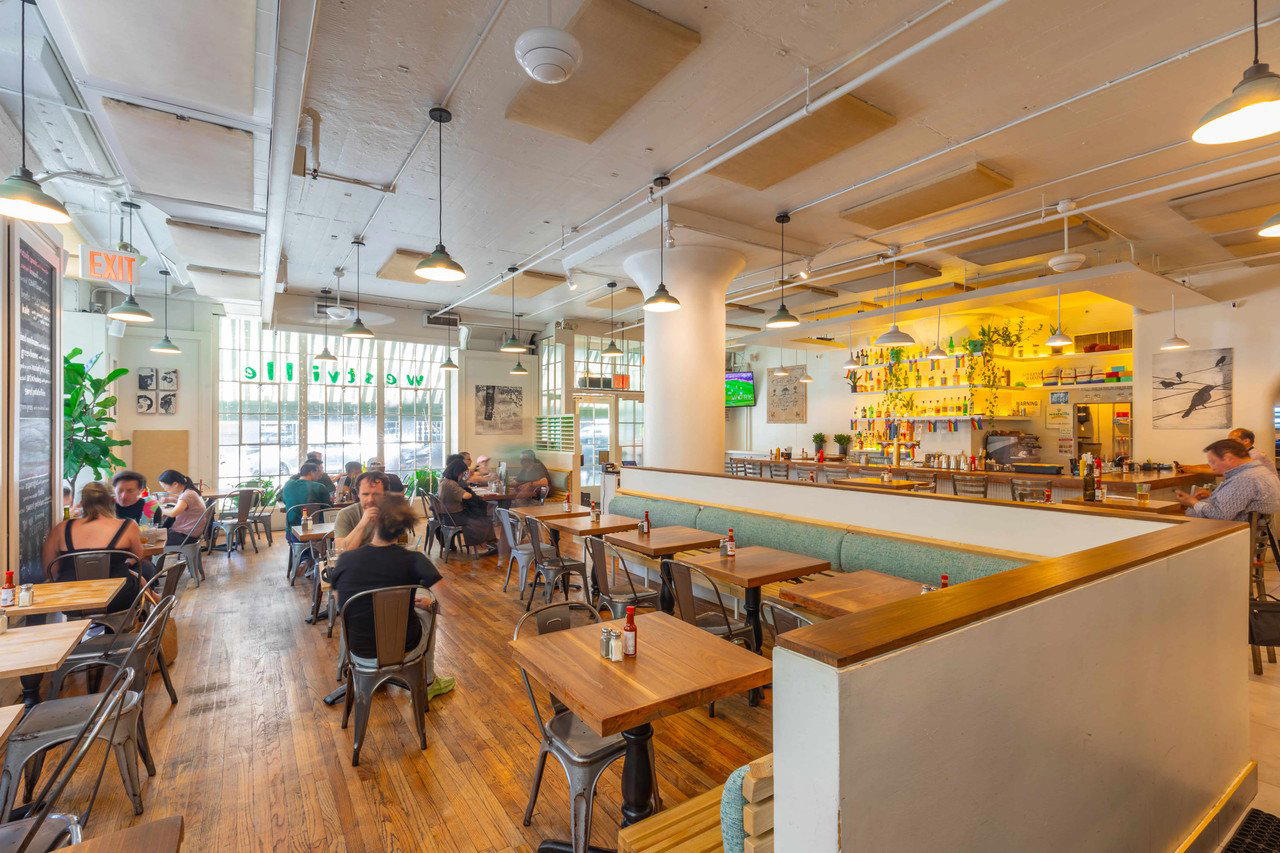
Tribeca's Vegetable-Forward Mid-Market and Where Westville Hudson Sits
New York's restaurant spectrum has long been framed by its extremes: the $400 omakase counters of Masa, the tasting-menu architecture of Per Se, the seafood precision of Le Bernardin, the plant-driven ambition of Eleven Madison Park. But the city also runs on a quieter register: neighborhood restaurants that fill tables five nights a week not because they chase awards but because they solve an everyday problem.
Westville Hudson centers seasonal vegetable-forward American cooking at an accessible price point. That positioning, seasonal produce anchoring a broad, approachable menu at mid-market prices, has proved durable. Where destination restaurants in cities like San Francisco (see Lazy Bear) or Healdsburg (see Single Thread Farm) build elaborate frameworks around local sourcing as a signal of ambition, Westville makes seasonal vegetables the practical center of an accessible, repeatable dining format.
The Hudson Street Address and the Tribeca Context
Tribeca's restaurant character has shifted considerably over the past two decades. The neighborhood's loft conversions and rising residential density brought a different demand profile than the tourist-heavy traffic that defines Midtown or the scenester churn of the Meatpacking District. Hudson Street, running north-south through the neighborhood's western edge, carries a particular mix: local foot traffic, families, remote workers, and a steady stream from the surrounding blocks that have filled in with young professional households. The dining that has taken hold here tends toward the reliable rather than the spectacular, places that reward returning rather than one-time visits.
That context shapes what Westville Hudson is actually for. It is not competing with Atomix or the tasting-room ambition you find at Smyth in Chicago or the farm-to-table grandeur of Blue Hill at Stone Barns in Tarrytown. It is competing with the question of where to eat on a Tuesday when you live three blocks away and want something fresh, satisfying, and reasonably priced. That is a harder problem to solve consistently than it sounds, and the Westville format has built its small group around answering it.
The Collaborative Format: Kitchen, Floor, and Consistency
The restaurant's appeal lies in how a team-driven format maintains coherence across busy services. The challenge at neighborhood restaurants operating at mid-market price points is precisely that the margins for a strong front-of-house program, an attentive kitchen, and consistent sourcing are tighter than at fine-dining operations where a $300 cover subsidizes the infrastructure.
Groups like Westville run on systems more than on individual star power. The kitchen team executes a format built around a rotating market board, vegetables, grains, and proteins organized around what is available and seasonal rather than around a fixed chef's vision carved in stone. The floor handles a high table-turn volume relative to destination restaurants; at this price tier, the rhythm of service is closer to that of a well-run brasserie than a tasting-menu room. The model shares some operational DNA with what Frasca Food and Wine in Boulder has built around hospitality as a disciplined team practice, even if the context and price point differ sharply.
What distinguishes the better operators in this segment from the mediocre ones is whether the collaboration between kitchen output and floor execution holds up under the pressure of a busy service. A mid-market neighborhood restaurant that loses that coherence reads as sloppy; one that maintains it reads as dependable. Westville's multi-location persistence suggests the latter has held more often than not.
Vegetable-Forward Cooking at the Accessible Tier
The broader American restaurant scene has seen vegetable-forward cooking migrate from a fine-dining signifier to a mainstream format over the past decade. What was once the domain of destination restaurants, seasonal produce, market-driven menus, cooking that treats vegetables as the main event rather than the side, has become a viable everyday proposition. Westville was positioned early in that shift, before the format had become crowded.
This places the restaurant in a different conversation than the produce-driven ambition of Providence in Los Angeles or the agricultural integration of The French Laundry in Napa. Those operations use sourcing as a fine-dining credential. Westville uses it as a practical menu engine, rotating what is fresh and available into a format that keeps prices accessible. The distinction matters: one model builds around exclusivity, the other around frequency of visit. For the neighborhood's residential base, frequency is the operative value.
Internationally, the accessible seasonal format has parallels at places like Dal Pescatore in Runate, where family-run continuity and seasonal rhythm define the offer across decades, or at Atelier Moessmer Norbert Niederkofler in Brunico, where regional produce anchors a more ambitious format. The scale and ambition differ, but the underlying logic of cooking seasonally and locally has proven resilient across price tiers and geographies.
Planning Your Visit
Know Before You Go
- Address: 333 Hudson Street, New York, NY 10013
- Neighborhood: Tribeca, Manhattan
- Format: Multi-location neighborhood group; vegetable-forward American cooking
- Price tier: Mid-market; accessible relative to Manhattan's full-service restaurant range
- Reservations: Check directly with the restaurant for current booking policy
- Hours: Confirm current hours before visiting, as service schedules can vary
- Getting there: The Hudson Street address is accessible from the 1 train at Houston Street or Canal Street, and from the A/C/E lines at Canal Street
Comparable Spots, Quickly
Comparable venues nearby, for context on price, style, and recognition.
| Venue | Cuisine | Price | Notes |
|---|---|---|---|
| Westville HudsonThis venue — the venue you are viewing | Market-Driven American | $$ | Not listed |
| Brine | Fire-Grilled Brined Chicken | $$ | Chelsea-Hudson Yards |
| Dallas BBQ Chelsea | American BBQ | $$ | Chelsea-Hudson Yards |
| Talea Penn District | Brewpub with Pub Classics | $$ | Midtown South-Flatiron-Union Square |
| BAMcafé | Modern American Café | $$ | Fort Greene |
| BROOKLYN WAFFLE HOUSE | Soul Food & Waffles | $$ | Bedford-Stuyvesant (East) |
Continue exploring
More in New York City
Restaurants in New York City
Browse all →

Bars in New York City
Browse all →
Hotels in New York City
Browse all →






At a Glance
- Trendy
- Casual
- Modern
- Cozy
- Casual Hangout
- Brunch
- Group Dining
- Family
- Standalone
- Terrace
- Craft Cocktails
- Beer Program
- Farm To Table
- Local Sourcing
Current opening hours
- Monday
- 11:30 AM–10 PM
- Tuesday
- 11:30 AM–10 PM
- Wednesday
- 11:30 AM–10 PM
- Thursday
- 11:30 AM–10 PM
- Friday
- 11:30 AM–10 PM
- Saturday
- 10 AM–10 PM
- Sunday
- 10 AM–10 PM
Hours can change for holidays and private events. Last verified .
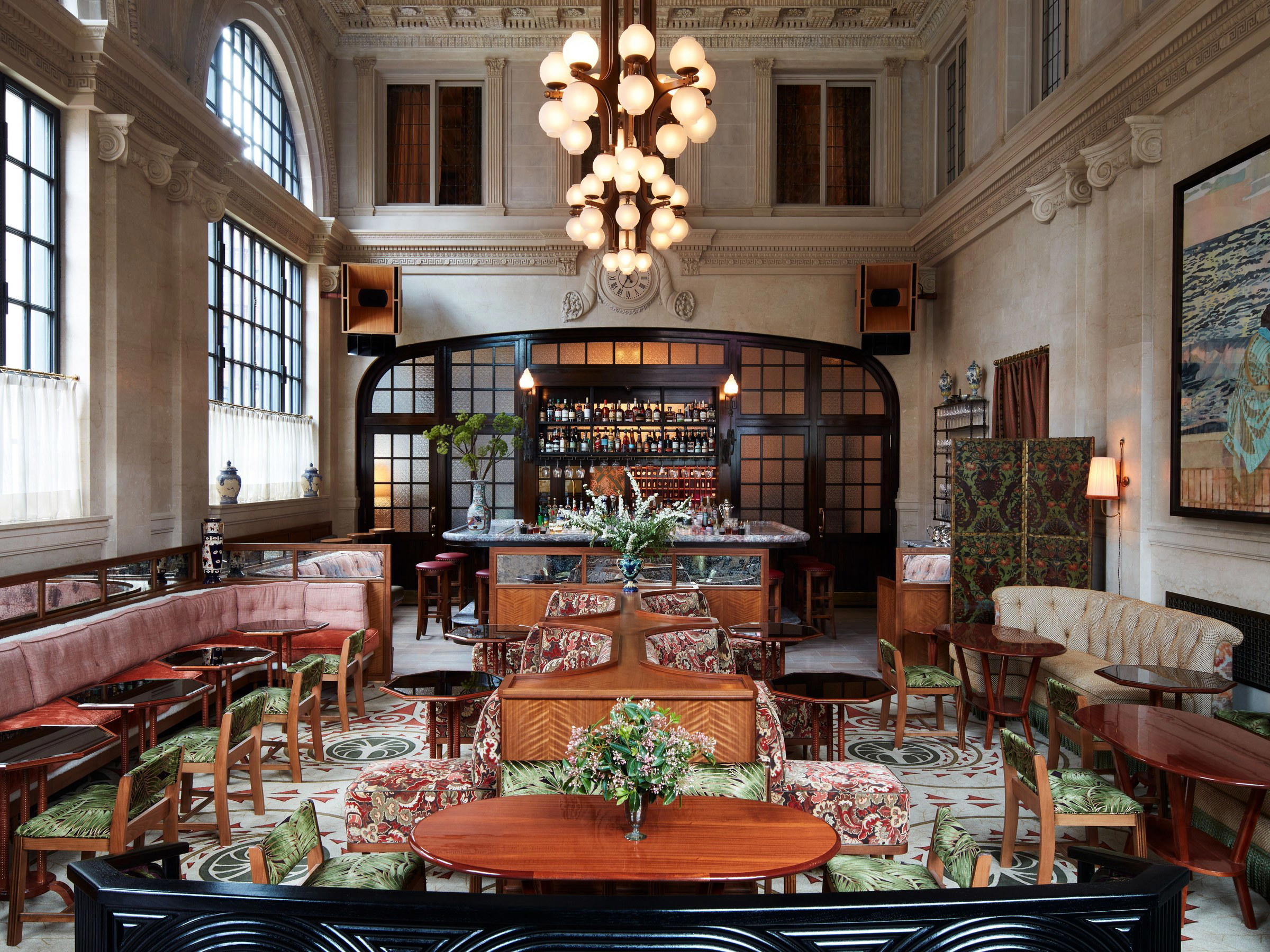
Modern, clean décor with white tones throughout creating an open and airy feel; described as no-frills with a slightly hipster-y casual vibe; some areas are dimly lit inside but outdoor seating offers a pleasant atmosphere.