WD~50


World's 50 Best #45 · James Beard Award Best Chefs
Our verdict
WD~50 put the Lower East Side on the international fine dining map during its decade-long run at 145 First Avenue. Wylie Dufresne's laboratory-meets-dining-room approach earned a place on the World's 50 Best Restaurants list twice, peaking at number 34 in 2005, and helped define the American modernist cooking moment before closing in November 2014. Its legacy shapes how New York talks about innovation, risk, and the ethics of ingredients.
The menu
What to order
- Everything bagel ice cream
- Corned duck
- Aerated foie gras
- Eggs benedict
The Restaurant That Rewired New York's Fine Dining Conversation
In 2004, a tasting menu at 145 First Avenue arrived in stages that defied category: eggs scrambled into cylinders, hollandaise deep-fried into a crisp shell, everything the diner thought they knew about breakfast reordered from the ground up. That kind of precision disruption was not incidental to WD~50. It was the operating principle. At a moment when most serious New York restaurants were still calibrating their relationship to French classicism, the Lower East Side address launched something different: a commitment to treating the American pantry as raw material for genuine technical investigation.
The restaurant ran from 2003 until November 2014, and in that span it held a place on the World's 50 Best Restaurants list twice — number 34 in 2005, and number 45 in 2010. In New York terms, its reference points were not Le Bernardin or Per Se — restaurants where French technique governed the contract between kitchen and guest, but rather a newer cluster of restaurants redefining what American fine dining could mean on its own terms.
Modernist Cooking and the Question of Waste
Molecular gastronomy acquired a reputation for extravagance: foams, gels, theatrical tableside production, the suggestion that technology had replaced ingredient. WD~50 complicated that story. The kitchen's approach to ingredient transformation was not about spectacle for its own sake. Hydrocolloids, sous vide baths, and enzyme-based techniques were used to extract more from an ingredient rather than less, to find textures and structures that allowed every part of a product to appear on the plate in a form a diner could engage with. In a period when the broader food world was beginning to formalize conversations about waste reduction and nose-to-tail sourcing, the modernist toolkit offered one underexamined answer: technical precision as a route to fuller utilization.
That framing is worth taking seriously now, in retrospect. The restaurant closed before farm-to-table ideology fully absorbed the fine dining tier, but its experimental ethos prefigured questions that Eleven Madison Park and others would later address more explicitly. When a kitchen can transform a trim or a secondary cut into a structurally compelling course, the ethical argument for doing so follows naturally. WD~50 made the technical case; the sustainability argument was already embedded in the method.
The Lower East Side as Laboratory
Location shaped what WD~50 could be. The Lower East Side in the early 2000s was not where New York's top-tier restaurant investment typically went. The neighborhood carried a different price expectation and a different clientele mix than Midtown or the Upper West Side, which meant the restaurant attracted guests who came specifically for the cooking rather than guests fulfilling a social obligation. That self-selection created the conditions for genuine experimentation: a room willing to encounter the unfamiliar and capable of reading it critically.
The dynamic mirrors patterns visible at other American modernist addresses that embedded themselves in neighborhoods outside the established fine dining corridor. Alinea in Chicago and Lazy Bear in San Francisco both positioned their technical programs in contexts where the guest's primary commitment was to the experience itself, not to institutional prestige. The Lower East Side gave WD~50 a similar operating latitude.
Where WD~50 Sits in the American Modernist Timeline
American fine dining has cycled through several distinct modes since the 1990s. The French-inflected prestige tier, represented in New York by addresses like Masa and Per Se, remained dominant but coexisted with a smaller experimental cohort that defined itself by departure from those reference points. WD~50 was the most prominent New York member of that cohort during its operating years.
The influence ran outward to cities beyond New York. The conversations about technique and ingredient that the restaurant helped normalize shaped what younger kitchens in Los Angeles, including Providence, felt licensed to attempt. It informed how chefs trained within that generation understood the relationship between science and sourcing. Single Thread Farm in Healdsburg represents a later synthesis of rigorous technique and deep supply-chain ethics that would have been harder to imagine without predecessors that established technical legitimacy as a value in American fine dining.
Internationally, the restaurants that influenced WD~50 and those it influenced in turn now form a documented lineage. The French Laundry in Napa provided one American precedent for the argument that serious tasting-menu cooking could happen outside European capitals. Alain Ducasse at Louis XV in Monte Carlo and 8½ Otto e Mezzo Bombana in Hong Kong belong to the parallel tradition of classical precision; WD~50's achievement was in demonstrating that American modernism could earn comparable international attention on entirely different terms.
Comparable New York addresses in the $$$$ tier, including Atomix, accumulate ratings through ongoing service; WD~50's figure is frozen but remains meaningful as an indicator of the depth of its reputation within its active years.
That reputation extended beyond its immediate New York context. The restaurant appeared in serious food media internationally and shaped what foreign visitors to New York added to their itineraries during the mid-2000s and early 2010s. Its influence on domestic restaurant culture was also significant. Chefs who came through that kitchen or studied its approach went on to open restaurants across the country, taking techniques and an ingredient philosophy with them. Emeril's in New Orleans belongs to the prior generation of American fine dining that WD~50 was responding to and extending; the conversation between those two eras produced the American modernist kitchen as a coherent category.
Planning a Visit to WD~50's Address
WD~50 closed in November 2014 when the building at 145 First Avenue was sold for development, ending an eleven-year run. The address no longer operates as the restaurant, but the site remains a reference point on the Lower East Side dining circuit. Guests researching New York's current tasting-menu tier should consult our full New York City restaurants guide for active options at comparable ambition levels. For a complete picture of where to stay during that research trip, our New York City hotels guide covers properties across the relevant neighborhoods. Those extending the visit into cocktail culture and the broader scene will find our New York City bars guide, our wineries guide, and our experiences guide useful for building a full itinerary.
Frequently asked questions
What's the must-try dish at WD~50?
WD~50 closed in 2014, so no dishes remain available to order. The restaurant's reputation was built on technically transformed American ingredients, particularly preparations that reassigned familiar textures to unexpected forms: solidified sauces, deep-fried liquids, and restructured proteins that retained full flavor while challenging the diner's expectations of the plate. Those techniques are documented in food media from the restaurant's active years and represent what made the cuisine a reference point for the American modernist tradition. For current tasting-menu cooking in New York at comparable ambition levels, Atomix and Eleven Madison Park offer active programs with strong critical recognition.
How far ahead should I plan for WD~50?
WD~50 is no longer accepting reservations, having closed in November 2014. During its operating years, the restaurant's World's 50 Best recognition, peaking at number 34 in 2005, placed it in a demand tier where advance booking of several months was standard for New York restaurants at that level. For planning purposes with current New York addresses in the same price and prestige tier, lead times of two to four months apply at venues like Per Se and Le Bernardin. Consulting our full New York City restaurants guide is the practical starting point for current booking intelligence.
What makes WD~50 worth seeking out?
WD~50 is worth understanding as a historical reference rather than a current destination. The kitchen's approach to modernist technique, applied to American ingredients with a precision that reduced waste by finding value in every part of a product, produced cooking that anticipated later conversations about sustainability in fine dining. For travelers building a picture of New York's current fine dining tier, our New York City restaurants guide maps the active landscape that WD~50 helped shape.
Standing Among Peers
Comparable options at a glance, pulled from our tracked venues.
| Venue | Cuisine | Price | Awards | Notes |
|---|---|---|---|---|
| WD~50This venue (the venue you are viewing) | Molecular Gastronomy | Not listed | World's 50 Best #45 · James Beard Award Best Chefs | Not listed |
| Le Bernardin | French Seafood Fine Dining | $300–500 | 3 Michelin Stars · World's 50 Best #13 | French, Seafood |
| Atomix | Modern Korean Tasting Menu | $300–500 | 2 Michelin Stars · World's 50 Best #7 | Modern Korean, Korean |
| Masa | Seasonal Hokkaido Tempura Omakase | $150–200 | Tabelog 100 #34 | Sushi, Japanese |
| Per Se | French Fine Dining Tasting Menu | $300–500 | 3 Michelin Stars · World's 50 Best #40 | French, Contemporary |
| Eleven Madison Park | Contemporary Plant-Based Fine Dining | $300–500 | 3 Michelin Stars · World's 50 Best #4 | French, Vegan |
Recognition history
Dated appearances from independent guides and award organizations, with the underlying list record or original source where available.
World's 50 Best Restaurants #45
World's 50 Best
James Beard Award Best Chefs
James Beard Award
Robb Report 100 Greatest American Restaurants of the 21st Century #14
Robb Report
Full recognition history (4 entries)
World's 50 Best Restaurants #34
World's 50 Best
Continue exploring
More in New York City
Restaurants in New York City
All restaurants in New York City →
Bars in New York City
All bars in New York City →





Details
- Modern
- Trendy
- Whimsical
- Intimate
- Special Occasion
- Open Kitchen
- Craft Cocktails
- Tasting Menu
Current opening hours
- Monday
- 11 AM–3 AM
- Tuesday
- 11 AM–3 AM
- Wednesday
- 11 AM–3 AM
- Thursday
- 11 AM–3 AM
- Friday
- 11 AM–4:30 AM
- Saturday
- 11 AM–5 AM
- Sunday
- 11 AM–2:30 AM
Hours can change for holidays and private events. Last verified .
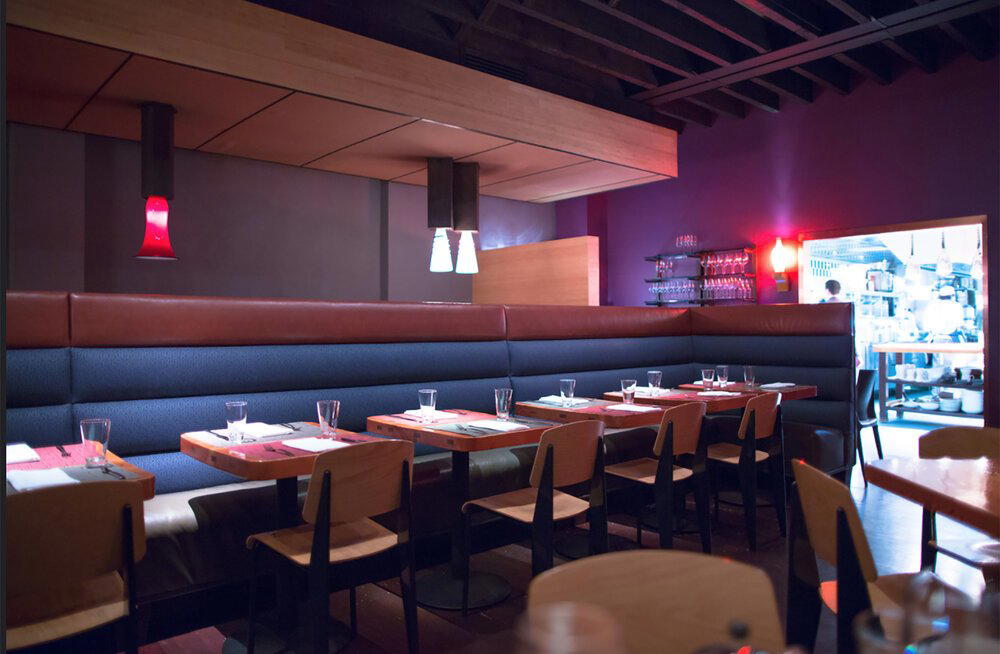
Casual and chill LES vibe, cozy like an upscale mom & pop diner with innovative, abstract presentations.