On a side street in Benoa, Kuta Selatan, Warung Babi Guling Sari Dewi Bp. Dobil serves one of Bali's most direct expressions of babi guling, the spit-roasted suckling pig that anchors Balinese ceremonial and everyday eating alike. The format is warung-simple: arrive early, eat well, leave before the rice runs out. A grounding stop for anyone serious about understanding how Balinese food actually works.
Pearl is the En Primeur Club membership app — saves, bookings, and concierge access live there. Same editors, same standards.
- Address
- Jl. Srikandi No.9, Benoa, Kec. Kuta Sel., Kabupaten Badung, Bali 80361, Indonesia
- Phone
- +62 361 771633
- Website
- instagram.com
- Directions
- Get directions
 Saves & bookings on Pearl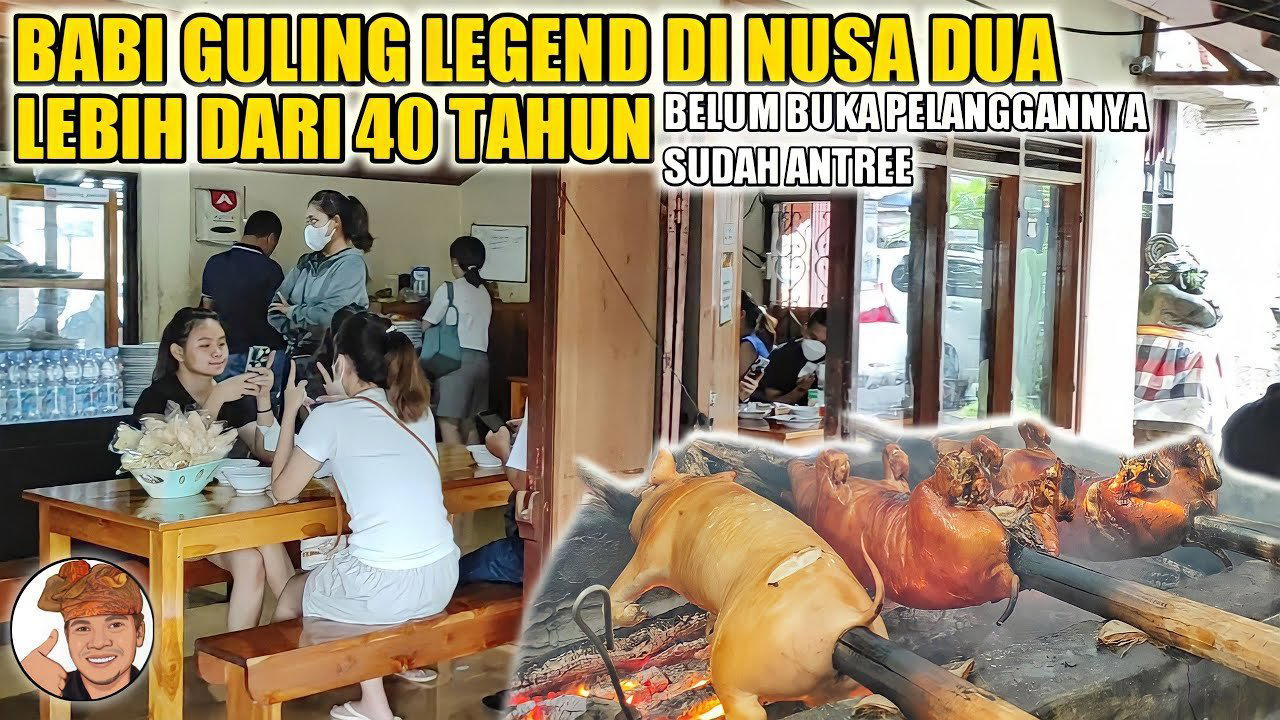
Where Babi Guling Is the Point, Not the Backdrop
Jalan Srikandi cuts through the Benoa neighbourhood of Kuta Selatan with the low-key purpose of a street that feeds people rather than impresses them. The warung format here is stripped of the design ambitions that characterise the Seminyak and Canggu dining belt. Plastic chairs, fluorescent light, and the faint smoke of roasting pork orient you immediately: this is a place built around a single dish and the discipline required to do it well. In Bali, that discipline has a name, babi guling, and the warung dedicated to it operates on a logic entirely different from the resort restaurants lining the Bukit Peninsula to the south or the beach clubs along the Kuta strip.
Babi guling, at its core, is spit-roasted suckling pig rubbed with a paste of turmeric, lemongrass, galangal, chilli, and shallots before slow rotation over coconut husks or wood. The technique is ceremonial in origin, the dish has long been prepared for temple festivals and life-cycle events across Bali, but the leading warung versions carry that same attention to process into daily service. The spice paste penetrates the meat during the cook; the skin crisps to a crackling register that is simultaneously fragile and forceful. When it works, the dish is a study in contrast: the heat of the spice rub against the richness of the pork fat, the crunch of skin against the yielding texture of the slow-cooked interior.
The Arc of the Plate
Eating babi guling in a warung setting follows a predictable but satisfying sequence that rewards attention. The plate arrives assembled rather than coursed, in the warung tradition, service is fast and the components are already portioned, but the eating itself has a natural progression. Most versions begin with the rice, cooked plain to act as ballast for the intensely spiced elements alongside it. The lawar, a finely chopped mixture of meat, coconut, and aromatics that accompanies babi guling throughout Bali, arrives sharp with lime and fragrant with kaffir leaf. It cuts through the fat and resets the palate between bites of pork.
The pork itself typically arrives in two registers: slices of the meat proper, and pieces of the crackling skin. A good kitchen manages both at the same temperature and the same moment of crispness, crackling that has sat too long softens and loses the textural contrast that makes it worth eating. The sate lilit, small parcels of spiced minced meat grilled on lemongrass skewers, often completes the arrangement, adding a charred smokiness that the roasted pork does not provide. The bowl of clear broth served alongside is a traditional palate cleanser: light, savoury, with a floating herb or two. Taken together, the components form a compact but complete picture of Balinese flavour logic, aromatic heat, rendered fat, acid, and herb, executed without decoration.
Babi Guling in Bali's Broader Eating Pattern
Babi guling warungs belong entirely to the second category, though the better-known ones in Ubud and Denpasar have become tourist destinations in their own right. The Benoa location of Sari Dewi Bp. Dobil sits closer to the local end of that spectrum: the address is in a residential-commercial strip, not a tourist corridor, and the operation is scaled to daily neighbourhood demand rather than coach-tour volume.
That placement matters for the eating experience. A warung feeding its neighbourhood has no incentive to dilute the dish for unfamiliar palates. The spice level, the richness, and the speed of service all reflect local preference. It also means the supply is finite: babi guling warungs typically roast a fixed number of pigs per day, and when the pork is gone, the kitchen closes. Arriving in the late morning, before noon, is the practical move. Many of these kitchens are effectively finished by early afternoon.
The comparison set is not other restaurants but other warungs, and the measure is fidelity to the dish rather than menu breadth or room design.
The common thread across these formats is the primacy of the technique over the presentation, cooking methods that require time and temperature management rather than last-minute plating.
Planning the Visit
This is a walk-in operation in the warung tradition. The price is about US$5 per person.
Reputation Context
Comparable venues nearby, for context on price, style, and recognition.
| Venue | Cuisine | Price | Notes |
|---|---|---|---|
| Warung Babi Guling Sari Dewi Bp. DobilThis venue — the venue you are viewing | Balinese Babi Guling | $ | Not listed |
| Warung Nia Balinese Food & Pork Ribs | Balinese BBQ Pork Ribs | $ | Seminyak |
| Ayam Betutu Khas Gilimanuk | Balinese Ayam Betutu | $$ | Tuban |
| Ground Zero Kitchen | Fusion Italian-American-Indonesian | $$ | Kuta |
| REV Italian Pizza Pasta Bistro Seminyak | Traditional French & Mediterranean Bistro | $$ | Seminyak |
| Warung Babi Guling Pak Malen | Balinese Babi Guling | $ | Seminyak |








At a Glance
- Rustic
- Casual Hangout
- Standalone
Current opening hours
- Monday
- 9:30 AM–4 PM
- Tuesday
- 9:30 AM–4 PM
- Wednesday
- 9:30 AM–4 PM
- Thursday
- 9:30 AM–4 PM
- Friday
- 9:30 AM–4 PM
- Saturday
- 9:30 AM–4 PM
- Sunday
- 9:30 AM–4 PM
Hours can change for holidays and private events. Last verified .
Casual traditional warung atmosphere, busy and hot without air-conditioning, functional seating amid high lunch crowds.