wagamama, midtown, new york
wagamama's Midtown Manhattan location at 100 W 55th St places the Japanese-inspired chain within a dense corridor of New York dining options ranging from neighborhood spots to Michelin-decorated counters. For a meal that moves from ramen to rice bowls without ceremony or significant wait, it occupies a direct position in the West 55th Street block. The format is familiar to anyone who has visited a wagamama elsewhere in the US or UK.
Pearl is the En Primeur Club membership app — saves, bookings, and concierge access live there. Same editors, same standards.
- Address
- 100 W 55th St, New York, NY 10019
- Phone
- +13329006111
- Website
- wagamama.us
- Directions
- Get directions
 Saves & bookings on Pearl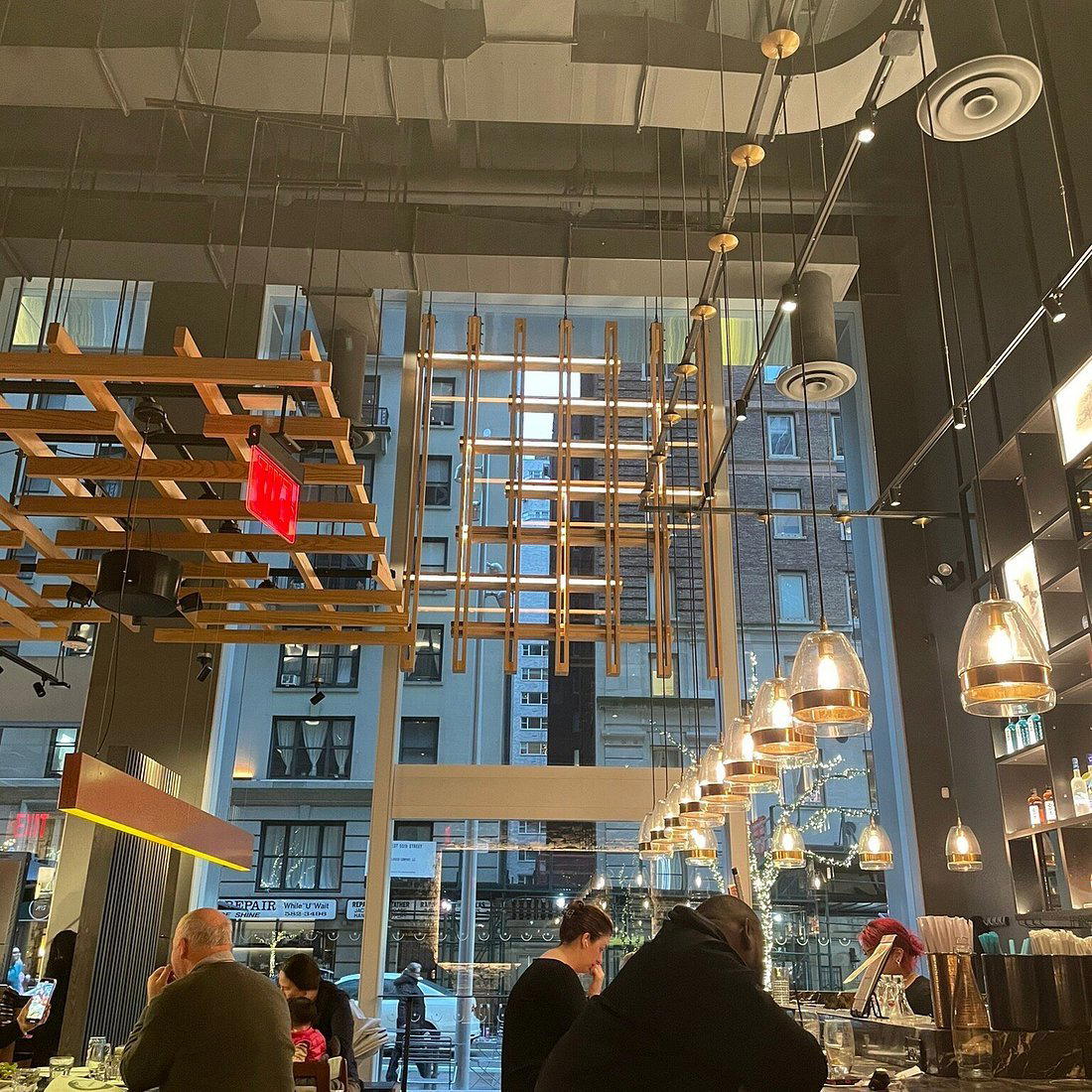
Where wagamama Sits in Midtown's Dining Range
Midtown Manhattan runs one of the widest dining ranges of any district in the United States. Within a few blocks of West 55th Street, the price tier climbs from counter-service noodle formats all the way to the tasting-menu rooms that define American fine dining: Le Bernardin, which has held three Michelin stars across decades, sits nearby, as does Per Se, Thomas Keller's New York flagship in the Time Warner Center. wagamama at 100 W 55th St occupies the opposite end of that range: a casual Japanese-inspired restaurant where the proposition is speed, familiarity, and a bowl of ramen or katsu curry at an accessible price point.
That positioning is not a criticism. Midtown office workers, tourists moving between appointments, and families navigating a city afternoon all need options that do not require a reservation booked weeks ahead. wagamama fills that slot.
The Meal Arc: How a wagamama Visit Sequences
wagamama's menu architecture follows a recognizable progression that the chain has held consistently across its international locations. The opening move is typically a small plate or gyoza, sides designed to arrive quickly and set the table while a ramen or noodle bowl is assembled. The mid-course is the bowl itself, which is the operational center of the format: ramen broth-based dishes, yakisoba, pad thai variants, and katsu preparations have anchored the menu across markets.
In a tasting-menu room like Atomix in Koreatown or Jungsik New York, the progression is curated and paced with deliberate intervals. At wagamama, the arc is self-directed and considerably faster. Dishes arrive when they are ready rather than in a coordinated sequence, which is part of the chain's stated philosophy, a feature that can read as casual energy or as a lack of table choreography depending on your expectations going in. If two people order different dishes, one bowl may arrive well ahead of the other.
The practical implication: wagamama works better as a solo meal or a quick pair lunch than as a group dinner where table sharing and course timing matter. For the former, the format is efficient and the bowl-centered meal structure is complete enough that no one leaves hungry.
Japanese-Inspired Cooking in a New York Context
New York's Japanese dining scene spans a range that is difficult to summarize briefly. At one extreme, counters like Masa in Columbus Circle represent some of the highest per-seat dining prices in the country, built on sourcing precision and chef-to-diner ratio. That register is not what wagamama is competing in, and there is no editorial reason to hold it to that standard.
The more relevant comparison is the mid-tier of Japanese-influenced casual dining in the city, where ramen shops, izakaya-style operations, and pan-Asian fast-casual chains all compete for the same lunch and dinner traffic. Within that bracket, wagamama's strength is brand consistency: a visitor who has eaten at a wagamama in London, Boston, or Chicago will recognize the menu logic, the shared-bench seating format common to the concept, and the service rhythm.
For context on what the broader US dining scene looks like when a restaurant commits fully to a distinct culinary identity, see EP Club's coverage of properties like Alinea in Chicago, The French Laundry in Napa, or Blue Hill at Stone Barns in Tarrytown. The wagamama proposition sits in a fundamentally different register, which is not a deficiency, it is a category distinction.
Planning the Visit: What to Know Before You Go
The West 55th Street address puts wagamama within walking distance of Carnegie Hall and the southern edge of Central Park, making it a logical stop for anyone spending time in that part of Midtown. The format is walk-in by design; the chain's casual positioning means reservations are not the expected mode of access, though volume during peak Midtown lunch hours can produce a wait at the door. Arriving before noon or after 2pm on weekdays generally avoids the office-rush compression.
At roughly $30 per person, wagamama sits in the affordable casual range for Midtown.
The Essentials
Comparable venues nearby, for context on price, style, and recognition.
| Venue | Cuisine | Price | Notes |
|---|---|---|---|
| wagamama, midtown, new yorkThis venue — the venue you are viewing | Not listed | $$ | Not listed |
| Koké | Not listed | $$ | Greenwich Village, Modern Japanese Matcha & Plant-Based Cafe |
| Momo Sushi Shack | Not listed | $$ | East Williamsburg, Brooklyn-Style Japanese Sushi Shack |
| Chuko | Clinton Hill, Brooklyn Craft Ramen | $$ | Not listed |
| Ramen DANBO Park Slope | Park Slope, Fukuoka-Style Tonkotsu Ramen | $$ | Not listed |
| Zutto Nolita | Not listed | $$ | SoHo-Little Italy-Hudson Square, Japanese Ramen Sushi Bar |
Continue exploring
More in New York City
Restaurants in New York City
Browse all →
Bars in New York City
Browse all →
Hotels in New York City
Browse all →





At a Glance
- Modern
- Lively
- Energetic
- Casual Hangout
- Group Dining
- After Work
- Open Kitchen
- Craft Cocktails
Current opening hours
- Monday
- 11:30 AM–10:30 PM
- Tuesday
- 11:30 AM–10:30 PM
- Wednesday
- 11:30 AM–10:30 PM
- Thursday
- 11:30 AM–10:30 PM
- Friday
- 11:30 AM–11:30 PM
- Saturday
- 11:30 AM–11:30 PM
- Sunday
- 11:30 AM–10:30 PM
Hours can change for holidays and private events. Last verified .
Bustling contemporary Japanese design with festive, artistic elements throughout; casual yet sophisticated atmosphere encouraging informal dining.