Wa Shin


Michelin Plate · Resy Best of the Hit List
Our verdict
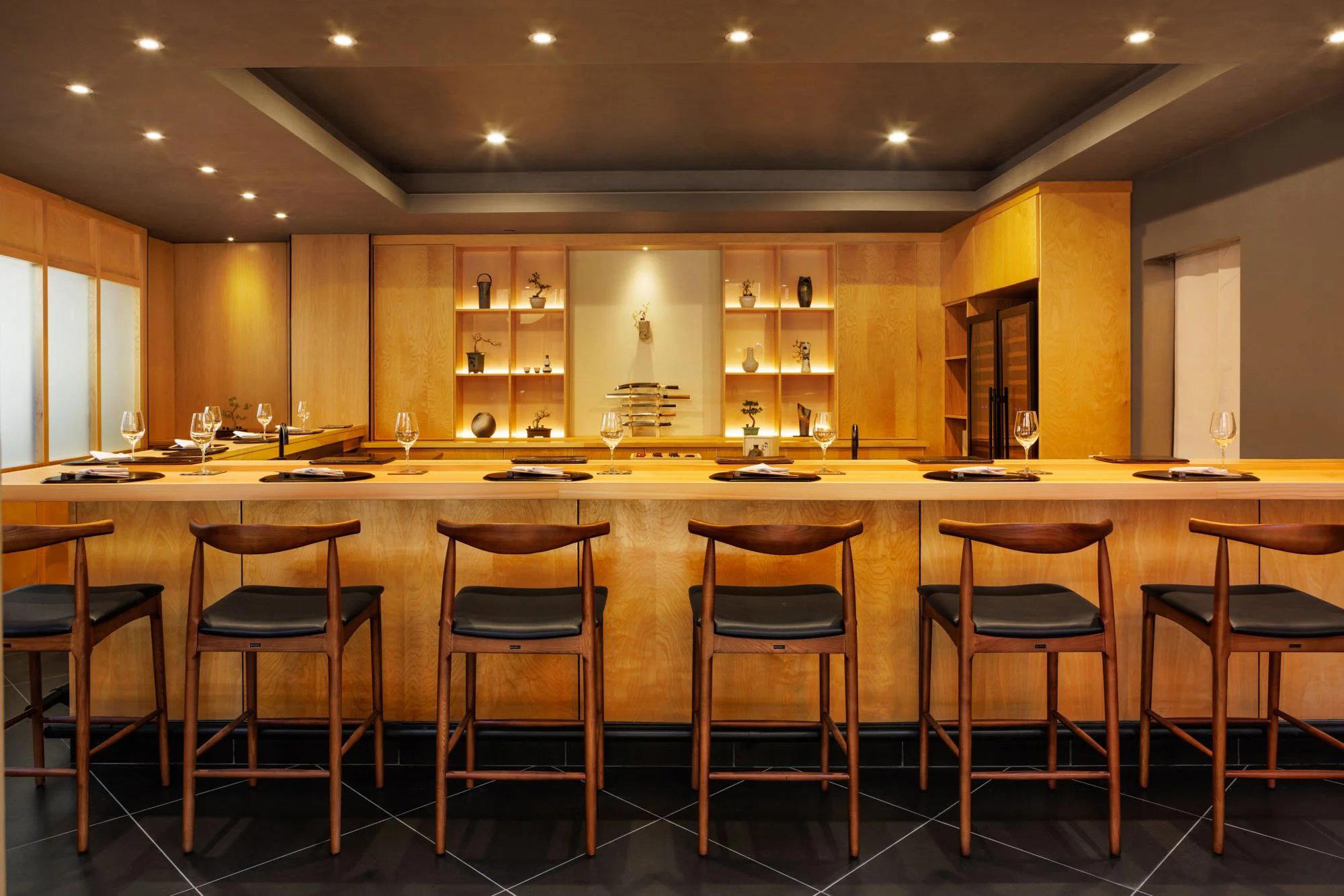
Wa Shin sits inside a residential tower on Stuart Street in Boston's Bay Village, operating as an edomae-style omakase counter built around Japanese-imported fish and restrained, precise seasoning. The L-shaped hinoki counter anchors a spare, material-driven room. Recognized on Resy's Best of the Hit List for 2025, Wa Shin runs three seatings nightly, making advance reservations a practical requirement.

Pearl is the En Primeur Club membership app — saves, bookings, and concierge access live there. Same editors, same standards.
- Address
- 222 Stuart St, Boston, MA 02116
- Phone
- (857) 289-9290
- Hours
- Mon–Sat 5–11 PMSun Closed
- Website
- washinboston.com
- Directions
- Get directions
- Booking
- Book on Resy
Wa Shin Dress Code and What to Expect: Boston's Bay Village Omakase Counter
Bay Village sits at the southern edge of Back Bay, a quiet residential enclave that most visitors pass through without stopping. The block of Stuart Street where Wa Shin operates looks more like a high-rise lobby address than a dining destination, and that spatial tension is part of what makes the room surprising. Step inside and the register shifts: a long L-shaped hinoki counter dominates the space, its pale wood grain set against dark stone tile flooring. Lighting is calibrated to produce warmth without drama. The overall effect is a room that signals precision and calm before a single plate arrives.
Dress Code at Wa Shin
No formal dress code is published for Wa Shin, but the physical environment answers the question practically. This is an omakase counter inside a polished residential tower, running on a format that favors focused attention over casual drop-ins. Across the omakase tier in Boston, and at peer-level counters in New York at venues like Atomix, the unwritten standard trends toward smart casual at minimum: nothing that would read as underdressed at a serious prix-fixe. A jacket is never out of place; denim is generally acceptable if paired with care. The room's restrained aesthetic makes effort feel appropriate and comfort-focused dressing feel slightly at odds with the setting.
Edomae in Boston: The Tradition Behind the Counter
Edomae sushi developed in Edo-period Tokyo as a way of preserving and enhancing fish through controlled seasoning, curing, and temperature. The tradition is less about raw immediacy than about considered intervention: marinating, aging, and applying acid or salt to draw out and focus flavor. Boston's omakase scene has grown considerably in recent years, with counters like 311 Omakase and Oishii Boston operating within the same premium tier. What separates the serious practitioners from the decorative ones is sourcing discipline and restraint in embellishment. At Wa Shin, the fish is largely imported from Japan, and the seasoning applied to each piece is described as mild and judicious — evidence of an edomae philosophy that refuses to let augmentation override the ingredient.
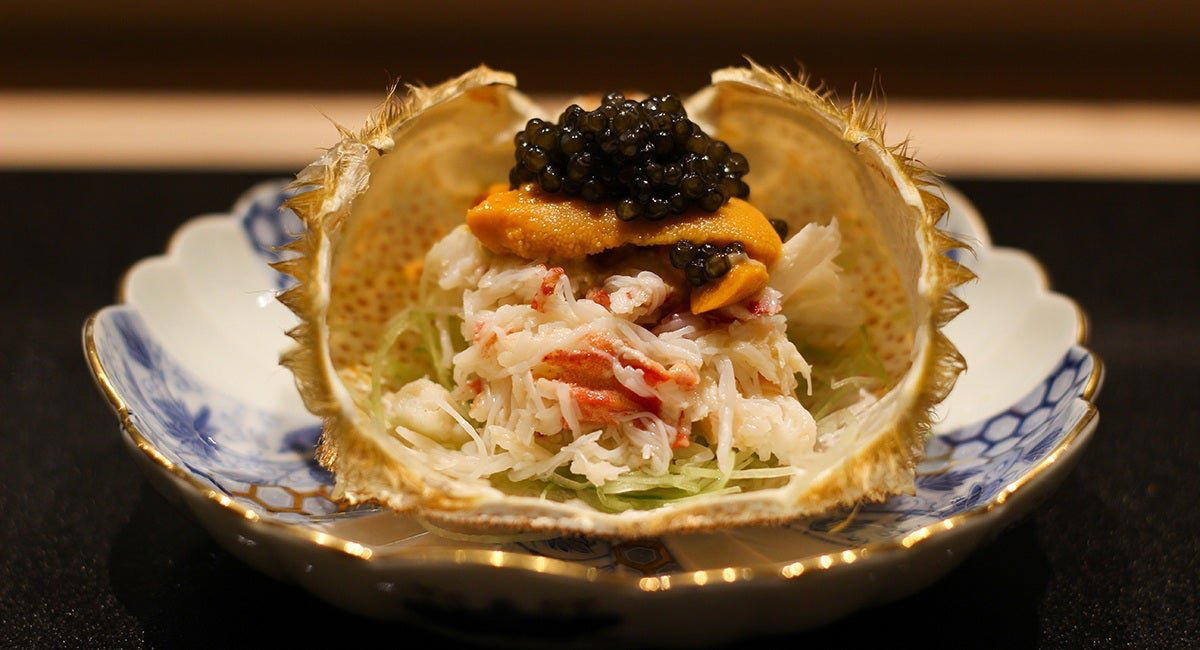
The meal opens with zensai, small courses that set the tone. Documented examples include hairy crab from Hokkaido with Okinawa seaweed, and madai torched and dressed with citrus and sea salt. Needlefish with shiso blossoms has also appeared at the start of service. These preparatory courses are not ornamental; they establish the kitchen's sourcing geography and its approach to seasoning before the nigiri sequence begins. For readers used to the more exuberant presentation styles at Boston seafood institutions like Neptune Oyster or Ostra, the register here will feel deliberately quieter.
The Counter as a Collaborative Space
High-end omakase counters function through tightly coordinated teams: the chef working through a sequence of fish, the front-of-house managing the pace and atmosphere, and whoever is managing drinks keeping the two sides of the meal in proportion. At Wa Shin, the L-shaped counter design means guests are positioned in sight of the kitchen work throughout. That layout is not incidental. It creates a shared viewing angle across the counter that makes the experience feel collaborative rather than performative. The chef's movements are visible; the preparation is not hidden behind a pass. At comparable counter formats nationally, from Le Bernardin in New York to Single Thread Farm in Healdsburg, the physical relationship between the kitchen team and the guest is increasingly understood as part of the dining design, not an accident of floor plan.
Chef Sky Zheng leads the kitchen with a skill set oriented toward classical edomae technique. The front-of-house role at a format like this is demanding: three nightly seatings require each service to reset completely, with different guests arriving at different points in the evening expecting the same level of attention. The instruction to arrive on time is not incidental — it reflects the structural reality of a tightly sequenced format where a late arrival compresses the experience for the entire table.
Where Wa Shin Sits in Boston's Dining Tier
Boston's premium dining scene has become more layered in recent years. The traditional upper end was dominated by European-format tasting menus; the current top tier now includes omakase counters, New American tasting rooms like Asta, and Italian formats like Bar Mezzana that operate at different price points and with different booking dynamics. Wa Shin's 2025 placement on Resy's Best of the Hit List positions it within the recognized upper tier of the city's current moment, not as a long-established institution but as a counter that has earned critical attention quickly. That trajectory is worth noting: it suggests a format and execution that reviewers are treating seriously, even if the venue hasn't yet accumulated the award history of older Boston establishments.
For readers considering the broader Boston omakase field, the comparison set is instructive. O Ya has operated at the high end of Boston Japanese dining for longer and with a more eclectic, fusion-inflected menu. Wa Shin's positioning is more classically edomae and less experimental, which will suit readers who prefer the tradition-grounded sequence over composed modern dishes.
Planning Your Visit
Wa Shin is located at 222 Stuart Street, Boston, MA 02116, in the Bay Village section of the Back Bay area. Three seatings run nightly, which means booking ahead is not optional at this format, the counter does not absorb walk-ins across most services. Resy is the standard booking platform for counters of this tier in Boston. Given the 2025 Hit List recognition, lead time for reservations has likely extended; planning two to four weeks ahead is a reasonable baseline for weekday seating, more for weekends.
For those building a broader Boston stay, EP Club's full Boston restaurants guide covers the wider dining field. Our Boston hotels guide, Boston bars guide, Boston wineries guide, and Boston experiences guide provide context for the full trip. Readers interested in how omakase formats compare at the national level will find useful benchmarks at Lazy Bear in San Francisco and Alinea in Chicago, where counter-format precision is applied to different culinary traditions. For the steakhouse side of the Back Bay dining scene, Abe & Louie's and Bar Volpe operate within the same neighborhood radius.
Frequently asked questions
Is Wa Shin okay with children?
What's the overall feel of Wa Shin?
What's the must-try dish at Wa Shin?
Category Peers
A compact comparison to help you place this venue among nearby peers.
| Venue | Cuisine | Price | Awards | Notes |
|---|---|---|---|---|
| Wa ShinThis venue — the venue you are viewing | Modern Japanese Omakase | $150–200 | Michelin Plate · Resy Best of the Hit List | Not listed |
| La Brasa | Global Grill with Mexican & Mediterranean Influences | $50–100 | Not listed | Mexican |
| Neptune Oyster | Modern New England Seafood Oyster Bar | $50–100 | Michelin Plate | Raw Bar-Seafood |
| O Ya | Modern Japanese Omakase | $200–300 | James Beard Award Semi Finalist | Japanese |
| Oishii Boston | Modern Creative Japanese Sushi | $100–150 | Wine Spectator Award of Excellence | Sushi |
| Ostra | Mediterranean Seafood | $100–150 | James Beard Award Semi Finalist · Wine Spectator Award of Excellence | Seafood Grill |
Recognition history
Dated appearances from independent guides and award organizations, with the underlying list record or original source where available.
Michelin Plate
Michelin
Resy Best of the Hit List
Resy
Continue exploring
More in Boston
Restaurants in Boston
Browse all →
Bars in Boston
Browse all →
Hotels in Boston
Browse all →
Wineries in Boston
Browse all →
Details
- Elegant
- Intimate
- Sophisticated
- Minimalist
- Date Night
- Special Occasion
- Chefs Counter
- Open Kitchen
- Sake Program
- Craft Cocktails
- Local Sourcing
- Omakase
- Tasting Menu
- Counter Dining
- Allergy Accommodating
Current opening hours
- Monday
- 5–11 PM
- Tuesday
- 5–11 PM
- Wednesday
- 5–11 PM
- Thursday
- 5–11 PM
- Friday
- 5–11 PM
- Saturday
- 5–11 PM
- Sunday
- Closed
Hours can change for holidays and private events. Last verified .
Contemporary polished look with L-shaped hinoki counter, dark stone tile contrasting light wood, and warm well-calibrated lighting creating an intimate, Japan-inspired atmosphere.