
Tabelog 100 #86
Our verdict
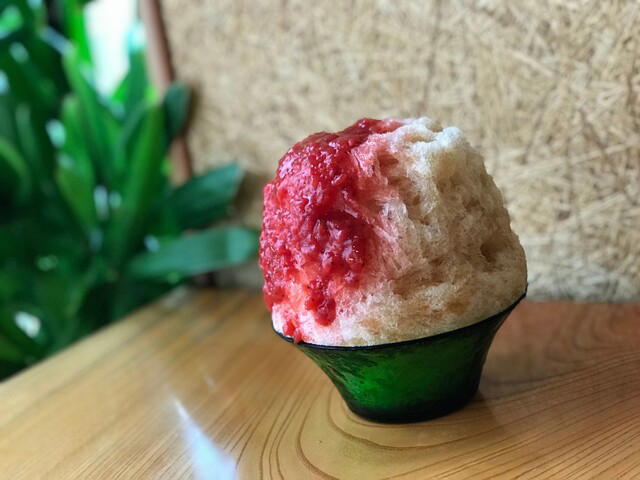
A second-floor kakigori specialist in Shimouma, Wa kitchen Kanna sits in Tokyo’s serious sweets circuit rather than the casual dessert-afterthought category. Its recognition in Tabelog Sweets TOKYO “Tabelog 100” across multiple years places it among venues where shaved ice is treated as a technical format, with seasonal Japanese ingredients carrying much of the identity.

Pearl is the En Primeur Club membership app, where members save venues, book tables and use the concierge.
The menu
What to order
- Kakigori with seasonal housemade sauces
- Japanese set meals with seasonal ingredients
- Traditional and fusion-style shaved ice
The room is in Tokyo, within a sweets culture that extends well beyond the department-store dessert floors and station-front chains that often frame quick urban treats. That city context matters. Kakigori has become one of Tokyo’s clearest examples of a humble format being pushed into specialist territory: ice texture, syrup structure, fruit seasonality and service rhythm now carry the same weight that pastry technique does elsewhere.
Wa kitchen Kanna belongs to that category rather than the café-sweets lane. Its listing for kakigori and a creative category, plus selection in the 2023 Tabelog Hyakumeiten record with a 3.77 score, signals a venue judged inside Tokyo’s competitive sweets culture, not simply a neighborhood dessert stop. In a city where elite dining often means counter sushi, kaiseki or French tasting menus, the more interesting question here is how shaved ice became serious enough to command planned visits.
Shaved ice as a Tokyo technical format
Modern Tokyo kakigori is not just ice under syrup. The serious version borrows from patisserie, tea service and Japanese seasonality while keeping the structure recognizably casual. Texture is central: the goal is not crunch but controlled collapse, with fine ice carrying sauce, dairy, fruit or bean components without turning immediately watery. That technical obsession explains why kakigori specialists now sit beside parfait counters, wagashi rooms and dessert cafés in the city’s sweets hierarchy.
The format also works because Japan has a long seasonal vocabulary for sweet refreshment. Summer ice culture, fruit gifting, matcha bitterness, adzuki sweetness and dairy richness all give kakigori a local grammar. Imported dessert logic then sharpens the composition: layering, temperature contrast and plated-dessert balance turn a simple bowl into a constructed course. Wa kitchen Kanna’s public identity, kakigori with a creative category, fits that intersection of local ingredient thinking and broader dessert technique.
That makes the experience different from a quick café order. Tokyo has plenty of casual sweets rooms, including graphic, camera-friendly formats and other dessert-focused stops, but kakigori at this level asks for more attention to timing and melt. It sits closer to the city’s specialist food culture, the same instinct that sends diners across town for tightly focused meals at other Tokyo dining rooms. The object changes; the Tokyo habit is the same.
Why Tokyo suits a serious sweets address
Tokyo gives this kind of venue a useful setting. The city is large enough to support destination traffic, but varied enough that a specialist sweets room does not have to perform like a luxury dining room or a tourist-facing department-store counter. For sweets, that balance can be an advantage: the audience can include local regulars, friends meeting outside the office corridor and travelers willing to leave the most obvious route.
The room’s practical format reinforces that middle ground. It is not best understood as a hushed luxury counter, nor is it merely a grab-and-go kiosk. The publicly listed price band of JPY 1,000 - JPY 1,999 points to a venue designed for a broader public while still maintaining the discipline expected of a recognized sweets specialist. That distinction is important in Tokyo, where some highly rated food rooms become difficult for visitors not because of cost, but because of language, size or booking culture.
Tokyo’s dining map is often read through expensive meals first: destination meals at Tori Tomi, focused dinners at Yakiniku Rokkoen, or neighborhood cooking at BISTRO GLOUTON. Wa kitchen Kanna sits in a different lane. It shows how the city’s low-to-mid price tier can still carry serious editorial weight when a narrow format is executed with enough consistency to earn sweets recognition.
For travelers building a day around food rather than monuments, that matters. A Tokyo itinerary does not need to move only from omakase to cocktail bar to hotel lounge. The better version leaves room for category specialists: shaved ice at Wa kitchen Kanna, other focused meals elsewhere in Tokyo, and casual stops that make sense by appetite rather than prestige. For broader planning, Our full Tokyo restaurants guide, Our full Tokyo hotels guide, Our full Tokyo bars guide, Our full Tokyo wineries guide and Our full Tokyo experiences guide map the city by category rather than cliché.
How to read the menu without over-ordering
The useful approach is to treat kakigori as the main event, not a finish after a heavy meal. The venue’s public category also includes creative, which gives the listing more flexibility than a dessert-only label, but the kakigori recognition is the anchor. The point is not maximal ordering; it is choosing the visit around appetite, temperature and pace.
Tokyo sweets culture rewards restraint. One carefully built shaved-ice order can reveal more than a table crowded with competing bowls, especially when the format depends on melt and balance. Groups should also remember that specialist rooms often work best when diners keep the pace compact and order with attention rather than treating the table like a banquet spread.
The address works as a Tokyo sweets stop without needing to be recast as a full luxury occasion. Its appeal is the focused category, the accessible listed price range and the way a familiar form becomes a planned visit. That combination is typical of Tokyo’s more practical hospitality: direct, specific and serious without relying on ceremony for its authority.
For readers tracking Japan beyond Tokyo, Wa kitchen Kanna also belongs to a larger national pattern: highly specific casual formats carrying serious local reputations. That pattern appears in regional Japanese dining and in focused Japanese formats outside Japan as well, where narrow concepts can become more memorable than generic luxury. The lesson is consistent: specificity travels further than spectacle, and Wa kitchen Kanna’s strength is that it lets a simple bowl of shaved ice carry the argument.
Frequently asked questions
Can I bring kids to Wa kitchen Kanna?
Check the venue's official channels for the latest details on children, seating and access. The public facts provided here place Wa kitchen Kanna in Tokyo.
Is Wa kitchen Kanna formal or casual?
It reads as accessible rather than formal. The listed price range is JPY 1,000 - JPY 1,999 in Tokyo, while its kakigori and creative categories give it a specialist focus.
What price level is Wa kitchen Kanna?
Pricing at Wa kitchen Kanna is listed as JPY 1,000 - JPY 1,999.
What is Wa kitchen Kanna known for?
Wa kitchen Kanna is known in the provided public record for kakigori, or shaved ice, with a creative category in Tokyo.
Reputation First
Comparable venues for context, by category and price tier.
| Venue | Cuisine | Price | Awards | Notes |
|---|---|---|---|---|
| Wa kitchen KannaThis venue (the venue you are viewing) | Japanese set meals & creative kakigori café | $10–20 | Tabelog 100 #86 | Not listed |
| Hirugao (ひるがお) | Shio Ramen Specialist | $10–20 | Not listed | Marunouchi |
| Honda Tokyo Noodle Works (麺処 ほん田) | Shoyu Ramen & Tsukemen | $10–20 | Not listed | Akihabara |
| Kyu Yamu Tei Shimokita sou | Japanese Curry | $10–20 | Tabelog 100 #6 | Setagaya |
| Warayakiya Roppongi | Tosa Straw-Grilled Izakaya | $30–50 | Not listed | Minato |
| Gyoza Mania Shinagawa hon ten | Gyoza-focused Japanese Izakaya | $30–50 | Tabelog 100 #50 | Minato |
Recognition history
Dated appearances from independent guides and award organizations, with the underlying list record or original source where available.
Tabelog 100 #86 · No. 86
Tabelog · Tabelog 100 - Sweets - TOKYO - 2023
Continue exploring
More in Tokyo
Restaurants in Tokyo
All restaurants in Tokyo →


Bars in Tokyo
All bars in Tokyo →




Details
- Cozy
- Quiet
- Romantic
- Modern
- Date Night
- Casual Hangout
- Family
- Solo
- After Work
- Standalone
- Design Destination
- Local Sourcing
- Farm To Table
- A La Carte
- Set Menu
- Coffee
- Tea
- Soft Drinks
- Vegetarian Friendly
Current opening hours
- Monday
- 11 AM–7 PM
- Tuesday
- 11 AM–7 PM
- Wednesday
- Closed
- Thursday
- 11 AM–7 PM
- Friday
- 11 AM–7 PM
- Saturday
- 11 AM–7 PM
- Sunday
- 11 AM–7 PM
Hours can change for holidays and private events. Hours as of .
A calm, spacious café-style room with lots of natural light and wood accents, offering a relaxed, date-friendly atmosphere away from the city bustle, where guests linger over seasonal Japanese dishes and elaborate shaved ice.