On Rue Carnot in central Poitiers, Vingelique occupies a position in a city whose dining scene has quietly shifted toward producer-focused cooking over the past decade. The address places it within walking distance of the old town, and its name suggests a wine-oriented approach that has become a reference point in a city underserved by serious wine lists. Worth knowing before you go.
Pearl is the En Primeur Club membership app — saves, bookings, and concierge access live there. Same editors, same standards.
- Address
- 37 Rue Carnot, 86000 Poitiers, France
- Phone
- +33549550703
- Directions
- Get directions
 Saves & bookings on Pearl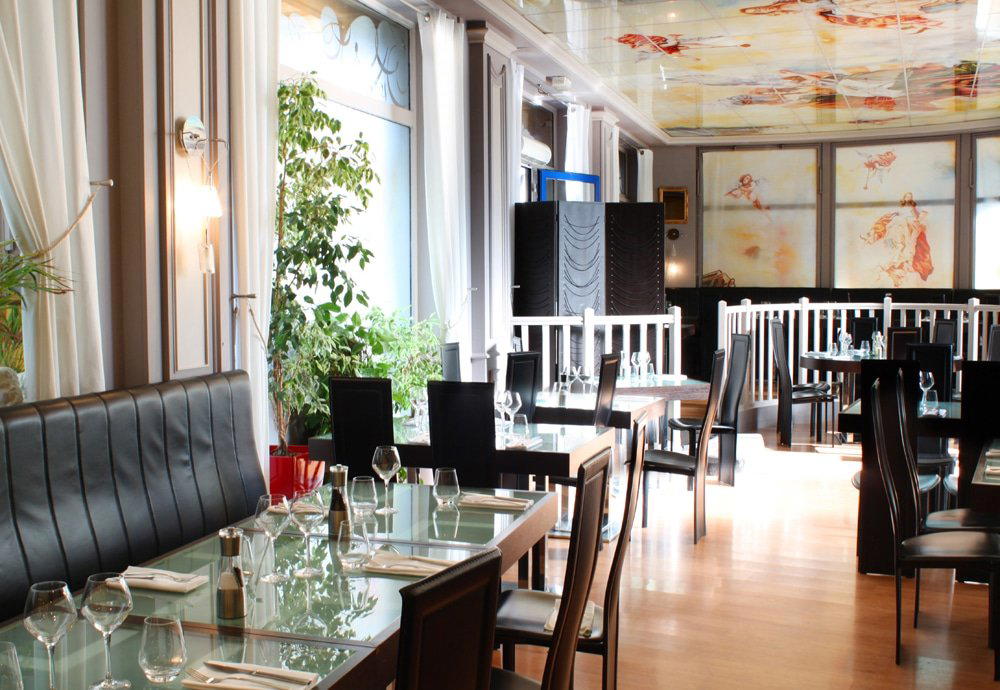
Rue Carnot and the Poitiers Dining Shift
That reading, always a partial one, has become increasingly difficult to sustain. A cluster of addresses along and around Rue Carnot and the old town have spent the better part of the last decade developing a dining identity that draws on the Vienne department's agricultural depth: Charolais beef from the plateau, goat's cheese from the Deux-Sèvres border, freshwater fish from the Clain and Vienne rivers, and market garden produce from the region's unusually varied soils. Vingelique, at number 37 on Rue Carnot, sits inside that shift. Its name, a compound that folds wine into its identity from the outset, signals the kind of establishment that treats the cellar and the plate as a single editorial decision rather than two separate departments.
In French provincial cities of Poitiers' size (roughly 90,000 inhabitants in the commune proper), the restaurant that takes wine seriously tends to operate in one of two registers: the traditional cave à manger, where the food exists primarily as a vehicle for the bottle, or the newer bistronomy-adjacent format, where a tighter menu and a considered wine list function in genuine dialogue. The name and address of Vingelique suggest the latter orientation, and that framing matters for how a visitor calibrates expectations before arrival.
What the Address Tells You
Rue Carnot runs through the commercial and administrative heart of Poitiers, connecting the train station axis to the medieval centre. The street is not a dining destination in the way that, say, a dedicated restaurant quarter in a larger French city might be, but it carries enough footfall and civic character to sustain addresses that are neither purely tourist-facing nor inaccessibly local. A venue at number 37 is accessible on foot from the SNCF station in under ten minutes, and within comfortable walking distance of the Notre-Dame-la-Grande church and the Palais des comtes de Poitou. For a traveller arriving from Paris on the TGV, the journey runs approximately 75 minutes from Gare Montparnasse, and the location is direct to reach on foot from the station.
That logistical ease matters in a city where dining ambition has often been hampered by dispersal. Unlike Les Archives or Papilles, which represent Poitiers' more format-defined modern cuisine addresses, Vingelique's wine-forward name suggests a slightly different competitive set: part of the same scene, but angled toward the glass as much as the plate.
Ingredient Sourcing in the Vienne Context
The Vienne department has a stronger agricultural case than its relative obscurity in food media suggests. The Nouvelle-Aquitaine region, of which it forms the northern edge, encompasses some of France's most productive farmland, and the Vienne itself benefits from a temperate climate that favours both cereal crops and livestock. Charolais cattle, associated primarily with Burgundy but present throughout the central plateau, reach the Poitiers market through well-established supply chains. The Deux-Sèvres border, a short drive west, is the heartland of chèvre production in France, the appellation Chabichou du Poitou, which carries AOC status, originates from this territory and represents one of the more geographically specific cheese credentials in the western Loire-Atlantic corridor.
Freshwater fish from the Clain and Vienne rivers represent a less-discussed but genuinely local sourcing option: the Vienne river, which flows through the city before joining the Loire, has historically supplied brochet (pike) and sandre (zander) to regional kitchens. These are not premium fish in the global sense, but in a locally-framed menu they carry the kind of geographical specificity that wine-focused restaurants in other French cities have built reputations around. Compare this sourcing latitude to the garden-to-table frameworks at places like Bras in Laguiole, where the Aubrac plateau defines the ingredient vocabulary, or the Atlantic seafood focus at Christopher Coutanceau in La Rochelle, and it becomes clear that the Vienne's culinary geography, while less celebrated, is not without material to work with.
At the Michelin-starred end of French regional cooking, the sourcing argument has become something close to orthodoxy. The tasting menus at Mirazur in Menton are organised around garden harvests. Flocons de Sel in Megève anchors its menu to alpine producers. Even in Paris, at Alléno Paris au Pavillon Ledoyen, the sourcing framework has become part of the stated creative logic. For a smaller address in Poitiers, the relevant comparison is not these starred flagships but rather the pattern they have established: in contemporary French cooking, the credibility of the plate increasingly runs through the credibility of the supply chain. Addresses like Auberge du Vieux Puits in Fontjoncouse and Auberge de l'Ill in Illhaeusern have built multi-generational reputations partly on that logic, even when their ingredient geography differs enormously from the Vienne.
Wine as a Structural Commitment
The wine-forward positioning implied by the name Vingelique places it in a category of French provincial addresses that has grown meaningfully over the past fifteen years. The cave à manger format, pioneered in Paris and Lyon, has migrated to smaller cities with varying degrees of ambition. In Poitiers, the Loire Valley wine regions are the natural reference: Saumur-Champigny and Chinon to the north and northeast, Anjou whites to the west, and the less-discussed but producer-rich Haut-Poitou appellation, which sits directly within the Vienne department. Haut-Poitou, granted AOP status in 2011, produces Sauvignon Blanc and Cabernet-based reds that rarely travel far but carry genuine regional identity. A wine list built around these appellations, supplemented by growers from the broader Loire arc, would represent a coherent and locally-grounded approach distinct from the Bordeaux-heavy lists that still dominate many provincial French dining rooms.
For comparison against the cellar ambition at decorated French tables, the wine programs at Assiette Champenoise in Reims, Au Crocodile in Strasbourg, and Georges Blanc in Vonnas each reflect their regional geography in distinct ways. A Poitiers address with genuine wine commitment would logically look toward the Loire rather than Bordeaux or Burgundy, and that regional specificity, if followed through, is precisely what distinguishes a serious wine address from a room that simply has a list.
For readers interested in how French culinary ambition at the highest level has developed internationally, the trajectories of Le Bernardin in New York City, Atomix in New York City, AM par Alexandre Mazzia in Marseille, Troisgros in Ouches, and Paul Bocuse in Collonges-au-Mont-d'Or each illustrate the sourcing and regional identity arguments in different registers. The distance between those addresses and Rue Carnot is real, but the underlying logic, that place should be legible in the glass and on the plate, is shared.
Planning Your Visit
Vingelique is located at 37 Rue Carnot, 86000 Poitiers. The address is walkable from Poitiers SNCF station, which serves direct TGV connections from Paris Montparnasse in approximately 75 minutes, making a day-trip or overnight visit from the capital logistically direct. The restaurant is open Tuesday to Saturday for lunch from 12 to 2 PM and for dinner from 7:30 to 10 PM, with Monday and Sunday closed, and reservations are essential.
Quick Comparison
Comparable venues nearby, for context on price, style, and recognition.
| Venue | Cuisine | Price | Awards | Notes |
|---|---|---|---|---|
| VingeliqueThis venue — the venue you are viewing | Regional French Bistro | $$ | Not listed | Not listed |
| Papilles | Modern French Gastronomique | $$$ | Michelin Plate | centre-ville |
| Les Archives | Modern French Bistro | $$ | Michelin Plate | city centre |
| Le Café Voltaire | French Bistro | $$ | Not listed | centre ville |
| Le Bouillon Limousin | Traditional French Brasserie with Limousin Specialties | $$ | Not listed | centre ville |
| La Route du Sel | French Bistro with Loire River Views | $$ | Not listed | Le Thoureil |
Continue exploring
More in Poitiers
At a Glance
- Elegant
- Cozy
- Intimate
- Date Night
- Special Occasion
- Courtyard
- Terrace
- Private Dining
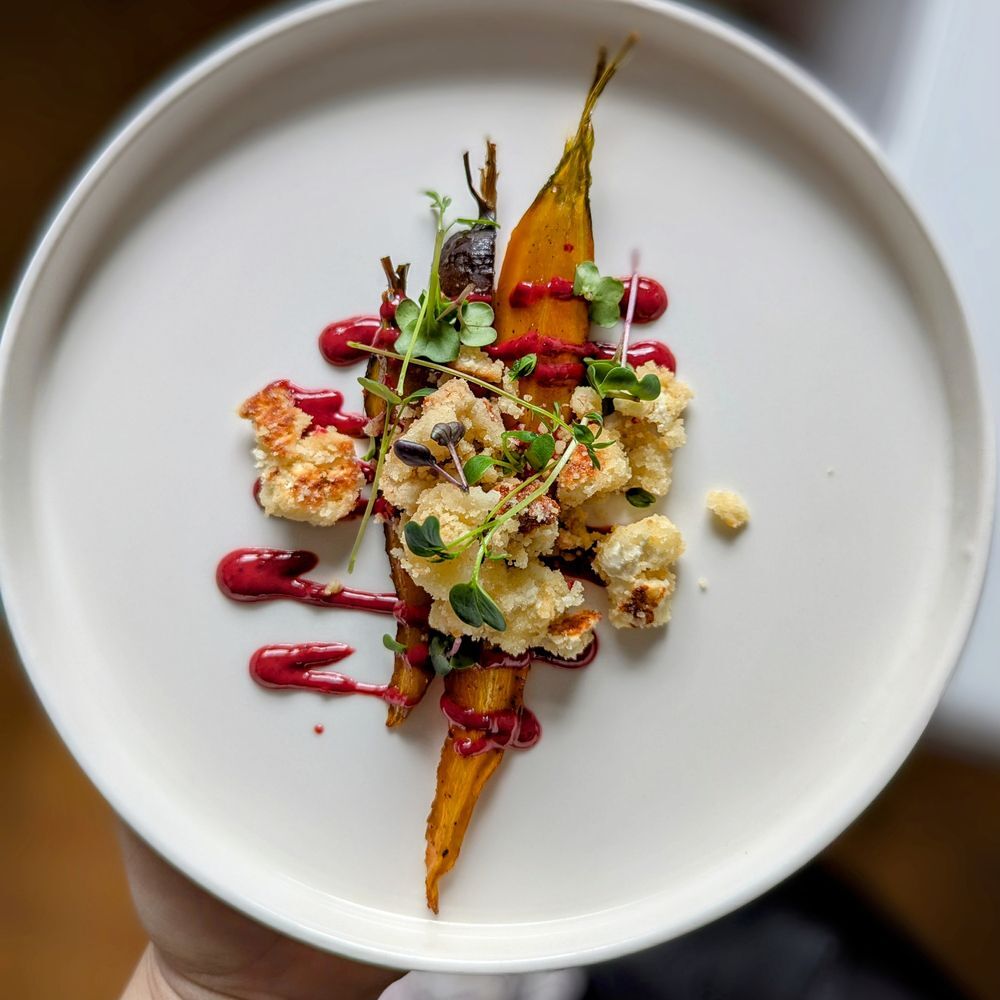
- Local Sourcing
- Garden
Current opening hours
- Monday
- Closed
- Tuesday
- 12–2 PM, 7:30–10 PM
- Wednesday
- 12–2 PM, 7:30–10 PM
- Thursday
- 12–2 PM, 7:30–10 PM
- Friday
- 12–2 PM, 7:30–10 PM
- Saturday
- 12–2 PM, 7:30–10 PM
- Sunday
- Closed
Hours can change for holidays and private events. Last verified .
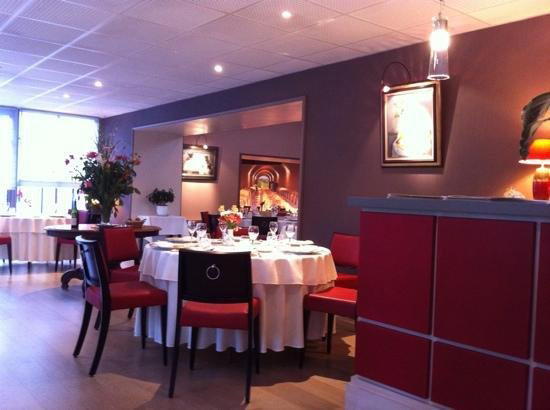
Warm, pleasant decor with a secluded, shaded courtyard away from city noise, providing an elegant and relaxing atmosphere.