On a quiet stretch of Via Taramelli in Milan's Porta Venezia district, Vietnamonamour occupies a position that few restaurants in the city share: Vietnamese cooking serious enough to warrant rooms for guests who want to stay close to the table. The format places it outside the standard trattoria-or-fine-dining binary that defines most of Milan's restaurant map.
 Discover on Pearl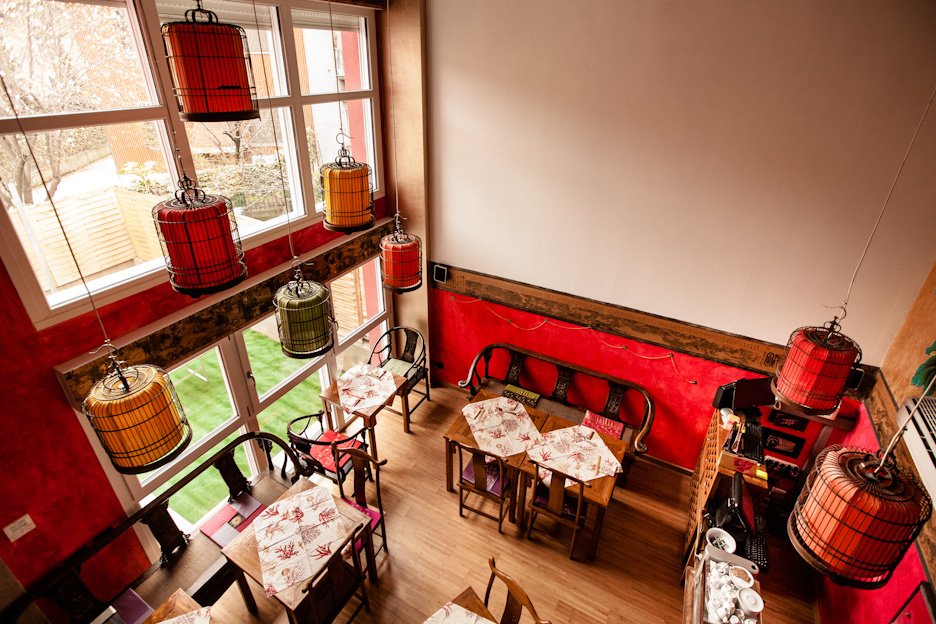
A Corner of Southeast Asia in Milan's Residential North
Milan's restaurant culture has long organised itself around a recognisable hierarchy: the grand Milanese trattoria, the modernist tasting-menu address, and the neighbourhood osteria serving cicchetti and natural wine. Vietnamese cooking sits outside all three categories, and for most of the city's dining history it occupied the low-cost end of the ethnic-restaurant tier. The story of how that position began to shift is partly told through addresses like Vietnamonamour on Via Torquato Taramelli, where a different proposition emerged: Vietnamese food treated with the seriousness usually reserved for Italian regional cooking, housed in a building that also offers rooms to guests who want proximity to the table rather than a taxi back to the centre.
The address itself carries meaning. Via Taramelli runs through the Porta Venezia and Isola-adjacent zone north of the Giardini Pubblici, a part of Milan that has never been a tourist circuit but has quietly accumulated some of the city's more interesting independent restaurants. The neighbourhood functions as a corrective to the more performative dining of the Brera and Navigli areas, where format and visibility often outrun the food. Here, the logic is different: the room either earns its audience or it does not.
The shortlist, unlocked.
Hard-to-book tables, cellar releases, and concierge-planned trips.
Get Exclusive Access →The Hybrid Format and What It Signals
The combination of restaurant and rooms, described in the venue's own name, places Vietnamonamour in a small category of Italian dining addresses that treat hospitality as a continuous experience rather than a transaction that ends when the bill arrives. In Italy, this model has deep roots in agriturismi and in the relais format, where chefs with serious culinary ambitions attach accommodation so that guests can eat, sleep, and return to the table for breakfast without the evening unravelling into logistics. Applying that logic to Vietnamese cooking in a northern Italian city is an editorial decision as much as a commercial one. It signals that the kitchen considers its offer worth staying for.
For context, Milan's high-end dining scene at the premium tier is anchored by addresses with Michelin recognition: Enrico Bartolini, Cracco in Galleria, Andrea Aprea, and Seta all operate at €€€€ price points with tasting menus built around Modern Italian frameworks. Verso Capitaneo adds a Creative dimension to that upper bracket. Vietnamonamour occupies a different register entirely, but the instinct to take a cuisine seriously and build around it an experience with overnight accommodation is a logic that connects it, structurally if not stylistically, to the Italian relais tradition.
Wine in a Vietnamese Kitchen: The Harder Question
The editorial angle that matters most at an address like this is the wine list, because Vietnamese cooking is among the more technically demanding cuisines to pair with wine. The cuisine's structural elements, fish sauce, fresh herbs, chilli heat, and bright acidity from lime and tamarind, create a flavour profile that breaks most of the conventions Italian sommeliers trained on. The wine list at a serious Vietnamese restaurant in Milan has to solve a problem that its Italian counterparts rarely face: how to find bottles that work with the food rather than against it.
The standard answers, off-dry German Riesling, Alsatian Pinot Gris, orange wines with enough tannin to hold against fish sauce, are well-documented in international wine circles. Italy's own contribution to this problem is less obvious but not absent. Vermentino from Sardinia, Ribolla Gialla from Friuli, and some of the lighter, higher-acid reds from Alto Adige can work with Vietnamese food in ways that Barolo and Brunello, the default frame for Italian wine seriousness, plainly do not. A wine list that acknowledges this reality and curates accordingly is a more interesting document than one that simply assembles a deep cellar of Italian prestige bottles.
Italy's broader fine dining scene demonstrates what deep wine curation looks like at the leading of the register. Enoteca Pinchiorri in Florence and Osteria Francescana in Modena represent the extreme end of cellar investment. Dal Pescatore in Runate, Le Calandre in Rubano, and Piazza Duomo in Alba each approach wine as a parallel editorial statement to the kitchen's. Further afield, Uliassi in Senigallia, Reale in Castel di Sangro, Quattro Passi in Marina del Cantone, Atelier Moessmer Norbert Niederkofler in Brunico, and Casa Perbellini 12 Apostoli in Verona all treat the list as a curatorial act with its own intellectual logic. The question Vietnamonamour poses, implicitly, is whether the same curatorial seriousness can be applied to a list built around Vietnamese food rather than Italian regional cuisine.
Beyond Italy, the international reference points for pairing wine with Asian cooking at this level include Le Bernardin in New York City, where seafood-driven French cuisine has generated some of the most thoughtful wine pairings in the North American fine dining scene, and Atomix in New York City, where Korean tasting menus have pushed sommeliers to develop pairing logic outside European convention entirely. These are not peer comparisons in cuisine or price tier, but they represent the intellectual direction that wine service at a serious Asian restaurant in the West has been moving.
Planning a Visit
Via Torquato Taramelli 67 places the restaurant in the 20124 postal zone, accessible from Centrale FS by foot or from Porta Venezia by a short walk through the residential grid. For those using the accommodation component, the practical advantage is clear: no transport pressure at the end of the meal, and the ability to order a second bottle without recalculating the evening. Given the sparse public data on booking methods, pricing, and hours, the most reliable approach is to contact the venue directly and confirm availability in advance, particularly if overnight rooms are part of the plan. The restaurant-with-rooms format tends toward limited capacity by design, and the accommodation element is worth treating as a separate reservation rather than an assumption. For a broader view of where Vietnamonamour fits within the city's restaurant map, our full Milan restaurants guide covers the range from neighbourhood trattorie to the Michelin tier.
Frequently Asked Questions
- What do people recommend at Vietnamonamour Ristorante con camere?
- The kitchen is built around Vietnamese cooking, a cuisine defined by layered aromatics, fresh herbs, and the interplay of fish sauce acidity with bright, herb-forward broths. In Milan's restaurant context, that positions the menu clearly outside the Italian regional and modernist Italian frameworks that dominate the city's most-discussed addresses. Specific dish recommendations require direct confirmation with the venue, as menus at this type of address tend to shift with seasonal availability and sourcing.
- What is the leading way to book Vietnamonamour Ristorante con camere?
- If the accommodation component is part of your plan, treat the room and the dinner as two separate reservations and confirm both directly with the venue. The restaurant-with-rooms format is a capacity-limited model by nature, and in a city like Milan, where weekend dinner demand at independent restaurants can run several weeks ahead, advance contact is the practical approach regardless of price tier. Direct contact via the address at Via Taramelli 67 is the most reliable starting point given no online booking platform is currently listed in public records.
- What is Vietnamonamour Ristorante con camere leading at?
- The format, a Vietnamese restaurant with attached rooms in a residential Milan neighbourhood, is the clearest point of distinction relative to the city's broader dining offer. Vietnamese cooking executed at a level of seriousness that supports overnight accommodation places this address in a very small peer group within Italy. The cuisine's technical demands on wine pairing and the kitchen's positioning outside the Italian fine dining mainstream are the two dimensions that most reward a considered visit rather than a casual one.
- Is Vietnamonamour Ristorante con camere a good choice for a longer stay in northern Milan?
- The combination of restaurant and rooms on Via Taramelli makes it a coherent base for guests whose priority is the table rather than a central hotel location. The Porta Venezia district gives access to the Giardini Pubblici and the residential fabric of northern Milan without the density of the fashion district or the tourist circuit around the Duomo. For travellers with a genuine interest in Vietnamese cooking as a serious dining proposition rather than a casual ethnic option, the format at this address is worth treating as a destination in its own right rather than a supplement to a broader itinerary.
A Quick Peer Check
A quick comparison pulled from similar venues we track in the same category.
| Venue | Cuisine | Price | Awards | Notes |
|---|---|---|---|---|
| Vietnamonamour Ristorante con camere | This venue | |||
| Enrico Bartolini | Creative | €€€€ | Michelin 3 Star | Creative, €€€€ |
| Cracco in Galleria | Modern Cuisine | €€€€ | Michelin 1 Star | Modern Cuisine, €€€€ |
| Andrea Aprea | Modern Italian, Italian Contemporary | €€€€ | Michelin 2 Star | Modern Italian, Italian Contemporary, €€€€ |
| Seta | Modern Italian | €€€€ | Michelin 2 Star | Modern Italian, €€€€ |
| Contraste | Progressive Italian, Modern Cuisine | €€€€ | Michelin 1 Star | Progressive Italian, Modern Cuisine, €€€€ |
Need a table?
Our members enjoy priority alerts and concierge-led booking support for the world's most difficult tables.
Get Exclusive AccessThe shortlist, unlocked.
Hard-to-book tables, cellar releases, and concierge-planned trips.
Get Exclusive Access →