Vietnam Café
Our verdict
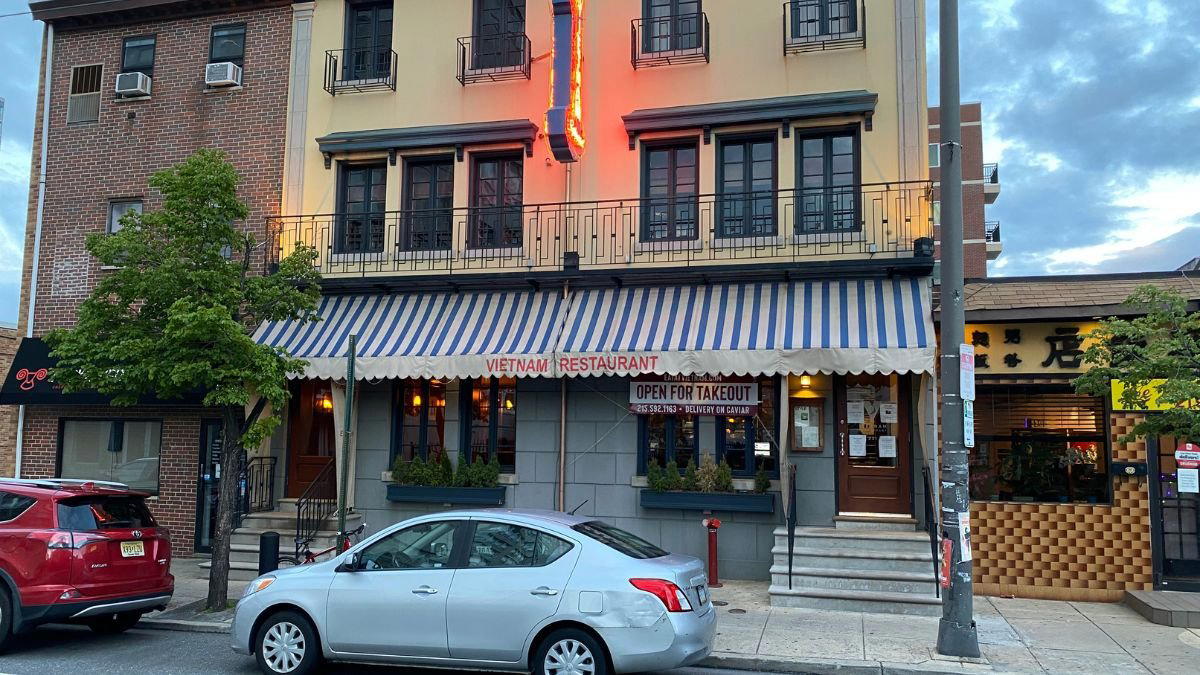
Vietnam Café occupies a corner of West Philadelphia's 47th Street corridor, where the neighborhood's Vietnamese-American community has maintained a consistent dining identity for decades. The room trades on atmosphere over spectacle, drawing regulars who know the menu rather than first-timers following a press cycle. For Philadelphia diners tracking the city's Southeast Asian dining scene alongside spots like Kalaya and Mawn, this is a reference point worth understanding.

Pearl is the En Primeur Club membership app — saves, bookings, and concierge access live there. Same editors, same standards.
The menu
What to order
- Pho Tai
- BBQ Platter
- Pork Vermicelli Bowl
- Beef Noodle Soup
West Philadelphia's Vietnamese Table
The stretch of Baltimore Avenue and its side streets in West Philadelphia represents one of the more understated corridors in the city's dining map. Unlike the packed blocks of South Philly or the chef-driven rooms clustered around Rittenhouse and Fishtown, this part of the city has built its food identity around community anchors rather than press-cycle openings. Vietnam Café, at 816 S 47th Street, sits within that character. The building addresses a residential block, and the approach to the room carries none of the theatrical signaling common to Southeast Asian restaurants that have repositioned themselves for a broader market in recent years.
Philadelphia's Vietnamese dining scene is more layered than it gets credit for. The city has long-standing pockets of Vietnamese-American settlement, and the restaurants that serve those communities tend to operate differently from the genre's more visible, trend-adjacent outposts. They are calibrated to return visits rather than discovery moments, to consistent execution rather than seasonal reinvention. Vietnam Café occupies that register. It is the kind of place where the dining context is already understood by the room, not constructed for newcomers.
The Atmosphere and What It Tells You
Arriving at a West Philadelphia neighborhood restaurant in the Vietnamese tradition, the sensory cues tend to be specific: the faint sweetness of pho broth that has been running since early in the day, the particular acoustic flatness of a room with hard surfaces and low ambient sound design, the visual density of laminated menus and hand-lettered specials boards. These are not markers of a room that aspires to be photographed. They are markers of a room that has been feeding the same neighborhood for a long time and sees no reason to change the frame.
Vietnam Café reads within that tradition. The 47th Street location places it in a residential pocket rather than a commercial dining strip, which shapes who shows up and how they use the space. In Philadelphia's Southeast Asian dining conversation, the higher-profile rooms tend to cluster elsewhere: Kalaya has become the city's reference point for Thai cooking at a chef-driven level, and Mawn represents a more contemporary Pan-Asian positioning. Vietnam Café operates in a different register entirely, closer to the neighborhood institution model than to either of those.
Philadelphia's Vietnamese Dining Context
Understanding Vietnam Café requires a brief account of how Vietnamese dining functions in American cities at the neighborhood level. The cuisine's canonical formats, including pho, bún bò Huế, bánh mì, and rice plate combinations, are designed for accessibility and repetition. The broth-based dishes in particular are labor-intensive in ways that reward dedicated kitchens: a well-built pho broth involves hours of simmering, careful spice sequencing, and a balance of clarity and depth that takes years to calibrate. Restaurants that serve these dishes reliably over long periods are operating with a degree of technical consistency that does not always get framed as craft, but should be.
Philadelphia as a city has developed its Southeast Asian dining scene unevenly. The higher-investment, awards-adjacent end of the spectrum has attracted attention, with restaurants competing in the same critical conversation as New American rooms like Fork and Friday Saturday Sunday. The neighborhood-facing end, which includes Vietnamese, Cambodian, and other Southeast Asian community restaurants, receives less editorial coverage but maintains a more stable, repeat-visit audience. Vietnam Café belongs to this latter category, and that positioning has a different kind of durability than the former.
For comparison, the dynamics at work here are not unlike what you find in communities built around Vietnamese restaurants in Houston, San Jose, or New Orleans: a core audience that treats the restaurant as infrastructure rather than occasion, combined with a smaller number of visitors who arrive via word of mouth rather than algorithm. The room functions at a different pace than the city's destination dining tier, which includes Philadelphia entries in the broader national conversation that extends to places like My Loup on the French-influenced end.
Seasonal and Temporal Considerations
Vietnamese cooking shifts perceptibly by season in ways that matter to how a room like this operates. The broth-heavy dishes, including pho and its regional variants, are calibrated for colder months, when a bowl that arrives with steam visibly rising from the surface works as both sustenance and comfort. Philadelphia winters are cold enough, running from November through March with sustained temperatures that make the broth-first format feel structurally appropriate rather than merely traditional. The lighter preparations, rice-based plates and vermicelli dishes dressed with nuoc cham, suit the warmer months when the room, like most of West Philadelphia's dining stock, runs warm without extensive climate control.
Visiting in shoulder seasons, particularly late September through October and again in April, tends to capture the menu at a point where both registers are available without the extremes of temperature that push the kitchen toward one end of its range. These are also the periods when the neighborhood dining rooms in this part of the city run at a pace that allows for a more considered visit rather than a turnover-driven one.
How to Place This Room in Philadelphia's Wider Picture
Philadelphia's dining scene is not monolithic, and the editorial attention that flows toward its tasting-menu and chef-driven rooms does not represent the full picture of what the city eats. They are the neighborhood Vietnamese, Cambodian, and other Southeast Asian restaurants distributed across West and South Philadelphia that serve consistent, technique-grounded cooking to communities that were here before the press arrived and will be here after the next dining trend cycles through.
For a reader coming from the national destination dining conversation, that context matters. The restaurants at the apex of American fine dining, from The French Laundry in Napa to Alinea in Chicago to Le Bernardin in New York City, operate at a remove from what neighborhood restaurants do day to day. Vietnam Café is not in that conversation. But it is part of the larger argument about what a city's dining identity actually consists of when you look past the tier that gets covered in national publications.
Within Philadelphia, that argument also includes rooms like Blue Hill at Stone Barns in the broader regional frame, and contrasting contexts from Atomix in New York to Providence in Los Angeles, all of which represent a different tier of investment and critical positioning. Vietnam Café sits at the opposite end of that spectrum by design, not by default. See our full Philadelphia restaurants guide for a complete picture of where the city's dining sits across categories and price points.
Planning a Visit
The 47th Street address is accessible from the 46th Street stop on SEPTA's Market-Frankford Line, placing it within reach of Center City without requiring a car. West Philadelphia neighborhood restaurants in this category do not typically require advance booking, and walk-in timing during off-peak hours, particularly weekday lunches and early weekday evenings, tends to produce the most relaxed experience. The surrounding blocks of the Baltimore Avenue corridor offer additional context for the neighborhood's food culture, making a visit to Vietnam Café a reasonable anchor for a longer exploration of West Philadelphia's dining character.
Frequently asked questions
Is Vietnam Café good for families?
The 47th Street address in West Philadelphia fits the neighborhood Vietnamese format well for families: tables tend to accommodate groups, and menus anchored by pho and rice plates give younger diners recognizable entry points. The setting is a residential block restaurant, not a high-energy commercial corridor, which generally means lower noise levels and a relaxed pace. Nothing in the venue's profile suggests a dress code or booking formality that would complicate a family visit.
Is Vietnam Café better for a quiet night or a lively one?
A residential West Philadelphia block at 816 S 47th St is not where you go for a scene. This is a neighborhood table, which means the room runs at a register suited to conversation rather than celebration. If you want energy and event-driven dining, the commercial corridors closer to Center City serve that function. Vietnam Café is the quieter alternative by geography and format.
Does Vietnam Café reflect the Vietnamese-American community dining tradition of West Philadelphia, or has it shifted toward a broader audience?
Its location on a residential block at 816 S 47th St — rather than on a high-traffic commercial corridor — and its absence from Philadelphia's awards and press cycles both suggest it operates primarily within the West Philadelphia community dining context rather than as a destination for city-wide restaurant tourists. That positioning is a meaningful data point: the menu and format are likely calibrated to regulars rather than to editorial approval. Philadelphia has a distinct Vietnamese-American dining tradition in its western neighborhoods, and Vietnam Café sits inside that tradition rather than outside it looking in.
What should I order at Vietnam Café?
In the Vietnamese-American neighborhood restaurant tradition that Vietnam Café represents, the kitchen's range typically centers on broth-based dishes — pho chief among them — alongside rice plates and cold-weather soups. These are the formats where technique is most legible: clarity of broth, balance of aromatics, quality of proteins. Order from the broth-based section first to read the kitchen accurately before ranging wider.
How do I find Vietnam Café?
Vietnam Café is located at 816 S 47th St, Philadelphia, PA 19143, Philadelphia.
City Peers
Comparable venues nearby, for context on price, style, and recognition.
| Venue | Cuisine | Price | Notes |
|---|---|---|---|
| Vietnam CaféThis venue — the venue you are viewing | Classic Vietnamese | $20–30 | Not listed |
| Fu-Wah Mini Market | Vietnamese Hoagies | $10–20 | Cedar Park |
| Quaker Kitchen @ UPenn | American Comfort Food | Not listed | University City |
| Baby's Kusina + Market | Modern Filipino | Not listed | Brewerytown |
| HipCityVeg | Plant-Based American Fast Casual | $10–20 | Rittenhouse Square |
| Bucatini Caffè | Modern Italian Pasta | $30–50 | East Passyunk Crossing |
Continue exploring
More in Philadelphia
Restaurants in Philadelphia
All restaurants in Philadelphia →
Bars in Philadelphia
All bars in Philadelphia →
Details
- Casual
- Cozy
- Group Dining
- Family
- Casual Hangout
- A La Carte
- Vegetarian Friendly
- Vegan Options
Current opening hours
- Monday
- 11:30 AM–8 PM
- Tuesday
- 11:30 AM–8 PM
- Wednesday
- 11:30 AM–8 PM
- Thursday
- 11:30 AM–8 PM
- Friday
- 11:30 AM–8 PM
- Saturday
- 11:30 AM–8 PM
- Sunday
- 11:30 AM–8 PM
Hours can change for holidays and private events. Last verified .
New and modern space with casual, friendly atmosphere well-suited for families, couples, and groups.