Victor's 1959 Cafe

Victor's 1959 Cafe on Grand Avenue brings the flavors and textures of Cuban home cooking to South Minneapolis, occupying a neighborhood dining niche that sits apart from the city's more formal restaurant scene. The cafe's address on a residential stretch of Grand Ave places it firmly in the Tangletown-Kingfield orbit, where everyday dining holds more cultural weight than occasion eating. For Minneapolis, that positioning carries its own significance.
Pearl is the En Primeur Club membership app — saves, bookings, and concierge access live there. Same editors, same standards.
- Address
- 3756 Grand Ave S, Minneapolis, MN 55409
- Phone
- +16128278948
- Website
- victors1959cafe.com
- Directions
- Get directions
 Saves & bookings on Pearl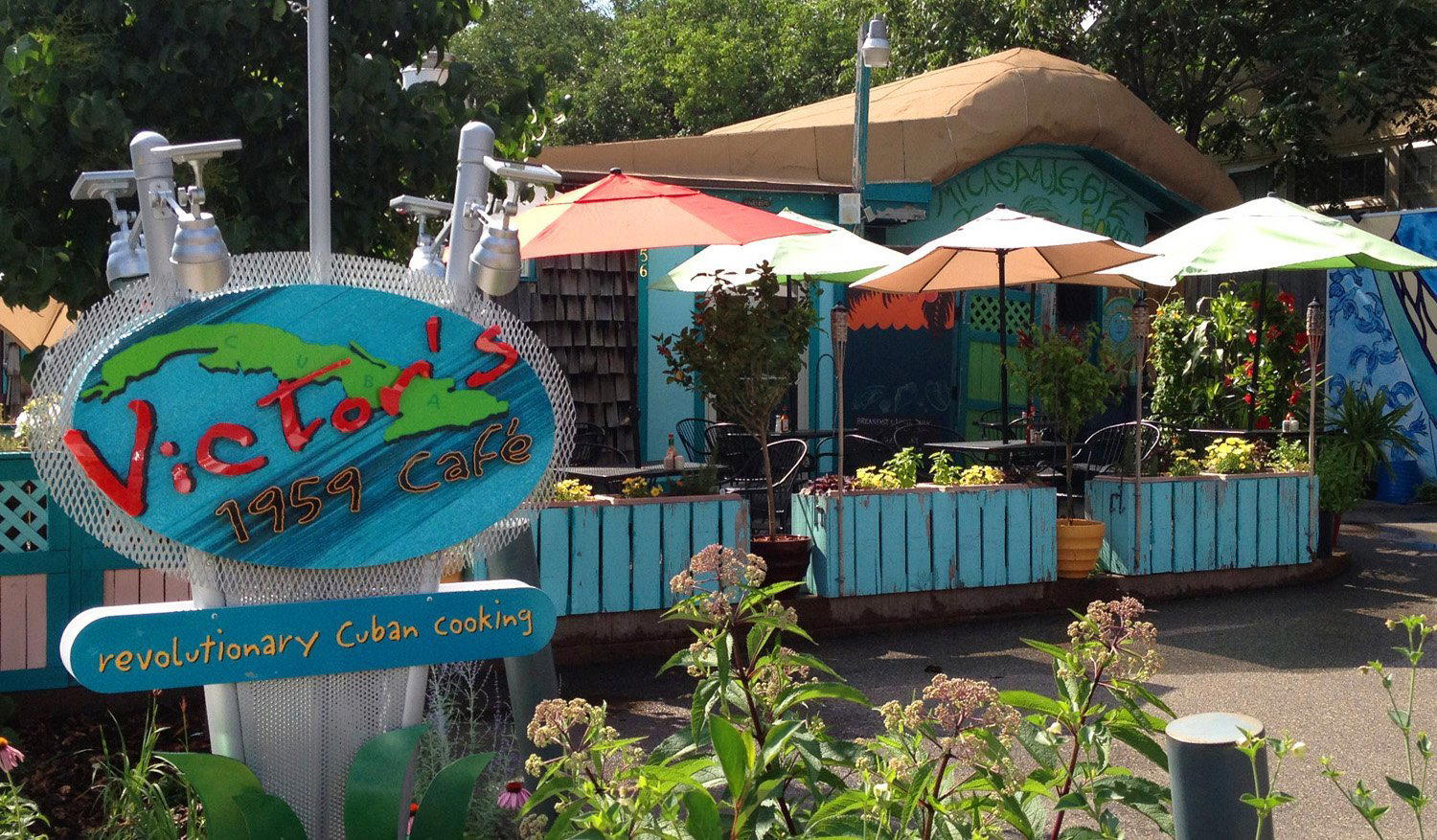
A Street Corner That Smells Like Havana
Grand Avenue South in Minneapolis does not announce itself. The residential blocks around the 3700s run quieter than Uptown, the storefronts smaller, the foot traffic more neighborhood-paced than destination-seeking. Victor's 1959 Cafe sits in that register, on a stretch where the architecture is low and the signage modest. The name alone does the orienting work: 1959, the year the Cuban revolution closed a particular chapter in Cuban domestic life, and with it a style of home cooking that the diaspora carried north, west, and into cities like Minneapolis that few food writers would have mapped as Cuban territory before a place like this existed.
Approaching, the sensory logic is direct. The physical scale is small-cafe rather than dining-room, the kind of format where the kitchen's output reaches you before you sit down. Cuban home cooking in this tradition is built on aroma: black beans long-cooked with bay and cumin, plantains caramelizing in hot oil, pork slow-rendered into something closer to a texture than a cut. These are not constructed plates. They are the product of time and repetition, and the smell of them carries differently than the output of a line kitchen working to order.
What Cuban Home Cooking Means in This Context
Minneapolis's dining identity has shifted considerably over the past decade. The James Beard recognition that followed Owamni and the sustained attention given to places like Spoon & Stable and Hai Hai established a credible fine-dining and chef-driven mid-tier in the city. But the dining scene's depth is measured as much by its neighborhood anchors as by its award recipients, and Victor's 1959 Cafe belongs to a category that neither Michelin stars nor James Beard nominations tend to reach: the culturally specific, community-embedded cafe that holds a cuisine tradition without performing it for an outside audience.
Cuban food in the United States exists on a spectrum from the high-volume Calle Ocho model of Miami to the scattered individual operators who brought it to cities with smaller Cuban populations. In the latter context, the cuisine does not simplify to tourism-facing versions of itself. Ropa vieja, picadillo, tostones, Cuban coffee served in the small, dense format that the drink requires: these dishes do not need a larger stage to work. They need consistency and proximity to their source logic, and a cafe format on a residential block is closer to that source logic than a polished dining room.
The city's culinary range now extends from Indigenous cuisine at Owamni to Italian-leaning American cooking at 112 Eatery, with neighborhood-specific operators filling the registers in between.
The Sensory Experience: What the Room Does
Small Cuban cafes operate on a sensory economy that larger restaurants cannot replicate. The ceiling height, the proximity of tables, the movement between the counter and the kitchen: all of it compresses the experience into something more domestic than hospitality-industry. Color plays a role in Cuban-American cafe interiors in ways that reflect the island's visual culture rather than any particular design trend. Warm oranges, tiled surfaces, hand-painted details, photographs that do curatorial work without being a gallery: these elements signal a specific kind of cultural seriousness, an argument that the space is continuous with the food rather than a backdrop for it.
Sound in a room this size is communal by default. Conversations overlap. The coffee machine is audible. The music, typically salsa or son cubano at a volume that fills without dominating, sets a pace that is unhurried but not slow. This is cafe culture operating on Cuban-American terms, where eating is social before it is performative.
The contrast with Minneapolis's more formal dining rooms is not incidental. Places like 4801 S Minnehaha Dr operate in a different register entirely. Victor's sits in a tier where the experience is measured by warmth and consistency rather than by service choreography or plate construction.
Where This Fits in the American Dining Spectrum
The year in the name positions the food as pre-revolutionary Cuban home cooking, which has its own culinary logic. This is a cuisine rooted in Spanish, African, and Caribbean influences that had decades to settle into a domestic idiom before 1959 changed the political and social conditions that shaped it. The Miami diaspora preserved and evolved that idiom; cities further north received smaller, less visible streams of it.
That positioning matters for understanding what Victor's is not. It is not the high-wire tasting-menu format practiced at places like Alinea in Chicago or the ingredient-obsessed farm-to-table model of Blue Hill at Stone Barns in Tarrytown. It is not the ambitious American fine dining of The French Laundry in Napa or the technically rigorous seafood of Le Bernardin in New York City. Those venues are part of the same broad American dining conversation, but they answer different questions. Victor's 1959 Cafe answers the question of what Cuban home cooking looks like when it survives a long migration and finds a stable footing in an unlikely city.
In that specific niche, cultural specificity and neighborhood embeddedness are the operating credentials, not awards or tasting menus. The same logic applies to places like Emeril's in New Orleans, where a regional tradition carries institutional weight regardless of the broader fine-dining hierarchy.
Planning Your Visit
The restaurant sits at 3756 Grand Ave S, Minneapolis, MN 55409, in the Kingfield neighborhood. Grand Avenue in this stretch is accessible by car with on-street parking, and the location sits roughly equidistant from the Uptown commercial corridor to the north and the quieter residential blocks to the south. This is a neighborhood cafe rather than a destination dining room, which means the experience scales better at off-peak hours when the room has space to breathe. Cuban coffee service makes it a viable morning or midday stop as well as a lunch destination, which fits its hours.
Peers Worth Knowing
Comparable venues nearby, for context on price, style, and recognition.
| Venue | Cuisine | Price | Notes |
|---|---|---|---|
| Victor's 1959 CafeThis venue — the venue you are viewing | Authentic Cuban Cafe | $$ | Not listed |
| The Harriet Brasserie | French-Brazilian New American Brasserie | $$ | Linden Hills |
| The Bird | Creative American | $$ | Loring Park |
| Smack Shack | Casual Coastal Seafood | $$ | North Loop |
| The Copper Hen Cakery & Kitchen | Farm-to-Table American Cakery & Kitchen | $$ | Eat Street |
| Esther's Table | Modern American Gastropub | $$ | Loring Park |
Recognition history
Dated appearances from independent guides and award organizations, with the underlying list record or original source where available.
Diners, Drive-Ins and Dives Featured Restaurant
Diners, Drive-Ins and Dives · 2026 Diners, Drive-Ins and Dives Featured Restaurants
Continue exploring
More in Minneapolis
Restaurants in Minneapolis
Browse all →
Bars in Minneapolis
Browse all →
At a Glance
- Cozy
- Bohemian
- Trendy
- Well Known
- Brunch
- Casual Hangout
- Historic Building
- Craft Cocktails
Current opening hours
- Monday
- 8 AM–2:30 PM
- Tuesday
- 8 AM–2:30 PM
- Wednesday
- 8 AM–2:30 PM
- Thursday
- 8 AM–2:30 PM
- Friday
- 8 AM–2:30 PM
- Saturday
- 8 AM–2:30 PM
- Sunday
- 8 AM–2:30 PM
Hours can change for holidays and private events. Last verified .
Eclectic bohemian vibe with colorful floral tablecloths, wall graffiti and writing, and a fun, cozy atmosphere.