The Harriet Brasserie
Our verdict
The Harriet Brasserie occupies a residential corner of southwest Minneapolis, operating as a neighborhood anchor in the Linden Hills dining corridor. Its brasserie format places it in a tier of approachable-but-considered dining that Minneapolis does quietly well, sitting apart from the downtown showcase restaurants while drawing a local crowd that values consistency over spectacle.

Pearl is the En Primeur Club membership app, where members save venues, book tables and use the concierge.

The menu
What to order
- Tres leches cake
- Coxinha
- Crab benedict
Southwest Minneapolis and the Neighborhood Brasserie Tradition
There is a particular kind of restaurant that every mature food city eventually produces: the neighborhood brasserie that asks nothing theatrical of its guests and offers everything reliable. Paris built the format over centuries. New York refined it. Minneapolis, for a long time, exported its serious dining energy downtown or into the North Loop, leaving its residential corridors to bars and casual cafes. That has been shifting, and Linden Hills is among the clearest examples of the shift. The Harriet Brasserie, at 2724 W 43rd St, sits inside this quieter but increasingly deliberate corridor, positioned a short walk from Lake Harriet in a part of the city that has learned to support serious hospitality without demanding it announce itself.
The address matters as context. Linden Hills is not a dining district in the way Eat Street or the North Loop is understood by visitors. It is a neighborhood that happens to contain restaurants, which is a different thing entirely. The brasserie format fits this geography precisely: not a destination that requires planning months ahead, like a counter seat at a tasting-menu restaurant, but not a fallback option either. It occupies the thoughtful middle ground that is, in many ways, the hardest register to sustain.
The Evolution of the Format
The brasserie as a category has undergone real reinvention in American cities over the past decade. The earlier wave leaned heavily on French signifiers: zinc bars, steak frites, moules, and a wine list that stopped at Burgundy and Bordeaux. That wave served its purpose, but it aged into a kind of costume. The more recent evolution, visible in cities from Chicago to San Francisco, has retained the brasserie’s structural logic (a wide menu, all-day accessibility, food that serves both the quick lunch and the leisurely dinner) while replacing the French costuming with something more rooted in local context. In Minneapolis specifically, that means engaging with Midwestern ingredient culture, with the seasonal rhythms of a northern climate, and with a dining public that has been educated by neighbors like Spoon & Stable and Owamni to expect more from a plate than comfort alone.
Whether The Harriet Brasserie has tracked this evolution, pivoted toward it, or helped define it in its own corner of the city is the kind of question that only sustained local observation can answer. What the format itself demands is clear: a kitchen that can hold a wide repertoire, a floor team that moves between relaxed and attentive without slipping into either indifference or performance, and a room that makes both the solo weekday diner and the weekend table of six feel equally at home.
Placing The Harriet in Minneapolis’s Dining Spread
Minneapolis has developed a dining scene with more range than its national profile typically suggests. At the top of the market, James Beard recognition and national press attention have followed places like Hai Hai and 112 Eatery. At the accessible end, the city supports strong casual formats across its neighborhoods. The gap that neighborhood brasseries fill sits between those poles: cooking that takes sourcing and technique seriously, in a room that does not charge for the ceremony.
Nationally, the brasserie tier is where some of the most interesting reinvention has happened. Tasting-menu restaurants at the level of Smyth in Chicago or Lazy Bear in San Francisco demand full commitment from the guest: time, money, and appetite for a structured experience. Destination properties like The French Laundry in Napa, Le Bernardin in New York City, or Providence in Los Angeles operate in a category where the restaurant is the occasion. The neighborhood brasserie’s value proposition is the opposite: it fits into occasions rather than creating them. That is a genuinely difficult thing to execute at a high level, and the cities that have it working well in their residential neighborhoods are better dining cities for it. Comparable ambitions are visible at places like 4801 S Minnehaha Dr in the Longfellow area, another example of serious cooking locating itself in a residential Minneapolis corridor rather than seeking downtown visibility.
The Room and What It Signals
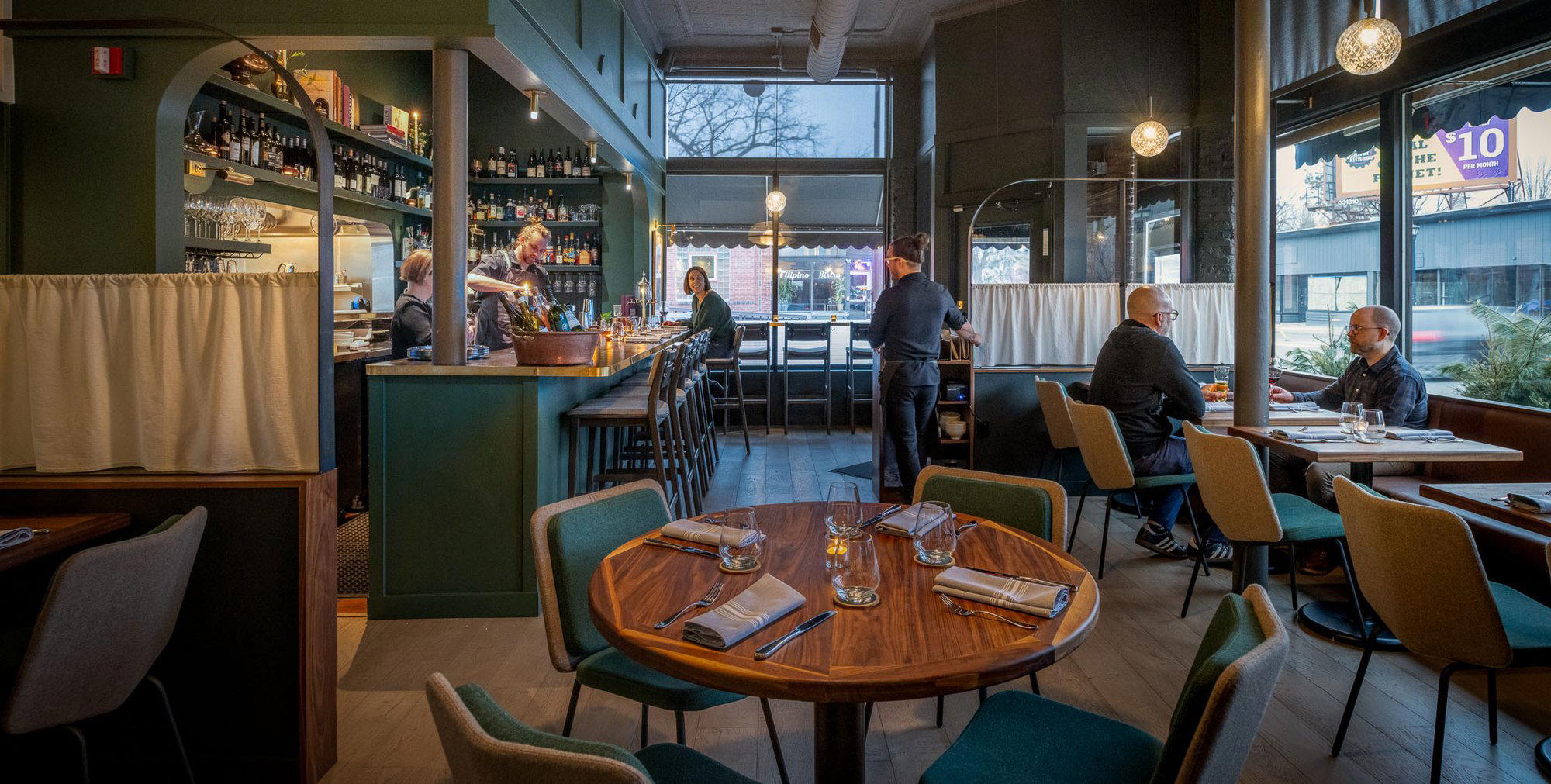
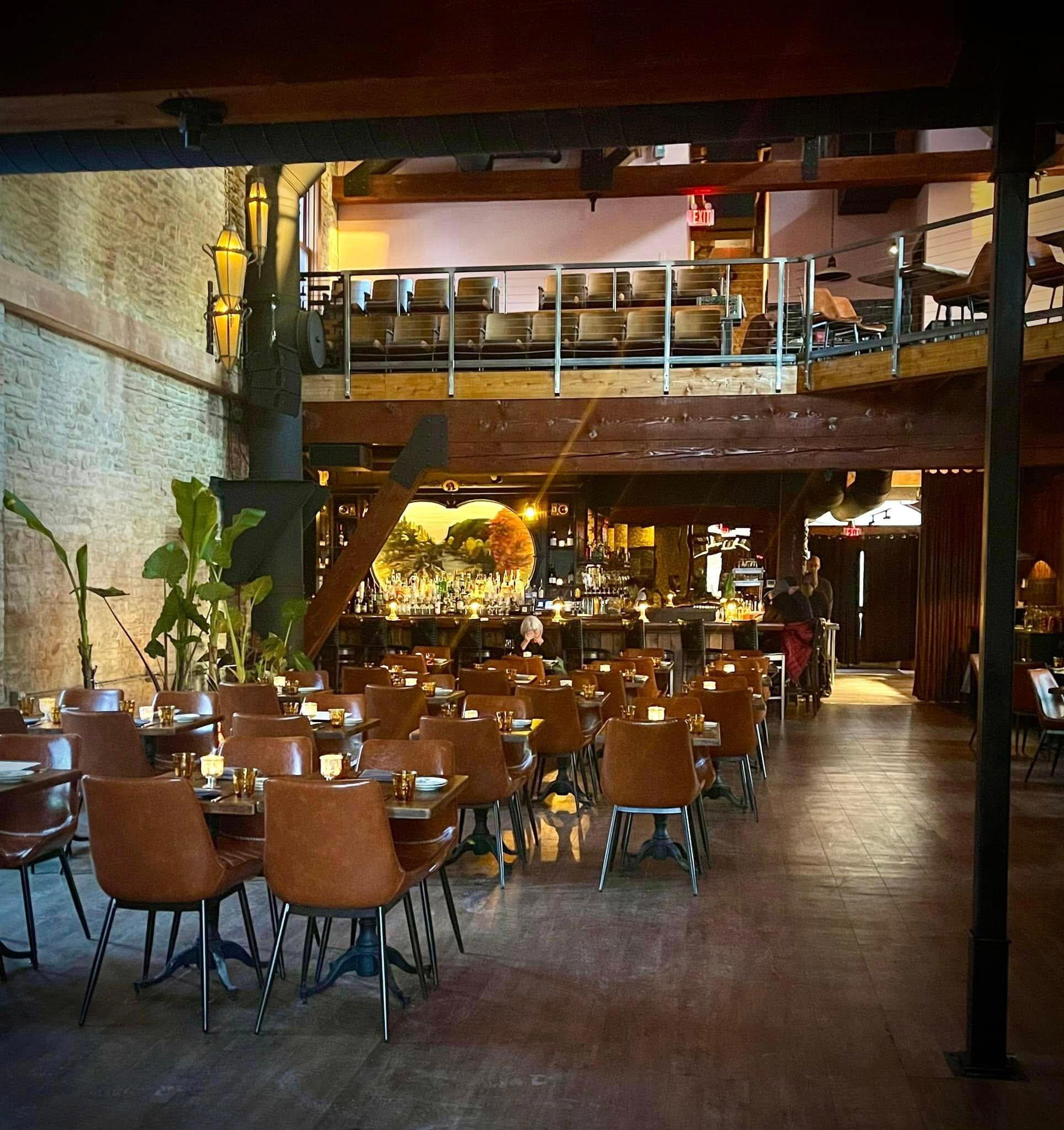
Approaching a brasserie in a residential neighborhood, the physical cues do real work. The quality of the lighting through a front window, the sound level audible from the sidewalk, the ratio of tables to bar seating: all of these communicate the room’s philosophy before a menu arrives. A brasserie that runs too loud signals it has prioritized turnover. One that runs too quiet has probably misjudged its format. The right register is convivial without being pressured, and it is harder to calibrate than most operators admit.
In Linden Hills, the streetscape is residential scale, which means a well-designed brasserie room will feel proportionate rather than cavernous. This works in favor of the format: smaller rooms allow kitchens to maintain quality across a wide menu because the volume of covers is manageable, and it allows the floor team to read the room rather than executing patterns.
Planning a Visit
The Harriet Brasserie sits at 2724 W 43rd St in the Linden Hills neighborhood of southwest Minneapolis, within walking distance of Lake Harriet. For visitors staying in downtown Minneapolis, the drive runs approximately 15 to 20 minutes depending on traffic. Given its neighborhood positioning and local following, booking ahead for weekend evenings is a reasonable precaution; the format attracts regulars who hold tables with some predictability. For a broader orientation to dining across the city, our full Minneapolis restaurants guide covers the range from Linden Hills to the North Loop and beyond, including comparable neighborhood-anchored options and higher-commitment dining at restaurants with the kind of national recognition that places like Blue Hill at Stone Barns or Addison in San Diego carry in their respective markets.
Frequently asked questions
Is The Harriet Brasserie okay with children?
The Harriet Brasserie sits in Linden Hills, a residential neighborhood in southwest Minneapolis where family foot traffic is part of the daily rhythm. Calling ahead or checking the venue directly at 2724 W 43rd St will give you the clearest picture before visiting with young children.
What is the atmosphere like at The Harriet Brasserie?
The Harriet operates in the tradition of the American neighborhood brasserie, a format built around approachability rather than occasion dining. Located on W 43rd St in Linden Hills, a walkable residential pocket near Lake Harriet, the physical setting does the work of signaling the room's register before you arrive. Expect a tone closer to convivial local gathering place than destination fine dining.
How does The Harriet Brasserie fit into the broader Minneapolis dining scene?
Minneapolis has produced a dining scene with more range than its national profile often reflects, with James Beard recognition reaching the market and a growing mid-tier of serious neighborhood restaurants. The Harriet occupies the Linden Hills segment of that spread, southwest Minneapolis, near Lake Harriet, where the demand is for consistent, place-rooted cooking rather than destination showmanship. It represents a category of restaurant that mature food cities tend to rely on as much as their headliner venues.
What should I eat at The Harriet Brasserie?
The brasserie format in American cities typically anchors around a core of approachable, seasonally informed plates rather than a fixed tasting structure. For the current menu, contacting the venue directly at their Linden Hills location on W 43rd St is the most reliable route.
Where do I go for The Harriet Brasserie?
The Harriet Brasserie is located at 2724 W 43rd St, Minneapolis, MN 55410, Minneapolis.
Is The Harriet Brasserie reservation-only?
Neighborhood brasseries in Minneapolis frequently operate with a mix of reserved tables and walk-in availability, particularly for bar seating.
A Minimal comparable set
Comparable venues nearby, for context on price, style, and recognition.
| Venue | Cuisine | Price | Notes |
|---|---|---|---|
| The Harriet BrasserieThis venue (the venue you are viewing) | French-Brazilian New American Brasserie | Not listed | Not listed |
| The Old Nicollet Diner | Classic American Diner | $20–30 | Eat Street, Classic American Diner |
| Moose & Sadie's | American | Not listed | North Loop, American Cafe |
| The Howe Daily Kitchen | American Gastropub | $20–30 | Howe, American Gastropub |
| Carbon Kitchen + Market | Charcoal-Grilled American Grill | $20–30 | Northeast Minneapolis Arts District, Charcoal-Grilled American Grill |
| Brasa Rotisserie | American Creole Rotisserie | $20–30 | East Harriet, American Creole Rotisserie |