
Tabelog Bronze #499
Our verdict
A Tabelog Bronze Award winner operating in Kitakyushu's Kurosaki district since 2006, Uotora sits within the serious end of Fukuoka's seafood izakaya tier. With a 4.04 Tabelog score, consecutive Tabelog 100 izakaya selections from 2021 through 2025, and dinner averaging JPY 8,000–9,999, it occupies a price point where the quality-to-cost ratio draws both locals and informed visitors.

Pearl is the En Primeur Club membership app, where members save venues, book tables and use the concierge.
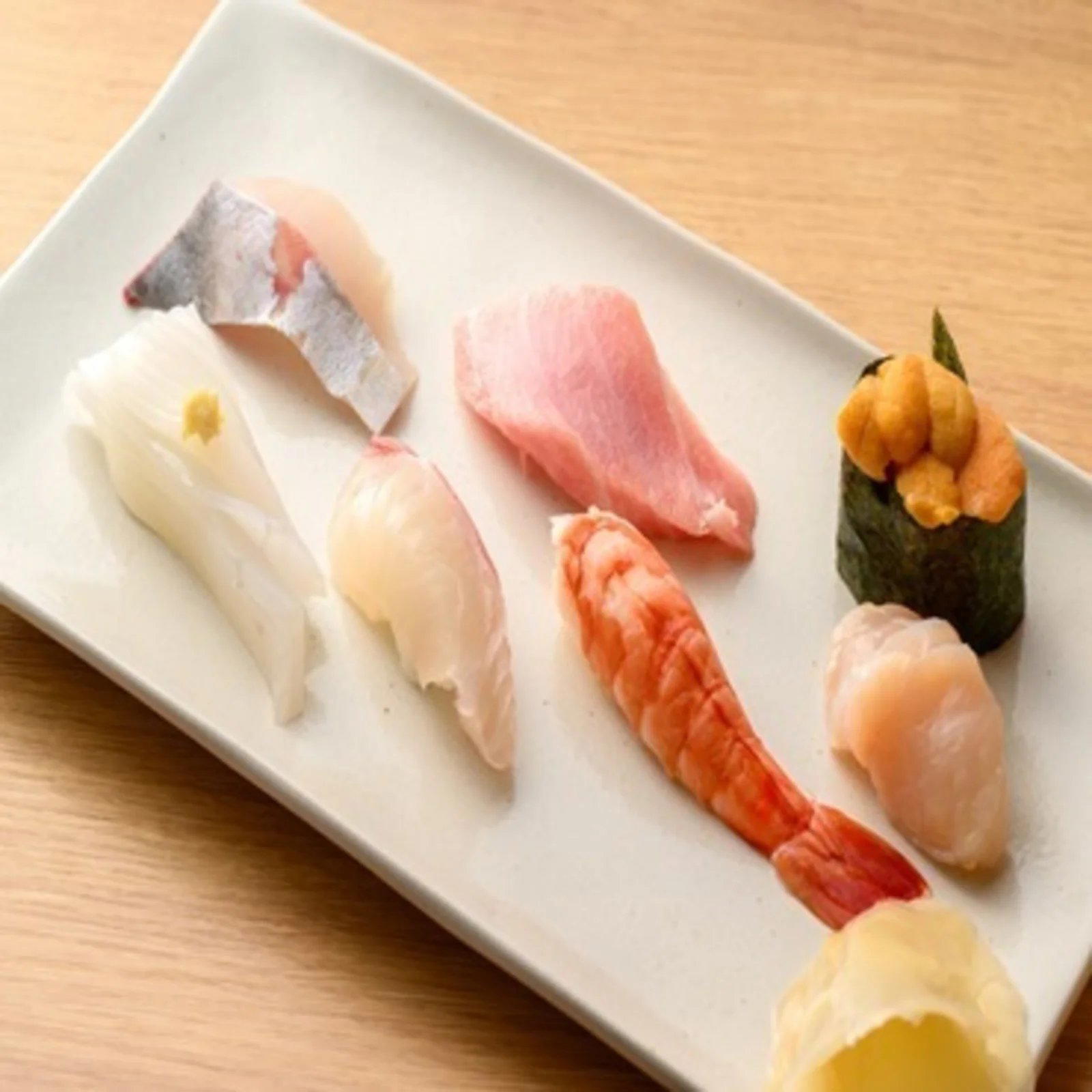
The menu
What to order
- Sashimi platter
- Sesame fried mackerel
- Tiger pufferfish
- Sea urchin
- Whale sashimi
- Eel tamago
A Seafood Izakaya at the Serious End of Kitakyushu's Dining Circuit
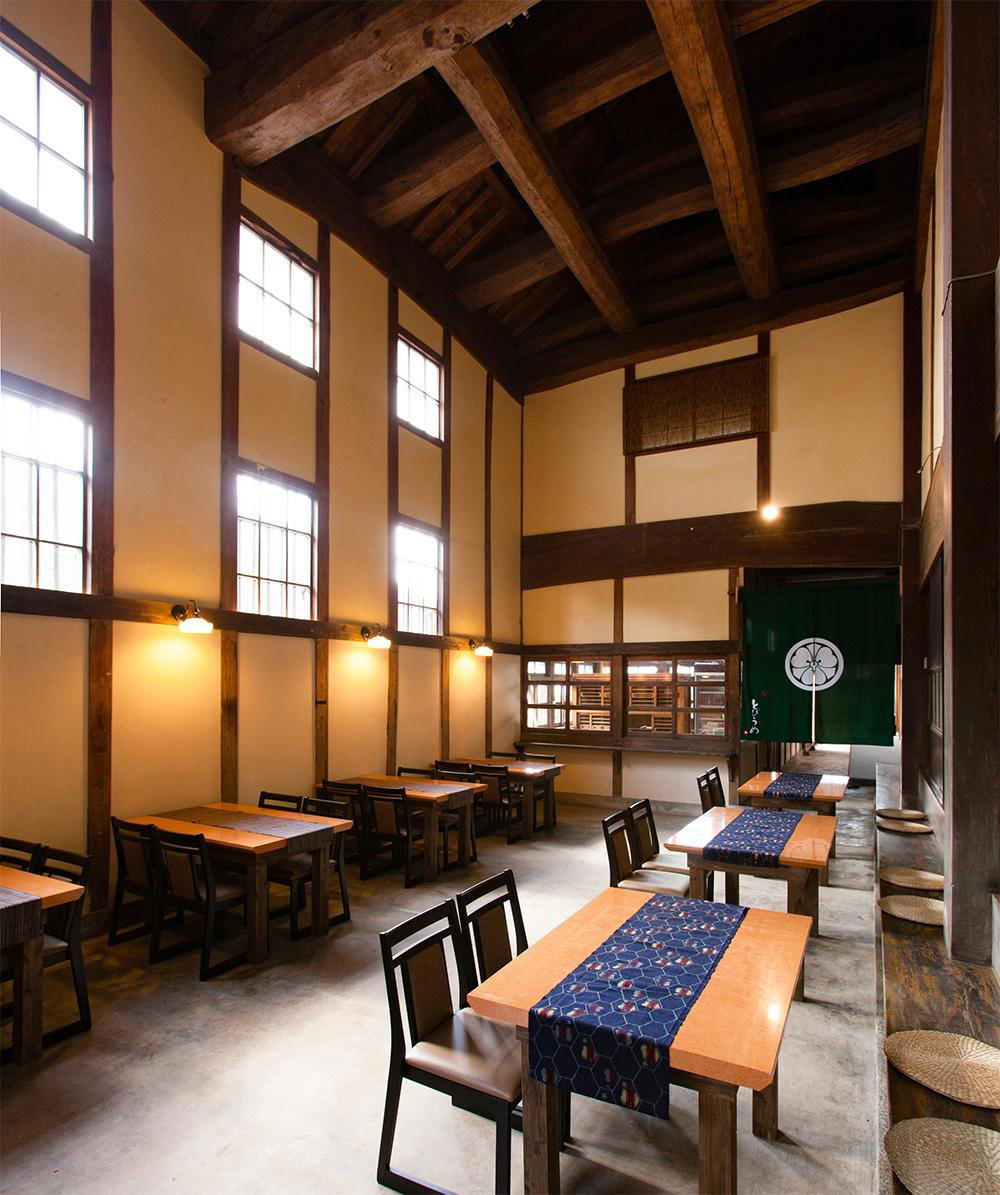
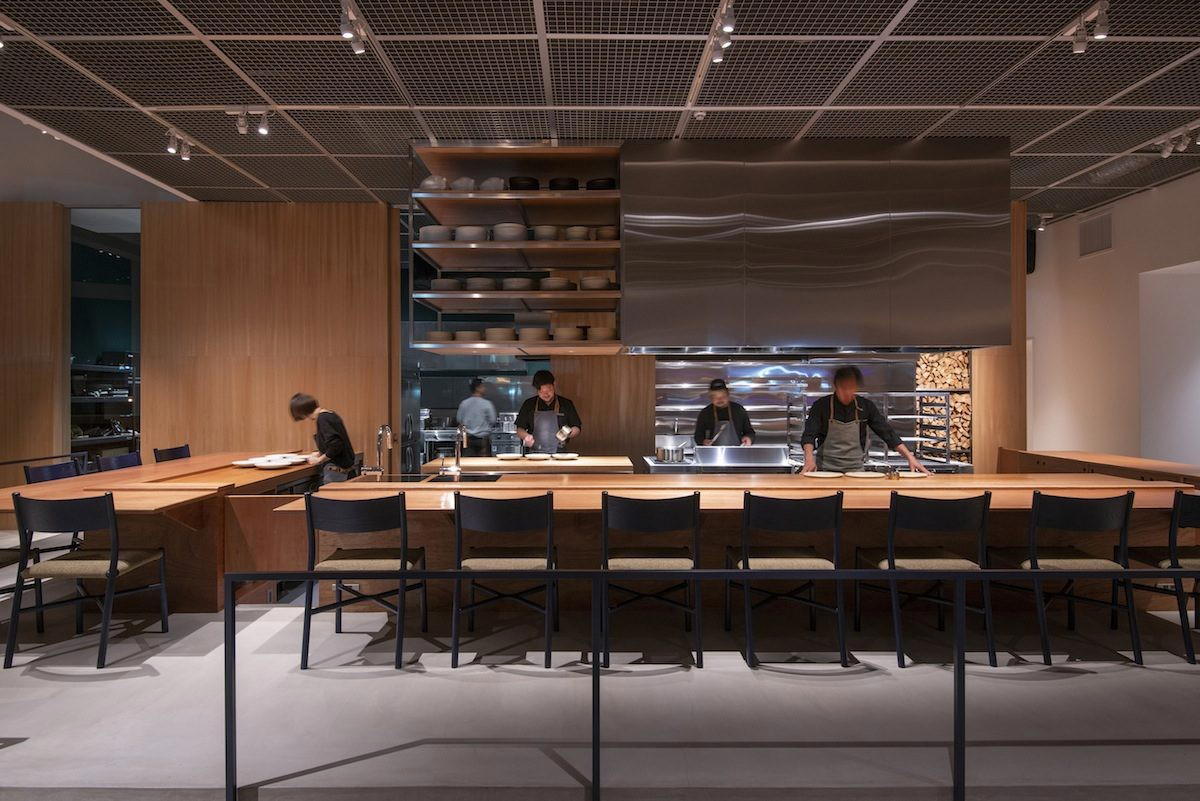
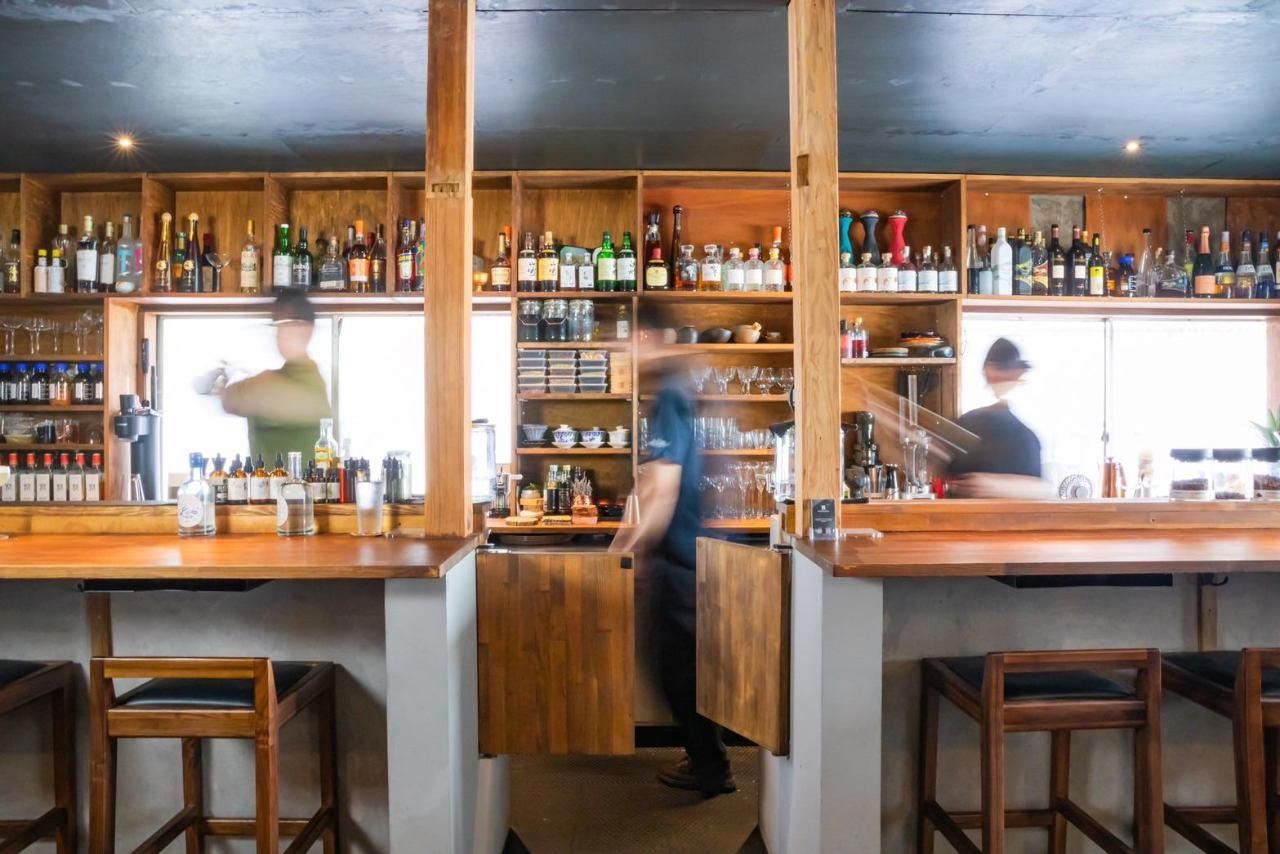
The izakaya as a format covers enormous ground in Japan. At one end sits the izakaya as drinking venue, where food is incidental. At the other end sits the izakaya as serious eating destination, where the drinking culture simply provides the framework. Uotora, operating out of a house-style space in Yahatanishi Ward's Kumade neighbourhood since April 2006, belongs firmly to the second category. The address is Kurosaki, a commercial district within Kitakyushu that lacks the international name recognition of central Fukuoka but sustains a dense, locally-driven dining scene. Arriving at Uotora, the environment reads less like a restaurant and more like an inhabited building pressed into nightly service: counter seating at ground level, table clusters, and a tatami room occupying the second floor for up to twenty guests. The physical layering of the space, counter to table to traditional room, maps directly onto the occasions it handles, from solo diners eating at the bar to larger groups taking the upstairs room for a private gathering.
Where the Food Comes From, and Why That Shapes the Visit
Kitakyushu sits at the northern tip of Kyushu, separated from Honshu by the Kanmon Strait. That geographic position matters at a seafood-focused izakaya like Uotora because the strait and the surrounding Genkai Sea deliver a supply chain that few Japanese coastal cities can match for diversity and freshness. The restaurant's Tabelog profile explicitly flags a particular emphasis on fish, and across more than a decade of consecutive Tabelog 100 izakaya selections, 2021, 2022, 2024, and 2025, that focus has remained the consistent axis around which the kitchen operates. In a city whose fishing industry predates its industrial identity, that sourcing story is less a marketing point than a structural fact of what ends up on the counter each evening.
The price bracket, averaging JPY 8,000 to JPY 9,999 per person at dinner, positions Uotora in the mid-tier of Fukuoka's seafood dining spectrum. It sits above the workaday izakaya chains and informal yatai stalls that define so much of the city's popular reputation, but well below the omakase counters and kaiseki rooms that occupy the upper bracket. At this price point, the expectation is both sourcing quality and cooking credibility, not just product. The Tabelog community score of 4.04 and the 2026 Bronze award from Tabelog suggest the kitchen is delivering on both counts consistently enough to hold recognition across multiple award cycles. For context, the Tabelog Bronze designation places Uotora among Japan's several hundred highest-rated restaurants by Tabelog's scoring methodology, a threshold that filters out many well-liked venues that simply haven't sustained quality over time. That multi-year consistency, from the 2022 Bronze through to 2025 and 2026, is arguably more telling than any single award.
The Format: Two Seatings, 38 Seats, a Counter Worth Knowing About
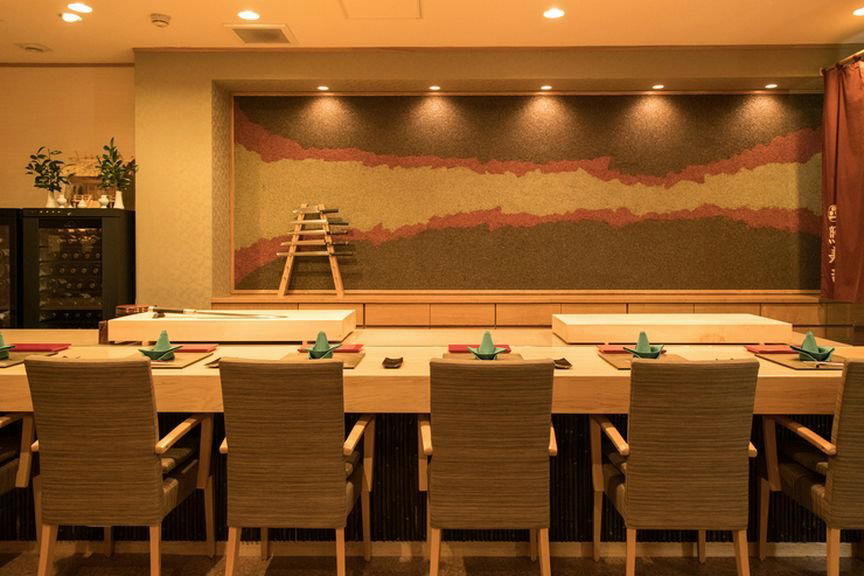
The evening is structured around two seatings: the first running from 18:00 to 20:30, the second from 20:30 to 22:30. Last orders for food fall at 23:00, with drinks extending to 23:45, and the space closes at midnight, Monday through Saturday. Sundays and public holidays are closed, as are the first and third Mondays of each month, Obon, and New Year. Thirty-eight seats are divided between six counter positions, three four-leading tables, and the twenty-seat tatami room upstairs. The counter is the obvious choice for solo diners or pairs who want to watch the kitchen, though the tatami room's capacity makes it one of the more practical private dining formats in the area for groups between ten and twenty people. Private use of the full space is available for parties of up to fifty.
Drink program skews toward sake (nihonshu) and shochu, with the menu described as particularly focused on both. That emphasis aligns with the seafood-forward kitchen in an obvious way: dry nihonshu and fish work in a register that doesn't require explanation in Japan, and in Fukuoka's izakaya tradition the pairing is effectively structural rather than optional.
Kurosaki, Kitakyushu, and the Case for Looking Beyond Central Fukuoka
Most international visitors to Fukuoka Prefecture concentrate around Hakata, Tenjin, and the surrounding wards. The Kitakyushu end of the prefecture, a separate city that merged five former industrial municipalities in 1963, operates on a different register. It has its own food culture, shaped by its port history, its proximity to the Korea Strait, and a local identity that has never positioned itself as a tourist destination in the way that Fukuoka city has. This is where Uotora's address actually becomes a meaningful editorial signal: sustained Tabelog recognition from a venue in Yahatanishi Ward rather than Hakata or Tenjin says something about the depth of the seafood izakaya tradition across the whole prefecture, not just its most publicised corridors.
From JR Kurosaki Station, the walk takes approximately seven minutes. Parking is not available at the venue. Reservations are handled by phone at 093-622-1001, with the caveat that calls after 18:00 may not be answered. Phone lines are available during business hours from 12:00 to 23:00 on weekdays. Credit cards are accepted (Visa, Mastercard, JCB, Amex, Diners Club), and QR code payments via PayPay are also in place. There is no official website.
Uotora Inside Fukuoka's Broader Dining Conversation
Fukuoka and Kitakyushu together produce a serious restaurant map that extends well beyond the province's ramen reputation. At the high end, venues like Goh (French), Chikamatsu (Sushi), and Chiso Nakamura operate in a different price tier and format to Uotora, but they share the same underlying advantage: proximity to exceptional regional produce. Asago and Bekk represent further reference points within the prefecture's dining spread. The full picture is covered in our full Fukuoka restaurants guide.
For visitors building a wider Fukuoka itinerary, our full Fukuoka hotels guide, our full Fukuoka bars guide, our full Fukuoka wineries guide, and our full Fukuoka experiences guide provide the supporting context.
For a sense of how Uotora fits within the wider geography of Japan's serious seafood-focused dining, the comparison extends to fish-forward counters in other cities: Harutaka in Tokyo and Gion Sasaki in Kyoto operate in a higher price tier, while destinations like HAJIME in Osaka, akordu in Nara, and 1000 in Yokohama illustrate the range of Japan's regional dining ambition. Outside Japan, seafood-led destination restaurants like Le Bernardin in New York City and Korean-influenced fine dining at Atomix in New York City occupy a structurally different register, though both share the same foundational commitment to sourcing precision. For the Okinawa end of Japan's southern island chain, 6 in Okinawa makes for an instructive comparison on how regional identity shapes a kitchen's approach.
Planning Your Visit
Uotora operates evenings only, Tuesday through Saturday (and Monday except the first and third of each month), from 18:00 with the kitchen closing at midnight. Reservations are strongly advised, particularly for the six-seat counter and for group bookings in the tatami room. The phone number is 093-622-1001. Budget JPY 8,000 to JPY 9,999 per person for dinner. The venue is a seven-minute walk from JR Kurosaki Station. Children are welcome at all ages. The space is entirely non-smoking indoors, with a designated smoking area near the entrance; electronic cigarettes including iQOS are not permitted.
Frequently asked questions
What do people recommend at Uotora?
The kitchen's stated focus is fish, and the seafood-led menu is the consistent reference point across the Tabelog reviews that have supported four consecutive years of Tabelog 100 izakaya selections (2021, 2022, 2024, 2025). The sake and shochu selection is described as a particular focus of the drink program, making the pairing of seafood dishes with nihonshu a natural anchor for the meal. For specific current dishes, contacting the restaurant directly at 093-622-1001 is the reliable route, as menus at izakaya of this type tend to shift with seasonal supply.
What is the standout thing about Uotora?
Sustained Tabelog recognition across multiple years is the clearest external signal: three Bronze Awards (2022, 2025, 2026) and four Tabelog 100 izakaya selections place Uotora at the serious end of a format that in Japan spans an enormous quality range. The combination of that recognition with a dinner price averaging JPY 8,000–9,999 represents a relatively accessible entry point for a venue operating at this consistent standard within the Fukuoka Prefecture dining scene.
Does Uotora accommodate allergies?
Given the kitchen's strong seafood focus, guests with fish or shellfish allergies should contact the restaurant directly before booking. The phone number is 093-622-1001; calls are leading placed before 18:00 when phone coverage is most reliable. Kitakyushu sits in Fukuoka Prefecture, and while Japanese dining culture generally takes dietary requests seriously, advance communication in writing or via phone is advisable for any specific allergy concern.
Is Uotora worth visiting from central Fukuoka city, or is it primarily a Kitakyushu local?
Uotora's address in Yahatanishi Ward, Kitakyushu, places it roughly an hour from Hakata by JR, which is a meaningful commitment for visitors staying in central Fukuoka. The venue's consecutive Tabelog 100 selections and Bronze Awards from 2022 through 2026 indicate a quality level that draws beyond its immediate neighbourhood, and the JPY 8,000–9,999 dinner bracket positions it as a destination worth considering for anyone spending time in the northern Fukuoka Prefecture corridor. The seven-minute walk from JR Kurosaki Station makes the logistics direct once you're in Kitakyushu.
At-a-Glance Comparison
Comparable venues nearby, for context on price, style, and recognition.
| Venue | Cuisine | Price | Awards | Notes |
|---|---|---|---|---|
| UotoraThis venue (the venue you are viewing) | Fresh Seafood Izakaya | $50–100 | Tabelog Bronze #499 | Not listed |
| 神戸焼肉大山 | Japanese Robatayaki Grill | $20–30 | Not listed | Hakata |
| 安春計 | Japanese Izakaya | Not listed | Tabelog 100 #90 | Chūō |
| Hakata Daruma (博多だるま) | Traditional Hakata Tonkotsu Ramen | $10–20 | Not listed | Chuo (Watanabedori) / Hakata |
| Yakiniku Horumon Jinsei Daichan | Yakiniku & Horumon Izakaya | $30–50 | Tabelog 100 #49 | Higashi |
| Onokoro Hanjou | Seafood-focused Japanese izakaya | $30–50 | Tabelog 100 #67 | Chūō |
Recognition history
Dated appearances from independent guides and award organizations, with the underlying list record or original source where available.
Tabelog Bronze #499
Tabelog
Full recognition history (3 entries)
Tabelog 100 #90 · No. 90
Tabelog · Tabelog 100 - Izakaya - WEST - 2025
Tabelog Bronze
Tabelog
Continue exploring
More in Fukuoka
Restaurants in Fukuoka
All restaurants in Fukuoka →
Details
- Lively
- Cozy
- Energetic
- Classic
- Group Dining
- Casual Hangout
- After Work
- Celebration
- Open Kitchen
- Private Dining
- Sake Program
- Beer Program
- Craft Cocktails
- Local Sourcing
- Sustainable Seafood
- A La Carte
- Counter Dining
- Family Style
- Sake
- Shochu
- Craft Beer
- Lemon Chuhai
- Pescatarian Friendly
Current opening hours
- Monday
- 6 PM–12 AM
- Tuesday
- 6 PM–12 AM
- Wednesday
- 6 PM–12 AM
- Thursday
- 6 PM–12 AM
- Friday
- 6 PM–12 AM
- Saturday
- 6 PM–12 AM
- Sunday
- Closed
Hours can change for holidays and private events. Hours as of .
Warm and inviting with traditional izakaya charm; lively and bustling atmosphere with counter seating offering views of the chef's swift, efficient preparation; stylish yet relaxing space with tatami rooms.