United Taekwondo Center / TMA Kickboxing
"El Rico Tinto, Jackson Heights by Diane Shaw. Though it says 'Bakery' on the awning, don't be fooled, this place is SO much more. El Rico Tinto serves Mexican and Colombian staples but with finessed details you don't usually see. Crunchy flautas arrive with a beautiful heap of fresh veg, queso fresco and an artful smattering of crema. Their carnitas and short rib tacos are notable in the neighborhood. If you're vegetarian, this is your spot. They have meatless versions of all their most popular menu items. Go for brunch and get the chilaquiles, fresh pastries and a fresh squeezed juice. It's run by two brothers, the warm-smiled Victor handles front of house while Fernando makes the deliciousness happen in the kitchen."
Pearl is the En Primeur Club membership app — saves, bookings, and concierge access live there. Same editors, same standards.
- Address
- United Taekwondo Center / TMA Kickboxing, 76-07 37th Ave, Jackson Heights, NY 11372
- Directions
- Get directions
 Saves & bookings on Pearl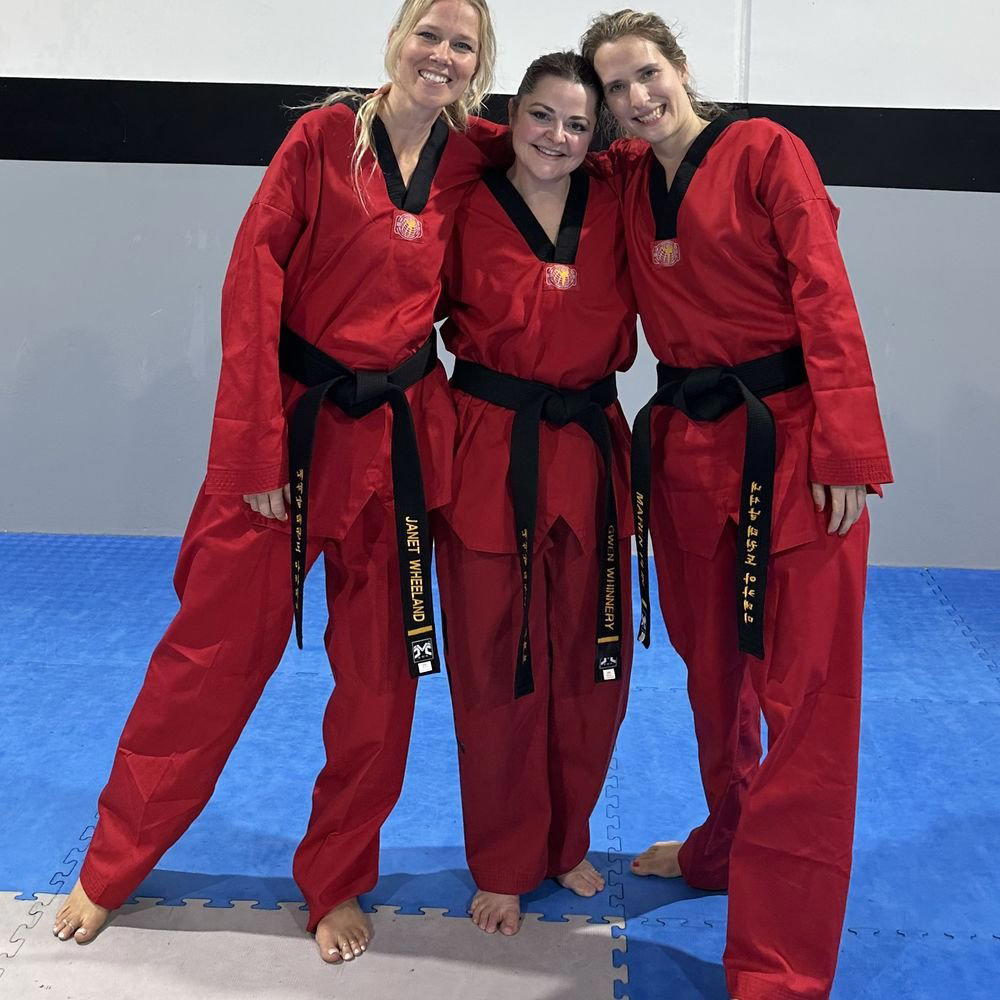
A Jackson Heights Staple in New York's Most Diverse Martial Arts Scene
Jackson Heights has long functioned as one of New York City's most culturally layered neighborhoods, a place where South Asian grocers, Ecuadorian bakeries, and Filipino community halls share the same block. Within that context, martial arts schools have served a practical civic role for decades, offering structured physical training and community grounding in a neighborhood where formal recreational infrastructure has historically been thin. United Taekwondo Center / TMA Kickboxing, located at 76-07 37th Ave, sits inside that tradition, operating in a part of Queens where locally embedded training programs tend to outlast the trendier fitness formats that cycle through Manhattan and Brooklyn.
The broader martial arts category in New York has undergone significant restructuring since the early 2000s. Mixed martial arts popularized by televised competition drew many smaller dojangs and kickboxing gyms toward hybrid programming, while traditional single-discipline schools either consolidated around competitive circuits or repositioned toward youth development and community fitness. Jackson Heights, with its large immigrant population and multi-generational neighborhood character, supported a slightly different trajectory: schools here tended to maintain a dual identity, serving both serious practitioners and families looking for after-school structure. United Taekwondo Center / TMA Kickboxing reflects that dual-track positioning by combining traditional taekwondo with kickboxing formats under one roof.
What the Jackson Heights Training Environment Represents
Queens as a borough accounts for a disproportionately large share of New York's grassroots martial arts activity. The neighborhood density, lower commercial rents compared to Manhattan, and community-oriented culture make it a natural home for independent training centers rather than franchised fitness chains. A facility in Jackson Heights is not competing in the same market as a boutique kickboxing studio in Flatiron or a high-end Brazilian jiu-jitsu academy in Tribeca. The competitive set is local: other Queens-based dojangs, community recreation centers, and school-affiliated sports programs. That local anchoring matters because it shapes programming priorities, pricing accessibility, and the relationship between instructor and student.
Taekwondo itself carries a specific institutional weight in the United States. It has been an Olympic discipline since 2000, and the infrastructure around it, from regional tournaments to belt certification bodies, gives community-level schools a framework for student progression that many other martial arts lack at the grassroots level. For a school in Jackson Heights to maintain both a taekwondo program and a kickboxing component is to serve two adjacent but distinct communities: those invested in the sport's competitive and ceremonial traditions, and those seeking a fitness-oriented combat training format without the formalized ranking structure.
The Sustainability Question in Community Fitness
The editorial angle of environmental consciousness applies differently to a neighborhood martial arts center than it does to a farm-to-table restaurant like Blue Hill at Stone Barns in Tarrytown or a supply-chain-focused kitchen like Single Thread Farm in Healdsburg. In the fitness and training context, sustainability is less about sourcing and more about institutional longevity and community resource efficiency. A school that has remained embedded in Jackson Heights across years of neighborhood change, chain displacement, and shifting recreational trends represents a form of sustainability that is sociological rather than environmental: the ability to remain viable for a specific community without being absorbed into a larger commercial format.
That model of community-embedded durability appears across different disciplines and geographies. Restaurants like Dal Pescatore in Runate have sustained across generations precisely because they remained anchored to a specific local identity rather than chasing external validation. In the training world, the equivalent is a school that maintains its student base through instructor continuity and program consistency rather than through rebranding or franchise affiliation. Whether United Taekwondo Center / TMA Kickboxing has achieved that kind of multi-generational continuity is not something the available record confirms, but the model it represents in Jackson Heights aligns with that pattern of neighborhood-embedded sustainability.
How This Fits Into New York's Broader Training Scene
New York's premium dining circuit, which includes institutions like Le Bernardin, Atomix, Eleven Madison Park, Masa, and Per Se, operates at a scale and price point that is structurally disconnected from what a Jackson Heights martial arts center serves. The comparison is not invidious; it simply illustrates that New York's cultural infrastructure spans from globally benchmarked fine dining to deeply local, community-anchored services, and both ends of that spectrum perform important functions. A neighborhood training center in Queens occupies a different tier but is no less embedded in the city's social fabric.
Across the United States, community-level training programs have shown resilience in neighborhoods where other small businesses have not. Places like Emeril's in New Orleans and Addison in San Diego have built institutional identities around consistent execution within their categories. The parallel in martial arts is a school that maintains its programming without drift, offering the same core curriculum year over year while adapting class schedules and formats to serve an evolving student population.
For anyone exploring our full New York City guide, understanding the borough-level distribution of services and cultural institutions adds important texture to what the city actually contains beyond its most visible dining and hospitality draws.
Planning a Visit
Address: 76-07 37th Ave, Jackson Heights, NY 11372
Neighborhood: Jackson Heights, Queens
Transit: Jackson Heights is served by the 7, E, F, M, and R trains at Roosevelt Ave / Jackson Hts-Roosevelt Ave station, making it accessible from most of Manhattan and Brooklyn without a transfer.
Phone: Not publicly listed in current records
Website: Not publicly listed in current records
Hours: Not confirmed in available records; contact the school directly before visiting
Pricing: Not confirmed; community martial arts schools in Queens typically offer monthly membership structures with introductory trial options
Leading approach: Arrive during posted class hours if listed on local directories; the Jackson Heights community board and neighborhood Facebook groups often carry current schedule information for local training centers
The Essentials
A quick peer list to put this venue’s basics in context.
| Venue | Cuisine | Price |
|---|---|---|
| United Taekwondo Center / TMA KickboxingThis venue — the venue you are viewing | Not listed | Not listed |
| Le Bernardin | French, Seafood | $$$$ |
| Atomix | Modern Korean, Korean | $$$$ |
| Per Se | French, Contemporary | $$$$ |
| Masa | Sushi, Japanese | $$$$ |
| Eleven Madison Park | French, Vegan | $$$$ |
Continue exploring
More in New York City
Restaurants in New York City
Browse all →
Bars in New York City
Browse all →
Hotels in New York City
Browse all →





Know Before You Go
- Getting there
- United Taekwondo Center / TMA Kickboxing, 76-07 37th Ave, Jackson Heights, NY 11372