
Tabelog 100 #83
Our verdict
Unazen occupies a specific address in Sumida City, Tokyo, a neighbourhood where traditional craft dining has long operated at a remove from the Ginza or Shinjuku circuits. The restaurant sits within a part of the city where eel preparations and older Japanese culinary traditions have persisted with less commercial reinvention than in the central wards, placing it in a context worth understanding before you book.

Pearl is the En Primeur Club membership app, where members save venues, book tables and use the concierge.
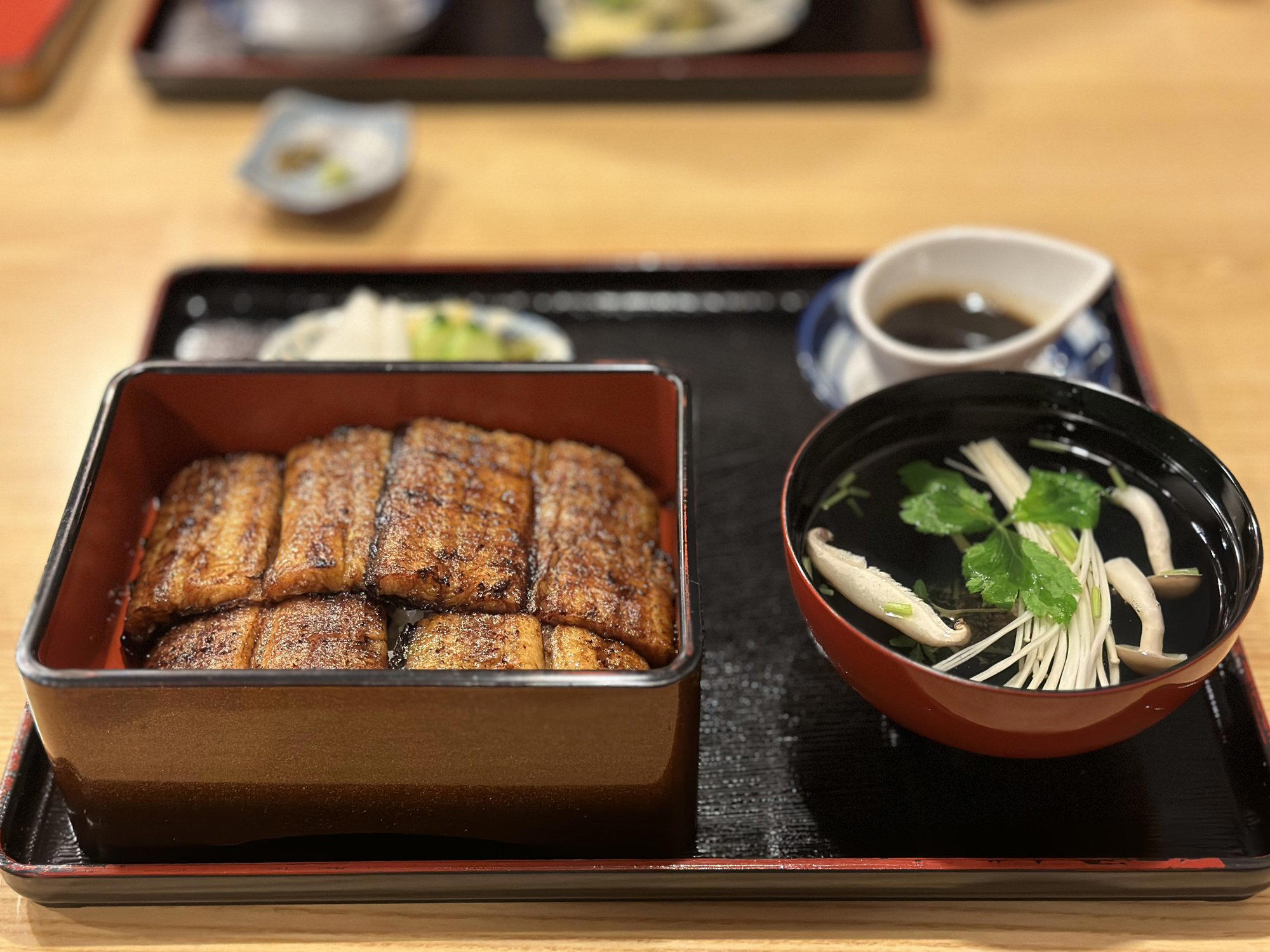
East of the River: Sumida's Quieter Culinary Register
The Sumida River has long functioned as a dividing line in Tokyo's dining consciousness. West of it lies the dense, internationally legible circuit of Ginza, Roppongi, and Shibuya, where restaurants compete for the same Michelin inspectors, the same expense-account clientele, and the same column inches in foreign food media. East of it, in Sumida City, a different tradition persists, one rooted in Edo-period craft, neighbourhood loyalty, and formats that have changed slowly, deliberately, or not much at all. Unazen sits at 3 Chome-6-18 Azumabashi, a specific address in this older Tokyo, close to the Azumabashi bridge that has marked an eastern threshold of the city since the eighteenth century.
For visitors orienting by the central wards, this part of Tokyo requires a mental shift. The Asakusa district, immediately adjacent, draws crowds to Senso-ji, but the streets radiating east and south from there, the Sumida City side, belong to a quieter register. Restaurants here do not typically advertise in the way that venues in our full Tokyo restaurants guide covering the central circuit might. Longevity and local reputation carry weight that awards and social media amplification do not replace.
Eel as a Lens on Tokyo's Evolving Craft Dining
Japanese eel cuisine, unagi, is one of the clearest windows into how Tokyo's culinary traditions have fragmented under pressure from cost, ingredient scarcity, and changing clientele. The wild-caught Japanese eel (Anguilla japonica) has faced significant stock depletion over the past three decades, and the cost of quality unagi has climbed accordingly. Specialist unagi restaurants in Tokyo now occupy a narrower commercial position than they did even twenty years ago: the ones that survive at the older end of the market do so through consistent sourcing relationships, a technically exacting preparation method, and a customer base that returns rather than discovers.
In the Kanto style, the Tokyo tradition, eel is steamed before grilling, producing a texture that is softer and less fatty than the direct-grilled Kansai approach used in Osaka and Kyoto. That distinction matters because it shapes the entire experience: the sauce, the rice ratio, the pacing of the meal. Restaurants working in the Kanto method are executing a technique that requires precise timing between the steaming and charcoal stages, and the margin for variation is narrow. For comparison, places like HAJIME in Osaka or Gion Sasaki in Kyoto operate in contexts where the Kansai preparation is the default register.
Unazen's position in Sumida City places it within the Kanto tradition's older institutional geography. This is where specialist unagi culture settled in the Edo period, when the river gave access to freshwater eel and the neighbourhood's craftspeople and merchants formed the original customer base. That origin does not mean the restaurant is frozen in a historical mode, but it does mean the lineage is traceable in ways that newer openings in the central wards cannot replicate.
The Evolution Argument: What Changes and What Doesn't
Across Tokyo's craft-dining categories, the venues that have lasted longest tend to have navigated two distinct pressures: ingredient availability and generational continuity. Unagi specialists have faced both simultaneously. The ingredient pressure has forced sourcing decisions, domestic versus imported eel, farmed versus wild, that carry implications for the taste and the ethics of the menu. The generational pressure has forced decisions about format: whether to modernise the space, broaden the offering, or maintain the narrow discipline of a single-protein house.
The broader Tokyo dining scene has moved toward hybrid formats, where tasting menus at the ¥¥¥¥ tier, comparable to what you find at Harutaka, L'Effervescence, RyuGin, or Sézanne, integrate multiple influences and seasonal variation into a structured progression. Specialist single-protein houses operate on a different logic entirely. They do not promise novelty; they promise depth within a defined range. The question of how Unazen has managed these pressures is the relevant one for anyone considering a visit, though the answer is not fully legible from publicly available data.
What the address and the neighbourhood context suggest is that Unazen has not chased the central-ward audience. Azumabashi-area restaurants with long track records tend to draw from a local and repeat-visitor base rather than from the tourist and international business circuits that fill reservation books in Ginza. That positioning is itself an editorial choice, whether or not it is framed as one.
Placing Unazen in the Wider Japan Circuit
For travellers building an itinerary across Japan's dining geography, Sumida City's craft-dining culture forms a meaningful data point. The eel tradition here sits in counterpoint to the contemporary innovative registers you find at akordu in Nara, Goh in Fukuoka, or at places like Crony within Tokyo itself. It also differs substantially from the regional specialist formats you encounter at 木本 石川鮨 in Nanao, 夕張山乃 in Sapporo, 湖南庵 in Takashima, or 庄羽屋 in Nishikawa Machi. For comparison across grilling-focused traditions, Birdland in Sakai offers a different single-protein model, while Bistro Ange in Toyohashi shows how mid-tier regional dining operates in smaller Japanese cities. Internationally, the structural logic of a specialist craft house committed to one preparation tradition maps loosely onto what Le Bernardin in New York City represents for seafood, or what Atomix represents for Korean-influenced tasting formats, venues defined by a narrow, deep commitment rather than a broad appeal.
Planning a Visit
Unazen's Azumabashi address is reachable via the Tobu Skytree Line (Asakusa Station) or by walking from Asakusa, crossing the Azumabashi bridge into Sumida City. The neighbourhood is most easily visited as part of a day that includes Asakusa itself, though the character on the Sumida side is noticeably less touristic. Unagi specialists in this price bracket and tradition often prefer phone reservations in Japanese, and lunchtime slots tend to be the primary service window at traditional unagi houses.
Frequently asked questions
Is Unazen okay with children?
In a traditional Tokyo unagi specialist at this address and in this neighbourhood, the format is generally low-key enough that children are not discouraged, but the meal is quiet and unhurried, which suits older children more comfortably than young ones.
What kind of setting is Unazen?
If you are arriving from the central wards expecting the polished minimalism of a Ginza tasting counter, adjust expectations: Sumida City's craft-dining format tends toward functional, traditional interiors where the preparation is the event. For venues where awards and price tier signal a formal atmosphere, look to the ¥¥¥¥ tasting-menu circuit in Roppongi or Ginza. Unazen's setting is shaped by its neighbourhood tradition.
What do people recommend at Unazen?
Order around the eel preparation, that is the core of what an Azumabashi-area unagi specialist exists to do. The Kanto-style steamed-then-grilled method is the signature discipline, and the unadon or unaju formats (eel over rice, served in a box) are the canonical order at houses of this tradition. Do not visit expecting a broad menu.
Is Unazen reservation-only?
Traditional unagi specialists in Tokyo's older neighbourhoods vary on this point: some accept walk-ins at off-peak times, while others with smaller kitchens and limited daily eel stock operate effectively on a reservation basis. Given Unazen's address in a quieter part of Sumida City, away from the high-footfall tourist circuit, current reservation policy should be confirmed directly before visiting.
What's the standout thing about Unazen?
Within Tokyo's dining geography, the standout quality is location and lineage: a specialist eel house in the Azumabashi area is operating within one of the oldest continuous culinary traditions in the city, in a neighbourhood where that tradition has not been heavily commercialised or repositioned for international audiences. That specificity is the point.
Is Unazen connected to the wider Kanto unagi tradition historically?
The Azumabashi area in Sumida City sits within the historic core of Tokyo's unagi restaurant geography, which developed during the Edo period when the river system made freshwater eel a locally sourced staple. A specialist house at this address operates within that longer lineage, which distinguishes it from newer openings in Shibuya or Shinjuku that import the format without the neighbourhood context. For anyone building a serious understanding of how Tokyo's craft-dining traditions evolved, the Sumida side of the river represents a different chapter than the central wards.
What It’s Closest To
Comparable venues nearby, for context on price, style, and recognition.
| Venue | Cuisine | Price | Awards | Notes |
|---|---|---|---|---|
| UnazenThis venue (the venue you are viewing) | Kanto-style Unagi (Eel) | $30–50 | Tabelog 100 #83 | Not listed |
| Kuzushi Teppan AVAGURA Kanda ten | Modern Teppanyaki | $50–100 | Tabelog 100 #100 | Chiyoda |
| 焼鳥 髙はし | Michelin-Starred Yakitori Omakase | $50–100 | 1 Michelin Star · Tabelog 100 #33 | Chūō |
| Ningyocho Imahan Nihombashi Takashimaya S.C. Restaurant | Traditional Japanese Wagyu Sukiyaki & Shabu-Shabu | $50–100 | Not listed | Chūō |
| Soba Kaiseki Tsukiji Bunkajin Kaza | Soba kaiseki with seasonal course menus | $50–100 | Tabelog 100 #15 | Chūō |
| 寿司 健 | Premium Omakase Sushi | $300–500 | Tabelog 100 #19 | Chūō |
Recognition history
Dated appearances from independent guides and award organizations, with the underlying list record or original source where available.
Tabelog 100 #83 · No. 83
Tabelog · Tabelog 100 - Unagi - 2024
Continue exploring
More in Tokyo
Restaurants in Tokyo
All restaurants in Tokyo →




Details
- Cozy
- Intimate
- Classic
- Solo
- Family
- Open Kitchen
- Sake Program
- Garden
- A La Carte
- Omakase
Current opening hours
- Monday
- Closed
- Tuesday
- 11 AM–4 PM
- Wednesday
- 11 AM–4 PM
- Thursday
- Closed
- Friday
- 11 AM–4 PM
- Saturday
- 11 AM–3 PM
- Sunday
- 11 AM–3 PM
Hours can change for holidays and private events. Last verified .
Traditional house restaurant with relaxing garden, counter seating to watch grilling, and warm family service.