
Tabelog 100 #49
Our verdict
Una Toyo places Nagoya’s eel culture in a calm, everyday register rather than a ceremonial luxury frame. The draw is unagi served with the discipline expected of a Tabelog 100 Unagi 2024 selection, in a 32-seat house-style room with tatami and table seating, take-out, and a price band that keeps the ritual accessible by Japanese eel-house standards.

Pearl is the En Primeur Club membership app, where members save venues, book tables and use the concierge.
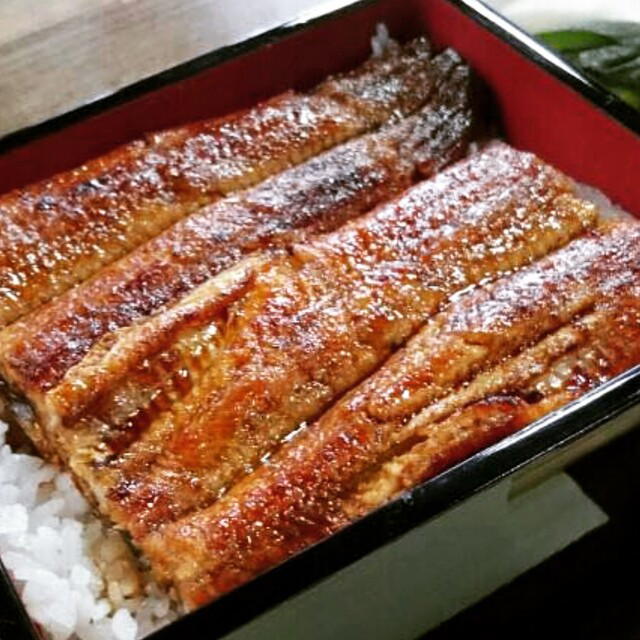
The menu
What to order
- Unadon (grilled eel rice bowl)
- Unaju (eel over rice in lacquered box)
- Hitsumabushi (chopped eel over rice with condiments and broth)
- Unagi chazuke (eel with rice and tea/broth)
- Shirayaki (plain grilled eel)
Approaching an unagi house in Nagoya slows the meal before it begins. Nagoya’s central dining districts can feel built for quick decisions: station counters, department-store floors, late trains, compact menus. Eel asks for a slower contract. The room, charcoal rhythm, lidded box or bowl, and pause before lifting the cover are part of the meal’s grammar, not decoration.
Una Toyo belongs to an older register of Japanese dining where format carries as much meaning as address. The cooking category is narrow, unagi, but the cultural bandwidth is wide. Eel houses sit between everyday comfort and seasonal ceremony, used for family meals, workday lunches, and midsummer stamina rituals tied to Doyo no Ushi no Hi. In Nagoya, a city that treats local food with less performance than Tokyo or Kyoto, that restraint matters. The point is not novelty; it is whether the house respects the pacing and form.
Nagoya's eel ritual, without the luxury theatre
Japanese unagi dining is built around repetition: rice, sauce, grill, heat, timing. The meal rewards a kitchen that can deliver consistency across lunch and dinner rather than a chef’s counter built around conversation. Una Toyo’s selection for Tabelog 100 Unagi 2024 places it inside a national category where specialization matters more than breadth, with a listed score of 3.69 that gives the recognition a clear public benchmark.
That distinction helps in Nagoya, where the city’s food reputation is often filtered through stronger-flavoured staples and local comfort cooking. Unagi occupies another lane: precise, slightly formal, tied to craft repetition, but not needing the hush of haute cuisine. The listed dinner and lunch budget of JPY 2,000–2,999 keeps the experience closer to a serious neighbourhood eel meal than a destination tasting-menu event. Compared with lower-key casual Nagoya addresses such as Komugi to Yakiago Sugure or peu frequente, the spend and purpose are not necessarily like for like. Eel houses price against ingredient cost, grilling labour, and the cultural expectation of a complete set meal.
The format also appeals to travellers who want Nagoya to feel less like a transit hub between Tokyo and Kyoto. This city does not reveal itself only through famous landmarks. Its better food moments often happen in everyday dining rooms, in categories locals already understand. For a wider city read, the broader Nagoya restaurants guide gives the dining map, while nearby planning across Nagoya hotels, bars, wineries, and experiences helps place a meal like this inside a full itinerary rather than a standalone detour.
A compact room built for repeatable craft
The house-style setting matters because eel is a cuisine of controlled familiarity. Una Toyo reads best as a specialist restaurant organized around a narrow category rather than a stage-managed counter. That is a strength. Eel loses something when the room becomes too precious, and the appeal here is tied to the steady habits of an unagi meal more than to theatrical presentation.
Dining ritual is also logistical. Lunch and dinner both sit within the same stated budget band, making the restaurant useful for travellers who want the eel-house format without turning it into a full evening production. Treat the meal as a timing decision: unagi is a category with its own rhythms, and a focused restaurant in Nagoya can be more rewarding when approached with patience rather than as a quick box to tick.
Payment and planning should be handled with the same practical mindset. The published phone number, +81-52-851-2632, is the clearest direct contact point for confirming current details before going. For international travellers, that is operational rather than quaint: specialist restaurants can be straightforward once the essential information is checked, especially when the meal itself is built around a familiar sequence of eel, rice, sauce, and heat.
The broader Japanese casual-specialist spectrum is useful here. Other Nagoya dining rooms such as Raa Menya Shio Soba Shizuku, Dote no Shinagawa, or Kitchen Ribbon may answer different appetites and occasions. Una Toyo’s lane is narrower: a meal organized around eel, rice, and the habits attached to them. That narrowness is the reason to go.
Where it fits in a Nagoya eating itinerary
For travellers building meals across Japan, this address balances flashier reservations. It pairs well with an architectural, museum-led, or neighborhood-based day because the meal does not require a long tasting-menu commitment. It also gives Nagoya a food memory beyond the dishes dominating first-time checklists. The decision is especially sensible for diners who value category specialists, award-list recognition, and a room with local utility.
EP Club’s broader restaurant index can pull a traveller in many directions, from other dining in Nagoya to specialist stops elsewhere in Japan. For readers comparing Japanese formats abroad, overseas examples show how narrower Japanese categories can change when they leave home. Una Toyo’s advantage is that it does not need that translation: the point is the local eel-house format, kept close to its source in Nagoya.
The editorial case for Una Toyo is not that it reinvents eel. It is that Nagoya’s dining identity benefits from places that do the opposite: hold a specialist ritual steady, keep the room functional, and let recognition follow the category rather than the personality behind it. For a traveller with one eel meal in Nagoya, that is sharper than chasing novelty.
Frequently asked questions
What's the pricing like at Una Toyo?
Pricing at Una Toyo is listed as JPY 2,000 - JPY 2,999 JPY 2,000 - JPY 2,999.
What's the address for Una Toyo?
Nagoya.
What days is Una Toyo closed?
Current opening days and hours are not provided here; check directly with Una Toyo before visiting.
What's the standout thing about Una Toyo?
The clearest credential is the Tabelog 100 - Unagi 2024 selection, which places Una Toyo among notable eel specialists. In practical terms, it is an unagi restaurant in Nagoya with lunch and dinner budgets listed at JPY 2,000–2,999.
Can Una Toyo accommodate dietary restrictions?
Una Toyo is an eel-focused restaurant, so the menu naturally centers on unagi rather than broad dietary flexibility. For guests with specific restrictions, the most reliable move is to check ahead by phone at +81-52-851-2632.
Cuisine and Awards Snapshot
Comparable venues for context, by category and price tier.
| Venue | Cuisine | Price | Awards | Notes |
|---|---|---|---|---|
| Una ToyoThis venue (the venue you are viewing) | Traditional Nagoya charcoal-grilled unagi | $30–50 | Tabelog 100 #49 | Not listed |
| Nagano Meijitei | Nagano Sauce Katsudon | $10–20 | Not listed | Nagano Station |
| Hamburger Steak Shokudo Enomoto Yoshihiro Shoten | Japanese Hamburger Steak / Yoshoku | Not listed | Tabelog 100 #15 | Higashi |
| takumi | Charcoal-grilled Yakiniku & Izakaya | $30–50 | Tabelog 100 #14 | Naka |
| Buta Inagaki | Tonkatsu (Japanese pork cutlet) | $20–30 | Tabelog 100 #41 | Mizuho |
| Kurumi | Okonomiyaki, Izakaya & Teppanyaki | $30–50 | Tabelog 100 #64 | Naka |
Recognition history
Dated appearances from independent guides and award organizations, with the underlying list record or original source where available.
Tabelog 100 #49 · No. 49
Tabelog · Tabelog 100 - Unagi - 2024
Continue exploring
More in Nagoya
Restaurants in Nagoya
All restaurants in Nagoya →


Details
- Classic
- Cozy
- Lively
- Family
- Casual Hangout
- Group Dining
- Solo
- Standalone
- Sustainable Seafood
- A La Carte
- Pescatarian Friendly
Current opening hours
- Monday
- Closed
- Tuesday
- Closed
- Wednesday
- 11 AM–2:30 PM, 5–9 PM
- Thursday
- 11 AM–2:30 PM, 5–9 PM
- Friday
- 11 AM–2:30 PM, 5–9 PM
- Saturday
- 11 AM–2:30 PM, 5–9 PM
- Sunday
- 11 AM–2:30 PM, 4:30–9 PM
Hours can change for holidays and private events. Last verified .