
Ue o Muite puts Osaka’s everyday noodle culture into a tighter, award-recognised frame: a Neyagawa udon shop selected for Tabelog 100 Udon WEST in 2024 and 2022, with pricing in the JPY 1,000–1,999 band. The appeal is not luxury theatre; it is the discipline of a compact udon format, counter-and-tatami seating, and a location that pulls serious noodle eating beyond the central Osaka circuit.
Pearl is the En Primeur Club membership app — saves, bookings, and concierge access live there. Same editors, same standards.
- Address
- 大阪府寝屋川市香里南之町34-5
- Website
- tabelog.com
 Saves & bookings on Pearl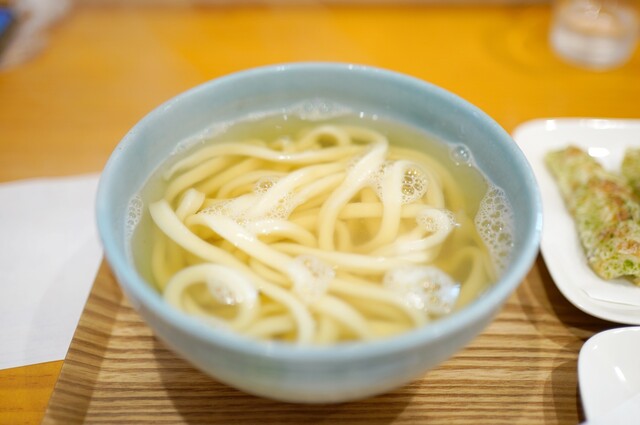
Approaching a suburban udon room in Neyagawa asks for a different rhythm than a Namba dinner crawl. The cues are smaller: a local station, a short walk, a room built for quick turnover rather than ceremony, and the familiar quiet of a noodle shop where the meal is structured around dough, broth, temperature, and pace. Osaka’s noodle culture is often read through late-night ramen or market-side snacks, but udon has its own grammar: less spectacle, more attention to texture and timing.
Ue o Muite belongs to that grammar. Its selection for Tabelog 100 Udon WEST in 2024, with earlier selection in 2022, places it inside the western Japan udon conversation rather than merely the neighbourhood lunch category. That distinction matters because udon in Kansai is not a novelty format. It is everyday food judged by small differences: noodle elasticity, broth clarity, seasoning restraint, and how the menu handles hot, cold, simple, and dressed preparations without turning the bowl into decoration.
Udon architecture, not tasting-menu theatre
The useful way to read this restaurant is through menu architecture. Udon shops rarely need long explanations; the structure does the editorial work. A menu built around wheat noodles asks diners to choose temperature, broth style, toppings, and portion appetite, then lets technique show through repetition. That is a harder test than it sounds. In a city dense with inexpensive specialist counters, the noodle itself carries the argument.
Osaka’s casual dining tier has a sharp price logic. At JPY 1,000–1,999, Ue o Muite sits with serious daily-use specialists rather than destination fine dining. That puts it closer in economic terms to places such as Gyoza no Yuta, Soba Kiri Tensho, and Teuchi Soba Noda than to the city’s reservation-led dining rooms. The comparison is not about cuisine equivalence; it is about how Osaka rewards narrow focus. A gyoza counter, a soba room, and an udon shop can all compete for the same kind of diner: someone willing to travel for craft but unwilling to pay for ceremony when the craft itself is the point.
The Tabelog score of 3.82 is another signal of that local-specialist tier. In Japan, scores in the high threes can carry more weight than they appear to for readers used to five-star inflation elsewhere, especially in categories where regulars and specialist diners dominate the review base. The restaurant’s 24-seat format, split between counter seats and tatami tables, also tells the reader how to frame the meal. This is not a room designed for lingering courses. It is a compact noodle house where solo diners, families, and small groups can all fit the same food culture without changing the premise.
Neyagawa puts the bowl outside Osaka's obvious circuit
The location is part of the story. Neyagawa, northeast of central Osaka, does not carry the instant dining shorthand of Umeda, Kitashinchi, Namba, or Tenma. That distance filters the audience. Travellers who come only for hotel-adjacent meals will miss a layer of Osaka eating that lives along commuter lines and residential shopping streets. The 4-minute walk from Korien Station’s west exit makes the trip simple enough, but the decision to go there is still editorial: this is for readers who treat udon as a category worth crossing town for, not as a fallback between bigger plans.
That suburban setting also changes the expectation of hospitality. The room’s counter seating suits the single-bowl diner; tatami tables make it workable for families; non-smoking policy and wheelchair access broaden the practical audience without altering the food’s narrow focus. No private rooms are listed, and the space is not trying to convert noodle eating into a private-event format. In Kansai, that restraint reads correctly. The craft is public, efficient, and repeatable.
For a broader Osaka plan, this is the sort of specialist stop that should sit alongside other low-ceremony food addresses rather than compete with formal dinners. A day might pair a suburban noodle run with bakery stops such as 52CHO-ME BAKERY, quick regional staples like 551 Horai (551蓬莱), or casual Italian at 99 Pizza Napoletana Gourmet. Readers building a fuller itinerary should use Our full Osaka restaurants guide for dining, with Our full Osaka hotels guide, Our full Osaka bars guide, Our full Osaka wineries guide, and Our full Osaka experiences guide for the rest of the trip.
How to place it in a Japan food itinerary
The strongest case for Ue o Muite is category clarity. It does not need chef mythology or luxury cues to justify attention; the evidence sits in the udon category itself, its Tabelog 100 Udon WEST selections, and the low price band. That combination is useful for travellers who want a serious meal without surrendering a full evening. Lunch-only hours from Wednesday to Sunday sharpen the planning logic, while Monday and Tuesday closures make it a poor candidate for improvisation at the start of the week.
Payment is also part of the restaurant’s character: cash is the safest assumption, with credit cards, electronic money, and QR payments not accepted. Parking is not provided, though nearby coin parking is listed, so rail access remains the cleaner choice. Reservations are generally unavailable, which pushes the meal into the old Osaka rhythm of showing up, waiting if necessary, eating well, and moving on.
Seen against Japan’s broader casual dining map, this is a specialist address rather than a universal crowd-pleaser. It shares that narrowness with focused rooms across the country, from.cafe and a canto (Italian) in Osaka to -Grilled beef Sukiyaki- KAMAKURA TANUKIAN 鎌倉 たぬき庵 in Kamakura. 鮪と炭火焼き うお炭 秋葉原店 in Tokyo.know in Kumamoto, (Shoku) Vietnam in Kawasaki, [Curry Senmon Ten] Maruyama Kyoju. in Sapporo, and [ki:] in Kyoto. For readers tracking Japanese food culture abroad, Jōdo Saké Bar in Los Angeles and Onigiri Time in Pasadena show how tightly defined formats travel differently once removed from the daily-use context that makes places like this work in Osaka.
At-a-Glance Comparison
Comparable venues at a glance for context.
| Venue | Cuisine | Price | Notes |
|---|---|---|---|
| Ue o MuiteThis venue — the venue you are viewing | Japanese Udon | $ | Not listed |
| Hana | Okonomiyaki & teppan comfort food | $ | Miyakojima |
| Chuka Soba Kokokara Sakie | Ramen / Chuka Soba Shop | $ | Yodogawa |
| Hirokawa Tailor | Japanese stand-up bar (tachinomi) | $ | Chūō |
| Tori Soba Zagin Honten | Chicken ramen (tori paitan soba) counter | $ | Nishi |
| Okonomiyaki Dan | Traditional Osaka okonomiyaki & teppanyaki | $ | Chūō |
Recognition history
Dated appearances from independent guides and award organizations, with the underlying list record or original source where available.
Tabelog 100 #64 · No. 64
Tabelog · Tabelog 100 - Udon - WEST - 2024
Continue exploring
More in Osaka
Restaurants in Osaka
Browse all →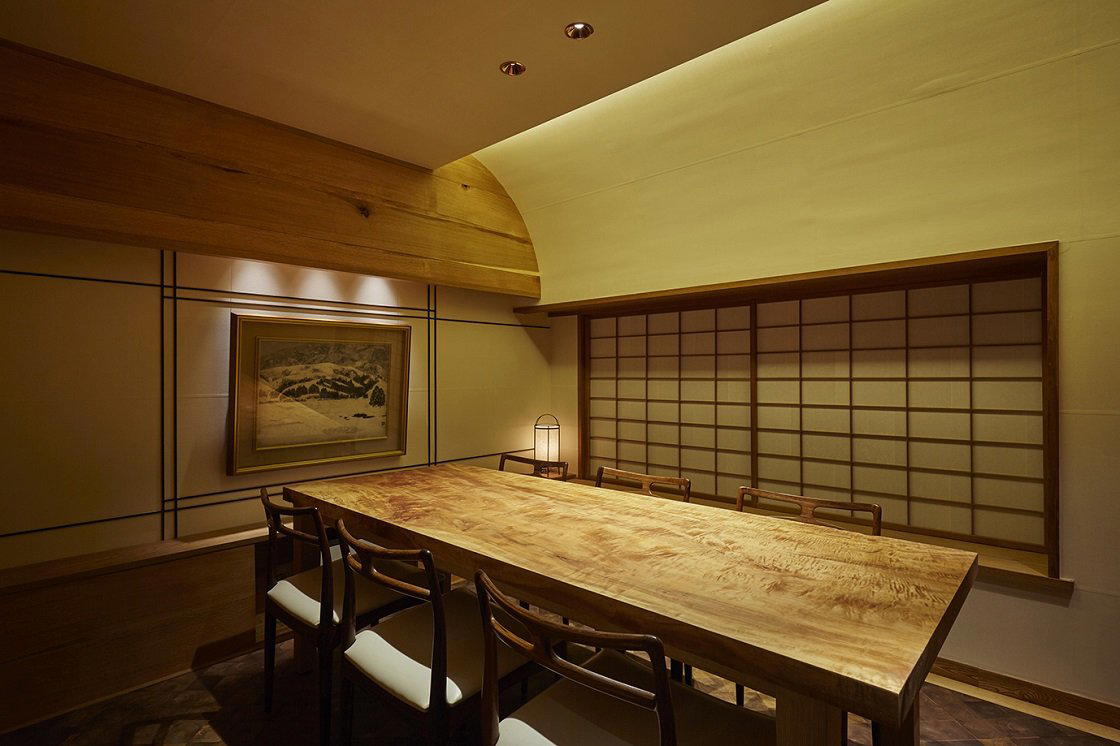




Bars in Osaka
Browse all →




Hotels in Osaka
Browse all →



Wineries in Osaka
Browse all →
At a Glance
- Cozy
- Classic
- Solo
- Family
- Casual Hangout
- Standalone
A small, direct neighborhood udon shop with a casual, family-friendly feel and a focus on quick, no-frills dining.