
Udon Jojo belongs to Osaka’s serious everyday-noodle tier: small, focused, and priced for repeat local use rather than destination dining theatre. Its 2024 Tabelog 100 Udon WEST selection and 18-seat scale place it among the Kansai shops where wheat, broth, and frying technique carry the argument.
Pearl is the En Primeur Club membership app — saves, bookings, and concierge access live there. Same editors, same standards.
- Address
- ロイヤルハイツ宏和 1F, 2 Chome-10-22 Tamatsu, Higashinari Ward, Osaka, 537-0023, Japan
- Phone
- +81669741701
- Website
- instagram.com
 Saves & bookings on Pearl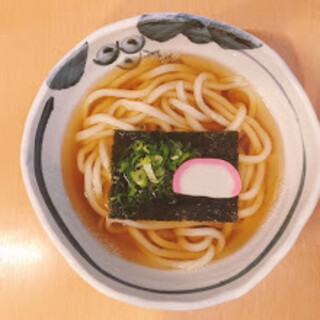
Approach this part of Higashinari and Osaka changes register. The city’s louder food mythology, takoyaki counters, department-store basements, late trains back from Namba, gives way to neighbourhood rhythm built around lunch hours and regulars. Udon Jojo fits it: compact, low-priced, and serious about a category Kansai treats less as novelty than infrastructure.
That matters because udon in western Japan is not a side note to ramen. Kansai udon has its own grammar: wheat noodles, a broth tradition that usually prizes clarity over force, and quick meals that still reward attention. In a city where casual eating is judged by value as much as polish, a shop selected for Tabelog 100 Udon WEST 2024 is measured against a deep regional field, not generic noodle comfort.
Wheat noodles, tempura, and the Osaka value equation
Read this address through sourcing and execution rather than luxury signals. Udon begins with flour, water, salt, and pressure; the interest lies in texture, elasticity, temperature control, and how the noodle behaves against broth or dipping sauce. Tempura adds another test, because a low-priced noodle shop has little room to hide poor oil management or heavy batter. The listed categories, udon, tempura, and udon-suki, place the kitchen inside a Kansai conversation about everyday staples handled with discipline.
Osaka’s noodle culture also makes price an editorial clue. A sub-¥1,000 meal must compete with commuter ramen, curry counters, bakery lunches, convenience-store efficiency, and station-area set meals. That is a harsher test than it looks. Ramen Jinsei JET 600 and Gokuraku Udon TKU occupy the same budget band in Osaka, while Ramen Shuki moves into a slightly higher everyday-noodle tier. In that company, Udon Jojo’s recognition signals consistency under pressure, not extravagance.
The sourcing angle matters because wheat is less romanticized than seafood or wagyu, yet defines the meal. Udon rewards kitchens that understand hydration and resting as much as seasoning. Kansai diners notice when a noodle has snap without toughness, or when broth supports rather than overwhelms. Those judgments rarely become spectacle, which makes award lists for noodle shops more useful than glossy dining narratives: they identify places where small technical choices accumulate.
For travellers building a wider Osaka food map, this is the counterweight to restaurants where imported ingredients or tasting-menu structures dominate. Compare the city’s breadth through .cafe, 52CHO-ME BAKERY, 551 Horai (551蓬莱), 99 Pizza Napoletana Gourmet, and a canto (Italian): Osaka’s range is not a ladder from casual to formal, but parallel systems, each with its own standards.
Why the small-room format changes the meal
An 18-seat udon shop operates differently from a large tourist canteen. Small capacity sharpens the relationship between production and service: noodles, frying, turnover, and cleaning must move in tight sequence. That scale is common in Japan’s serious casual dining, where restraint in the room places more responsibility on the food. There is no private-room theatre and no sprawling menu logic to distract from the bowl.
The no-reservation format also belongs to the genre. Udon is a democratic meal in Japan, and much of its appeal comes from immediacy. The trade-off is timing. Lunch-only service compresses demand, and a small staff means the room’s pace is governed by cooking rather than hospitality choreography. For a visitor, that is not inconvenience to romanticize; it is the operating reality of a shop built around production.
There is a social cue in the stated occasion: friends. Osaka’s casual restaurants often work as low-friction meeting points, especially outside the heavy entertainment districts. The point is not ceremonious dining, but a precise, affordable meal between errands, station transfers, or a longer east-side itinerary. Tamatsukuri and nearby Tsuruhashi bring a different texture from Umeda or Shinsaibashi, with residential blocks, rail access, and fewer visitor-facing cues.
That setting explains the appeal. Osaka’s food identity is too often flattened into snack culture, but everyday restaurants show the city’s standards. A bowl shop with a 2024 Tabelog 100 Udon WEST selection, a 3.65 Tabelog score, and a small seat count occupies a specific lane: not luxury, novelty, or mass-market convenience, but precision casual dining in a city that knows how to judge it.
How to place it within an Osaka itinerary
Udon Jojo makes sense when the day is built around east-central Osaka rather than a cross-city detour for one lunch. The nearest-station geography points toward Tamatsukuri and Tsuruhashi, so it pairs naturally with a neighbourhood walk, a market-oriented morning, or a transfer between central Osaka and the eastern wards. Parking is not part of the proposition; rail and walking suit the format.
Payment details reinforce the low-friction, local-use character. Credit cards and electronic money are not accepted, while PayPay is listed. That is practical for travellers accustomed to card-heavy dining in hotels and high-end restaurants, and a reminder that Osaka’s serious food culture does not always announce itself through international-facing infrastructure.
The broader lesson extends beyond one shop. Japan’s regional noodle categories reward specificity: udon in Kansai, ramen in dense station districts, curry shops in northern cities, and rice-based formats abroad ask different questions of value and craft. Readers comparing formats can look beyond Osaka through -Grilled beef Sukiyaki- KAMAKURA TANUKIAN 鎌倉 たぬき庵 in Kamakura. 鮪と炭火焼き うお炭 秋葉原店 in Tokyo.know in Kumamoto, (Shoku) Vietnam in Kawasaki, [Curry Senmon Ten] Maruyama Kyoju. in Sapporo, [ki:] in Kyoto, Jōdo Saké Bar in Los Angeles, and Onigiri Time in Pasadena.
The editorial verdict is restrained but clear: this Osaka address rewards travellers who treat everyday food with the seriousness usually reserved for tasting menus. Use Our full Osaka restaurants guide to place it among the city’s dining options, then widen the trip through Our full Osaka hotels guide, Our full Osaka bars guide, Our full Osaka wineries guide, and Our full Osaka experiences guide. The pleasure is not display, but the confidence of a small Kansai noodle shop operating in a city that understands the category well enough to be demanding.
At-a-Glance Comparison
Comparable venues by cuisine and price in the same metro.
| Venue | Cuisine | Price | Notes |
|---|---|---|---|
| Udon JojoThis venue — the venue you are viewing | Casual Udon Noodle Shop | $ | Not listed |
| Umaiya Takoyaki | Traditional Osaka Takoyaki | $ | Tenma |
| Ramen Jinsei JET 600 | Ramen & Tsukemen Shop | $ | Higashinari |
| Columbia8 Kitahama honten | Osaka spice curry counter | $ | Chūō |
| RAMEN Gamou Smile | Seasonal Japanese Ramen | $ | Jōtō |
| Shima Ya Honten | Traditional Japanese sweet potato café | $ | Abeno |
Recognition history
Dated appearances from independent guides and award organizations, with the underlying list record or original source where available.
Tabelog 100 #71 · No. 71
Tabelog · Tabelog 100 - Udon - WEST - 2024
Continue exploring
More in Osaka
Restaurants in Osaka
Browse all →




Bars in Osaka
Browse all →


Hotels in Osaka
Browse all →



Wineries in Osaka
Browse all →
At a Glance
- Solo
- Casual Hangout
- After Work
- Standalone
Current opening hours
- Monday
- 11:11 AM–2 PM
- Tuesday
- 11:11 AM–2 PM
- Wednesday
- 11:11 AM–2 PM
- Thursday
- 11:11 AM–2 PM
- Friday
- 11:11 AM–2 PM
- Saturday
- 11:11 AM–2 PM
- Sunday
- Closed
Hours can change for holidays and private events. Last verified .
Simple, no-frills local udon shop atmosphere with limited seating and a focus on quick meals rather than lingering.