On King Street West, Tulum Mexican Restaurant operates in one of Toronto's most competitive dining corridors, where Mexican cuisine rarely commands the same critical attention as the city's Japanese or Italian fine-dining tier. That gap is worth examining. Tulum positions itself at the intersection of traditional Mexican cooking and the ingredient-conscious approach that defines serious Toronto dining in 2024.
Pearl is the En Primeur Club membership app — saves, bookings, and concierge access live there. Same editors, same standards.
- Address
- 291 King St W, Toronto, ON M5V 1J5, Canada
- Phone
- +14165069491
- Website
- tulumm.ca
- Directions
- Get directions
 Saves & bookings on Pearl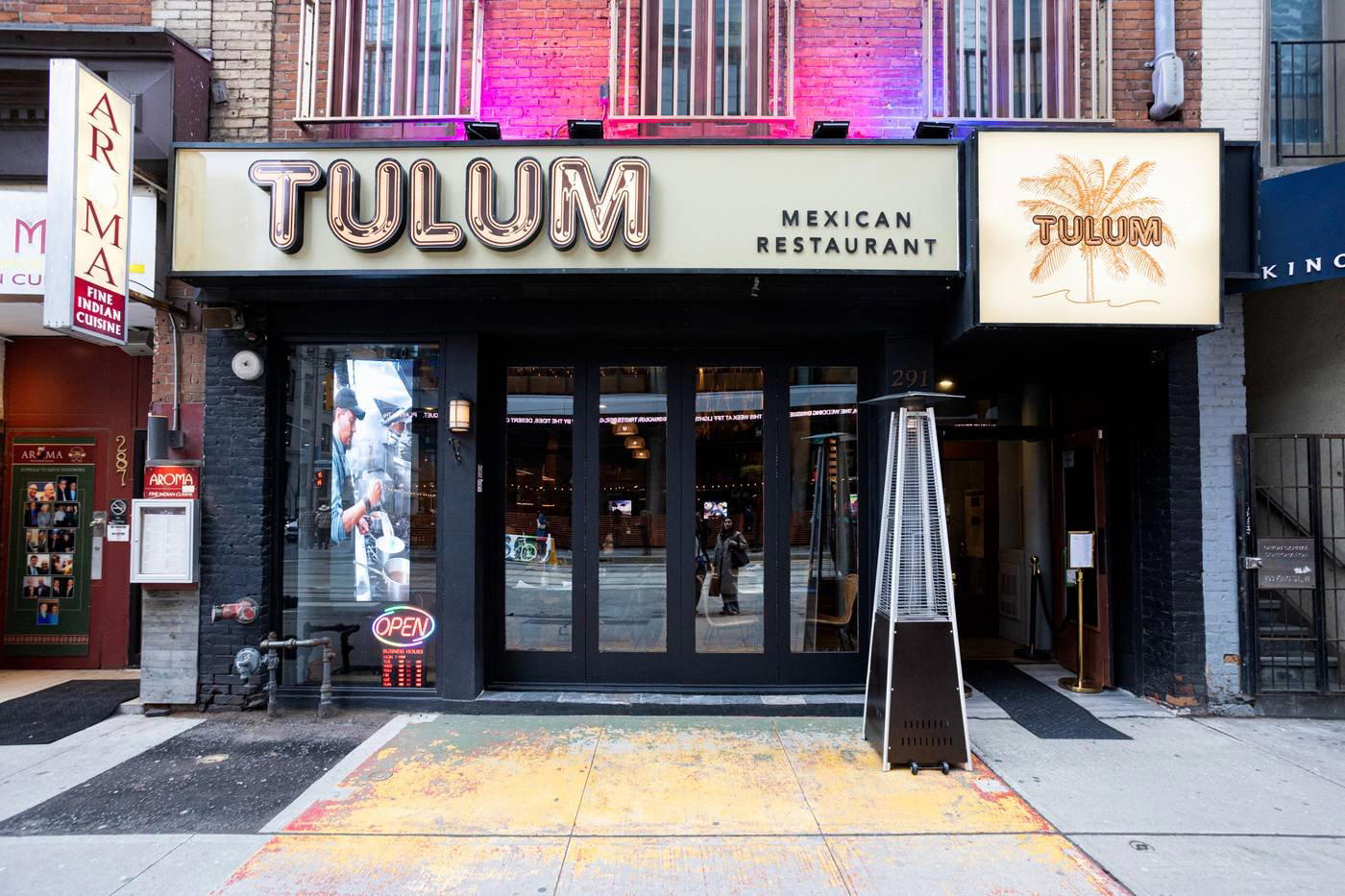
King Street West and the Case for Mexican Cooking in Toronto
King Street West has, over the past decade, become shorthand for a particular kind of Toronto ambition: high-volume rooms with serious kitchen programs, running cheek-by-jowl between entertainment venues and the city's more decorated fine-dining addresses. Alo anchors the contemporary end of that corridor. DaNico and Don Alfonso 1890 hold down the Italian bracket. What the strip has historically struggled to produce is a Mexican kitchen operating at the same register of seriousness. Tulum Mexican Restaurant, at 291 King St W, is an Authentic Mexican restaurant and makes an implicit argument: that Mexican cooking deserves the same scrutiny applied to the Japanese and Italian programs that dominate the city's critical conversation.
That argument is worth taking seriously. Toronto's dining scene has grown comfortable with the idea that Japanese technique, in particular, demands rigorous sourcing and extended craft timelines. Sushi Masaki Saito and Aburi Hana operate at the summit of the city's Japanese tier on exactly those terms. Mexican cooking, by contrast, tends to get flattened into either the casual-Tex-Mex bracket or, at the other extreme, an expensive tasting-menu format that imports its authority from European fine-dining conventions. The more interesting ground lies between those poles, where technique serves the ingredient rather than performing its own sophistication.
Local Ingredients, Mexican Framework
The editorial angle that makes Toronto's better Mexican kitchens worth watching is not the authenticity question, which tends to generate more heat than light, but rather the sourcing one. Canada's agricultural calendar is compressed compared to Mexico's, but Ontario's shoulder seasons produce ingredients that interact with chili-based cooking in ways that deserve more attention than they typically receive. Dried and fermented chilies, by their nature, act as a concentrating medium: they pull forward whatever is placed alongside them. A kitchen applying that logic to Ontario-grown produce is doing something structurally different from one importing everything from its country of reference.
This intersection of imported culinary method and local product supply is one of the defining tensions in serious Canadian cooking more broadly. Tanière³ in Quebec City and AnnaLena in Vancouver both operate within that tension, translating European or regional technique through a specifically Canadian ingredient lens. The question for a Mexican kitchen in Toronto is whether it applies the same discipline, or whether it defaults to sourcing patterns that make sense in Oaxaca but land differently in Ontario.
The Competitive Set for Mexican Dining in Toronto
Mexican cuisine in Toronto does not occupy the same critical tier as Japanese omakase or Italian fine dining, but that gap is closing in cities across North America. In New York, Le Bernardin's level of technical rigor has raised the baseline expectation for what serious cooking looks like across all cuisines. Atomix did the same for Korean cooking, demonstrating that a cuisine can move from perceived informality to serious critical standing within a single generation of kitchens. Mexican cooking in Canadian cities is at an earlier stage of that same trajectory.
The comparison venues that matter for contextualizing Tulum are not, primarily, the $$$$ tasting-menu rooms on King West. They are the Toronto kitchens that have succeeded in repositioning a cuisine type within a more rigorous sourcing and technique framework. Jérôme Ferrer - Europea in Montreal is instructive on this point: it built its standing by applying classical French discipline to North American ingredient realities, and the result is a kitchen that reads as both technically serious and specifically rooted. That model is available to any cuisine that commits to it.
What the King West Address Signals
Location on King Street West carries specific expectations. The strip attracts a post-work and pre-theatre crowd that skews toward confident spending but not necessarily toward extended tasting formats. Rooms on this corridor tend to succeed when they can operate at volume without sacrificing kitchen focus. That is a harder brief than it sounds. The Canadian kitchens that have managed it most convincingly have generally done so by narrowing their menu scope and deepening their sourcing relationships, rather than trying to cover the full range of a cuisine in a single sitting.
For context on what that kind of focus looks like outside major urban centers, Restaurant Pearl Morissette in Lincoln and Eigensinn Farm in Singhampton represent the pole of maximal sourcing commitment: kitchens that have structured their entire operation around a specific ingredient relationship. A city-center Mexican restaurant operating in a high-traffic corridor cannot replicate that model directly, but the underlying logic, that a narrower, more committed kitchen produces more coherent food than a broad one, applies regardless of setting.
Smaller Ontario towns have their own versions of this: The Pine in Creemore and Barra Fion in Burlington have both built audiences by applying serious technique to local product in formats that a central Toronto room would struggle to sustain. The question is what discipline a King West kitchen can import from those models.
Planning Your Visit
Tulum Mexican Restaurant is located at 291 King St W, Toronto, ON M5V 1J5, in the heart of the King West corridor, accessible by TTC at the King streetcar stop.
Reservations are recommended. Location: 291 King St W, accessible by King streetcar. Nearby context: The corridor also houses Alo and DaNico for comparison against the city's contemporary and Italian fine-dining tiers.
A Quick Peer Check
Comparable venues nearby, for context on price, style, and recognition.
| Venue | Cuisine | Price | Notes |
|---|---|---|---|
| Tulum Mexican RestaurantThis venue — the venue you are viewing | Authentic Mexican | $$$ | Not listed |
| Easy Restaurant | Southwestern-Inspired Diner | $$$ | Little Tibet |
| Silent H | Modern Mexican | $$$ | Fashion District |
| Mezcalero | Modern Mexican Tapas & Mezcal Bar | $$$ | Annex |
| Fonda Lola | Modern Mexican Cantina | $$ | Trinity Bellwoods |
| Atomic 10 | Modern Latin Fusion Tacos | $$ | Oakwood Vaughan |
Continue exploring
More in Toronto
Restaurants in Toronto
Browse all →
Bars in Toronto
Browse all →
Hotels in Toronto
Browse all →


Wineries in Toronto
Browse all →
At a Glance
- Lively
- Trendy
- Energetic
- Date Night
- Group Dining
- Casual Hangout
- Open Kitchen
- Craft Cocktails
Current opening hours
- Monday
- Closed
- Tuesday
- 5 PM–2 AM
- Wednesday
- 5 PM–2 AM
- Thursday
- 5 PM–2 AM
- Friday
- 5 PM–4 AM
- Saturday
- 5 PM–4 AM
- Sunday
- 5 PM–4 AM
Hours can change for holidays and private events. Last verified .
Lively and energetic atmosphere featuring lively music, bold flavors, and immersive Tulum-inspired design.