Our verdict
Yoshii's Omakase at Crown Sydney brings Japanese counter dining to one of the city's most prominent addresses, offering a structured multi-course sequence in the omakase tradition. Positioned within the Barangaroo precinct, it occupies a tier of Sydney dining defined by precision, restraint, and booking scarcity rather than volume or spectacle.

Pearl is the En Primeur Club membership app — saves, bookings, and concierge access live there. Same editors, same standards.
- Address
- Crown Sydney, Level 2/1 Barangaroo Ave, Barangaroo NSW 2000, Australia
- Phone
- +61288717171
- Hours
- Mon ClosedTue–Wed 6–8:30 PMThu 6–8 PMFri–Sat 6–8:30 PM, 8:45–11:15 PMSun Closed
- Website
- crownsydney.com.au
- Directions
- Get directions
- Booking
- Book on the venue's website
The menu
What to order
- Miso-marinated toothfish
- Shiitake mushrooms smoked in cedar
- Crab in persimmon
Sydney's Omakase Counter in Context
Japan's omakase tradition arrived in Australian fine dining gradually, then all at once. For most of the 2000s, Sydney's Japanese upper tier meant formal kaiseki rooms and high-end sushi bars pitched at expense-account lunches. The shift toward dedicated counter formats, where a single meal sequence drives the entire operation and the kitchen has no fallback menu, took hold later here than in cities like New York or London. By the time our full Sydney restaurants guide began tracking the category seriously, the city had developed a small but committed cohort of omakase counters that priced and operated against global peers rather than local Japanese restaurant norms.
Yoshii's Omakase, located on Level 2 of Crown Sydney at 1 Barangaroo Avenue, sits squarely within that cohort. The Barangaroo address matters as context: the precinct represents Sydney's most concentrated gathering of high-spend dining, where venues like Rockpool anchor the Australian fine dining end of the market and seafood-driven operations like Saint Peter define the premium produce conversation. Within that concentration, a Japanese counter format signals a deliberate positioning choice, operating in a category defined by scarcity of seats and depth of sequence rather than breadth of menu.
The Architecture of an Omakase Progression
The omakase format is not simply a degustation in Japanese clothing. Where a European tasting menu often moves through protein categories with sauce-based transitions, the Japanese counter tradition structures a meal as a progression of techniques: raw preparations first, then cooked, with temperature, fat content, and intensity calibrated so each course recalibrates the palate for what follows rather than simply adding another course to a count. At counters operating at this level internationally, including Atomix in New York City, the sequence functions as the primary creative statement, with individual dishes acting as chapters rather than standalone moments.
This distinction in philosophy separates serious omakase counters from restaurants that use the word loosely. At the upper end of the format, the kitchen commits entirely to the progression: no substitutions, no parallel menus, and a seat count low enough that the chef can calibrate pacing in real time. The result is a meal that reads differently on the palate depending on where you sit within the sequence, which is why the format demands a minimum commitment of time and attention that casual dining formats do not.
Fish and seafood sourcing sits at the center of any credible Japanese counter at this price tier. Australia's position relative to cold southern ocean currents and its proximity to tropical reef systems means that the raw material available to Sydney kitchens is genuinely different from what Tokyo or Paris counters work with. This geographic fact is not a consolation prize for operating outside Japan; it is an argument for why Australian omakase, at its most considered, produces a progression that cannot be replicated elsewhere. The challenge is discipline: counters that foreground Australian product while maintaining the structural logic of Japanese sequencing occupy a more demanding position than those that simply import technique without interrogating ingredient sourcing.
Barangaroo and the Premium Sydney Dining Tier
The Crown Sydney building has attracted sustained critical attention since it opened, and not all of it flattering. The scale of the development, the casino license controversy, and the density of high-end venues within a single tower created a dining environment that some critics argued was more about concentration than curation. What has emerged over time, however, is that the building functions as a kind of pressure test for ambitious restaurant formats: the rent structure and clientele expectations demand that venues operate at a level that justifies both the address and the price point.
For an omakase counter, that pressure cuts both ways. The address provides visibility and access to an international visitor base that Sydney's more embedded neighbourhood restaurants, such as 10 William St or 10 Pounds, simply do not receive. At the same time, it requires operating at a standard comparable to counters in Tokyo or New York, where the same traveller may have eaten the week before. The comparison set for a Crown Sydney omakase is not Sydney's broader Japanese restaurant market; it is the global counter format at premium price points, venues like Le Bernardin in New York City, where technical precision and sourcing intelligence are baseline expectations rather than points of distinction.
How Yoshii's Compares Within Australia's Fine Dining Conversation
Australia's fine dining scene has matured in ways that make international comparison less awkward than it once was. Attica in Melbourne brought Australian fine dining into consistent conversation with the World's 50 Best list, and Brae in Birregurra established that serious tasting menu operations could sustain outside metropolitan centres. Within Sydney specifically, the range runs from coastal-produce-driven formats to more technique-intensive European-influenced kitchens, with venues like 1021 Mediterranean and Bayly's Bistro in Kirribilli operating in adjacent but distinct categories.
What Yoshii's Omakase represents within this broader picture is a commitment to a format with no hedging built in. A counter-only omakase in a major hotel cannot pivot to casual service or a bar menu if the main format underperforms. The format bet is total, which means that the venues which sustain it over time do so on the strength of consistent sourcing, technical execution, and the kind of repeat clientele that books months in advance and treats the experience as an appointment rather than an occasion. That pattern of advance booking, common to high-performing omakase globally, also applies here: planning several weeks ahead at minimum is a reasonable baseline, and for preferred dates or parties, a longer lead time is more reliable.
For diners coming from broader Sydney exploration, the contrast with more casual formats across the city, from the neighbourhood energy of bills in Bondi Beach to the relaxed bar dining of Bar Carolina in South Yarra or the coffee culture anchored by Barry Cafe in Northcote, is significant. Omakase at this level is a different category of decision entirely, requiring time, intention, and a willingness to surrender the menu to the kitchen's logic for the duration of the meal.
Planning a Visit
Yoshii's Omakase operates within Crown Sydney at Level 2, 1 Barangaroo Avenue, placing it within easy reach of the CBD and the ferry terminals at Barangaroo South. The omakase format means that arrival time matters more than at conventional restaurants: late arrivals interrupt the pacing of the sequence for everyone at the counter, and serious counters enforce start times accordingly. Booking well in advance is advisable, particularly for weekend sittings, and the investment involved, both in time and cost at this tier, makes confirmation of any dietary requirements at the time of reservation rather than on the night a practical necessity. For additional context on where Yoshii's sits within Sydney's broader dining options, the EP Club Sydney guide maps the full range from neighbourhood discoveries like Johnny Bird in Crows Nest to destination formats at this level.
Frequently asked questions
What part of town is Yoshii's Omakase in?
Yoshii's Omakase is located at Crown Sydney, Level 2/1 Barangaroo Ave, Barangaroo NSW 2000, Australia, Sydney.
Is Yoshii's Omakase the only dedicated omakase counter inside Crown Sydney?
Yoshii's Omakase occupies Level 2 of Crown Sydney at 1 Barangaroo Avenue, positioning it as a distinct counter-format Japanese offering within a development that houses multiple fine dining venues. Sydney's broader omakase scene has grown considerably, with counters appearing across the CBD and inner suburbs, but Yoshii's sits within the specific Crown precinct rather than in the standalone restaurant streets of Surry Hills or the CBD core.
What dish is Yoshii's Omakase famous for?
Yoshii's Omakase at Crown Sydney is structured as a sequenced counter experience rather than a restaurant built around a single signature item. In the omakase tradition, the chef dictates the progression based on season and product quality, meaning no single dish defines the offering. The counter format itself, within Barangaroo's premium dining precinct, is the defining characteristic.
How far ahead should I plan for Yoshii's Omakase?
Omakase counters at the premium end of Sydney's dining market, particularly those within Crown Sydney where the international visitor base competes with local demand, tend to book well in advance. Planning two to four weeks ahead is a reasonable minimum for most sittings, though weekend availability at Barangaroo venues typically tightens faster. Checking availability as early as possible is advisable.
A Pricing-First Comparison
Comparable venues nearby, for context on price, style, and recognition.
| Venue | Cuisine | Price | Notes |
|---|---|---|---|
| Yoshii's OmakaseThis venue — the venue you are viewing | Modern Japanese Omakase | $200–300 | Not listed |
| Kuon Sushi Sei | High-End Japanese Omakase and Sushi | $150–200 | Haymarket, High-End Japanese Omakase and Sushi |
| Green Shiso | Modern Japanese Omakase | $150–200 | Sydney, Modern Japanese Omakase |
| Rengaya | Premium Japanese Yakiniku BBQ | $50–100 | North Sydney, Premium Japanese Yakiniku BBQ |
| O'Uchi | Modern Organic Japanese Izakaya | Not listed | Sydney, Modern Organic Japanese Izakaya |
| Robata Jones | Japanese Robata Izakaya | $30–50 | Artarmon, Japanese Robata Izakaya |
Continue exploring
More in Sydney
Restaurants in Sydney
Browse all →
Bars in Sydney
Browse all →
Hotels in Sydney
Browse all →

Details
- Intimate
- Elegant
- Sophisticated
- Modern
- Special Occasion
- Date Night
- Celebration
- Chefs Counter
- Sake Program
- Extensive Wine List
- Omakase
- Tasting Menu
- Counter Dining
- Sake
- Wine Pairing
- Pescatarian Friendly
Current opening hours
- Monday
- Closed
- Tuesday
- 6–8:30 PM
- Wednesday
- 6–8:30 PM
- Thursday
- 6–8 PM
- Friday
- 6–8:30 PM, 8:45–11:15 PM
- Saturday
- 6–8:30 PM, 8:45–11:15 PM
- Sunday
- Closed
Hours can change for holidays and private events. Last verified .
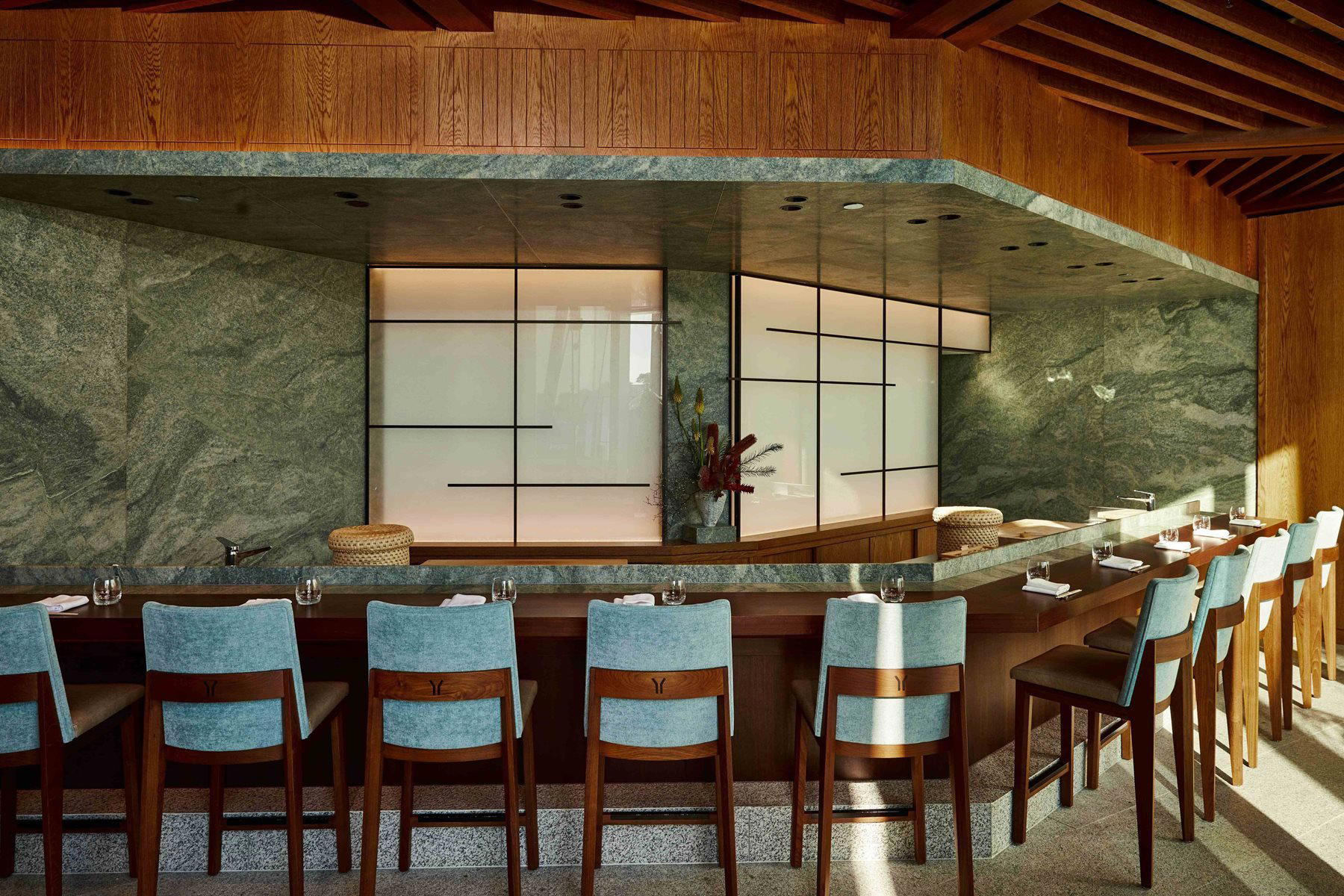
Hushed, modern, and ornate counter seating with jade-esque design, offering an intimate front-row view of the chef's precise craftsmanship.