Trzesniewski serves Viennese Finger Sandwiches at Linzerie am Taubenmarkt, with Swedish Herring, Bacon and Egg, and Spicy Paprika suited to a quick lunch.
Pearl is the En Primeur Club membership app — saves, bookings, and concierge access live there. Same editors, same standards.
- Address
- Linzerie am Taubenmarkt Landstraße 12 Erdgeschoss, Shop-Nummer 10, 4020 Linz, Austria
- Phone
- +43732296056
- Website
- trzesniewski.at
- Directions
- Get directions
 Saves & bookings on Pearl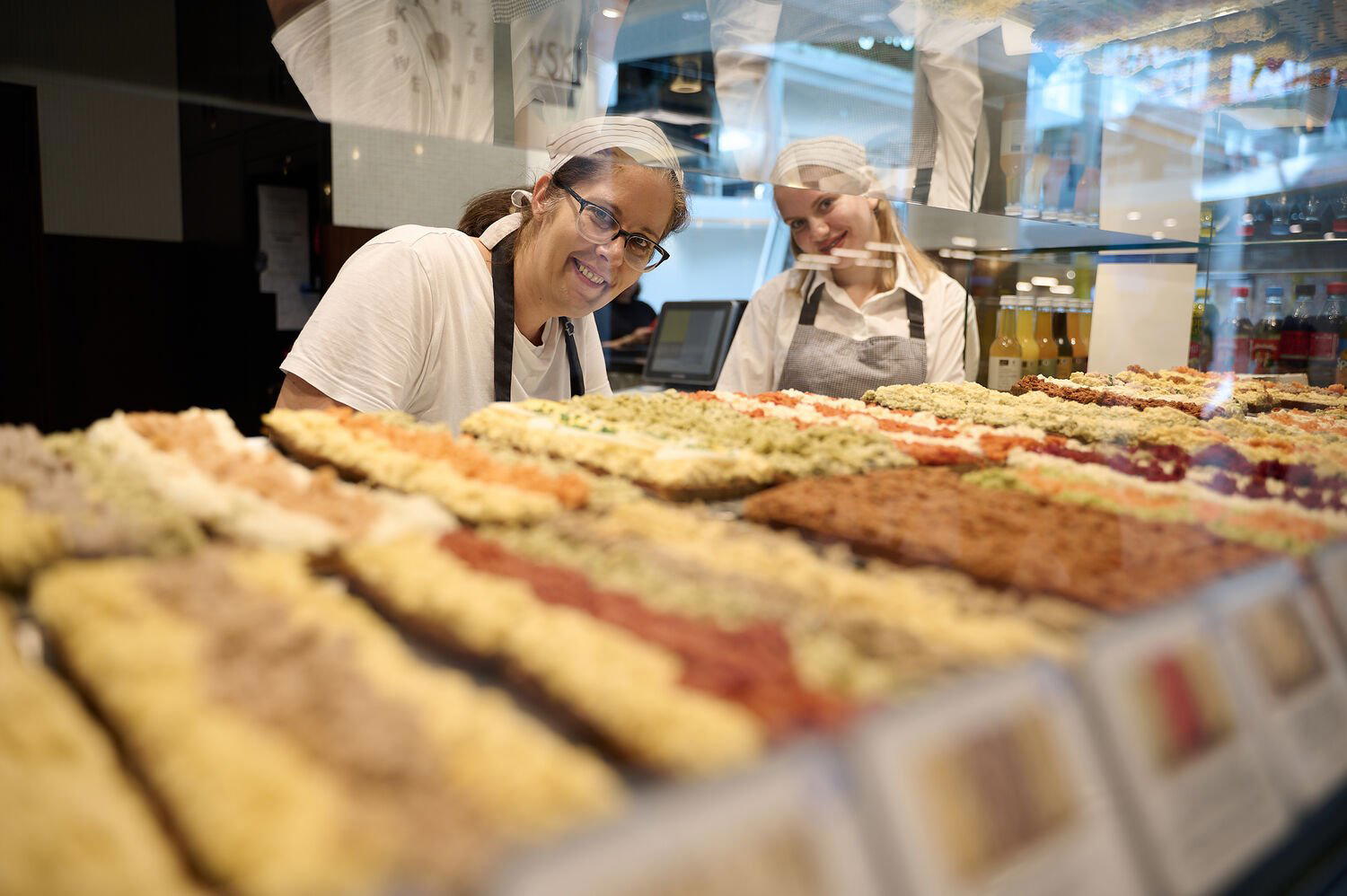
A Linz Fixture on Landstraße
The Taubenmarkt end of Landstraße has long functioned as Linz's commercial spine, a stretch where chain retailers and local institutions occupy the same postcode without much friction. Within the Linzerie shopping complex at number 12, Trzesniewski operates from a ground-floor position that places it squarely in the flow of weekday foot traffic rather than the destination-dining circuit. That address is not incidental. The Trzesniewski format, originating in Vienna, was built around accessibility: small open-faced sandwiches, high turnover, and a price point of about $5 per person that requires no occasion to justify a visit. In Linz, that model persists, and the branch on Landstraße functions as a quick-service anchor in a city where formal dining rooms, like the modern cuisine at Rossbarth or the international register at Verdi, occupy an entirely different tier of commitment and spend.
The Format and Its Origins
The Trzesniewski concept traces to early twentieth-century Vienna, where the open-faced sandwich, or belegte Brötchen in its broader Central European context, was already a working-day staple. The Vienna flagship on Dorotheergasse has been operating since 1902, and the model that spread to other Austrian cities carried the same structural logic: a counter display of small, pre-assembled rye-bread rounds topped with spreads ranging from egg and anchovy combinations to vegetable-based pastes. Portions are deliberately small, designed to be eaten standing or taken away, and priced to encourage ordering several at once. That format, with counter service and no reservation, places Trzesniewski outside the evaluation criteria applied to sit-down restaurants entirely.
How the Format Has Evolved
Trzesniewski across its Austrian branches is less about reinvention and more about selective preservation. The core spread-and-rye formula has remained largely consistent across decades, which is itself a curatorial decision in an era when most food-service formats have cycled through several concept refreshes. Where change has occurred, it tends to cluster around peripheral elements: presentation standards, hygiene compliance, and the degree to which branches align visually with the Vienna flagship's institutional aesthetic. The Linz location, set within a retail complex rather than a standalone building, adapts that aesthetic to a shopping-centre context, an environment that prioritises throughput and convenience over the atmospheric density of the Dorotheergasse original. That compromise is the branch model's fundamental tension, and it is worth naming directly. A counter inside Linzerie serves a different social function than the Vienna room where office workers and tourists have shared the same narrow standing space for generations. The Linz version trades some of that atmospheric compression for broader accessibility within the city's retail core.
Where It Sits in Linz's Eating Scene
Linz has developed a more considered restaurant scene over the past decade, with operators across price tiers bringing sharper concepts to a city that was historically overshadowed by Vienna and Salzburg in Austrian culinary coverage. Aroy Thai serves the city's appetite for Asian cooking; regional producers have found outlets through operators working the €€ bracket; and evening dining has grown more international in reference without abandoning Austrian product. Within that context, Trzesniewski functions as a daytime utility rather than a culinary destination. It answers a specific question: where to eat quickly and cheaply on Landstraße without committing to a sit-down lunch. That is not a criticism. Cities need both registers, and a working quick-service counter in a high-footfall retail location serves a genuine need.
The Counter Experience
Arriving at a Trzesniewski counter, the visual logic is immediate: a refrigerated display of pre-made rounds, each topping clearly visible, with small paper labels identifying spreads. The ordering process requires no translation beyond pointing. Spreads typically cover the range from herring and paprika combinations to egg-based pastes and vegetable preparations, each on a thumbnail-sized disc of dark rye. A single round constitutes a mouthful rather than a meal; the format assumes multiples. The accompanying shot-glass of Pfiff may or may not feature at branch locations, depending on licensing. The physical environment at the Linz counter inside Linzerie prioritises function: tiled surfaces, overhead lighting calibrated for retail rather than atmosphere, and the ambient noise of a shopping centre rather than the murmur of a standalone dining room. For readers who have experienced the Vienna flagship, the Linz branch will read as a functional extension of the concept rather than a full recreation of it.
Planning a Visit
Trzesniewski at Linzerie am Taubenmarkt, Landstraße 12, operates on a walk-in basis consistent with the counter-service format. No reservation infrastructure applies. The location within Linzerie means access aligns with the shopping centre's opening hours, making it a natural stop during a midday circuit of central Linz rather than a standalone dining destination. Visitors staying or dining elsewhere in the city centre, whether continuing to an evening at Rossbarth or exploring Austrian fine dining in the broader region at venues like Landhaus Bacher in Mautern an der Donau, Döllerer in Golling an der Salzach, or Ois in Neufelden, will find the Trzesniewski stop fits naturally into a morning or lunchtime window. The format is cash-friendly by tradition, though card acceptance at Austrian branches has expanded in recent years. No dress code applies.
Austrian Dining in Broader Context
For readers using Linz as a base to explore Upper Austria's restaurant range, the regional picture extends well beyond the city limits. Gourmetrestaurant Tannenhof in Sankt Anton am Arlberg, Griggeler Stuba in Lech, Kräuterreich by Vitus Winkler, and Restaurant 141 by Joachim Jaud in Mieming represent the Alpine fine-dining tier operating at the furthest remove from the quick-service counter format. At the international level, the tasting-menu discipline of Le Bernardin in New York or the Korean-American precision of Atomix illustrate how far the investment-dining category extends globally. Trzesniewski sits at the opposite end of that spectrum by design, and has done so consistently for over a century.
Reputation First
Comparable venues nearby, for context on price, style, and recognition.
| Venue | Cuisine | Price | Notes |
|---|---|---|---|
| TrzesniewskiThis venue — the venue you are viewing | Viennese Finger Sandwiches | $ | Not listed |
| Die* Obelisk | Modern Austrian Sausage Stand | $ | JKU Campus |
| Pöstlingberg Schlössl | Austrian Fine Dining | $$$ | Pöstlingberg |
| Leberkas-Pepi | Traditional Austrian Leberkäse | $ | Landstraße |
| Hostaria Bigoli Al Mercato | Veneto Osteria | $$ | city center |
| Ichi go ichi e | Japanese Ramen Bar | $$ | Linzerie |
Continue exploring
More in Linz
Restaurants in Linz
Browse all →
Bars in Linz
Browse all →

Hotels in Linz
Browse all →

At a Glance
- Classic
- Well Known
- Casual Hangout
- Historic Building
Current opening hours
- Monday
- 9:30 AM–6 PM
- Tuesday
- 9:30 AM–6 PM
- Wednesday
- 9:30 AM–6 PM
- Thursday
- 9:30 AM–6 PM
- Friday
- 9:30 AM–6 PM
- Saturday
- 9:30 AM–5 PM
- Sunday
- Closed
Hours can change for holidays and private events. Last verified .
Retro buffet-style with standing counters, lively yet casual atmosphere focused on quick, no-cutlery bites.