Ichi go ichi e occupies a ground-floor address on Linz's central Landstraße, bringing a Japanese-inflected sensibility to Austria's third-largest city. The name, a Japanese phrase meaning 'this moment, only once,' signals the format's intent: a meal shaped by precision and transience rather than routine. For Linz, where fine dining skews toward Central European tradition, this represents a distinct counterpoint.
Pearl is the En Primeur Club membership app — saves, bookings, and concierge access live there. Same editors, same standards.
- Address
- Landstraße 12/Linzerie EG, 4020 Linz, Austria
- Phone
- +436642353665
- Website
- ichigoichie.at
- Directions
- Get directions
 Saves & bookings on Pearl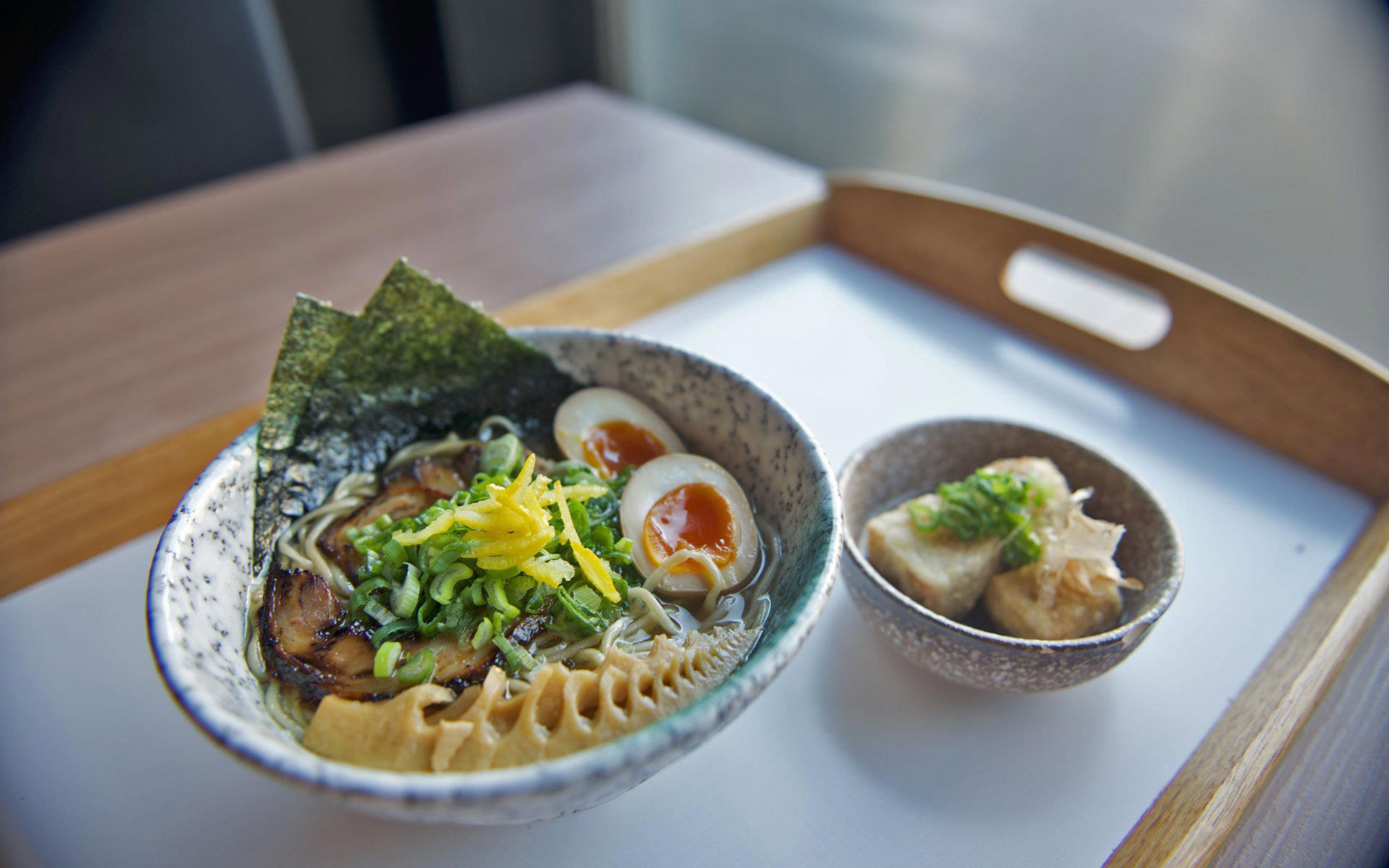
A Japanese Phrase in an Austrian City
The phrase ichi go ichi e translates, roughly, to 'one time, one meeting', a Japanese concept rooted in the tea ceremony tradition, where each encounter is treated as singular and unrepeatable. That framing is doing real work at the Landstraße address in Linz's pedestrian core. Austria's fine dining infrastructure tends to anchor itself in the alpine-regional tradition: game, dairy, foraged herbs, root vegetables prepared with classic French discipline, as seen at destinations like Döllerer in Golling an der Salzach or Obauer in Werfen.
Linz itself is an underexamined city for serious dining. It sits between Vienna and Salzburg on the Danube, often passed over by visitors who treat it as a stopover rather than a destination. The local dining scene has been quietly developing a more international vocabulary, with venues like Verdi working an international register and Rossbarth pushing modern cuisine at the leading price tier. Ichi go ichi e enters that conversation from a different angle entirely.
What the Name Implies About the Format
In Japan, the ichi go ichi e principle shaped the kaiseki tradition and, later, the omakase counter, both formats where the guest surrenders the menu decision to the kitchen and receives something calibrated to the moment: the season, the available produce, the particular composition of the room that night. The name signals a preference for impermanence over fixed menus and for the kitchen's judgment over the guest's selection.
This matters in the context of European fine dining, where tasting menus have become the default high-end format, but the underlying philosophy often remains the chef's artistic statement rather than a genuine response to the guest and the moment. The distinction is subtle but detectable in how courses are paced, how substitutions are handled, and whether the kitchen treats the evening as performance or conversation. Venues like Ikarus in Salzburg have built a reputation around rotating guest chefs, a different kind of impermanence, while Kräuterreich by Vitus Winkler in Sankt Veit im Pongau anchors its format in hyper-local herb cultivation. The restaurant appears to be reaching for something more philosophically Japanese in its premise.
Local Ingredients, Japanese Method: The Productive Tension
The editorial angle that makes the restaurant worth examining is the intersection of imported Japanese technique with Central European produce. Austria's larder is genuinely strong: Styrian pumpkin oil, Waldviertel carp and catfish, white asparagus from the Marchfeld, Mostviertel pears, Lungauer Kaspressknödel, alpine dairy from Vorarlberg. The question a Japanese-influenced kitchen in Linz faces is how to apply precision-cutting traditions, restrained seasoning, and temperature discipline, techniques refined over centuries around Japanese ingredients, to materials that carry entirely different textures, fat structures, and flavor profiles.
This is not a new problem in fine dining. The broader movement toward applying Japanese knife work and umami-awareness to non-Japanese produce has produced serious results at venues ranging from Le Bernardin in New York City to Atomix in New York City, where Korean technique meets global sourcing. In Austria specifically, Steirereck im Stadtpark in Vienna has demonstrated for decades that deep technical rigor applied to Austrian regional produce can generate particularly compelling cooking on the continent. The productive tension at the restaurant, if the kitchen is working that vein seriously, is whether Japanese method clarifies or complicates the identity of Danubian or alpine ingredients.
Danube fish, zander, carp, catfish, are structurally quite different from the tuna and bream of Japanese coastal cuisine. Applied precision is not automatically transferable. But the principles of temperature control, textural contrast, and minimal intervention that characterize the better end of Japanese cooking can, in experienced hands, reveal rather than mask the character of Central European raw materials. This is the interpretive gamble at the core of what the name promises.
Linz's Dining Context and Where This Fits
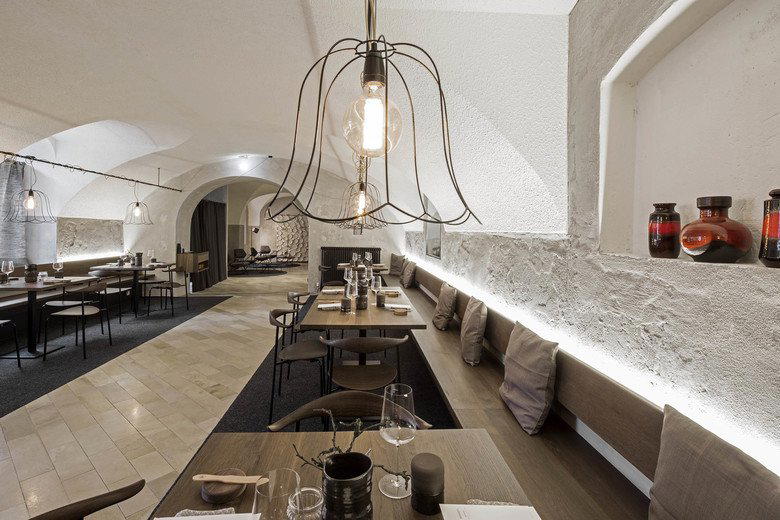
Among Linz's dining options, the city offers a spread from casual to ambitious. Aroy Thai and Be right back operate at the more accessible end, while Bruckner's im Brucknerhaus Linz trades on the cultural cachet of the Brucknerhaus venue. The restaurant, by virtue of its name and its Landstraße address, is pitching itself toward a guest who is looking for conceptual seriousness alongside technical craft. The Landstraße is the city's main commercial artery, which means foot traffic and visibility, but a ground-floor address in the Linzerie shopping complex suggests a setting that relies on interior design and kitchen output rather than destination location to create its atmosphere.
For Austria as a broader dining region, the comparison set for technique-led restaurants with non-Austrian conceptual influences includes Landhaus Bacher in Mautern an der Donau, Gourmetrestaurant Tannenhof in Sankt Anton am Arlberg, Griggeler Stuba in Lech, and Restaurant 141 by Joachim Jaud in Mieming. These venues share a commitment to craft without uniformly defaulting to regional Austrian cuisine as their frame. Ois in Neufelden, closer geographically to Linz, takes a more explicitly local-produce approach. The restaurant sits in different conceptual territory from all of them.
Planning Your Visit
The restaurant is located at Landstraße 12, ground floor of the Linzerie building, in central Linz. The Landstraße is easily reached on foot from the main train station in under ten minutes, or directly by tram along the city's main line. Advance booking is recommended. The seasonal logic embedded in the restaurant philosophy suggests the menu may shift with the year.
Peers in This Market
Comparable venues nearby, for context on price, style, and recognition.
| Venue | Cuisine | Price | Notes |
|---|---|---|---|
| Ichi go ichi eThis venue — the venue you are viewing | Japanese Ramen Bar | $$ | Not listed |
| Lentos Restaurant | Modern Austrian with river views | $$ | Donaulände |
| my Indigo Lentia | Global Fusion Bowls & Hot Pots | $$ | LentiaCity |
| Die Huberei | Modern Austrian Wirtshaus | $$ | Altstadt |
| Front Food | 100% Vegan Fast Food | $$ | Linz Innenstadt |
| Linza Döner | Turkish Döner Kebab | $ | Urfahr |
Continue exploring
More in Linz
Restaurants in Linz
Browse all →
Bars in Linz
Browse all →

Hotels in Linz
Browse all →

At a Glance
- Trendy
- Cozy
- Modern
- Casual Hangout
- Open Kitchen
- Sake Program
Current opening hours
- Monday
- 11:30 AM–8:30 PM
- Tuesday
- 11:30 AM–8:30 PM
- Wednesday
- 11:30 AM–8:30 PM
- Thursday
- 11:30 AM–8:30 PM
- Friday
- 11:30 AM–8:30 PM
- Saturday
- 11:30 AM–8:30 PM
- Sunday
- Closed
Hours can change for holidays and private events. Last verified .
Casual and lively atmosphere in a small shopping mall ramen bar with focus on flavorful, perfectly cooked dishes.