Trattoria Sabatino serves Authentic Tuscan Trattoria fare in a historic standalone building, with local sourcing and dishes like Bistecca alla Fiorentina.
Pearl is the En Primeur Club membership app — saves, bookings, and concierge access live there. Same editors, same standards.
- Address
- Via Pisana, 2R, 50143 Firenze FI, Italy
- Phone
- +39 055 225955
- Website
- trattoriasabatino.it
- Directions
- Get directions
 Saves & bookings on Pearl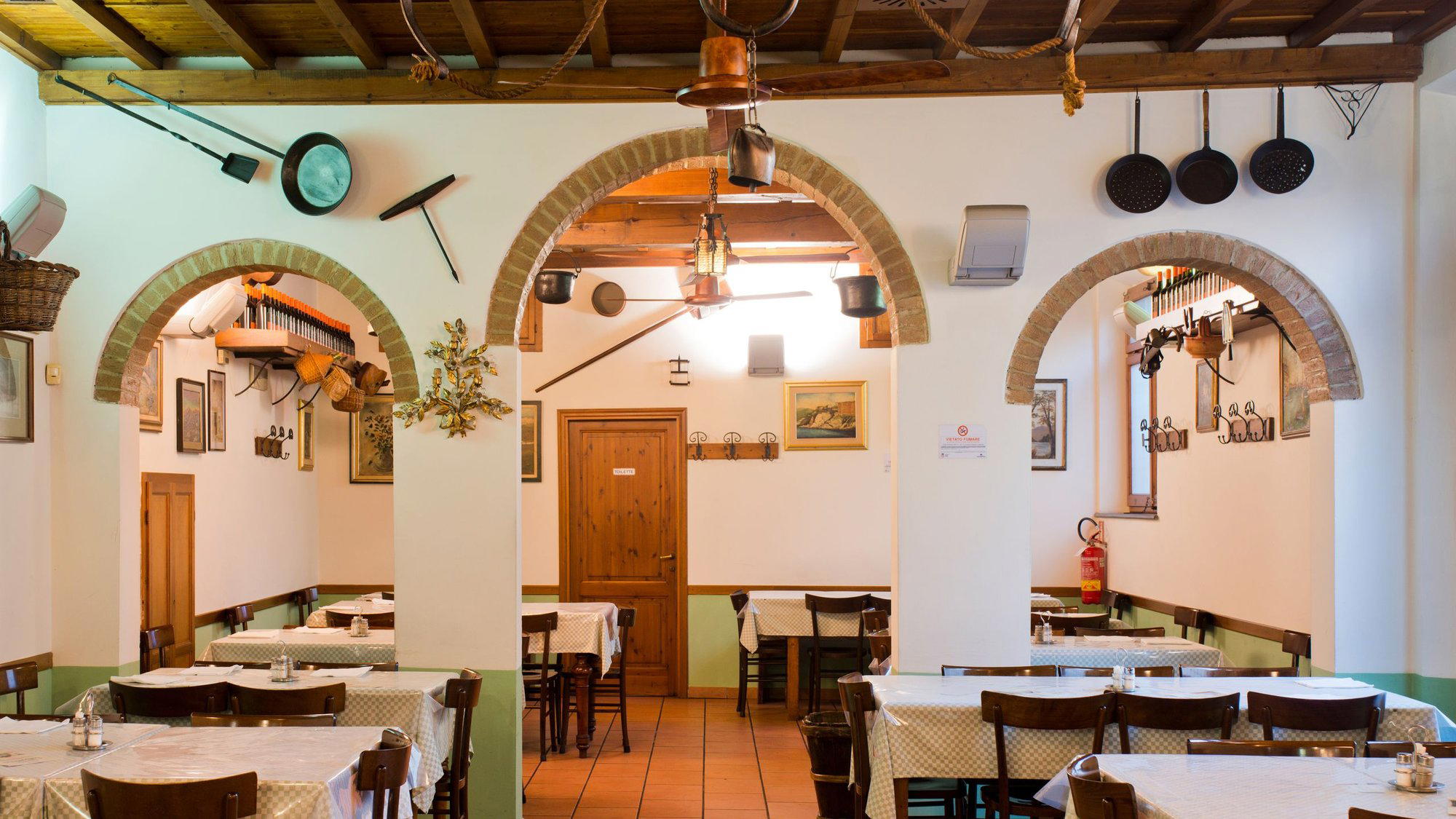
Where the Oltrarno Eats on a Tuesday Night
Via Pisana runs west from the Porta San Frediano gate, past the old wool-working buildings that gave this quarter its working-class character before the galleries and boutique hotels arrived. Trattoria Sabatino sits at number 2R, close enough to the ancient walls that the stone still radiates cold in winter. The room is what Florentine trattorias looked like before the design consultants came: strip lighting, paper tablecloths, wooden chairs worn smooth by decades of use. The noise level at lunch is closer to a school refectory than a dining room, and that is precisely the point. In a city where Florence's upper dining tier, represented by places like Enoteca Pinchiorri and Santa Elisabetta, commands tasting-menu prices and tasting-menu formality, Sabatino has held its position at the opposite end of the spectrum with an almost defiant consistency.
The Sounds and Smells That Locate You Immediately
The editorial angle on Sabatino is sensory before it is gastronomic. You smell the kitchen before you see the menu: soffritto base, rosemary-scented roasting fat, the faint mineral edge of a house wine poured from a carafe. The lunch service, which is when the room fills fastest, produces a specific acoustic texture: crockery against laminate tables, rapid Florentine dialect between staff and regulars, the intermittent percussion of the swing door between kitchen and floor. These are not accidental design choices; they are the residue of a trattoria that has not been optimised for anything except serving lunch to people who live and work in the Oltrarno. That unmediated quality is rarer now in the historic centre of Florence than it was twenty years ago, and it draws visitors who have already done the more formal rooms, places like Atto di Vito Mollica and Borgo San Jacopo, and want the corrective experience of somewhere that charges for the food rather than the setting.
Cucina Povera in Practice
The Florentine trattoria tradition is rooted in cucina povera, the cooking of scarcity that turned offal, dried legumes, and stale bread into dishes that have outlasted the economic conditions that produced them. Ribollita, the twice-cooked bread and cavolo nero soup, is the canonical example: a dish born of necessity that now appears in its most deliberate form at Gucci Osteria da Massimo Bottura as a self-conscious reference to the tradition it once simply was. Sabatino operates closer to the source. The menu follows seasonal availability in the direct sense that Tuscan markets impose: autumn means porcini and chestnut, winter means cavolo nero and white beans, spring brings peas and broad beans into the pasta sauces. The kitchen's relationship to the Florentine canon is one of continuation rather than commentary.
That positioning matters when you map it against the broader Italian fine-dining conversation. The country's most decorated kitchens, from Osteria Francescana in Modena to Piazza Duomo in Alba, have spent the past two decades reprocessing cucina povera references through a fine-dining lens. Sabatino exists in the register those kitchens are quoting. The comparison is not competitive; it is contextual. Understanding what Sabatino does requires knowing what it is not attempting to do, which is precisely what distinguishes it from the creative Italian contemporary format found at Le Calandre in Rubano or Reale in Castel di Sangro.
The Neighbourhood Logic
Oltrarno has bifurcated over the past decade between tourist-facing renovation and a core of places that continue to serve the residential population on its western edge. Via Pisana is in the latter zone, far enough from the Ponte Vecchio tourist corridor that the tables fill with workers from nearby offices and artisan workshops rather than visitors on day trips from the cruise terminal. This geography matters because it calibrates what the kitchen is accountable to: the regulars who return twice a week will notice a change in quality faster than a rotating tourist clientele would. That accountability, rather than any formal credential, is what gives the trattoria format its quality signal in cities like Florence. It is the same dynamic that underpins the reputations of places like Uliassi in Senigallia and Quattro Passi in Marina del Cantone, where a local base preceded and then anchored the arrival of external recognition.
Seasonal Timing and the Practical Reality
Autumn and winter are the seasons that reveal this kitchen most clearly. The cold-weather Tuscan repertoire, braised meats, bean soups, pasta with wild boar ragu, is what the room was built around, and the short daylight hours mean the lunch service absorbs a particular quality of afternoon light through the front windows. Spring and summer shift the menu toward lighter preparations, but the room loses some of its thermal intimacy. Florence's visitor pressure also peaks in June through August, which pushes more tourists along Via Pisana toward the Porta San Frediano than the neighbourhood sees in November. For the experience of Sabatino at its most representative, the period from October through March makes the more considered case.
The address is reachable on foot from the Santa Maria Novella station in under twenty minutes, or from the Ponte Vecchio in roughly fifteen, following the Lungarno Soderini west before turning onto Via Pisana. The lunch service is the primary draw; the room operates on a schedule aligned with traditional Florentine working hours.
Where Sabatino Sits in the Italian Conversation
Italy's dining identity has always contained this tension between preservation and reinvention. The kitchens that draw international attention, Atelier Moessmer in Brunico, Dal Pescatore in Runate, Enrico Bartolini in Milan, Casa Perbellini in Verona, operate in a creative register that treats the traditional canon as material. Places like Sabatino are what that material looks like in its original state, without the transformation. Neither category is more authentic than the other; they are doing different things with the same inheritance. What Sabatino offers that no amount of technical creativity can replicate is the accumulated texture of a room that has not been reset: the tables that have absorbed decades of spilled wine, the staff rhythms developed across years of the same lunch service, the menu that changes because the season changes rather than because a tasting-menu narrative requires it. For visitors whose Florence itinerary already includes the formal tier, Sabatino provides the reference point that makes the fine-dining rooms legible. The experience of eating ribollita in a room that smells of wood smoke and soffritto tells you something about what Le Bernardin or Atomix are departing from, and why the departure requires the original to exist.
Nearby-ish Comparables
Comparable venues nearby, for context on price, style, and recognition.
| Venue | Cuisine | Price | Notes |
|---|---|---|---|
| Trattoria SabatinoThis venue — the venue you are viewing | Authentic Tuscan Trattoria | $ | Not listed |
| PIZZA A TAGLIO RICCIARDI | Pizza a Taglio | $ | Nave A Petriolo |
| Semel Street Food | Tuscan Street Food Panini | $ | Ricorboli |
| Giotto Pizzeria | Modern Neapolitan Pizza | $$ | San Jacopino |
| Trattoria Sergio Gozzi | Traditional Tuscan Trattoria | $$ | Santo Spirito |
| Trattoria Mario | Traditional Tuscan Trattoria | $$ | Santo Spirito |
Continue exploring
More in Florence
Restaurants in Florence
Browse all →
Bars in Florence
Browse all →
Hotels in Florence
Browse all →
At a Glance
- Rustic
- Cozy
- Classic
- Well Known
- Casual Hangout
- Group Dining
- Family
- Solo
- Historic Building
- Standalone
- Local Sourcing
Current opening hours
- Monday
- 12–2:30 PM, 7:15–10 PM
- Tuesday
- 12–2:30 PM, 7:15–10 PM
- Wednesday
- 12–2:30 PM, 7:15–10 PM
- Thursday
- 12–2:30 PM, 7:15–10 PM
- Friday
- 12–2:30 PM, 7:15–10 PM
- Saturday
- Closed
- Sunday
- Closed
Hours can change for holidays and private events. Last verified .