Trattoria Italiana
Trattoria Italiana occupies a corner of Hildesheim's Ostertor district, where the city's medieval street plan meets a direct Italian dining tradition. In a region where fine-dining ambition tends toward contemporary German technique, this address represents a different register: familiar sourcing logic, regional Italian produce traditions, and a room that prioritises comfort over spectacle.
Pearl is the En Primeur Club membership app — saves, bookings, and concierge access live there. Same editors, same standards.
- Address
- Ostertor 3-4, 31134 Hildesheim, Germany
- Phone
- +491788730975
- Website
- trattoria-hi.de
- Directions
- Get directions
 Saves & bookings on Pearl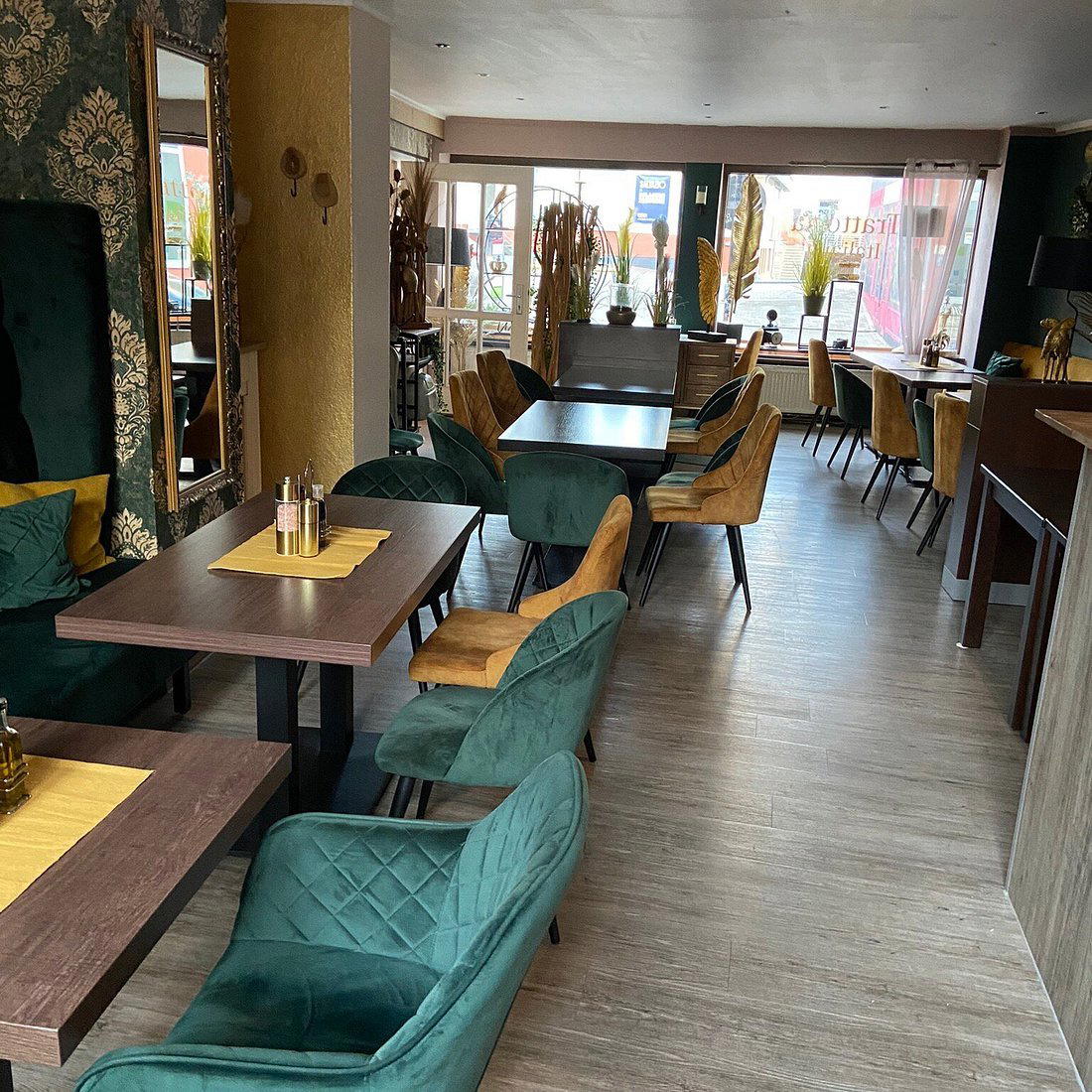
Italian Sourcing Traditions in a Lower Saxony Setting
Hildesheim sits in a part of Lower Saxony where the dining conversation has historically centred on German regional cooking and, increasingly, on ambitious contemporary technique. The city's cathedral quarter draws visitors for its UNESCO-listed architecture, but its restaurant scene has developed more quietly than comparable cities of similar size. Into that context, a trattoria format represents a specific editorial choice: the Italian trattoria, at its leading, is a sourcing-led format, one where the kitchen's identity derives less from chef invention than from the provenance and handling of core ingredients. Pasta quality, olive oil origin, the curing traditions behind charcuterie, these are the variables that separate a credible trattoria from a generic approximation of Italian comfort food.
Trattoria Italiana, at Ostertor 3-4 in Hildesheim's old town perimeter, sits within a neighbourhood that retains genuine pedestrian character. The Ostertor area connects the historic centre to the residential districts beyond, which means foot traffic here reflects a local-to-visitor mix different from the purely tourist-facing streets closer to the Marktplatz. For a restaurant operating in the trattoria register, that mix matters: the format functions leading when regulars anchor the room and seasonal repetition builds familiarity between kitchen and guest.
The Sourcing Logic Behind the Trattoria Format
Across Italy, the trattoria emerged as a format defined by ingredient fidelity rather than culinary transformation. A good trattoria in Emilia-Romagna serves Parmigiano-Reggiano aged to a specific month count and pasta made from the region's soft wheat; one in Campania anchors its menu to San Marzano tomatoes and fior di latte rather than industrial mozzarella. The format's integrity, wherever it operates internationally, is measured against the same question: how close is the sourcing to genuine Italian regional provenance?
German cities with established Italian communities, including Frankfurt, Munich, and Hamburg, have produced a tier of Italian restaurants where sourcing fidelity is traceable and verifiable. Venues like JAN in Munich operate in a different register entirely, reflecting the contemporary fine-dining ambition that has made Germany one of Europe's most decorated restaurant nations, alongside three-star addresses such as Aqua in Wolfsburg, Schwarzwaldstube in Baiersbronn, and Vendôme in Bergisch Gladbach. The trattoria sits at the opposite structural end of that spectrum: it is not chasing transformation or abstraction, but rather asking whether the fundamentals are in order. For a visitor calibrating expectations, that distinction is one useful frame available.
Germany's broader fine-dining scene has built its reputation on precision and creative range. Operations like CODA Dessert Dining in Berlin and ES:SENZ in Grassau represent the experimental end of that ambition, while Victor's Fine Dining by Christian Bau in Perl, Waldhotel Sonnora in Dreis, and Restaurant Haerlin in Hamburg hold the classical fine-dining tradition. A trattoria in Hildesheim is not competing in that arena, and that is precisely the point: it occupies a separate category where the measure of quality is ingredient honesty rather than technique complexity.
What the Room Communicates
The trattoria format, when it reads correctly, communicates specific atmospheric signals. Tables tend toward closeness rather than spacing designed for privacy. The wine list prioritises regional Italian producers over international prestige labels. Service operates at a pace set by the guest's conversation, not by kitchen orchestration. Noise levels reflect an occupied, social room rather than the hushed concentration of a tasting-menu counter. These are not compromises relative to fine dining; they are the format's intended language.
Hildesheim's Ostertor location, on a street address rather than an anonymous block, suggests a room with some architectural character from the surrounding old town fabric. Lower Saxony's medieval street patterns, particularly around Hildesheim's rebuilt historic core, tend to produce buildings with distinctive proportions, narrower frontages, higher ceilings in older structures, that give neighbourhood restaurants a physical identity that newer purpose-built dining rooms rarely achieve. The atmosphere that results is one of a restaurant embedded in its street, rather than installed into it.
For visitors arriving from elsewhere in Germany's restaurant circuit, including addresses like Schanz in Piesport, Bagatelle in Trier, or ammolite in Rust, the register shift a trattoria represents is immediate. It is also, depending on the traveller's mood and purpose, exactly what the evening calls for.
Hildesheim's Dining Context
Hildesheim does not appear on Germany's Michelin map with the frequency of Hamburg, Munich, or the Rhineland. The city's culinary identity has been shaped more by its function as a regional commercial and educational centre than by destination dining. That means visitors seeking contemporary ambition of the kind found at ATAMA by Martin Stopp in Sankt Ingbert, AUGUST in Augsburg, or AURA in Wirsberg will need to look beyond the city. But it also means that the restaurants which do operate here serve a primarily local audience, which tends to produce more settled, consistent kitchens than venues calibrated for rotating tourist traffic.
The trattoria format, internationally, has produced particularly compelling neighbourhood dining on record: addresses that the broader critical conversation around restaurants like Le Bernardin in New York or Atomix in New York rarely captures, because the trattoria's value is relational and local rather than spectacular and exportable.
Planning Your Visit
Trattoria Italiana is located at Ostertor 3-4, 31134 Hildesheim, placing it within walking distance of the city's historic core and accessible from the main rail station on foot or by a short taxi ride. Reservations are recommended, and the restaurant is open Monday to Wednesday and Friday to Saturday from 5 to 10 PM, with Thursday and Sunday closed. For itinerary planning, the Ostertor neighbourhood works well as an evening destination after a day spent around Hildesheim's cathedral and market square.
- pasta
- pizza
- mixed antipasti
- sea bass
- sea bream
- saltimbocca
- tiramisu
In Context: Similar Options
Comparable venues nearby, for context on price, style, and recognition.
| Venue | Cuisine | Price | Notes |
|---|---|---|---|
| Trattoria ItalianaThis venue — the venue you are viewing | Traditional Italian Trattoria | $$ | Not listed |
| ristorante gianni | Authentic Italian Trattoria | $$ | Kirchrode |
| Pizza Social Club | Neapolitan Pizza | $$ | Barmbek |
| Leonardo | Authentic Italian Fine Dining | $$$ | Mitte |
| Roy's | Italian Mediterranean | $$$ | Oststadt |
| Ombra | Italian Bistro & Pizzeria with Sourdough | $$ | Limmerstraße |
Continue exploring
More in Hildesheim
Restaurants in Hildesheim
Browse all →
Bars in Hildesheim
Browse all →Hotels in Hildesheim
Browse all →
At a Glance
- Cozy
- Classic
- Intimate
- Date Night
- Casual Hangout
- Group Dining
- Terrace
Current opening hours
- Monday
- 5–10 PM
- Tuesday
- 5–10 PM
- Wednesday
- 5–10 PM
- Thursday
- Closed
- Friday
- 5–10 PM
- Saturday
- 5–10 PM
- Sunday
- Closed
Hours can change for holidays and private events. Last verified .
Warm and inviting interior with a cozy, intimate setting; features a pleasant outdoor terrace for al fresco dining.