
Totomen En belongs to Osaka’s serious ramen conversation rather than its tourist-facing food circuit: a small Higashiosaka shop with counter seating, repeat Tabelog Ramen OSAKA “Tabelog 100” selection in 2023, 2024, and 2025, and a format built for focused solo dining. The appeal is precision and tempo, not ceremony.
Pearl is the En Primeur Club membership app — saves, bookings, and concierge access live there. Same editors, same standards.
- Address
- 1 Chome-3-12 Ajirominami, Higashiosaka, Osaka 577-0842, Japan
- Website
- x.com
 Saves & bookings on Pearl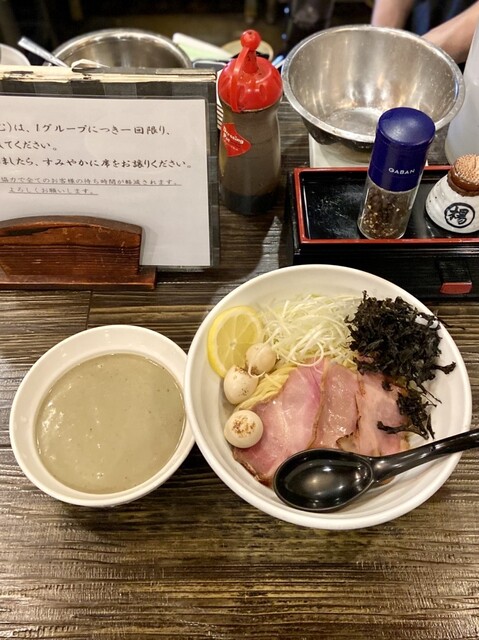
Approaching a small ramen room in Higashiosaka shifts the scale of Osaka dining. Beyond bright signage, market grazing, and late-night drinking districts, a ramen counter follows another rhythm: steam, ticket-machine efficiency, bowls landing, and a room turning over through concentration, not performance. Totomen En works in that exacting register, where the experience rests on the minutes between ordering, receiving a bowl, and judging whether the broth justifies the queue culture around it.
Osaka ramen has never been as easily branded abroad as Sapporo miso or Hakata tonkotsu, so its better shops reward attention. The city absorbs styles rather than defending one orthodoxy: clear broths, chicken-based soups, seafood-driven bowls, and heavier pork expressions can sit within a short train ride. In that context, a Tabelog Ramen OSAKA “Tabelog 100” selection matters because it places a shop inside a local field judged by regular diners who compare ramen constantly. Totomen En appeared on that list for 2023, 2024, and 2025, a stronger signal than a single-year spike.
Higashiosaka ramen rewards patience over spectacle
Fuse and the surrounding Higashiosaka area sit outside the central hotel-and-department-store orbit, shaping the meal. This is not Umeda’s polished dining grammar or Namba’s visitor-heavy snack trail. The district’s food culture is more workday than celebratory, with compact shops serving office workers, residents, and train-line regulars who measure value quickly. For ramen, that audience is useful: less forgiving of decoration, more interested in balance, consistency, and enough identity to pull diners beyond their usual route.
The competitive set around Fuse underlines it. Junai Udon Nadeshiko and Chotakasui Jun Teuchi Men Nishimura operate in lower-budget noodle territory, while Fuse Hosomi Shoten and Taishu Chuuyuuka Shokudo Hakkai show how casual Chinese and noodle-adjacent cooking remain part of the same everyday dining economy. Chuka Soba Fukuhara sits closer in price tier and ramen seriousness. Totomen En belongs in that conversation, not the luxury restaurant frame; its credibility comes from repetition, focus, and recognition within a narrow category.
That distinction helps travellers. Osaka can make casual dining feel effortless, but ramen at this level is rarely casual in execution. Small rooms compress everything. Counter seating puts the kitchen rhythm in view, tables handle small groups, and timing matters more than lingering. The form is democratic but not loose: a bowl arrives, the first minutes count, and diners know ramen is eaten with pace.
A compact room with award-list gravity
The 14-seat layout, including four counter seats and two four-seat tables, gives the meal intimate pressure. This is not tasting-menu intimacy, with service choreographed across hours. Ramen intimacy is immediate: the room is small enough for every movement to register, and every empty seat has value. That scale explains why recognition changes the stakes. A Tabelog score of 3.70 is serious in Japan’s restaurant-rating culture, especially where diners split hairs over broth clarity, noodle texture, seasoning, and repeatability.
The “Tabelog 100” designation needs nuance. It is not a Michelin star, and it does not turn ramen into fine dining. Its value is category precision. Osaka ramen lovers compare shops bowl by bowl, and selection across three consecutive lists signals relevance beyond opening momentum. For a venue that opened in 2021, that matters: it moved from new entrant to sustained local reference point within a crowded field.
Sensory frame is disciplined rather than lavish. Ramen shops run on direct signals: steam at the counter, bowls moving from kitchen to seat, chopsticks lifting noodles before the soup cools, and the low sound of diners concentrating. Without verified dish names or tasting notes, the responsible reading of the restaurant is through format and recognition: a compact ramen specialist with enough local traction to sit among Osaka’s notable ramen addresses, not a broad-menu restaurant built for every mood.
That focus separates it from the wider Osaka table. A day might move from bakery culture at 52CHO-ME BAKERY to casual urban stops such as .cafe, pork buns at 551 Horai (551蓬莱), or Italian cooking at a canto (Italian) and 99 Pizza Napoletana Gourmet. Ramen asks for a narrower appetite: one bowl, one seat, one short window of attention.
How to place it within an Osaka food itinerary
The restaurant is strongest for travellers who know Osaka’s food identity is not confined to Dotonbori. The city’s better eating often comes from matching neighbourhood to format: central areas for breadth, transport hubs for speed, outer districts for specialist rooms with loyal local followings. Higashiosaka fits the last category. The reward is not convenience theatre, but a clearer view of how everyday Japanese dining becomes obsessive when one dish type is refined through repeated service.
Plan it as a focused ramen stop, not a long lunch. Reservations are not the operating logic, and cash-based, small-shop dining remains common in this tier, so flexibility helps. The room’s solo-dining friendliness matters too. In Japan, ramen remains one of the easiest serious meals to take alone, and the counter format removes the social friction of higher-end restaurant booking.
The broader EP Club Osaka map frames the decision. Use Our full Osaka restaurants guide for the city’s dining range, then layer in Our full Osaka hotels guide, Our full Osaka bars guide, Our full Osaka wineries guide, and Our full Osaka experiences guide if the trip extends beyond meals. For comparison across Japan and Japanese dining abroad, the editorial trail runs from -Grilled beef Sukiyaki- KAMAKURA TANUKIAN 鎌倉 たぬき庵 in Kamakura and. 鮪と炭火焼き うお炭 秋葉原店 in Tokyo to.know in Kumamoto, (Shoku) Vietnam in Kawasaki, [Curry Senmon Ten] Maruyama Kyoju. in Sapporo, [ki:] in Kyoto, Jōdo Saké Bar in Los Angeles, and Onigiri Time in Pasadena.
The editorial verdict is simple: this is a specialist ramen address for travellers willing to trade central convenience for a tighter local signal. Its repeated Tabelog recognition, compact seating, and Higashiosaka setting make it a useful counterweight to Osaka’s louder food mythology. Go for concentration, not ceremony.
Price and Recognition
Comparable options at the same price tier.
| Venue | Cuisine | Price |
|---|---|---|
| Totomen EnThis venue — the venue you are viewing | Higashi-Osaka, Creative seafood ramen | $ |
| Gokuju Bimen umami | Higashi-Osaka, Ramen shop | $ |
| Yuiitsu Muni no Ramen Senmon Ten Ibukuro Washizukami | Tennōji, Specialty Ramen Shop | $ |
| Yuai Tei | Naniwa, Traditional soy sauce ramen shop | $ |
| Buttah | Chūō, Japanese Curry | $ |
| Okonomiyaki Chitose | Nishinari, Traditional Osaka okonomiyaki | $ |
Recognition history
Dated appearances from independent guides and award organizations, with the underlying list record or original source where available.
Tabelog 100 #19 · No. 19
Tabelog · Tabelog 100 - Ramen - OSAKA - 2025
Continue exploring
More in Osaka
Restaurants in Osaka
Browse all →




Bars in Osaka
Browse all →


Hotels in Osaka
Browse all →



Wineries in Osaka
Browse all →
At a Glance
- Lively
- Cozy
- Solo
- Casual Hangout
- After Work
- Chefs Counter
- Standalone
Current opening hours
- Monday
- Closed
- Tuesday
- 11 AM–3 PM
- Wednesday
- 11 AM–3 PM
- Thursday
- 11 AM–3 PM
- Friday
- 11 AM–3 PM
- Saturday
- 11 AM–3 PM
- Sunday
- 11 AM–2 PM
Hours can change for holidays and private events. Last verified .
Casual and bustling counter-style ramen joint with a few small tables, bright and functional rather than decorative, focused on the theater of ramen preparation and quick turnover during busy lunch hours.