Tosca Cafe
Tosca Cafe on Columbus Avenue is one of North Beach's most enduring drinking rooms, a bar that predates the neighbourhood's transformation into a tourist corridor and still carries the weight of that history in its red leather booths and opera on the jukebox. The wine and spirits program reads against the grain of San Francisco's tasting-menu circuit, making it a counterpoint worth understanding.
Pearl is the En Primeur Club membership app — saves, bookings, and concierge access live there. Same editors, same standards.
- Address
- 242 Columbus Ave, San Francisco, CA 94133
- Phone
- +1 415 986 9651
- Website
- toscacafe-sf.com
- Directions
- Get directions
 Saves & bookings on Pearl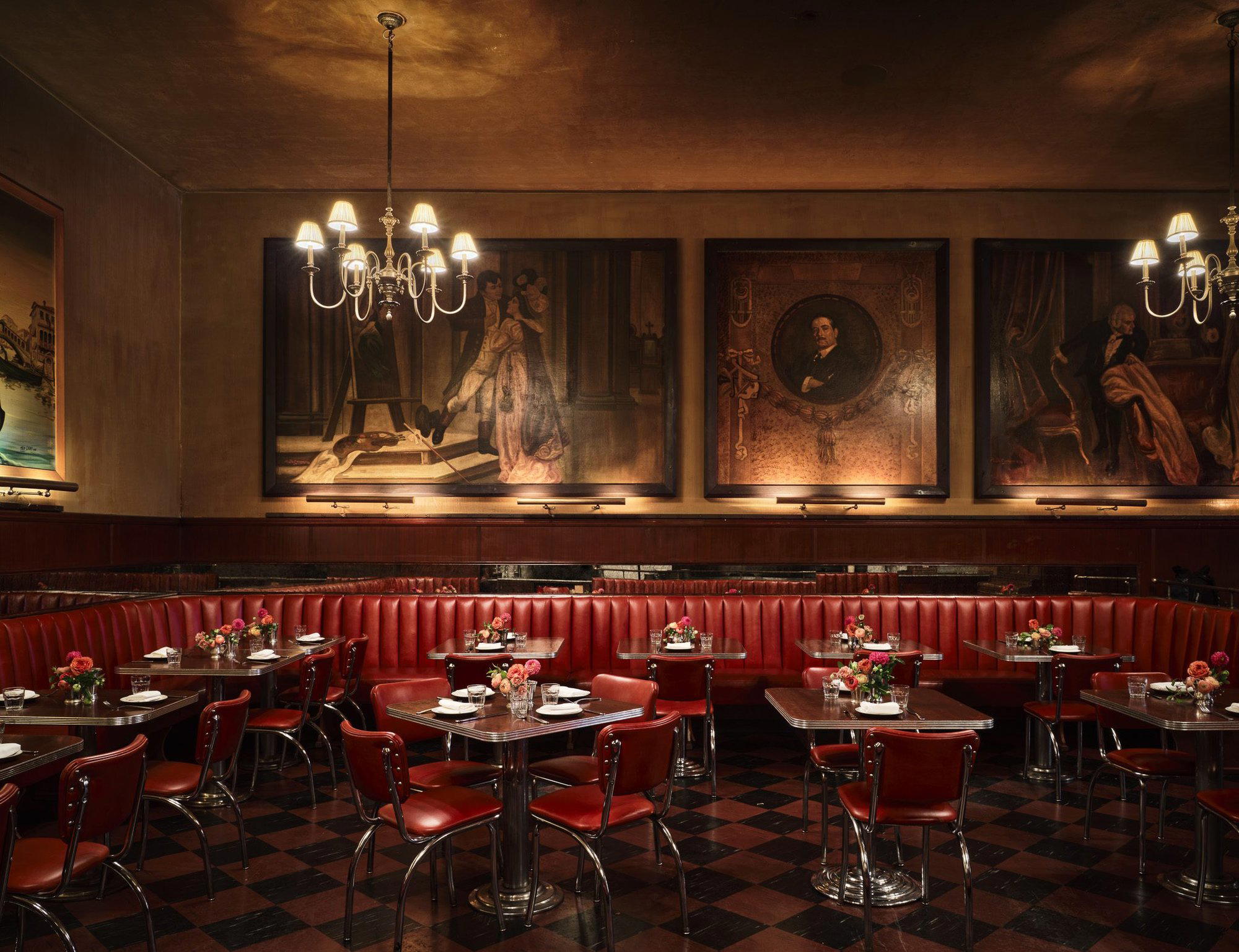
North Beach After Dark, Before the Hype
Columbus Avenue in North Beach runs through one of the oldest drinking corridors in San Francisco, a street where the city's literary and bohemian past is still legible in the facades if not always in the rooms behind them. Tosca Cafe at 242 Columbus Ave sits in that lineage with unusual consistency. The red leather banquettes, the dark wood bar, the sound of opera filling the room from a jukebox that has been doing exactly that for decades: these are not design choices made to evoke a mood. They are the residue of a bar that has simply not abandoned its format. That kind of institutional continuity is rarer on this block than it appears.
San Francisco's broader drinking and dining culture has bifurcated sharply over the past fifteen years. On one side, the tasting-menu circuit, represented by counters like Lazy Bear, Atelier Crenn, Benu, Quince, and Saison, pulls guests into structured, prix-fixe formats with wine pairings chosen from deep, curated cellars. On the other side, neighbourhood anchors hold their ground by doing something different: providing rooms where people drink without a script. Tosca belongs to that second tradition, and understanding it requires reading it against the tasting-menu world rather than in isolation.
The Wine and Spirits Program as Editorial Statement
Bars that survive across decades in San Francisco tend to do so either by becoming heritage institutions or by reinventing themselves for each new wave of hospitality fashion. Tosca has operated in the former mode. Its drinks program has long centered on the house cappuccino, a warm blend of coffee, chocolate, and brandy that contains no espresso and functions as both a signature and a signal: this is a bar that has its own logic, not one that follows industry trends.
The wine list at Tosca has historically favoured Italian and Californian bottles, a pairing that mirrors North Beach's own dual identity as both an Italian-American neighbourhood and a San Francisco original. That curation philosophy, Italian roots alongside California production, is a through-line that connects the bar's drinks program to the neighbourhood's demographic history in a way that more fashion-conscious lists rarely attempt. Where the Michelin-circuit restaurants referenced above use their cellars to signal global sourcing depth, a North Beach bar at this price tier earns its credibility through specificity and coherence.
The spirits selection leans toward the classic rather than the contemporary craft tier. This is a deliberate positioning decision, whether or not it is articulated as such. In a city where cocktail bars have chased every technical trend from clarified milk punch to fat-washed spirits, a room that pours straightforwardly and without performance occupies a distinct competitive position. Peer bars in comparable American cities, from the literary bar rooms of New Orleans to the older cocktail institutions of New York, have found that longevity itself becomes a curation credential. For reference points outside San Francisco, the hospitality philosophy here has more in common with the dining room character of Emeril's in New Orleans or the understated room presence of Smyth in Chicago than with the technical showmanship of younger cocktail programs.
North Beach in Context
North Beach's position in San Francisco's dining geography is particular. It sits between the Financial District to the south and Fisherman's Wharf to the north, which means it absorbs both office-hour traffic and tourist pressure without fully belonging to either. The neighbourhood's Italian-American identity, established through generations of immigration in the late nineteenth and early twentieth centuries, gave it a distinct food and drink character that Columbus Avenue still partially reflects, even as rents and demographics have shifted.
For visitors mapping San Francisco's restaurants against a national frame, the city's premium tier now competes directly with programs like The French Laundry in Napa, Providence in Los Angeles, Le Bernardin in New York City, Blue Hill at Stone Barns in Tarrytown, The Inn at Little Washington, Addison in San Diego, Single Thread Farm in Healdsburg, Frasca Food and Wine in Boulder, Atomix in New York City, and Atelier Moessmer Norbert Niederkofler in Brunico. Tosca does not operate in that tier, and that is the point. The bar occupies a different function in a traveller's itinerary: it is the room you go to between the ambitious meals, or after them, where the drinks are uncomplicated and the room carries its own atmosphere without requiring your participation in a format.
What Draws People Back
The operational continuity of a bar like Tosca across decades in a city with San Francisco's real estate and hospitality economics is part of its appeal. Rooms that survive this long in this city do so because they have a specific gravity that transcends ownership changes and kitchen rotations. The Italian-American food served alongside the drinks, house-made pasta and direct secondi, fits the same logic as the wine list: coherent, specific, not chasing external trends.
That coherence is rarer than it looks. Many of the bars and restaurants that opened in North Beach over the past decade have tried to synthesise the neighbourhood's historical atmosphere with contemporary hospitality standards, and the results are frequently unconvincing in both directions. Tosca avoids that problem by not attempting the synthesis at all.
Know Before You Go
- Address: 242 Columbus Ave, San Francisco, CA 94133
- Neighbourhood: North Beach
- Format: Full-service bar with kitchen; walk-ins typically accommodated at the bar
- Drinks anchor: The house cappuccino (brandy, chocolate, coffee; no espresso) is the signature order
- Wine orientation: Italian and Californian bottles; list favours coherence over depth
- Booking: Reservations recommended for tables, particularly on evenings and weekends; bar seating often available without advance booking
- When to go: Weeknight evenings reward the room's atmosphere most fully; weekend pressure increases with tourist traffic on Columbus Ave
Cuisine and Awards Snapshot
Comparable venues nearby, for context on price, style, and recognition.
| Venue | Cuisine | Price | Notes |
|---|---|---|---|
| Tosca CafeThis venue — the venue you are viewing | Modern Italian-American | $$$ | Not listed |
| Pazzia | Authentic Tuscan Italian | $$$ | Financial District/South Beach |
| Che Fico Pop-Up at the Fall Show | Modern Italian Pizzeria | $$$ | Marina |
| The Tailor's Son | Northern Italian Trattoria | $$$ | Pacific Heights |
| Ofena | Modern Italian with California Twists | $$$ | West of Twin Peaks |
| The Gold Mirror | Classic Italian Trattoria | $$$ | West of Twin Peaks |
Continue exploring
More in San Francisco
Restaurants in San Francisco
Browse all →
Bars in San Francisco
Browse all →
Hotels in San Francisco
Browse all →


At a Glance
- Classic
- Well Known
- Elegant
- Intimate
- Date Night
- Special Occasion
- Late Night
- Historic Building
- Open Kitchen
- Craft Cocktails
Current opening hours
- Monday
- Closed
- Tuesday
- 5–10 PM
- Wednesday
- 5–10 PM
- Thursday
- 5–11 PM
- Friday
- 5–11 PM
- Saturday
- 5–11 PM
- Sunday
- Closed
Hours can change for holidays and private events. Last verified .
Rat-Pack era ambiance with eccentric old San Francisco charm, dimly nostalgic lighting, and lively historic bar atmosphere.