
Fukushima’s Sakaemachi dining pocket rewards small counters over spectacle, and Tori Ken fits that scale: 10 counter seats, yakitori, Fukushima sake, and selection for Tabelog 100 Yakitori EAST 2025. The appeal is less about destination theatre than precision within a compact station-side room, where charcoal grilling sits inside the city’s after-work rhythm.
Pearl is the En Primeur Club membership app — saves, bookings, and concierge access live there. Same editors, same standards.
- Address
- 福島県福島市栄町12-1 第1寿ビル1F
- Phone
- +81245243665
- Website
- tabelog.com
 Saves & bookings on Pearl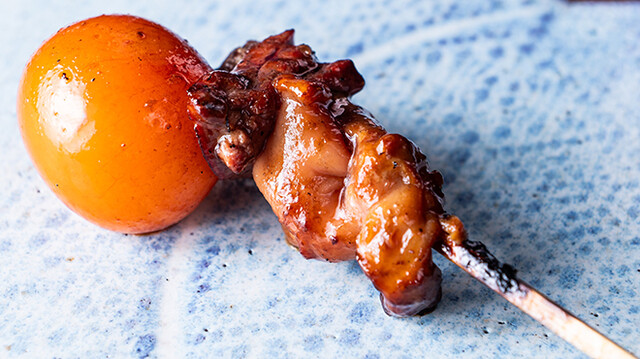
Near Fukushima Station’s east-side grid, the city tightens into small buildings, stairwells, counters, and rooms built for regulars rather than spectacle. Yakitori makes particular sense here. It is a cuisine of proximity: grill, cook, bottle, guest, all close enough that timing and heat become part of the room. Tori Ken belongs to that compact Sakaemachi mode, a 10-seat counter where the format is the argument. In a prefectural capital better known to travellers as a rail junction than a dining destination, this kind of small charcoal counter explains more about the city than a grand room ever could.
Fukushima’s restaurant map is not arranged like Tokyo’s prestige districts. It rewards short walks, narrow storefronts, and specialists with modest footprints. That is why the comparison set matters. A diner can read the city through formats: everyday bistro cooking at Bistro Mikasa, tempura at Tempura Hirai, ramen at Jikaseimen Urota, and higher-spend Japanese dining at Shioya. Tori Ken sits in a different lane, defined by skewers, counter seating, and a drinks list that includes sake, shochu, and wine. Its selection for Tabelog 100 Yakitori EAST 2025 gives that lane a visible credential, especially outside the metropolitan yakitori circuits that usually dominate English-language attention.
Sakaemachi's counter culture, seen through charcoal and Fukushima sake
Yakitori is often misunderstood by visitors as casual drinking food with better technique. At serious counters, the structure is closer to sushi or tempura than to pub grazing: single portions, direct handoff, and a meal paced by the grill rather than by the table. The 10-counter-seat layout sharpens that reading. There is no dining-room distance and no private-room insulation. The cook’s rhythm, the smoke discipline, and the sequence of small servings become the evening’s architecture.
The local angle is not decorative. Fukushima has a deep sake identity, and yakitori is one of the cleanest ways to understand how regional bottles work with salt, tare, fat, and smoke. Tori Ken’s drink program lists nihonshu and shochu with stated attention to both, which places the counter inside a familiar northern Japan pattern: grilled food as a frame for local drinking culture, not merely a protein-led meal. For travellers mapping the city beyond dinner, the wider to Fukushima restaurants, Fukushima bars, Fukushima hotels, Fukushima wineries, and Fukushima experiences help place that meal inside a broader itinerary rather than treating it as an isolated reservation.
Why a small Fukushima yakitori counter carries national signal
Tabelog’s Hyakumeiten selections matter because they reward category depth, not only luxury signifiers. The 2025 Yakitori EAST list places the restaurant among restaurants judged within a specialist field, where size, décor, and menu breadth are less persuasive than consistency. The counter was also selected for the Yakitori EAST lists in 2023 and 2024, with an earlier Yakitori 100 selection in 2018. That recurrence is the stronger signal: in Japan’s user-review culture, repeat category recognition suggests the restaurant has stayed relevant beyond a single wave of attention.
The price band also clarifies the decision. Fukushima has lower-cost everyday options such as Cow Burgers and Jikaseimen Urota, and mid-to-higher Japanese dining at Tempura Hirai or Shioya. The restaurant occupies the specialist-yakitori bracket, where value is measured less by portion count than by sourcing, grill control, drink compatibility, and the intimacy of the counter. In that sense, it competes less with broad local dining and more with category-focused rooms across eastern Japan.
For readers building a regional Japan route, the lesson extends beyond one address. Small-format dining often carries the strongest local information. In Fukushima, that can mean coffee at CAFE BAHNHOF, casual regional meals at Asia Shokudo Chouku, or a counter-led evening here. Elsewhere in Japan, the same logic appears in different forms, from age and Agu Buta Shabushabu Senmon Ten Toriou Bettei to -Grilled beef Sukiyaki- KAMAKURA TANUKIAN 鎌倉 たぬき庵 in Kamakura. 鮪と炭火焼き うお炭 秋葉原店 in Tokyo.cafe in Osaka.know in Kumamoto, (Shoku) Vietnam in Kawasaki, and [Curry Senmon Ten] Maruyama Kyoju. in Sapporo. For sake-context dining outside Japan, Jōdo Saké Bar in Los Angeles offers a useful contrast; for Japanese food culture translated into a Californian quick-service idiom, Onigiri Time in Pasadena sits at the opposite end of the format spectrum.
The reader decision: go for focus, not range
This is a narrow-format choice, and that is the point. The counter seats, the no-smoking policy, the adult-only restriction, and the stated sensitivity around strong fragrance all point toward a room built around concentration. Diners looking for private rooms, a broad menu, or a family-friendly stop will be better served elsewhere in Fukushima. Diners interested in how yakitori functions as a precise, drink-aware counter tradition should read the restaurant as one of the city’s clearest small-room signals.
The practical judgment is simple: this is a dinner for travellers who value category depth over variety. Its appeal lies in the combination of Fukushima place, yakitori discipline, repeat Tabelog recognition, and a counter small enough that the meal cannot hide behind atmosphere. In a city where many visitors pass through quickly, that kind of focused room gives Sakaemachi a reason to hold the evening.
The Essentials
Comparable venues by cuisine and price in the same metro.
| Venue | Cuisine | Price | Notes |
|---|---|---|---|
| Tori KenThis venue — the venue you are viewing | Fukushima, Yakitori | $$$ | Not listed |
| Shioya | Fukushima, Edo-style Tempura Omakase | $$$ | Not listed |
| Tempura Sakuma | Not listed | $$ | Koriyama Tomita, Traditional Japanese Tempura |
| Lincoln | Fukushima, Dining | Not listed | Not listed |
| Rantei Vivian | Koriyama, Seasonal Kaiseki Omakase | $$$ | Not listed |
| Hisuinosato | Not listed | $$$$ | Fukushima, Kawasemi-style Japanese Kaiseki |
Recognition history
Dated appearances from independent guides and award organizations, with the underlying list record or original source where available.
Tabelog 100 #62 · No. 62
Tabelog · Tabelog 100 - Yakitori - EAST - 2025
Continue exploring
More in Fukushima
Restaurants in Fukushima
Browse all →

Hotels in Fukushima
Browse all →
At a Glance
- Cozy
- Lively
- Intimate
- Classic
- Casual Hangout
- After Work
- Date Night
- Group Dining
- Special Occasion
- Chefs Counter
- Standalone
- Sake Program
- Beer Program
- Local Sourcing
- Street Scene
A cozy, bar-like yakitori house with lively counter seating and a relaxed, intimate feel.