Tony's Coal Fired Pizza & Slice House
On Stockton Street in North Beach, Tony's Coal Fired Pizza & Slice House represents a specific strand of San Francisco pizza culture: coal-fired technique applied to a by-the-slice format that sits several tiers below the city's tasting-menu circuit yet draws from the same neighbourhood tradition. The address puts it squarely in the city's oldest Italian-American quarter, where the argument over what makes a correct pizza has never stopped.
Pearl is the En Primeur Club membership app — saves, bookings, and concierge access live there. Same editors, same standards.
- Address
- 1556 Stockton St, San Francisco, CA 94133
- Phone
- +14158359888
- Website
- tonyscoalfired.com
- Directions
- Get directions
 Saves & bookings on Pearl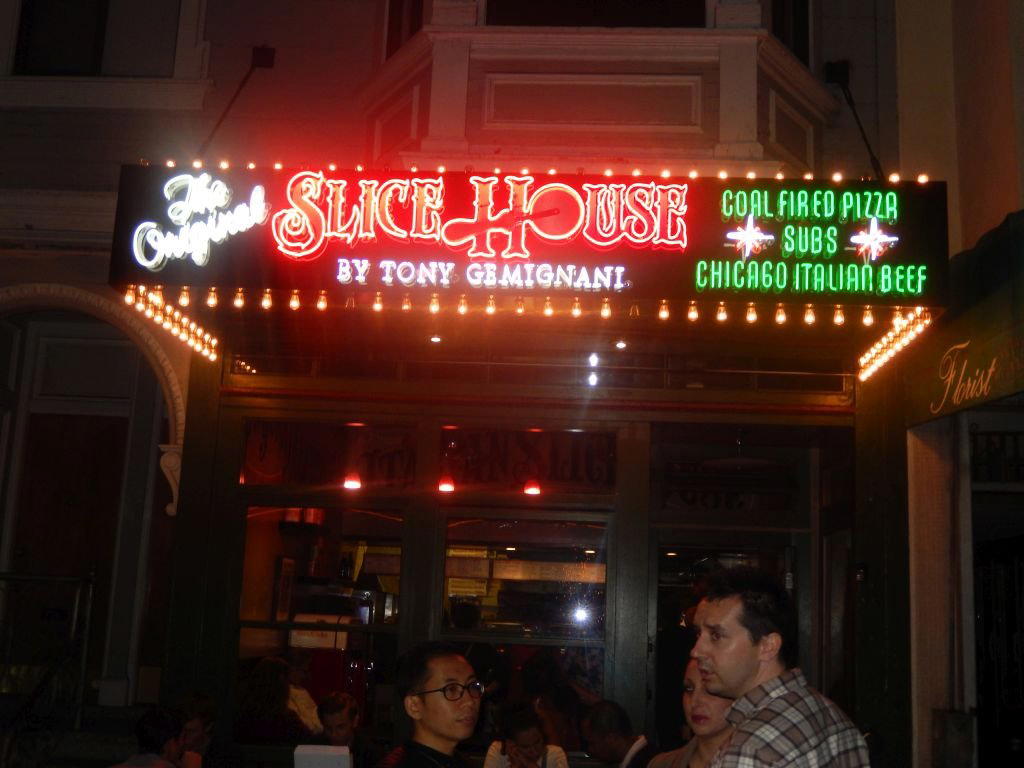
North Beach and the Pizza Argument That Never Ends
San Francisco's relationship with pizza has always been complicated. The city's Italian-American identity is concentrated in North Beach, where Stockton Street and Columbus Avenue have carried the weight of that heritage since the late nineteenth century. That neighbourhood context matters when placing Tony's Coal Fired Pizza & Slice House at 1556 Stockton Street: this is not a venue that arrived in a vacuum. It sits inside a long civic debate about what authenticity looks like when the source tradition is both geographically distant and locally reinvented across generations.
Coal-fired pizza as a technique traces back to the eastern seaboard, to the old-guard pizzerias of New Haven and New York where coal ovens produced char temperatures that gas could not match. The method migrated west slowly, and its presence in San Francisco represents a deliberate counter-position to the wood-fired Neapolitan wave that dominated the 2000s and early 2010s. Where wood-fired ovens produce a particular leopard-spotted char and a softer, more yielding crust, coal-fired ovens tend toward a crisper, drier base with a distinct mineral quality to the heat. These are not interchangeable cooking methods, and venues that commit to coal are making an argument as much as a product.
The Slice House Format in a Tasting-Menu City
San Francisco's fine-dining circuit operates at a significant remove from the slice house format. Lazy Bear, Atelier Crenn, Benu, Quince, and Saison occupy a tier defined by multi-course progression, reservation lead times measured in months, and price points that reflect the city's position as among the more expensive dining markets in North America. The slice house sits at the opposite end of that spectrum deliberately. It is a format built on accessibility, speed, and the logic that a well-made individual slice should need no further qualification.
That accessibility carries its own sustainability argument. By-the-slice service reduces the food waste inherent in whole-pie formats where diners order more than they finish. A slice counter operates closer to a demand-responsive model: production scales to what customers actually take, and the economics of waste are distributed differently than in a tasting-menu kitchen where every component is prepared in anticipation of a fixed cover count. This is not a claim that slice houses are environmentally virtuous by definition, but the format does structurally limit over-production in ways that matter when the broader food system conversation has shifted toward waste reduction as a primary metric.
Coal Firing and Environmental Considerations
The coal-fired method raises a legitimate question that any editorially honest treatment of the format should address. Coal as a fuel source carries a higher carbon intensity than natural gas and a significantly higher one than electricity from renewable sources. The San Francisco Bay Area has made notable progress on grid decarbonisation, which means that fully electric cooking equipment in the region now carries a lower emissions profile than it would in coal-heavy grid states. A coal oven, by contrast, burns a fossil fuel directly at the point of use, with no offset from grid improvements.
This tension is not distinctive to Tony's. The broader American pizza tradition built around coal and wood-fired methods is navigating the same question as cities tighten air quality regulations and restaurant operators face pressure to account for their direct fuel emissions. New York City has already moved to restrict open-fire cooking without mitigation equipment under its air quality rules. San Francisco's regulatory environment is similarly attentive to particulate emissions. How individual operators respond to those pressures, whether through filtration systems, alternative fuel transitions, or operational adjustments, is now a visible part of how this category of restaurant is evaluated, not just a background compliance issue.
The sustainability story for coal-fired pizza is therefore genuinely complex. The technique produces a distinct and defensible result. The fuel source is a legitimate concern. And the slice format, as noted, does carry structural waste-reduction advantages. Readers who track this kind of operational detail, as an increasing share of premium dining audiences do, will want to weigh all three factors rather than treat any one of them as dispositive.
Where Stockton Street Sits
The North Beach address at 1556 Stockton places the venue in a neighbourhood that has sustained Italian-American food culture through several decades of San Francisco's transformation into a technology economy city. The surrounding blocks contain some of the older-established Italian delis, bakeries, and cafes in the city, alongside newer arrivals that have calibrated to the neighbourhood's tourist foot traffic without entirely displacing the residential character. Stockton Street itself runs parallel to Columbus but carries less of the tourist density, which affects the operational character of businesses along it.
North Beach is a logical base for anyone whose itinerary includes the Ferry Building farmers market, the Embarcadero waterfront, or the financial district lunch circuit, all within reasonable walking or transit distance.
Nationally, the coal-fired pizza format appears in concentrated form in the northeast, and the West Coast presence remains thinner. Venues like Le Bernardin in New York City, Alinea in Chicago, and Emeril's in New Orleans anchor their respective cities' fine-dining identities, while the casual formats that define neighbourhood eating operate in a different conversation entirely. The farm-to-table sourcing emphasis visible at places like Single Thread Farm in Healdsburg, Blue Hill at Stone Barns in Tarrytown, and The French Laundry in Napa has begun influencing ingredient sourcing at lower price points across Northern California, including in the pizza category where flour provenance and tomato sourcing have become more visible on menus.
Other California venues worth noting in a broader West Coast dining context include Providence in Los Angeles and Addison in San Diego, both operating at the opposite end of the formality spectrum from a slice house but relevant to any reader building a multi-city California itinerary. Further afield, The Inn at Little Washington, Bacchanalia in Atlanta, Atomix in New York City, and 8½ Otto e Mezzo Bombana in Hong Kong represent the range of formats that EP Club tracks across its full restaurant coverage.
Planning Your Visit
Slice house operations typically run on a walk-in basis, and the format at 1556 Stockton Street follows that logic: this is not a venue that requires advance booking planning of the kind that governs San Francisco's tasting-menu tier, where covers at Benu or Atelier Crenn can require weeks of lead time. North Beach foot traffic peaks on weekend afternoons and early evenings, when the neighbourhood draws both residents and visitors. Arriving outside those windows, mid-afternoon on a weekday in particular, tends to mean shorter queues and fresher first-run pies rather than reheated slices from an earlier rush.
Comparable Spots
Comparable venues nearby, for context on price, style, and recognition.
| Venue | Cuisine | Price | Notes |
|---|---|---|---|
| Tony's Coal Fired Pizza & Slice HouseThis venue — the venue you are viewing | New York-Style Coal-Fired Pizza | $$ | Not listed |
| Cafe Tiramisu | Authentic Italian | $$ | Financial District/South Beach |
| Barbara Pinseria | Roman-Inspired Italian Pinsa & Cocktails | $$ | North Beach |
| Calzone's Pizza Cucina | Italian Pizza and Calzones | $$ | North Beach |
| La Copa Loca | Italian Gelato & Crepes with Mexican-Inspired Flavors | $$ | Mission |
| Pasta Supply Co | Modern Italian Pasta Shop | $$ | Mission |
Continue exploring
More in San Francisco
Restaurants in San Francisco
Browse all →
Bars in San Francisco
Browse all →
Hotels in San Francisco
Browse all →
At a Glance
- Lively
- Casual
- Well Known
- Casual Hangout
- Group Dining
- Open Kitchen
- Standalone
- Street Scene
Current opening hours
- Monday
- 11:30 AM–10 PM
- Tuesday
- 11:30 AM–10 PM
- Wednesday
- 11:30 AM–10 PM
- Thursday
- 11:30 AM–10 PM
- Friday
- 11:30 AM–11 PM
- Saturday
- 11:30 AM–11 PM
- Sunday
- 11:30 AM–11 PM
Hours can change for holidays and private events. Last verified .
Sunny parklet seating on Stockton Street packed with pizza enthusiasts; casual, energetic neighborhood atmosphere in the heart of Little Italy.