
Tonkatsu Wakaba places Fukuoka’s everyday pork-cutlet tradition in a sharper Tenjin frame: central, inexpensive, and serious enough to earn Tabelog 100 Tonkatsu selections in 2022, 2024, and 2026. Its reputation rests less on luxury theatre than on a focused category, a compact room, and the kind of price point that keeps tonkatsu tied to daily city eating.
Pearl is the En Primeur Club membership app — saves, bookings, and concierge access live there. Same editors, same standards.
- Address
- 1 Chome-15-36 Tenjin, Chuo Ward, Fukuoka, 810-0001, Japan
- Phone
- +81 92-406-8189
- Website
- instagram.com
 Saves & bookings on Pearl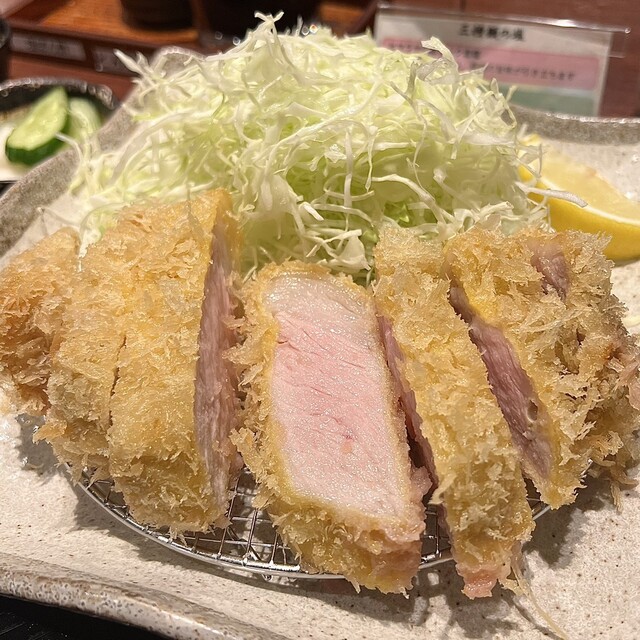
Tenjin is built for quick decisions: subway exits, department-store food floors, office lunches, late shopping, and Nakasu’s pull just beyond the river. In that setting, tonkatsu works because it is direct: a pork cutlet set can be lunch, an early dinner, or the centre of a family table without ceremony. Tonkatsu Wakaba fits that practical Fukuoka rhythm, but repeated selection for Tabelog 100 Tonkatsu in 2022, 2024, and 2026 moves it beyond anonymous neighbourhood lunch and into Japan’s watched pork-cutlet circuit.
Read this address not as a luxury detour, but as a category specialist in a city where serious eating often hides in plain sight. Fukuoka travellers usually map ramen, yatai, seafood, and mizutaki first. Tonkatsu sits quieter, yet tells another city story: urban, efficient, priced for repeat use, and technically narrow enough that small differences matter. For a broader map, Our full Fukuoka restaurants guide gives the stronger neighbourhood spread, while Our full Fukuoka bars guide, Our full Fukuoka hotels guide, Our full Fukuoka wineries guide, and Our full Fukuoka experiences guide fill in the city around the table.
Tenjin turns tonkatsu into a city-centre meal, not a destination ritual
Japan’s tonkatsu culture rewards concentration. The form is familiar, but the competitive set is unforgiving: frying, pork selection, rice, cabbage, sauce, and pacing all sit under scrutiny because the dish has few places to hide. A Tabelog score of 3.65 and inclusion in the 2026 Tabelog 100 Tonkatsu list place Tonkatsu Wakaba in a peer group defined by category credibility rather than fine-dining signals. That matters in Fukuoka, where a meal can be excellent without tasting-menu language or premium-room choreography.
The price band reinforces the point. At JPY 1,000 to JPY 1,999, it sits closer to high-functioning everyday counters than expense-account rooms. That differs from Riki Hanten, listed in Fukuoka at JPY 10,000 to JPY 14,999, and from low-cost quick-service anchors such as Tempura Dokoro Hirao Akurosu ten, whose appeal follows another fried-food grammar. Tonkatsu Wakaba occupies the middle ground Japanese cities do well: specialist cooking, central access, and a bill that does not turn dinner into an event.
Tenjin’s density also shapes expectations. Diners compare across genres within a few blocks: South Indian cooking at 106 South Indian Fukuoka tenjin ten, spice-led meals at Afterglow, local drinking-food rhythms at Aji Dokoro Taro Gen Sougyou ten, seafood-fry specialization at Aji Furai Shokudo Kaba, and old-school cutlet culture at Aji no Katsueda. Against that spread, pork cutlet must justify itself through execution, not novelty.
The format is compact, useful, and built for repeat diners
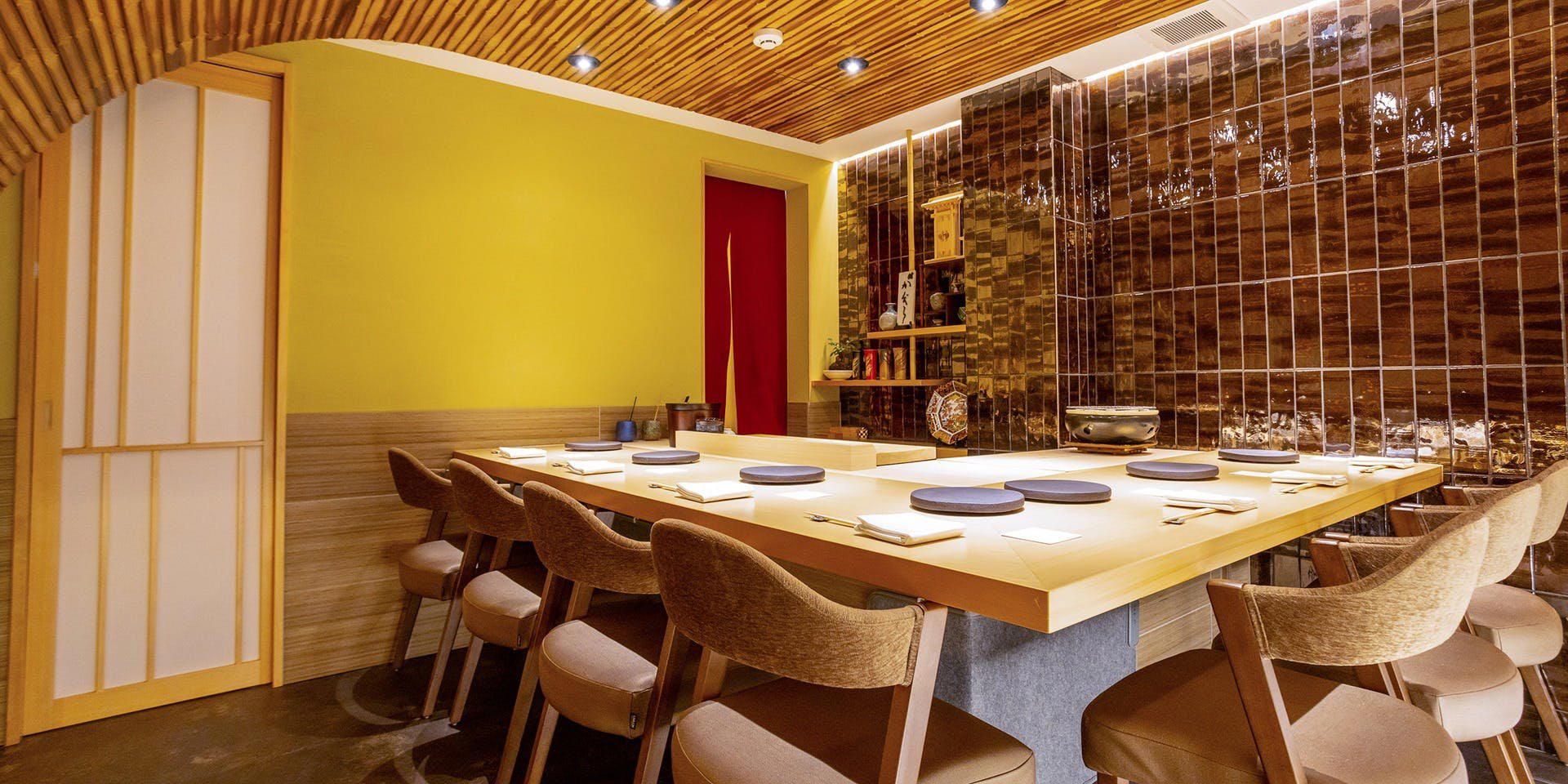
The room is listed at 45 seats, including counter seating, with no private rooms and no private-use format. Experienced Japan diners can read that: not a sealed-off business meal or hotel-concierge spectacle, but a public, functional restaurant where counters and tables keep turnover moving. The non-smoking policy, family-friendly classification, and children-welcome note make it more flexible than many small Japanese specialists, especially for travellers eating well without forcing a group into a rigid tasting-menu environment.
Reservations are unavailable, which changes planning. In Tenjin, that is not automatically a drawback. It suits flexible days, solo meals, couples, and families willing to time lunch or dinner around the city rather than anchor the day to a booking. Posted service covers lunch and dinner daily, with Sunday dinner ending earlier than the rest of the week, a meaningful detail where late shopping and transit can tempt diners to decide too late.
The drinks list is category-appropriate rather than performative: sake, shochu, and wine are listed. Take-out and delivery are part of the service mix, another signal that the restaurant operates inside local life, not only for travellers. Payment acceptance is broad by Japanese small-restaurant standards, with major credit cards, transportation IC cards, iD, and QR payments including PayPay, Rakuten Pay, and au PAY listed. Parking is unavailable, fitting the Tenjin address; subway-first is smarter, especially from Tenjin Station, with Nakasu-Kawabata and Tenjin Minami also in the practical orbit.
For travellers building a Japan food route, the restaurant offers a disciplined, award-recognised version of a dish too often treated casually, and gives Fukuoka another register beside its obvious signatures. The national comparison need not be tonkatsu-only: regional specialists such as -Grilled beef Sukiyaki- KAMAKURA TANUKIAN 鎌倉 たぬき庵 in Kamakura. 鮪と炭火焼き うお炭 秋葉原店 in Tokyo.cafe in Osaka.know in Kumamoto, (Shoku) Vietnam in Kawasaki, and [Curry Senmon Ten] Maruyama Kyoju. in Sapporo show how single-category focus can carry a meal without fine-dining architecture. Outside Japan, the same logic appears in tightly framed casual formats such as Jōdo Saké Bar in Los Angeles and Onigiri Time in Pasadena, where a narrow idea succeeds only if fundamentals are disciplined.
Where it fits in a Fukuoka itinerary
The strongest case is timing. It belongs in the middle of a Tenjin day: after shopping, before a bar crawl, between hotel check-in and an evening walk toward Nakasu, or as a lunch that does not derail the afternoon. The award history supplies trust, the price keeps it grounded, and the no-reservation format makes it better as a planned flexible stop than a fixed celebration meal. The restaurant reminds that Fukuoka’s dining intelligence is not limited to noodles and nightlife; some of its most persuasive eating happens when a familiar Japanese staple is taken seriously, priced accessibly, and placed exactly where the city is already moving.
The Essentials
Comparable venues in the metro at similar price points.
| Venue | Cuisine | Price | Notes |
|---|---|---|---|
| Tonkatsu Wakaba | Not listed | $$ | Chūō, Tonkatsu (Japanese pork cutlet) |
| Dai 8 Yachiyo Maru | Not listed | $$ | Hakata, Traditional Japanese Izakaya & Live-Tank Seafood |
| 奈良屋町 青 | Hakata, Japanese Izakaya | Not listed | Not listed |
| Shokudo Nizakana Shonen | Hakata, Japanese Seafood Set Meals | $$ | Not listed |
| Toritori Kenkyu Dan | Hakata, Yakitori & Chicken Ramen | $$ | Not listed |
| Hountei | Not listed | $$ | Hakata, Hakata bite-sized gyoza & izakaya dishes |
Recognition history
Dated appearances from independent guides and award organizations, with the underlying list record or original source where available.
Tabelog 100 #85 · No. 85
Tabelog · Tabelog 100 - Tonkatsu - 2026
At a Glance
- Lively
- Cozy
- Solo
- Family
- Casual Hangout
- After Work
- Group Dining
- Standalone
Current opening hours
- Monday
- 10:30 AM–2:30 PM, 5–9:45 PM
- Tuesday
- 10:30 AM–2:30 PM, 5–9:45 PM
- Wednesday
- 10:30 AM–2:30 PM, 5–9:45 PM
- Thursday
- 10:30 AM–2:30 PM, 5–9:45 PM
- Friday
- 10:30 AM–2:30 PM, 5–9:45 PM
- Saturday
- 10:30 AM–2:30 PM, 5–9:45 PM
- Sunday
- 10:30 AM–2:30 PM, 5–7:45 PM
Hours can change for holidays and private events. Last verified .