Michelin Bib Gourmand
Our verdict
A Michelin Bib Gourmand fixture for over three decades, Tong Ji operates out of a two-storey alley address in Yuexiu District, serving steamed free-range pullet, boiled chicken intestines, stir-fried ribbon rice noodles, and creamy congee at single-digit price points. The kind of place Guangzhou's dining culture quietly depends on: no ceremony, high precision, and ingredients selected with a specificity that most formal kitchens would envy.

Pearl is the En Primeur Club membership app, where members save venues, book tables and use the concierge.
The menu
What to order
- Poached chicken
- Chicken congee
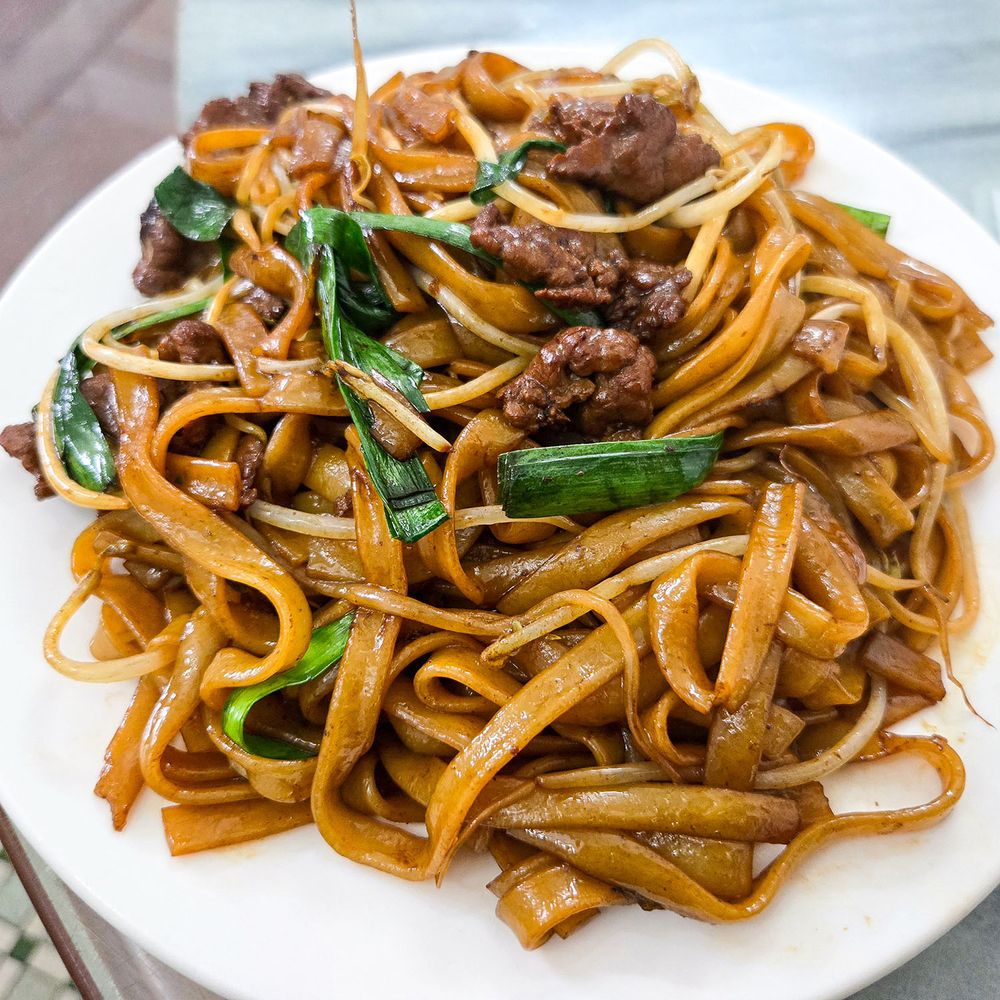
- Stir-fried rice noodles with beef
An Alley Address in Yuexiu, Thirty Years Running
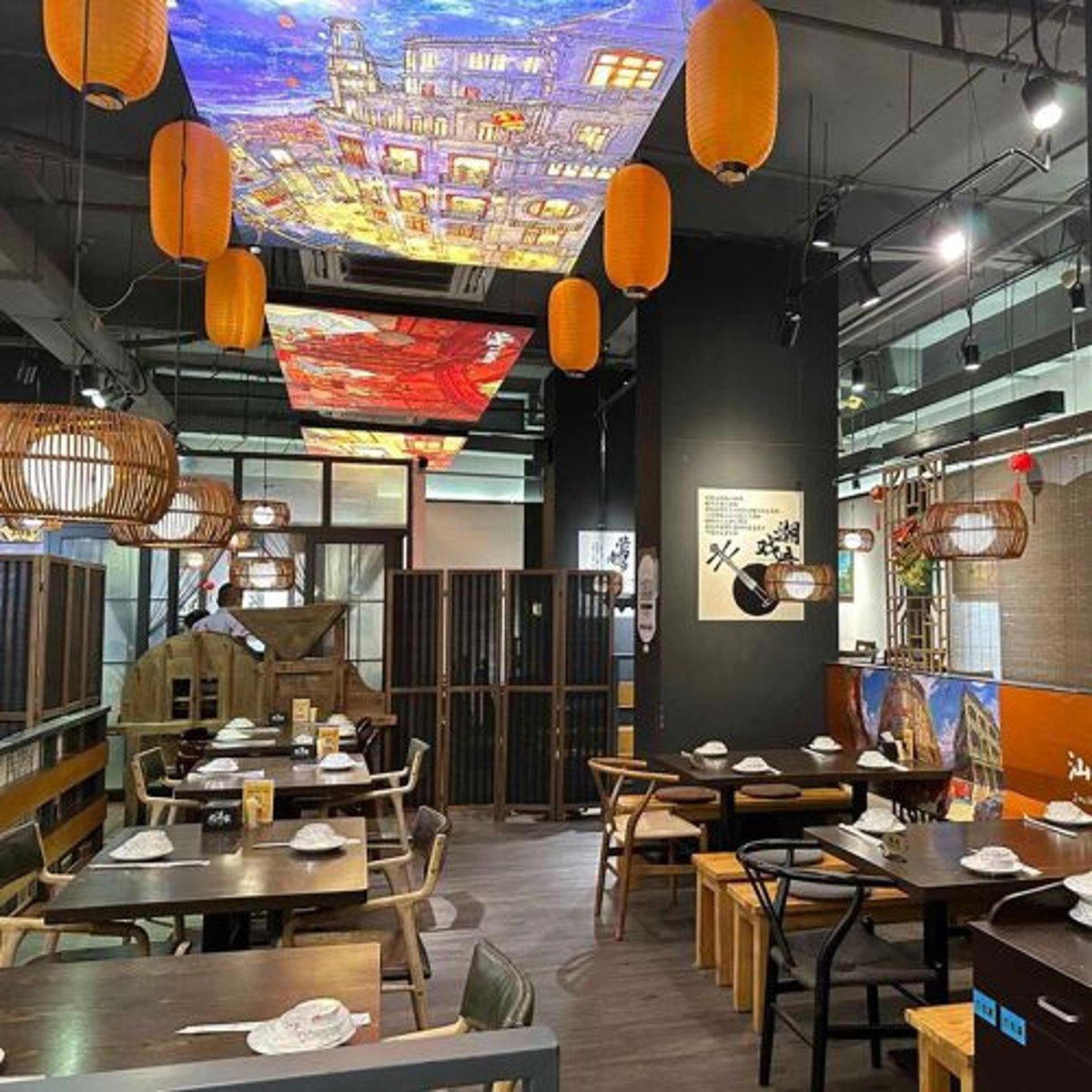
The approach to Tong Ji gives nothing away. Huifu East Road in Yuexiu District is a dense, workaday stretch of the old city, and the alley entrance to this two-storey shopfront reads as functional rather than welcoming. Plastic stools, communal tables, a kitchen that prioritises output over theatre. In Guangzhou's dining culture, this is not a shortcoming, it is a genre marker. The city has long maintained a parallel track of serious eating that runs entirely outside the formal restaurant system, and Tong Ji has occupied its position on that track for more than three decades.
The 2025 Michelin Bib Gourmand recognition places Tong Ji in a cohort of addresses that inspectors flag for quality that exceeds what the price point would suggest. At a single ¥ price tier, it operates in a different register entirely from the city's formal Cantonese tables. For comparison, Imperial Treasure Fine Chinese Cuisine and Jiang by Chef Fei occupy the ¥¥¥ bracket, and Taian Table and Chōwa sit at the top of the price range. Tong Ji's Bib Gourmand sits at the opposite end of that spectrum, which is precisely the point.
The Logic of Ingredient Selection
Editorial angle on Tong Ji is not nostalgia. It is ingredient discipline applied at a standard that formal kitchens rarely match at this price tier. The steamed chicken, which is the dish that most regulars come for, is made exclusively from free-range pullets selected before their first egg, a procurement window that captures the bird at peak skin elasticity, fat distribution, and flesh texture. The springy skin, oily richness, and silky flesh cited in the Michelin record are not incidental to the recipe. They are the result of a sourcing decision that narrows the viable supply significantly.
This kind of ingredient specificity reflects something deeper about Cantonese culinary thinking. The tradition prizes the quality of the raw material above almost every other variable. Technique in this context means knowing how to apply heat so that the product expresses itself rather than transforms. Steaming a properly selected pullet at the right temperature, for the right duration, produces a result that no amount of seasoning can replicate with a lower-quality bird. Tong Ji's three decades in operation suggest that the sourcing discipline has held.
The same logic extends to the broader menu. Boiled chicken intestines are a dish where freshness and cleaning technique determine almost everything. Stir-fried ribbon rice noodles (hor fun) require high heat, timing, and the right fat distribution to achieve the characteristic char without overcooking. Creamy congee in the Cantonese style depends on cooking time, stock depth, and rice variety. None of these are showpiece preparations. Each is a benchmark dish within its category, and each is executed with a consistency that thirty years of repetition tends to produce.
Where Tong Ji Sits in Guangzhou's Noodle and Congee Tradition
Guangzhou is, by almost any measure, the city where Cantonese culinary tradition is most fully expressed. The dim sum culture, the emphasis on freshness, the preference for lighter seasoning that allows primary ingredients to register clearly, these patterns run across the city's eating culture from street level to formal dining rooms. The noodle and congee segment occupies a specific position within that tradition: it is everyday food in the most serious sense, eaten at breakfast and late at night, and subject to genuine connoisseurship among locals.
The Bib Gourmand designation at this segment level is relatively rare in Guangzhou, which reflects the difficulty of sustaining consistency at low price points over decades. The category rewards places that have built processes rather than reputations, and that continue operating with the same sourcing and preparation standards regardless of recognition. Tong Ji's thirty-year run in an alley address in Yuexiu, without a website, without a bookable phone line in the public record, suggests a business that is indifferent to marketing and dependent entirely on product quality and word of mouth.
For comparison within the noodle and congee category across Greater China, Ho Hung Kee Congee and Noodle in Hong Kong holds a Michelin star, and Ding Te Le Zhou Mian Guan in Shanghai operates in the same informal register. The comparison points to a broader pattern: the most technically serious addresses in this segment tend to be high-volume, low-margin, and visually unassuming.
Cantonese Technique in a No-Frills Frame
The intersection of local ingredients and precise technique is not unique to fine dining. In Guangzhou's informal sector, it manifests as a kind of quiet professionalism that is easy to overlook if you are calibrating quality by room design. Tong Ji's two-storey format and no-frills interior are not a statement, they are simply the operational context within which a specific set of preparations are executed with care. The free-range pullet sourcing, the freshness requirements for offal, the heat management on the hor fun: these are technical decisions, not atmospheric ones.
This is also where the Cantonese tradition diverges most clearly from other regional Chinese cooking cultures. The preference for minimal intervention, steaming over roasting, boiling over braising, sauce as accent rather than dominant element, requires that the raw material be selected at a higher standard than in preparations where seasoning carries more of the load. Tong Ji's longevity in this context is a form of credential: it signals that the sourcing discipline has been maintained and that the kitchen has not simplified its preparation standards over time.
Guangzhou's broader dining range is explored in our full Guangzhou restaurants guide. The city's formal Cantonese end includes BingSheng Mansion on Xiancun Road. For context on how this sourcing-led approach operates across mainland Chinese dining more broadly, comparable addresses include Xin Rong Ji in Beijing, 102 House in Shanghai, Ru Yuan in Hangzhou, Xin Rong Ji in Chengdu, Chef Tam's Seasons in Macau, and Dai Yuet Heen in Nanjing. For hotels, bars, wineries, and experiences in Guangzhou, EP Club maintains separate guides: hotels, bars, wineries, and experiences.
Know Before You Go
- Address: 588 Huifu East Road, Yuexiu District, Guangzhou
- Cuisine: Noodles and Congee (Cantonese tradition)
- Price range: ¥ (single-tier; Michelin Bib Gourmand 2025)
- Recognition: Michelin Bib Gourmand 2025
- Format: Two-storey, no-frills shopfront in an alley off Huifu East Road; communal seating
- Key dishes: Steamed free-range pullet, boiled chicken intestines, stir-fried ribbon rice noodles, creamy congee
- Booking: No booking information available in public record; walk-in expected
- Hours: Not confirmed, check locally before visiting
- Getting there: Yuexiu District; accessible by metro from central Guangzhou
Frequently asked questions
What's the pricing like at Tong Ji?
Pricing at Tong Ji is listed as ¥.
What awards or recognition does Tong Ji have?
Tong Ji has received recognition including: Michelin Bib Gourmand (2025); Tucked away in an alley, this two-storey, no-frills joint has been in business for over 30 years. You're not here for the ambience, but for the steamed chicken – only free-range pullets before they lay their fi….
What's the must-try dish at Tong Ji?
The steamed chicken is the dish that secured Tong Ji's Michelin Bib Gourmand recognition in 2025. The kitchen uses only free-range pullets harvested before their first egg, a sourcing standard that produces the springy skin, oily richness, and silky flesh the dish is known for. Boiled chicken intestines, stir-fried ribbon rice noodles, and creamy congee are all cited by Michelin as further reasons to visit, but the chicken remains the anchor order.
What style of cooking does Tong Ji do?
Comparable options at a glance, pulled from our tracked venues.
| Venue | Cuisine | Price | Awards | Notes |
|---|---|---|---|---|
| Tong JiThis venue (the venue you are viewing) | Cantonese Chicken and Congee | Not listed | Michelin Bib Gourmand | Not listed |
| Imperial Treasure Fine Chinese Cuisine | Fine Cantonese Cuisine | Not listed | 2 Michelin Stars · La Liste Top Restaurants | Cantonese |
| Taian Table | Modern European with Asian Influences | $300–500 | 3 Michelin Stars · La Liste Top Restaurants | Modern European, European Contemporary |
| Chōwa | Franco-Japanese Fusion | $150–200 | 1 Michelin Star · The Best Chef Two Knives | Innovative |
| Imperial Treasure Fine Teochew Cuisine | Fine Teochew Cuisine | Not listed | 1 Michelin Star · La Liste Top Restaurants | Chao Zhou |
| Rêver | Modern French Fine Dining with Cantonese Influences | Not listed | 1 Michelin Star · The Best Chef One Knife | French Contemporary |
Recognition history
Dated appearances from independent guides and award organizations, with the underlying list record or original source where available.
Michelin Bib Gourmand
Michelin
Full recognition history (3 entries)
Michelin Bib Gourmand
Michelin
Michelin Bib Gourmand
Michelin