
Tabelog 100 #50
Our verdict
TOKYO BHAVAN sits in Tokyo’s serious South Indian lane rather than the generic curry-house bracket, with Tabelog 100 recognition for Asian and ethnic cuisine in 2023 and 2024. The appeal is ingredient-led cooking at an accessible price point, with dinner reservations, English menu support, and a Kudanshita-Iidabashi location that makes it useful for both locals and visitors.

Pearl is the En Primeur Club membership app, where members save venues, book tables and use the concierge.
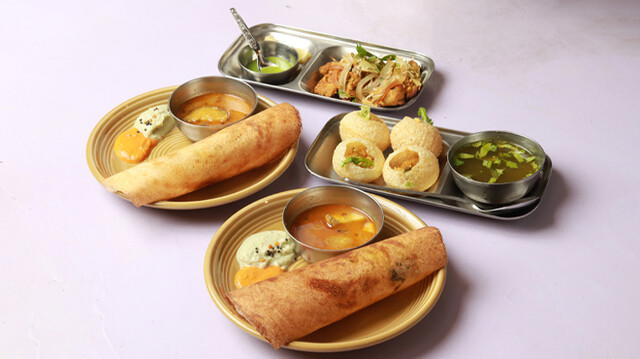
Approaching Tokyo through its everyday dining rhythm, the pace often shifts from station-front speed to side-street focus, where office workers, students, families, and serious eaters overlap. Here, Indian cooking has to carry fragrance, texture, and identity without ceremony.
TOKYO BHAVAN sits in that practical, revealing tier of Tokyo restaurants. The category is Indian and Indian curry, a broad label that still leaves room for nuance and sharper kitchen identity. In Tokyo, that distinction matters: “Indian curry” can mean quick lunch sets, carefully built spice structures, or meals shaped around rice, legumes, vegetables, aromatics, heat, and acidity. Its value is not luxury signaling, but Tokyo’s growing appetite for clearer definition at accessible prices.
Indian cooking in Tokyo is no longer a side note
Tokyo has long absorbed foreign cuisines through local demand: ramen from Chinese roots, yoshoku from Western technique, and curry through a Japanese comfort-food lens. The newer shift is more precise. Diners now separate broad national labels from more focused cooking styles, which is why Indian restaurants with a clearer point of view have gained traction with an audience that recognizes the difference between a generic curry plate and a meal structured around balance, spice, texture, and accompaniments.
That makes TOKYO BHAVAN’s everyday clarity central. Indian food depends less on luxury ingredients than on familiar ones handled well: grains, pulses, spices, aromatics, dairy, pickles, and vegetables. A Tokyo kitchen must make those elements legible in a city trained to notice precision. The point is not imported rarity, but whether acidity, heat, fat, and texture stay distinct.
The Tabelog Hyakumeiten recognition in 2024 is a useful signal, placing the restaurant inside a competitive local category rather than a tourist-facing shortcut. Its Tabelog score is 3.68, and the price band is modest for Tokyo: lunch at JPY 1,000 to JPY 1,999, dinner at JPY 2,000 to JPY 2,999. Tokyo diners reward clarity even when the format is casual and the spend is closer to everyday meal than special-occasion reservation.
Why the Tokyo setting matters
Tokyo supports several dining speeds at once: corporate meals, student budgets, residential regulars, and destination eaters who travel across the city for specific formats. The area supports specificity without preciousness. Compared with Old Thailand Iidabashi ten, part of the same everyday regional-food conversation, TOKYO BHAVAN reads as an accessible Indian and Indian curry option. Compared with Curry & Spice Bar Curry Bito, another curry-focused Tokyo address, the distinction is culinary framing, not price alone.
For travelers, serious Tokyo dining is not confined to luxury counters and chef-led omakase rooms. The city’s food intelligence often appears in restaurants that teach the palate through repetition: lunch service, weeknight dinners, spice structure, and rice-based formats. A visitor using Our full Tokyo restaurants guide will see specialization rewarded at every price level, from curry rooms to yakitori addresses and casual visual-culture cafés across the city.
The useful comparison is not luxury French rooms such as SOMBREUIL TOKYO, in an entirely different category, nor higher-spend Cantonese dining such as Kin Fuku Hong Kong Bishoku. The better read is that Tokyo now has enough range for an Indian restaurant to be judged on its own culinary grammar: a sign of maturity in the city’s Asian and ethnic cuisine category.
A practical room, not a performance room
The format reinforces the point. TOKYO BHAVAN is best understood as a practical Tokyo dining room rather than a hushed destination counter. Its appeal is not built on theatrical service or luxury codes, but on the more durable question of whether a casual restaurant can make its category feel precise, satisfying, and repeatable.
That matters for both residents and visitors. At lunch, a restaurant in this price band has to compete with the city’s enormous range of fast, efficient meals; at dinner, it has to justify a return visit without leaning on ceremony. TOKYO BHAVAN’s listed budget keeps it in the everyday conversation, while its recognition gives diners a reason to treat it as more than a convenient curry stop.
Service details should be checked directly before visiting, especially for reservations, payment methods, opening hours, group use, and menu availability. What the confirmed public profile does establish is simpler: TOKYO BHAVAN is a Tokyo restaurant categorized as Indian and Indian curry, with a phone listing of +81-3-6256-9925, a Tabelog score of 3.68, and 2024 Hyakumeiten recognition.
For a broader Tokyo itinerary, pair this low-ceremony regional dining with other parts of the city’s hospitality map: Our full Tokyo hotels guide, Our full Tokyo bars guide, Our full Tokyo wineries guide, and Our full Tokyo experiences guide. Nearby and adjacent dining can pull the day elsewhere, while other dining rooms in Tokyo show how wide the city’s casual and premium spectrum has become.
The wider Japan map shows the same appetite for tightly defined formats outside Tokyo, from compact specialty rooms to casual restaurants built around a single culinary idea. For readers tracking Japanese dining culture abroad, the same lesson often travels in reverse: a clear format, a focused menu, and a recognizable point of view can matter as much as formality.
The editorial case for TOKYO BHAVAN is clear: it represents Tokyo’s move from broad ethnic categories toward more literate, ingredient-sensitive dining at everyday prices. It does not mimic the city’s luxury grammar. It succeeds by making Indian and Indian curry feel readable in a city where diners know the difference between convenient curry and a kitchen with a point of view.
Frequently asked questions
What's the pricing like at TOKYO BHAVAN?
Pricing at TOKYO BHAVAN is listed as dinner: JPY 2,000 - JPY 2,999; lunch: JPY 1,000 - JPY 1,999.
What days is TOKYO BHAVAN closed?
Current opening days and closing information should be checked directly with TOKYO BHAVAN before visiting.
Where is TOKYO BHAVAN in Tokyo?
Tokyo.
What's the standout thing about TOKYO BHAVAN?
Its strongest credential is Tabelog Hyakumeiten recognition in 2024. The venue is categorized as Indian and Indian curry, with a listed Tabelog score of 3.68.
Can TOKYO BHAVAN handle vegetarian requests?
Check directly with TOKYO BHAVAN for current menu details and dietary requests.
Is TOKYO BHAVAN good for families?
Check directly with TOKYO BHAVAN for current family, stroller, and seating guidance before visiting.
The Essentials
Side-by-side context: comparable cuisine and price.
| Venue | Cuisine | Price | Awards | Notes |
|---|---|---|---|---|
| TOKYO BHAVANThis venue (the venue you are viewing) | Authentic South Indian restaurant | $10–20 | Tabelog 100 #50 | Not listed |
| Yu | Vegan Gyoza Cafe | $10–20 | Tabelog Bronze | Not listed |
| Curry & Spice Bar Curry Bito | Indian-style Curry & Spice Bar | $10–20 | Tabelog 100 #56 | JPY 1,000 - JPY 1,999 |
| Kin Fuku Hong Kong Bishoku | Hong Kong / Cantonese Chinese | $50–100 | Tabelog 100 #35 | JPY 6,000 - JPY 7,999 |
| Old Thailand Iidabashi ten | Thai | Not listed | Tabelog 100 #54 | JPY 3,000 - JPY 3,999 JPY 1,000 - JPY 1,999 |
| SOMBREUIL TOKYO | Classic French fine dining in a Tokyo mansion | $150–200 | Tabelog 100 #1 | JPY 20,000 - JPY 29,999 JPY 10,000 - JPY 14,999 |
Recognition history
Dated appearances from independent guides and award organizations, with the underlying list record or original source where available.
Tabelog 100 #50 · No. 50
Tabelog · Tabelog 100 - Asian cuisine / Ethnic cuisine - TOKYO - 2024
Continue exploring
More in Tokyo
Restaurants in Tokyo
All restaurants in Tokyo →



Bars in Tokyo
All bars in Tokyo →




Details
- Casual Hangout
- Family
- Solo
- Group Dining
- After Work
- Standalone
- A La Carte
- Vegetarian Friendly
Current opening hours
- Monday
- 11:30 AM–3 PM, 5–9:30 PM
- Tuesday
- 11:30 AM–3 PM, 5–9:30 PM
- Wednesday
- 11:30 AM–3 PM, 5–9:30 PM
- Thursday
- 11:30 AM–3 PM, 5–9:30 PM
- Friday
- 11:30 AM–3 PM, 5–9:30 PM
- Saturday
- 11:30 AM–3 PM, 5–9:30 PM
- Sunday
- 11:30 AM–3 PM, 5–9:30 PM
Hours can change for holidays and private events. Hours as of .
Casual, simple neighborhood spot with a relaxed, not--busy atmosphere focused on hearty South Indian meals rather than design or décor.