Tierra Colombiana
Our verdict
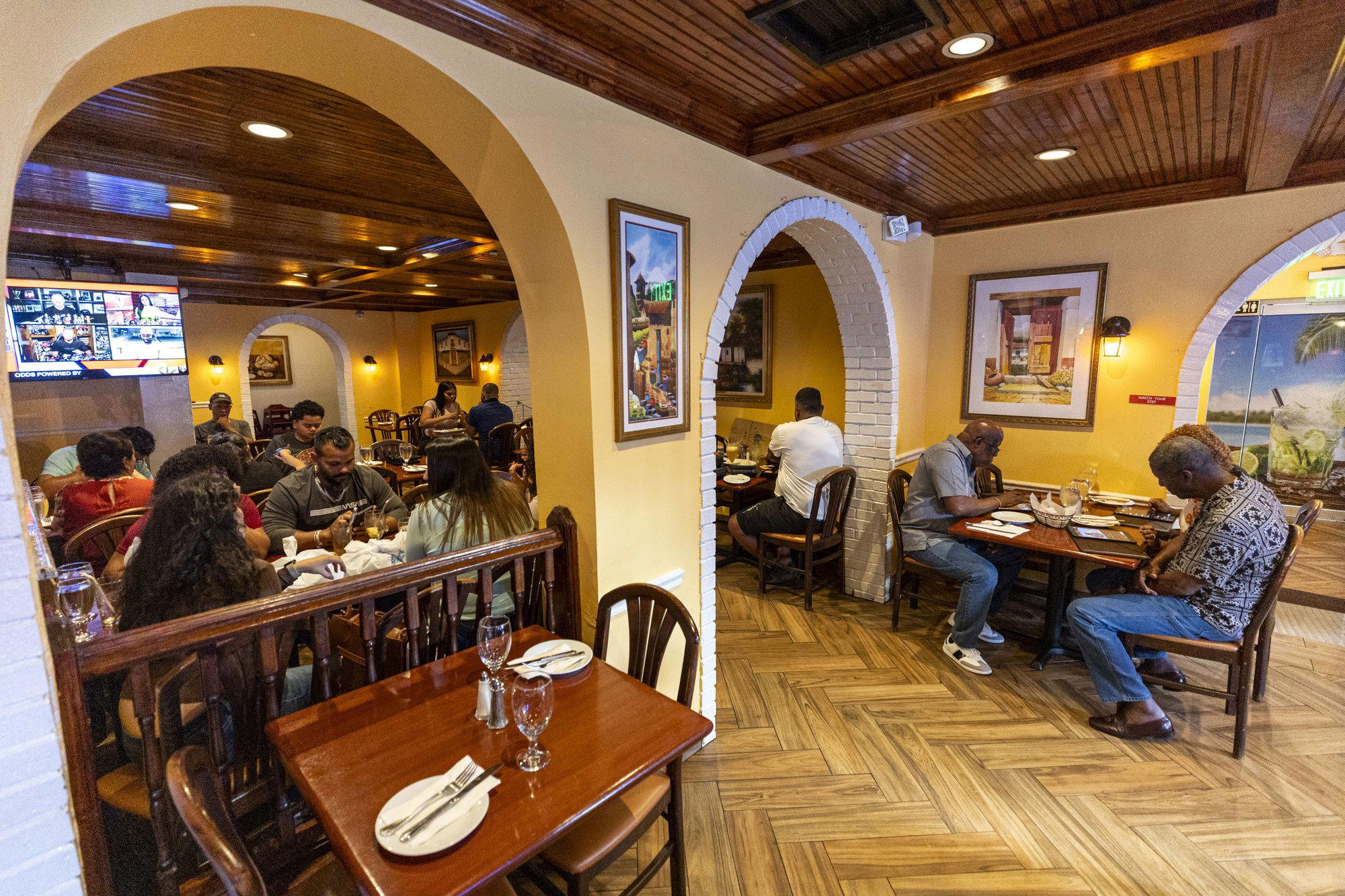
Tierra Colombiana at 4535 N 5th St anchors Philadelphia's Colombian dining scene in the Olney neighborhood, a part of the city where Latin American culinary traditions run deep and community restaurants operate on decades of institutional loyalty rather than trend cycles. The kitchen draws from Colombian and broader Latin American ingredient traditions, making it a reference point for the city's north side dining corridor.

Pearl is the En Primeur Club membership app — saves, bookings, and concierge access live there. Same editors, same standards.
- Address
- 4535 N 5th St, Philadelphia, PA 19140
- Phone
- (215) 324-6086
- Hours
- Daily 8 AM–10 PM
- Directions
- Get directions
The menu
What to order
- El Montuno
- Arroz con Pollo
- Mofongo de Camarones
- Picada Special
- Tres Leches Cake
North Philadelphia's Latin Ingredient Corridor
The stretch of North 5th Street running through Olney is one of Philadelphia's most underappreciated food corridors. Where Center City dining tends to reward novelty, this neighborhood rewards consistency and sourcing fidelity. Carnicerias, Latin grocers, and family-run restaurants operate in close proximity here, creating a supply infrastructure that many kitchens in trendier zip codes actively try to replicate with farm partnerships and supplier press releases. Tierra Colombiana, at 4535 N 5th St, sits inside that ecosystem rather than importing it from elsewhere. That geographic positioning matters for understanding what the kitchen produces and why it tastes the way it does.
Colombian cooking, broadly speaking, depends on a short list of foundational ingredients — arepas made from pre-cooked corn masa, starchy tubers like yuca and papa criolla, dried legumes, and slow-cooked proteins that vary by region. The Andean highlands produce stews like ajiaco, built on three potato varieties and guascas herb. The coast brings seafood and coconut milk into the mix. The Llanos grasslands contribute beef-forward traditions. A restaurant drawing from this tradition without shortcuts needs reliable access to the right raw materials, and in Olney, that access is structural rather than aspirational. Tierra Colombiana operates in a neighborhood where the ingredient supply matches the culinary tradition.
What the Kitchen Signals About the Food
Colombian restaurants in the United States occupy a specific and often underexamined niche. They are rarely positioned at the high end of the market the way that Peruvian cuisine has been in recent years, with its ceviche counters and Nikkei tasting menus drawing comparison to venues like Providence in Los Angeles or Le Bernardin in New York City. Colombian cooking has instead maintained a community-facing identity in most American cities, where value, portion size, and authenticity to regional traditions carry more weight than format experimentation or chef credentials. That positioning is not a limitation. It reflects a different set of priorities, and Tierra Colombiana operates within those priorities rather than against them.
The sourcing logic at a restaurant like this one is direct rather than curated. Proteins, plantains, corn products, and dried beans come through suppliers embedded in the same commercial ecosystem as the neighborhood's grocers and butchers. This is not farm-to-table marketing. It is the older and more durable version of the same idea: cook what the neighborhood can supply, and supply what the neighborhood cooks. For diners more accustomed to sourcing narratives at places like Blue Hill at Stone Barns in Tarrytown or Single Thread Farm in Healdsburg, this approach can read as invisible. The difference is that here, the sourcing does not need to be narrated. It is the precondition of the restaurant's existence in this neighborhood.
Philadelphia's Immigrant Restaurant Geography
Philadelphia's Latin dining map is not evenly distributed. South Philadelphia concentrates the city's oldest Italian-American infrastructure, and pockets of Center City have absorbed the kind of globally-inflected New American cooking represented by Fork and Friday Saturday Sunday. North Philadelphia, and Olney in particular, holds the city's Colombian, Dominican, Puerto Rican, and broader Latin American restaurant density. This geographic clustering shapes both the competitive dynamics and the customer base. A restaurant like Tierra Colombiana is not competing for the same diner who books Kalaya for its southern Thai tasting format or visits Mawn for Cambodian cooking.
That stability is itself an editorial point worth making. Fine dining's seasonal menu rotation, executed at the highest levels by kitchens like Alinea in Chicago or The Inn at Little Washington, represents one end of the restaurant spectrum. Community anchor restaurants represent the other. Menu constancy here signals institutional reliability, not lack of ambition. The dishes that Colombian diners associate with home cooking — bandeja paisa, sancocho, pollo asado, are not format experiments. They are the point.
The Olney Neighborhood Context
Olney is one of Philadelphia's more densely settled working-class neighborhoods, with a large Latino population that has grown significantly over the past two decades. The commercial strip along 5th Street functions as a neighborhood main street in the traditional sense: banks, phone stores, hair salons, and restaurants serving the people who live within walking distance. Destination dining from other parts of the city has not reshaped this block the way it has reshaped East Passyunk or Fishtown. That insularity is what preserves the supply logic and the customer culture that makes a restaurant like Tierra Colombiana what it is. Visitors arriving from outside the neighborhood should understand they are entering a community institution rather than a restaurant designed for the broader Philadelphia dining circuit.
For context on how other American cities handle similar dynamics, consider how New Orleans's neighborhood restaurants have historically operated parallel to their nationally-known counterparts, with places like Emeril's in New Orleans drawing a different audience entirely than the city's neighborhood-facing Creole kitchens. Philadelphia's pattern is comparable. The restaurants that appear in national press, My Loup, for instance, with its French-influenced format, are not the same restaurants that anchor the food life of neighborhoods like Olney. Both types matter. They simply serve different functions and measure success differently.
Planning Your Visit
Tierra Colombiana is located at 4535 N 5th St, Philadelphia, PA 19140, in the Olney neighborhood. Public transit access via SEPTA's Broad Street Line (Olney terminal) and connecting buses makes the location reachable from Center City without a car. Given the community-anchor positioning of the restaurant, walk-in dining is the standard format for this category. Booking infrastructure common at Atomix in New York City or Addison in San Diego is not the operating model here.
Peer Comparison: North Philadelphia Latin American Dining
| Venue | Cuisine | Format | Booking | Neighborhood |
|---|---|---|---|---|
| Tierra Colombiana | Colombian / Latin American | Community restaurant | Walk-in typical | Olney |
| South Philly Barbacoa | Mexican | Counter service | Walk-in | South Philadelphia |
| Barbuzzo | Italian | Sit-down, reservations | OpenTable | Midtown Village |
| Federal Donuts | Casual / Doughnuts | Counter service | Walk-in | Multiple locations |
For the broader Philadelphia dining picture, our full Philadelphia restaurants guide maps venues across neighborhoods and price tiers.
Frequently asked questions
Where do I go for Tierra Colombiana?
Tierra Colombiana is located at 4535 N 5th St, Philadelphia, PA 19140, Philadelphia.
Is Tierra Colombiana in Philadelphia different from Colombian restaurants in other American cities?
Philadelphia's Olney neighborhood has one of the region's more concentrated Latino residential populations, which shapes what restaurants on N 5th Street are required to produce: food that functions as a cultural anchor for Colombian and broader Latin American communities, not a crossover product pitched at outside diners. That community-serving orientation tends to keep menus closer to Colombian regional tradition than counterparts in higher-traffic tourist corridors in cities like Miami or New York.
What do people recommend at Tierra Colombiana?
Colombian restaurant kitchens rooted in immigrant-serving neighborhoods like Olney tend to anchor their menus around the workhorses of regional Colombian cooking: bandeja paisa, sancocho, and arepas prepared according to home-country tradition rather than American-market adaptations. These are dishes built for volume and authenticity, not novelty. Tierra Colombiana at 4535 N 5th St sits within a Latin ingredient corridor where sourcing follows community standards, which typically keeps the reference dishes close to their Colombian origins.
Can I walk in to Tierra Colombiana?
Walk-in dining is the standard operating model at community-anchor Latin American restaurants along the N 5th Street corridor in Olney, and Tierra Colombiana follows that pattern. Unlike reservation-driven restaurants in Center City Philadelphia, neighborhood spots of this type are built for regular, informal traffic. Arriving at off-peak hours, particularly mid-afternoon between the lunch and dinner rushes, typically improves your chances of immediate seating.
Comparable Options
Comparable venues nearby, for context on price, style, and recognition.
| Venue | Cuisine | Price | Notes |
|---|---|---|---|
| Tierra ColombianaThis venue — the venue you are viewing | Authentic Colombian and Latin American | $20–30 | Not listed |
| Philadelphia Distilling | Modern Gastropub | $30–50 | Northern Liberties |
| Santucci's North Broad | Original Square Pizza | $20–30 | Avenue of the Arts |
| Cerveau | Mediterranean Pizzeria | $20–30 | Callowhill |
| New Harmony Vegetarian Restaurant | Vegan Chinese | Not listed | Old City |
| Seafood Unlimited | Fresh Seafood | $20–30 | Rittenhouse Square |