Cerveau
Our verdict
Cerveau operates on Spring Garden Street in Northern Liberties, Philadelphia, holding its own in a city that has grown quietly serious about thin-crust pizza. The format sits closer to the Roman tradition than Neapolitan, favoring a crisper, drier base where toppings are allowed to carry real weight. For Philadelphia diners, it represents a distinct alternative to the borough's broader Italian-American canon.

Pearl is the En Primeur Club membership app — saves, bookings, and concierge access live there. Same editors, same standards.
- Address
- 990 Spring Garden St ste 102, Philadelphia, PA 19123
- Phone
- (215) 494-0229
- Hours
- Mon ClosedTue–Thu 4–9 PMFri–Sat 12–3 PM, 4–11 PMSun Closed
- Website
- cerveauphilly.com
- Directions
- Get directions
- Booking
- Book on OpenTable
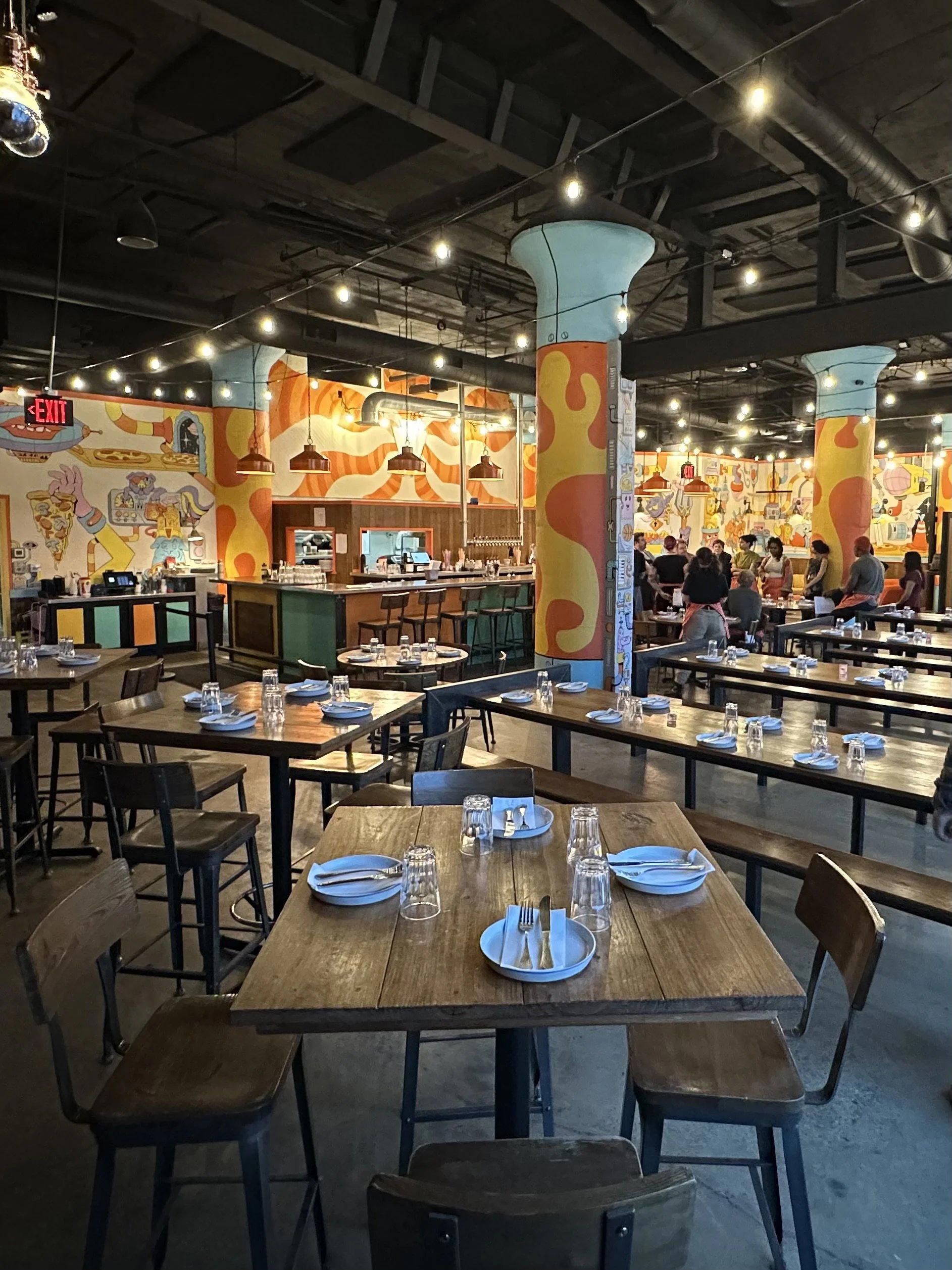
Thin Crust, Serious Intent: Philadelphia's Pizza Beyond the Red-Sauce Canon
Philadelphia has long operated in the shadow of New York's pizza identity politics, but the city's own thin-crust scene has matured independently, without much fanfare. The Northern Liberties and Spring Garden corridor, where Cerveau sits at 990 Spring Garden Street, has become a reliable address for diners moving away from thick, oil-pooled slices and toward something closer to the Roman pizza al taglio tradition: flat, cracker-adjacent bases with enough structural integrity to carry sparse, considered toppings. That shift in format signals a shift in culinary reference point — away from the red-sauce Italian-American tradition dominant across South Philly, and toward a more European-influenced sensibility.
The Roman style is the relevant frame here. Where Neapolitan pizza codes around a soft, charred, wet-centered crust and DOP-certified San Marzano tomatoes, Roman thin-crust is drier, more restrained in hydration, and designed to be cut rather than folded. Cerveau's position in the thin-crust category places it within that latter tradition, serving a palate that prefers texture and precision over the theatrical char of a wood-fired Neapolitan. For context, this is the same distinction that separates a Trastevere neighborhood pizzeria from a tourist-facing Napoli-style operation — different audiences, different commitments.
Where Spring Garden Street Sits in Philadelphia's Italian Dining Geography
Philadelphia's Italian dining has historically clustered in two zones: the old South Philly enclave with its red-sauce institutions, and a newer wave of Italian-influenced openings spread across Center City and the Northern Liberties fringe. Cerveau occupies that second geography. Spring Garden Street runs north of the Benjamin Franklin Parkway through a mixed residential and commercial strip, placing the restaurant at a remove from both the tourist circuits of Old City and the white-tablecloth density of Rittenhouse Square.
That positioning matters for understanding the room's likely register. Diners at this end of Spring Garden tend to arrive with neighborhood regularity rather than occasion-dining intent. Comparable Philadelphia Italian addresses, Barbuzzo on 13th Street, for instance, occupy a more central, higher-traffic corridor and carry corresponding pricing pressure. Spring Garden's lower commercial intensity can support a different kind of operation: less performative, more focused on what arrives on the plate.
For broader Philadelphia dining context, the city's New American scene at places like Fork and Friday Saturday Sunday has driven most of the national critical attention in recent years, but the city's more casual, single-subject restaurants have developed real depth. Mawn's Cambodian program and South Philly Barbacoa's Mexican focus are examples of how Philadelphia's strength often comes from restaurants with a specific, narrow identity rather than broad menus. Cerveau's thin-crust focus fits that pattern.
Reading the Format: What Thin-Crust Commitment Tells You About a Kitchen
A restaurant that narrows its identity to a single pizza style is making an argument. It is saying that execution within constraints matters more than range, and that the audience willing to make that trade-off is the audience worth serving. Thin-crust operations live or die on the base: dough hydration, fermentation time, bake temperature, and the balance between crispness and chew. These are parameters that require consistency and control. A kitchen that gets them right produces something repeatable across visits, which is ultimately what earns a place on the regular rotation for any neighborhood diner.
By contrast, kitchens that offer thin-crust alongside thick-crust alongside deep-dish are typically optimizing for traffic rather than craft. Cerveau's format signals the former orientation. The Italian-American category in Philadelphia is competitive enough that a single-style operator needs to be genuinely good at that style to survive without the support of a broader menu safety net.
Restaurants taking similarly focused approaches at a higher price tier nationally include operations like Lazy Bear in San Francisco or Alinea in Chicago, where the narrowing of format creates intensity of execution. The principle scales down as well as up: commitment to a single form, executed with discipline, is a coherent culinary stance at any price point.
How Cerveau Compares to Philadelphia's Italian Category
Philadelphia's Italian dining spans a wide range, from the long-running South Philly red-sauce institutions to newer, European-inflected openings. Cerveau's thin-crust positioning sits outside both poles. It is not trading on nostalgia for the Italian-American immigrant tradition, and it is not operating as a destination fine-dining Italian experience. It is, instead, a format restaurant with a specific regional reference point, which gives it a clearer competitive identity than restaurants that try to cover all of Italian cuisine.
That specificity is useful for the reader who already knows what they want. If you arrive looking for wood-fired Neapolitan with the accompanying wet crumb and leopard-spotted char, this is not that address. If you are looking for something closer to the Roman taglio tradition, where the crust is a delivery mechanism rather than the main event, the format aligns. Understanding which tradition you are being served by is half the work of evaluating whether a pizza restaurant is doing its job well.
For a full picture of where to eat in the city, our full Philadelphia restaurants guide covers the range from occasion dining to neighborhood regulars. Readers interested in broader city context can also consult our Philadelphia hotels guide, Philadelphia bars guide, Philadelphia wineries guide, and Philadelphia experiences guide.
Planning a Visit to Cerveau
Cerveau is located at 990 Spring Garden Street, Suite 102, in Philadelphia's Spring Garden neighborhood, accessible from Center City by a short ride north on the 47 or 57 bus lines, or a roughly ten-minute drive from Rittenhouse Square. The suite designation suggests a ground-floor commercial unit within a mixed-use building, which is typical of newer restaurant openings along this stretch of Spring Garden. Readers comparing pizza-focused options across the city should weigh Cerveau against their specific stylistic preference before committing: the thin-crust format is consistent, and consistency in a format restaurant is the relevant metric.
For readers building a broader Philadelphia dining itinerary, reference points at the fine-dining end of the national spectrum include Le Bernardin in New York, The French Laundry in Napa, Atomix in New York, Single Thread Farm in Healdsburg, Emeril's in New Orleans, and Alain Ducasse at Louis XV in Monte Carlo, all of which represent the outer range of what formal dining ambition looks like. Cerveau occupies a different register entirely, but knowing where that register sits within the broader category is useful framing for any serious diner.
Also Consider: My Loup
For diners whose Spring Garden visit includes consideration of the French-influenced end of Philadelphia's dining scene, My Loup on nearby 13th Street operates in a complementary register to Cerveau's Italian focus, and the two addresses together represent the range of European culinary reference points currently active in this part of the city.
Frequently asked questions
How does Cerveau fit into Philadelphia's thin-crust pizza scene compared to New York-style options in the city?
Philadelphia has historically deferred to New York in pizza identity conversations, but Cerveau's thin-crust focus at 990 Spring Garden Street represents the city's independent development of that style on its own terms. Where New York-style operations in Philadelphia often adapt for local familiarity, a dedicated thin-crust kitchen like Cerveau is making a format argument that doesn't depend on the New York reference point. That distinction matters to diners specifically seeking Italian-style thin crust rather than the foldable, high-hydration New York slice.
What dish is Cerveau famous for?
Cerveau has built its identity around thin-crust pizza, committing to that format as a defining house position rather than offering a broad Italian menu. In Philadelphia's dining context, that kind of format discipline is relatively rare outside South Philly's old-guard institutions. The Spring Garden address places it in a newer wave of Italian-influenced openings rather than the red-sauce enclave.
What's the best way to book Cerveau?
Showing up directly or checking third-party reservation platforms like Resy or OpenTable for a Cerveau Philadelphia listing is the most practical approach until official contact details are confirmed.
What has Cerveau built its reputation on?
Cerveau operates on the premise that thin-crust pizza done with consistent precision is a more compelling argument than a sprawling Italian menu. That positioning sets it apart from Philadelphia's South Philly red-sauce canon and aligns it more closely with European-inflected, format-focused kitchens that have emerged in the city's northern neighborhoods. The Spring Garden location on the 900 block places it within a dining corridor developing independently of Center City's main restaurant concentration.
Should I splurge on Cerveau?
What the format does signal is focused execution over scale: a kitchen that narrows to thin-crust pizza is optimizing for consistency rather than menu breadth, which typically reflects in tighter, mid-range pricing rather than the higher outlay of a multi-course Italian tasting room.
In Context: Similar Options
Comparable venues nearby, for context on price, style, and recognition.
| Venue | Cuisine | Price | Notes |
|---|---|---|---|
| CerveauThis venue — the venue you are viewing | Mediterranean Pizzeria | $20–30 | Not listed |
| Casablanca Mediterranean Grill | Mediterranean Fusion Grill | $20–30 | Passyunk Square |
| Craftsman Row Saloon | Modern Comfort Food & Gastropub | $20–30 | Washington Square West |
| Jack's Firehouse | Haute Country American | $30–50 | Fairmount |
| Porcini | Modern Italian Trattoria | $30–50 | Rittenhouse Square |
| Royal Tavern | Elevated American Gastropub | $20–30 | Bella Vista |
Continue exploring
More in Philadelphia
Restaurants in Philadelphia
Browse all →
Bars in Philadelphia
Browse all →


Details
- Lively
- Trendy
- Modern
- Casual Hangout
- Date Night
- Group Dining
- Open Kitchen
- Craft Cocktails
- Zero Proof
- Extensive Wine List
- A La Carte
- Small Plates
- Wine
- Cocktails
- Vegetarian Friendly
- Vegan Options
Current opening hours
- Monday
- Closed
- Tuesday
- 4–9 PM
- Wednesday
- 4–9 PM
- Thursday
- 4–9 PM
- Friday
- 12–3 PM, 4–11 PM
- Saturday
- 12–3 PM, 4–11 PM
- Sunday
- Closed
Hours can change for holidays and private events. Last verified .
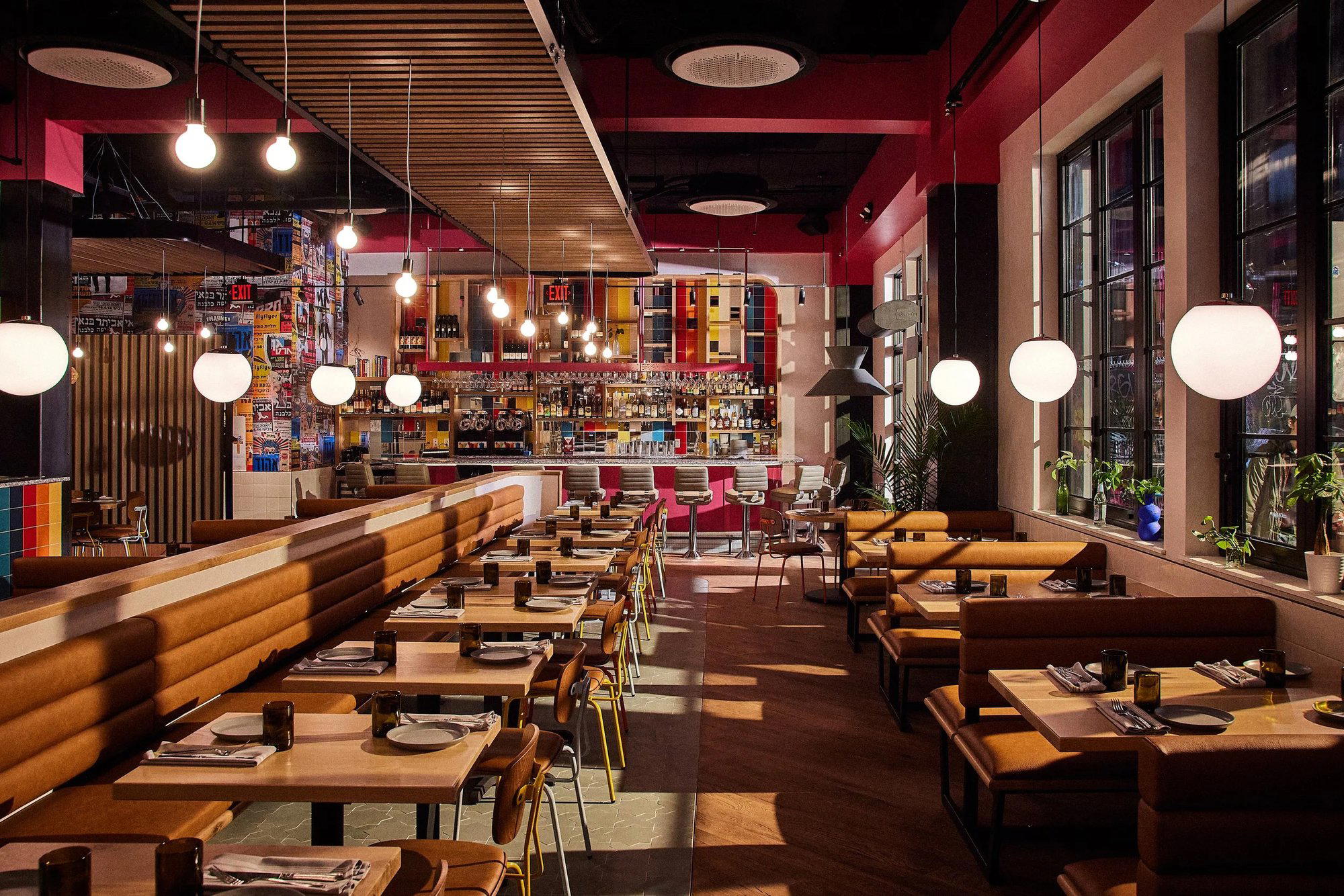
Big, busy atmosphere with colorful, surreal surroundings featuring murals and lava lamp-like columns.