The Swag


Relais Chateaux Award · Wine Spectator Award of Excellence
Our verdict
Set on a ridge in the Great Smoky Mountains near Waynesville, The Swag operates as a farm-to-table destination where American Mountain cooking and a 130-label wine list share the same serious attention. Chef Jake Schmidt's dinner menu draws on local sourcing traditions that have defined Appalachian cooking long before the phrase farm-to-table entered the national conversation. At the $$ price tier for two courses, it sits well below comparable destination dining in the region.

Pearl is the En Primeur Club membership app — saves, bookings, and concierge access live there. Same editors, same standards.
- Address
- 2300 Swag Rd, Waynesville, NC 28785
- Phone
- (828) 926-0430
- Website
- theswag.com
- Directions
- Get directions
- Booking
- Book on Resy
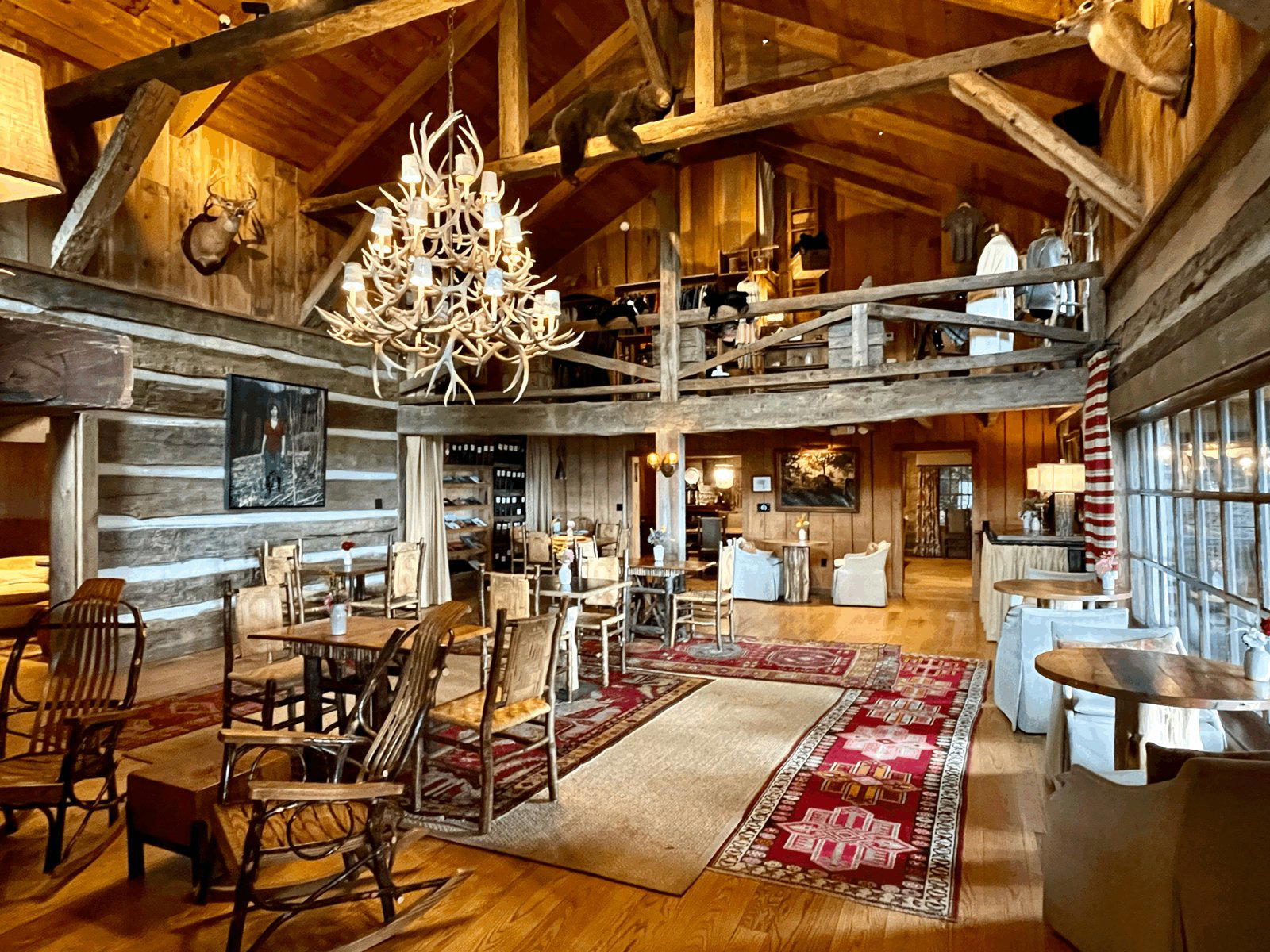
Where the Smokies Set the Menu
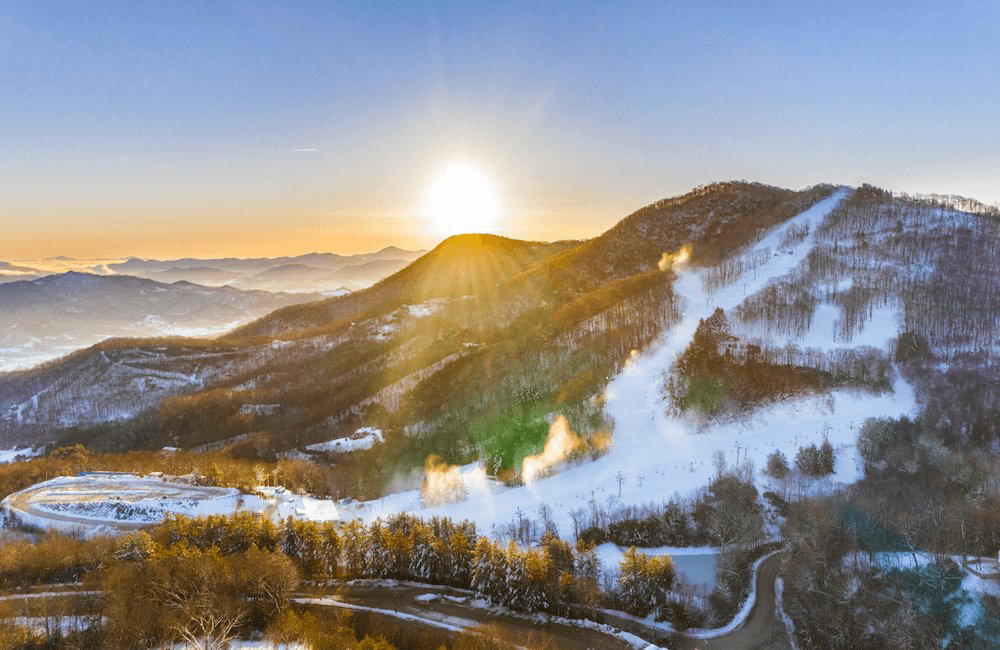
The approach to The Swag on Swag Road tells you something about the philosophy inside. At 2,300 feet in the Great Smoky Mountains outside Waynesville, North Carolina, the drive up is not incidental atmosphere — it is the first argument the kitchen is going to make: that place determines what lands on the plate. Appalachian food culture has operated this way for generations, relying on the altitude, the climate, and the specific ecology of the southern highlands to shape what grows, what keeps, and what gets cooked. What contemporary farm-to-table dining has rebranded as an ethos, mountain communities here practiced as necessity long before it became a movement. The Swag positions itself inside that lineage rather than above it.
American Mountain Cooking in Context
Farm-to-table as a national movement reached its most visible expression at places like Blue Hill at Stone Barns in Tarrytown and Single Thread Farm in Healdsburg, where sourcing relationships with specific farms became the conceptual architecture of the restaurant. Those properties made their agrarian connections legible and legible as luxury. Appalachian mountain dining, by contrast, has always had a quieter version of the same argument — sourcing local not as a premium signal but as geography forcing the issue. The Great Smoky Mountains offer a distinct larder: ramps, pawpaws, black walnuts, wild mushrooms, and cultivated produce from the small farms that work the valley floors below the ridge lines. Chef Jake Schmidt's American Mountain menu at The Swag draws on that larder. The $$ pricing for a two-course dinner, meaning a typical meal falls between $40 and $65, not including beverages, places it meaningfully below destination-format peers like The Inn at Little Washington or The French Laundry in Napa
The comparison set for The Swag is not the grand tasting-menu circuit. It belongs closer to the tier occupied by destination properties where the building, the landscape, and the table work as a single experience, places like Blackberry Mountain in Walland or Granite Lodge in Philipsburg, both working within the American Mountain category. Within that set, what distinguishes The Swag is the formality of its beverage program relative to its food price point, a distinction worth examining.
The Wine Program as a Separate Argument
Wine programs at destination mountain properties often function as afterthoughts, a short list of recognizable bottles chosen to satisfy rather than engage. Cara De Lavallade, The Swag's Wine Director, runs a program that refuses that default. The list holds 130 selections drawn from a 2,100-bottle inventory, with California pricing at the $$ tier, meaning the list spans a genuine range without requiring a $100-plus commitment on every bottle. A $30 corkage fee applies for guests bringing their own bottles, which is a fair signal of how seriously the house takes its own list: high enough to be meaningful, low enough not to be punitive. For context on what a serious mid-tier wine program looks like at the upper end of American fine dining, Le Bernardin in New York City, Lazy Bear in San Francisco, and Providence in Los Angeles all operate with deeper lists and higher price floors. The Swag's 130-label range is calibrated differently, it reads as a program chosen for match quality with the regional kitchen rather than for prestige breadth. That is the right call at this altitude, in this room, at this price tier.
The Appalachian Setting as an Ingredient
The Great Smoky Mountains are the most visited national park in the United States, drawing over 12 million visitors in recent years. Most of that traffic moves through Gatlinburg and Pigeon Forge on the Tennessee side. The North Carolina approach via Waynesville is slower, less commercial, and considerably quieter, the kind of difference that matters when a restaurant's core proposition is landscape immersion. Asheville Regional Airport sits approximately 71 kilometers from The Swag, making it the logical arrival point for guests flying in. From Asheville, the drive through Haywood County into the mountains takes under an hour and transitions through small towns that still operate on agricultural rhythms. That context is not incidental to the dinner. It is the dinner's subject matter.
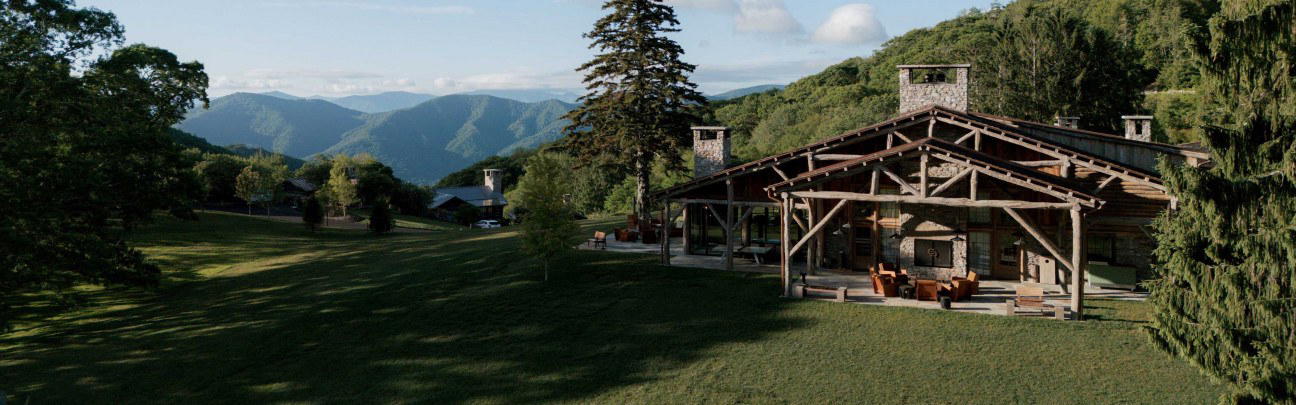
Farm-to-table programs that operate this convincingly at altitude are rare. Addison in San Diego, Emeril's in New Orleans, and Alinea in Chicago all build sourcing stories, but they do so in urban contexts where the farm is an abstraction, a named supplier on a menu, a visit organized for the press. At The Swag, the sourcing story is the physical backdrop. The ridge is visible from the dining room. The farms in the valleys below supply the kitchen above them. That relationship has a directness that urban farm-to-table programs work hard to simulate and rarely achieve.
Who Eats Here and When
The Swag's dinner-only format, combined with its mountain location and property-based setting, means the audience skews toward guests staying on the property rather than day visitors driving up for a meal. This is destination dining in the most literal sense: you arrive, you settle, you eat. That format rewards planning. Guests traveling through western North Carolina as part of a broader regional trip should note that Waynesville sits at the edge of a dining corridor that includes Asheville to the east, a town with a food scene that has drawn national attention for over a decade. For a full picture of what the area offers, see our full Waynesville restaurants guide, along with our Waynesville hotels guide, bars guide, wineries guide, and experiences guide for broader itinerary planning. Comparable American Mountain programs in the region, including Blackberry Mountain on the Tennessee side, make a multi-stop mountain itinerary viable for serious travelers.
For a different coastal or urban American dining reference point, Albi in Washington, D.C. demonstrates how sourcing-led American cooking translates in a city context, which makes the contrast with The Swag's mountain application sharper and more instructive.
Planning Your Visit
Arriving via Asheville Regional Airport (approximately 71 kilometers by road) is the practical choice for most travelers. GPS coordinates 35.5739, -83.0937 are the reliable navigation anchor, as the mountain approach on Swag Road requires precise routing. Dinner is the only meal format available. The wine list's 130-label range at California $$ pricing means there are credible options at multiple budget levels, and the $30 corkage fee accommodates guests who want to bring a specific bottle for a special occasion without the policy feeling prohibitive. General Manager Will Jones oversees operations, and the property is owned by Annie and David Colquitt, which suggests a family-operated property identity consistent with the sourcing-first ethos.
Frequently asked questions
Is The Swag suitable for children?
The Swag's dinner-only format, mountain approach, and destination-property setting make it a considered rather than casual choice for families. At the $$ price point for a two-course dinner ($40–$65 per person), the cost commitment is reasonable by destination dining standards, but the experience is oriented toward adults who came specifically for the table and the setting. Families with older children who engage with food seriously will find it worthwhile. Younger children may find the format and pacing a mismatch for the context Waynesville and the Smokies provide.
Is The Swag better for a quiet night or a lively one?
The mountain setting, property-based format, and American Mountain cuisine all point in the same direction: this is not the place for a high-energy evening. It operates at the quieter end of what western North Carolina offers at the $$ price tier. For reference, Waynesville does not have the density of nightlife that Asheville provides 71 kilometers to the east.
What's the must-try dish at The Swag?
What the record does confirm is Chef Jake Schmidt working within the American Mountain cuisine framework, with farm-to-table sourcing as the kitchen's editorial position and the Great Smoky Mountains' specific larder as the raw material. The productive approach is to arrive with confidence in the seasonal sourcing logic rather than a fixed target. Whatever comes from the local farms and the surrounding landscape is the dish to order.
Quick Comparison
| Venue | Cuisine | Price | Awards | Notes |
|---|---|---|---|---|
| The SwagThis venue — the venue you are viewing | Mountain Farm-to-Table Fine Dining | $50–100 | Relais Chateaux Award · Wine Spectator Award of Excellence | Not listed |
| Le Bernardin | French Seafood Fine Dining | $300–500 | 3 Michelin Stars · World's 50 Best #13 | French, Seafood |
| Atomix | Modern Korean Tasting Menu | $300–500 | 2 Michelin Stars · World's 50 Best #7 | Modern Korean, Korean |
| Lazy Bear | Modern American Tasting Menu | Not listed | 2 Michelin Stars · World's 50 Best #25 | Progressive American, Contemporary |
| Alinea | Avant-Garde Molecular Gastronomy | $300–500 | 2 Michelin Stars · World's 50 Best #37 | Progressive American, Creative |
| Masa | Seasonal Hokkaido Tempura Omakase | $150–200 | Tabelog 100 #34 | Sushi, Japanese |
Recognition history
Dated appearances from independent guides and award organizations, with the underlying list record or original source where available.
Relais Chateaux Award
Relais Chateaux
Wine Spectator Award of Excellence
Wine Spectator
Full recognition history (4 entries)
Relais Chateaux Award
Relais Chateaux
Wine Spectator Award of Excellence
Wine Spectator
Continue exploring
More in Waynesville
Restaurants in Waynesville
Browse all →
Bars in Waynesville
Browse all →
Details
- Romantic
- Cozy
- Rustic
- Elegant
- Scenic
- Intimate
- Sophisticated
- Special Occasion
- Celebration
- Date Night
- Historic Building
- Panoramic View
- Hotel Restaurant
- Byob
- Farm To Table
- Local Sourcing
- Mountain
- Prix Fixe
- Gluten Free Options
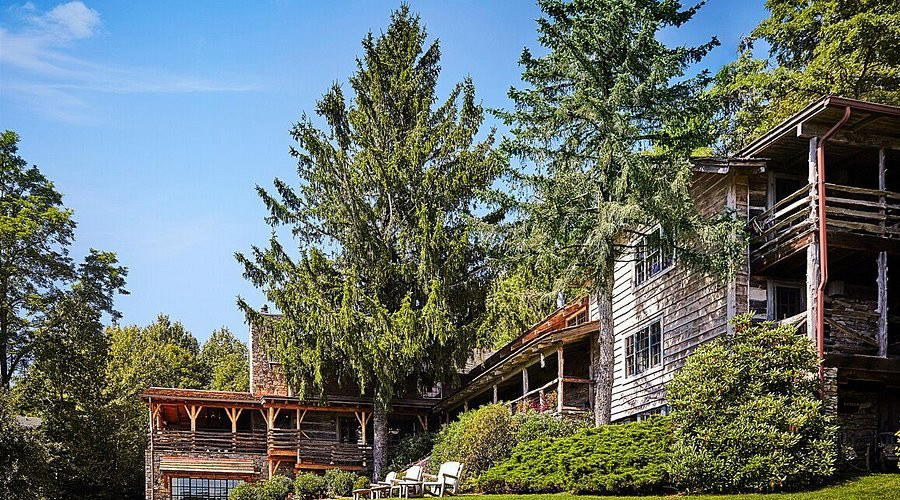
Cozy log cabin dining room with dramatic mountain vistas, warm hospitality, and a peaceful, exclusive retreat atmosphere.