The Spotted Pig

James Beard Award Best Chefs
Our verdict
The Spotted Pig on West 11th Street is one of the West Village's most recognisable gastropubs, drawing a crowd that ranges from neighbourhood regulars to out-of-towners who know the address by reputation. The two-floor space trades in a particular kind of informal conviviality that defined a certain era of New York dining, where the food was taken seriously even when the room was not.

Pearl is the En Primeur Club membership app — saves, bookings, and concierge access live there. Same editors, same standards.
- Address
- 314 W 11th St (at Greenwich St), New York, NY 10014
- Directions
- Get directions
The menu
What to order
- Burgers
The West Village Gastropub That Defined a Moment
A specific type of New York dining room emerged in the mid-2000s that had no real precedent in the city: the serious gastropub. Not a bar that happened to serve food, and not a restaurant pretending to be casual, but a place where a burger with Roquefort and a hand-pulled pint occupied the same table as genuine culinary ambition. The Spotted Pig at 314 West 11th Street, on the corner of Greenwich, became the clearest expression of that format in Manhattan, and its West Village address was not incidental. The neighbourhood's low-rise, human-scaled streets and pre-war walk-ups created the right conditions for a room that felt more Clerkenwell than Chelsea.
That British gastropub DNA matters as context. The format that flourished in London through the 1990s, anchored by high-quality sourcing and an unpretentious room, crossed into New York and found particularly fertile ground in the West Village. The Spotted Pig was among the first Manhattan venues to make that translation legible to a local audience, and the address on West 11th became, for several years, shorthand for a particular kind of night out: loud, unhurried, slightly crushed, and reliably good. For readers mapping the broader shape of New York dining, our full New York City restaurants guide sets this moment in context alongside the wider scene.
The Room: Two Floors of Deliberate Compression
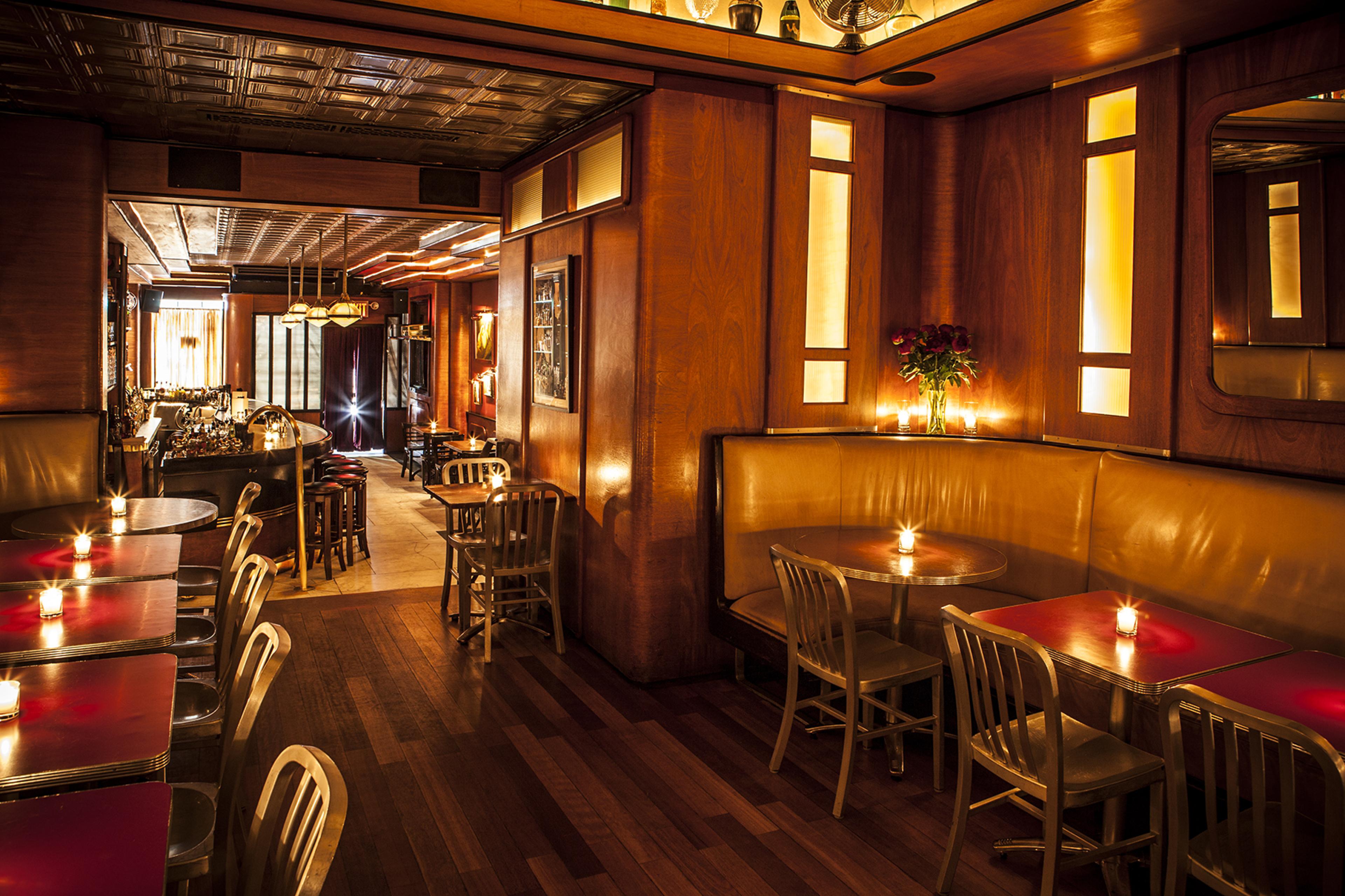
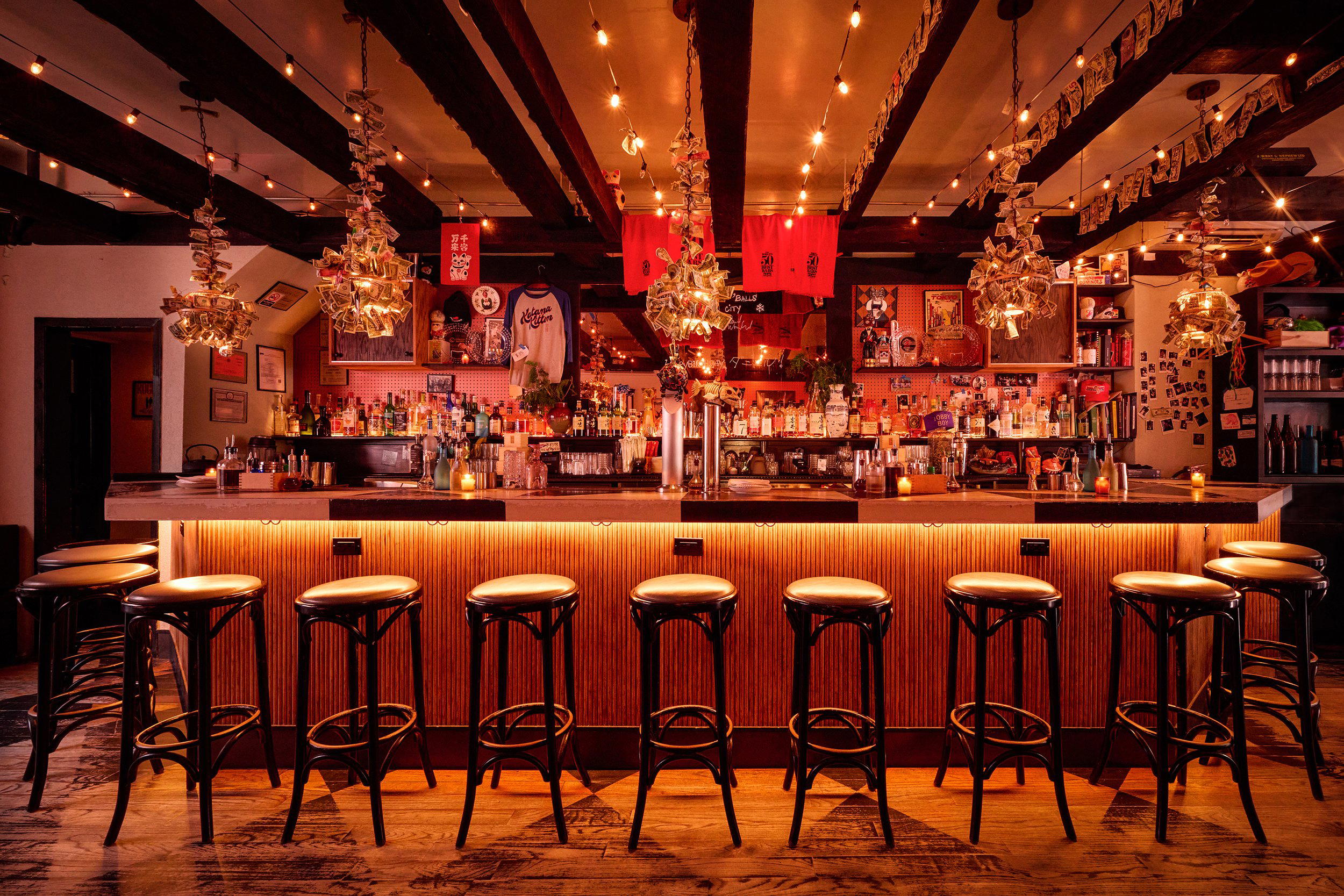
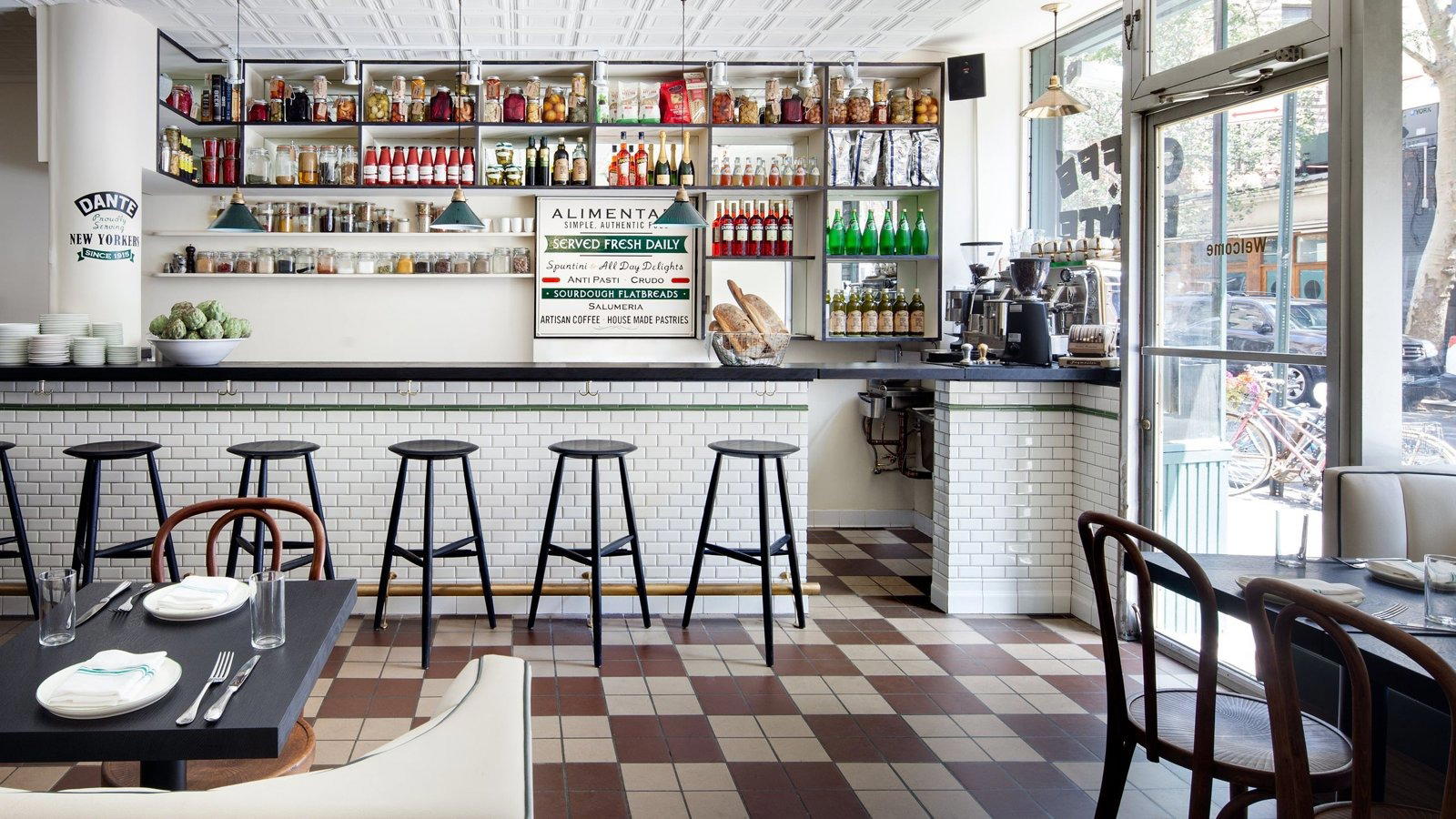
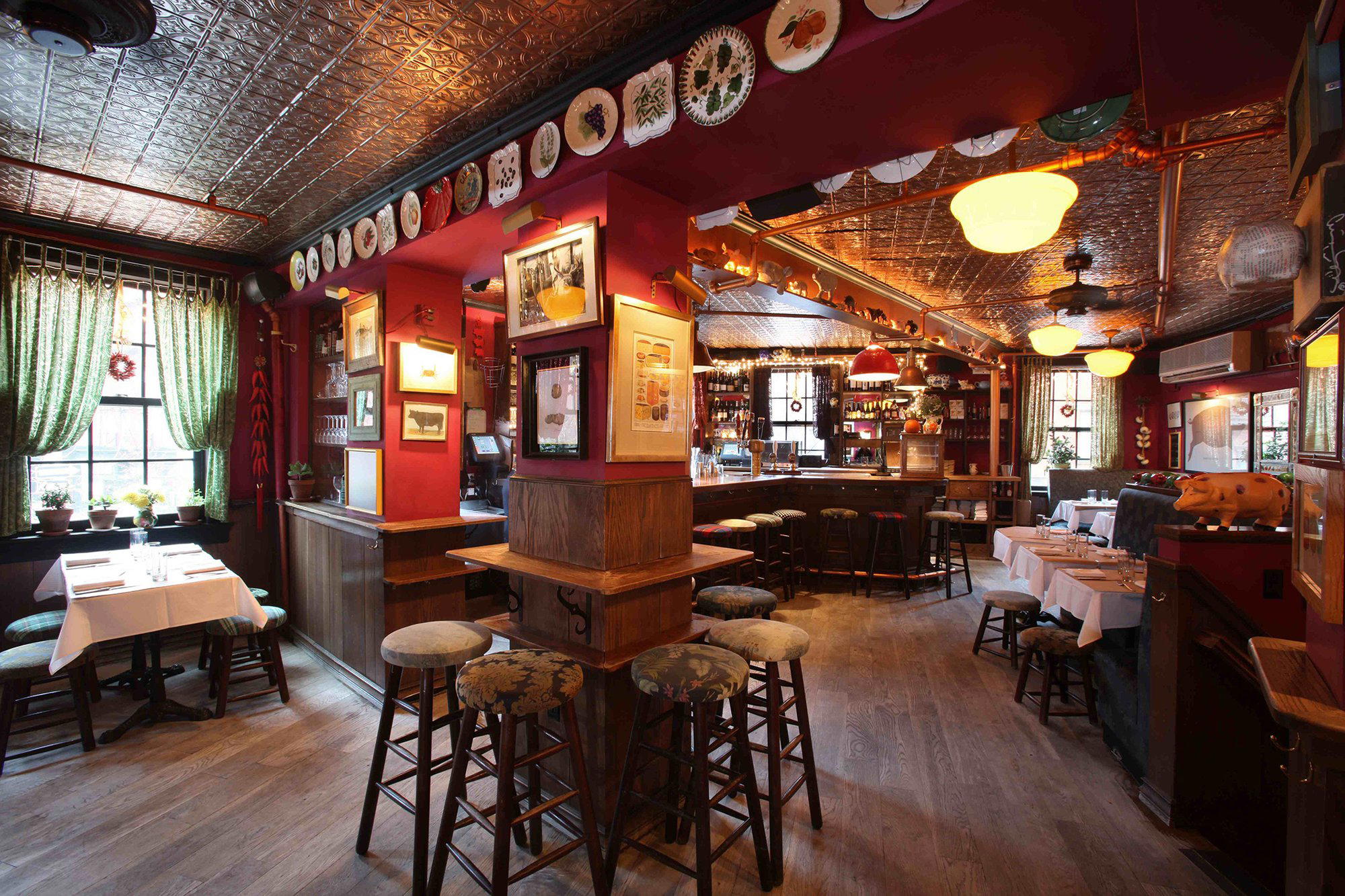
The sensory register of The Spotted Pig is defined first by compression. The ground floor operates at a noise level that suggests twice its actual capacity, which means the room carries an energy that feels earned rather than engineered. Wood surfaces, low ceilings, and a bar that anchors the centre of the ground floor all contribute to an acoustic density that marks it immediately as a pub rather than a restaurant borrowing pub aesthetics. This is not a room designed for extended business conversation; it rewards exactly the opposite.
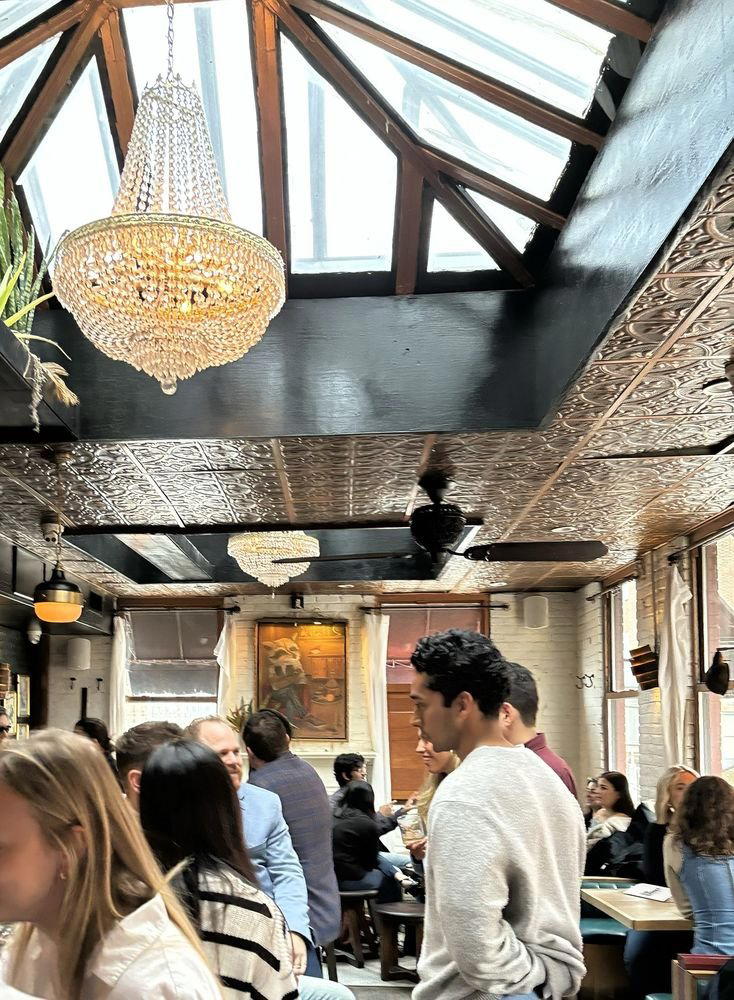
The upper floor offers a marginal reduction in noise but retains the same material warmth: exposed brick, close-set tables, and the kind of lighting that arrives at flattering through function rather than design intention. The pig motif runs through the décor with enough restraint that it reads as a visual throughline rather than a theme park conceit. What the room communicates, most of all, is that the priorities are food and company, in that order, with atmosphere arriving as a byproduct.
This sensory approach sits at some distance from the formal dining rooms that define New York's top tier. Venues like Per Se, Le Bernardin, and Masa operate in a register of deliberate quiet and spatial generosity that is the structural opposite of what the Spotted Pig offers. That is not a ranking; it is a description of different ambitions, and the West Village gastropub model succeeds on entirely different terms.
What the Kitchen Represents
The gastropub model, when it works, asks the kitchen to take ingredient sourcing and technique seriously while refusing to let the plate become the event. The food should be worth talking about, but it should not require the room to fall silent. That balance is harder to sustain than it appears, and venues that have attempted it across American cities confirm the difficulty. Lazy Bear in San Francisco and Emeril's in New Orleans both operate in the territory where kitchen ambition and accessible atmosphere intersect, though each with distinct formats and city-specific registers.
The Spotted Pig's kitchen has been associated with the kind of European-influenced cooking that treats offal and charcuterie as starting points rather than novelties, and the burger with Roquefort became a reference point in New York food conversation in a way that few single dishes from non-tasting-menu restaurants manage. When a single dish from a casual room gets discussed in the same breath as the output of more formally structured kitchens, it signals something about the quality threshold the venue set for itself from the beginning.
That said, the broader American gastropub category has evolved considerably. More recently opened venues like Blue Hill at Stone Barns in Tarrytown and Single Thread Farm in Healdsburg push the farm-to-table dimension to a level that reframes what sourcing-led cooking can mean in a fine-dining context. The Spotted Pig sits in a different tier, where sourcing discipline serves the gastropub format rather than restructuring it entirely.
The West Village as a Dining Address
West 11th and Greenwich is a specific kind of New York corner: residential, relatively quiet at street level, and surrounded by a neighbourhood that has maintained its character through successive waves of price pressure. The West Village has not become a dining district in the way that the Meatpacking blocks immediately to the north have; it retains enough residential density that restaurants there exist within the neighbourhood rather than on top of it. That distinction shapes the experience of arriving at The Spotted Pig. The walk from the nearest subway stop is not incidental; it functions as a decompression passage from midtown pace into village scale.
Other New York venues that draw significant out-of-town attention tend to cluster in Midtown or the areas around it. Atomix, Jungsik New York, and comparable tasting-menu destinations operate in a different geography and at a different price point. The Spotted Pig's West Village address is part of what it offers: a room that feels embedded in a specific patch of the city rather than positioned for maximum transit convenience.
How It Fits Into a Wider Trip
Visitors building a multi-day New York itinerary that already includes one or two of the city's formal dining rooms will find The Spotted Pig occupies a different slot in the schedule. It is the kind of place suited to a weeknight when the priority is atmosphere and recognisable comfort food executed with care, rather than a kitchen's full technical ambition. That makes it a useful counterweight to the more structured experiences at Alinea in Chicago-calibre venues, where the meal is itself the event and the room is arranged to support that. The Spotted Pig inverts the arrangement: the room and the company are the event, and the kitchen earns its place within that dynamic.
For readers who have used New York as a base for exploring the broader American dining scene, reference points further afield include The French Laundry in Napa, Providence in Los Angeles, Addison in San Diego, Bacchanalia in Atlanta, and The Inn at Little Washington. Internationally, 8½ Otto e Mezzo Bombana in Hong Kong and Alain Ducasse at Louis XV in Monte Carlo represent the kind of formal dining register that sits at the opposite end of the spectrum from the gastropub model entirely.
Planning Your Visit
The Spotted Pig is located at 314 West 11th Street at Greenwich Street in the West Village, Manhattan. The venue operates across two floors in a compact building that becomes notably busy on weekend evenings. Given the venue's reputation and limited contact details in current circulation, visiting directly or checking current availability through the venue's own channels is advised before planning around a specific time. The West Village is leading reached via the 1 train to Christopher Street or the A/C/E to 14th Street, with a short walk to the corner of West 11th and Greenwich.
Quick reference: 314 W 11th St (at Greenwich St), West Village, New York, NY 10014. Walk-in or direct venue contact recommended for current booking and hours information.
Frequently asked questions
What is the atmosphere like at The Spotted Pig?
The Spotted Pig runs across two floors in a compact West Village building, and the ground floor operates at a noise level that makes conversation an active effort. It is a gastropub in the original sense: a room built around proximity and energy, not theatrical plating or hushed dining-room formality. The crowd tends to be local and return-visit heavy, which gives the room a density that purpose-built restaurants rarely achieve.
What part of town is The Spotted Pig in?
The Spotted Pig is located at 314 W 11th St (at Greenwich St), New York, NY 10014, New York City.
Is The Spotted Pig a good dinner option for visitors staying near Midtown Manhattan?
The Spotted Pig is located at 314 West 11th Street at Greenwich Street in the West Village, a neighbourhood that sits distinctly apart from Midtown in both geography and character. For visitors already building an itinerary that includes formal dining rooms elsewhere in the city, it functions as a counterpoint: lower formality, neighbourhood-scale, and rooted in a part of Manhattan that rewards the detour. Travel time from Midtown is roughly 25 to 30 minutes by subway.
What's the signature dish at The Spotted Pig?
The kitchen's identity has been tied to the gastropub model it helped establish in New York from the mid-2000s onward, where ingredient sourcing and technique are taken seriously without letting the plate become the event.
Should I book The Spotted Pig in advance?
The Spotted Pig has historically operated as a walk-in-friendly room, consistent with the gastropub format, though that has varied with demand over the years. Given its West Village location and the volume of visitors that neighbourhood draws, arriving early or contacting the venue directly is advisable for groups or weekend evenings.
What's The Spotted Pig best at?
The Spotted Pig made its mark by treating a pub kitchen with the seriousness typically reserved for formal dining rooms, while keeping the room itself unpretentious and neighbourhood-rooted. That positioning, a serious kitchen inside a genuinely casual space, is what distinguished it from both the city's white-tablecloth restaurants and its ordinary bars when it emerged in New York's mid-2000s dining scene. It occupies a specific register that few rooms in Manhattan replicate.
Do they accommodate allergies at The Spotted Pig?
The most reliable approach is to check the venue's official channels before visiting, particularly for serious dietary requirements, as gastropub kitchens typically work across a range of dishes and ingredients that may not be immediately apparent from a menu alone.
Credentials Lens
| Venue | Cuisine | Price | Awards | Notes |
|---|---|---|---|---|
| The Spotted PigThis venue — the venue you are viewing | Modern American Gastropub | $30–50 | James Beard Award Best Chefs | Not listed |
| Le Bernardin | French Seafood Fine Dining | $300–500 | 3 Michelin Stars · World's 50 Best #13 | French, Seafood |
| Atomix | Modern Korean Tasting Menu | $300–500 | 2 Michelin Stars · World's 50 Best #7 | Modern Korean, Korean |
| Masa | Traditional Japanese Omakase | $500+ | 2 Michelin Stars · World's 50 Best #27 | Sushi, Japanese |
| Per Se | French Fine Dining Tasting Menu | $300–500 | 3 Michelin Stars · World's 50 Best #40 | French, Contemporary |
| Jungsik New York | Modern Korean Fine Dining | $200–300 | 3 Michelin Stars · World's 50 Best #18 | Progressive Korean, Korean |
Recognition history
Dated appearances from independent guides and award organizations, with the underlying list record or original source where available.
James Beard Award Best Chefs
James Beard Award