The Social Haus


James Beard Award Semi Finalist · Forbes 4-Star
Our verdict
Live-fire “dinner theater” defines The Social Haus at The Green O in Southwestern Montana, where chef Brandon Cunningham crafts an intimate eight-course tasting amid shou sugi ban warmth and forest views—arguably the region’s most transporting fine-dining experience.

Pearl is the En Primeur Club membership app — saves, bookings, and concierge access live there. Same editors, same standards.
- Address
- 4069 Backcountry Road, Greenough, MT 59823
- Phone
- (800) 280-9472
- Website
- thegreeno.com
- Directions
- Get directions
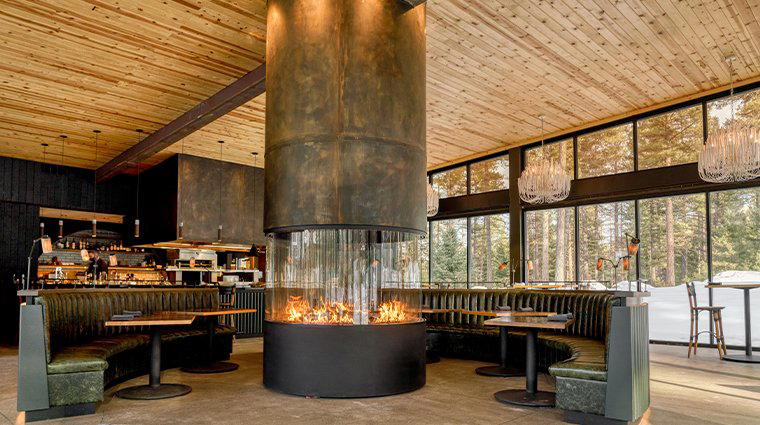
Where the Forest Comes Inside
Approaching The Social Haus along Backcountry Road in Greenough, Montana, the surrounding ponderosa pine forest does not so much frame the restaurant as absorb it. Inside, that relationship continues with deliberate architectural intent: the shou sugi ban wood accents, a Japanese technique of finishing timber by charring it, have been stained to match the hue and texture of the pines growing directly outside the windows. The effect is less decorative than immersive. The boundary between the dining room and the wilderness dissolves in a way that few resort restaurants manage without leaning on the cliche of taxidermy and reclaimed barn board.
This is the dining room at The Green O, a 12-cabin adults-only property on the Blackfoot River corridor, and it operates at a different register than its neighbors in the northern Rockies resort circuit. The 24-seat capacity is the first signal. At that scale, the kitchen can cook with the kind of precision and ceremony that larger resort dining rooms sacrifice for throughput. The format is a multi-course tasting menu, around eight courses on any given evening, and the menu description itself is part of the experience: each course is listed as a two-word pairing — "chestnut and raclette," "ham and coffee" — leaving the actual composition a deliberate mystery until the plate arrives. That structure places The Social Haus in the same category of format-conscious American tasting rooms as Lazy Bear in San Francisco, where the dinner-as-event framing is as intentional as the cooking.
Live Fire as Culinary Tradition, Not Gimmick
The American rustic cooking tradition has a long and occasionally muddled history. At its weakest, it is merely nostalgic, a branding exercise dressed in cast iron and mason jars. At its strongest, as at Blue Hill at Stone Barns in Tarrytown or Single Thread Farm in Healdsburg, it represents a genuine sourcing philosophy where local farms and seasonal availability drive menu decisions at a structural level rather than as a marketing footnote.
The Social Haus operates within that more serious tier of the tradition. Many dishes are cooked over an open fire, a technique that shapes both flavor and atmosphere simultaneously. The smell of pine-inflected smoke moves through the dining room as its own kind of ambient detail, placing the meal in its geographical and seasonal context in a way that a description on a menu cannot. Open-fire cooking in a serious kitchen is also technically demanding, heat management without the precision of a gas burner requires a different set of skills, closer to the approach at wood-fire-forward tasting rooms like Addison in San Diego, and when it is executed well, the results carry a depth of char and smoke that calibrated gas cooking cannot replicate.
Menu examples from public record illustrate the range: Hokkaido wagyu on toasted Japanese milk bread with caviar creme fraiche sits alongside roasted sturgeon with eggplant, puff-pastry-wrapped venison with chanterelle mushrooms, and salted milk jam crullers. The sourcing logic threads through that list. Venison and chanterelles are native to the Montana ecosystem. Sturgeon appears on the menu as a nod to the river systems of the Pacific Northwest. The Japanese elements, wagyu, milk bread, the shou sugi ban on the walls, reflect the kitchen's willingness to apply global technique to regional material, a pattern common to the most compelling farm-to-table kitchens across the American West. Compare the approach to The French Laundry in Napa, where classical French structure provides a framework for Northern California produce, or to The Inn at Little Washington, where regional Appalachian sourcing operates within a fine dining register. The Social Haus belongs to that same conversation, adapted for the Blackfoot River valley.
The Kitchen Lineage and What It Means for the Plate
Restaurant kitchens carry lineage the way wineries carry terroir, the training history of a chef shapes technique and philosophy in ways that are legible in the food even when the connection is unstated. Executive chef Brandon Cunningham's publicly documented background runs through Ned Ludd in Portland, a restaurant with open-fire cooking at its foundation; through Renata, also in Portland, where pasta technique under Matt Sigler built a precision counterpoint to that rougher fire work; and through The Resort at Paws Up, directly adjacent to The Green O, where he worked alongside Sunny Jin, who had cooked at both The French Laundry and El Bulli. That sequence matters not because it explains the chef's personal story, but because it explains why the menu moves fluently between wood-fire informality and technically precise preparations. The knife skills and pasta discipline from a serious Italian kitchen, combined with fire-cooking instincts built at Ned Ludd, produce a kitchen that can wrap venison in puff pastry and also char wagyu over live flame in the same eight-course arc without tonal inconsistency.
For further context on what that tier looks like across American dining, the EP Club coverage of Providence in Los Angeles, Albi in Washington, D.C., and Emeril's in New Orleans illustrates the range of formats and cuisines that sit within a comparable recognition tier. Closer in format and geography, Tree Room in Park City and Artisans Restaurant in The Adirondacks offer points of comparison for resort-anchored American rustic cooking in mountain settings.
Seating, Format, and the Mechanics of the Evening
The 24-seat dining room divides into several distinct formats: a small inner circle bar, a main dining area, a lounge, and an open kitchen counter where guests can sit directly in view of the cooking. In warmer months, alfresco seating adds an outdoor option. The choice of position within the room changes the character of the meal, the kitchen counter places the fire-cooking at the center of the experience, while the lounge creates a more relaxed, course-by-course pace. Booths near the fire seat guests side by side rather than across from each other, a configuration that works well for pairs who want to share sightlines with the kitchen rather than with each other. Given the 24-seat capacity and the resort context, reservations are required, and guests staying at The Green O are leading positioned to plan ahead during booking.
For those at the property who prefer a less formal evening, the kitchen also sends pizzas directly to the individual cabins. That option does not replicate the tasting menu format but provides access to the kitchen's cooking at a different register, useful for a second or third night at the resort when the full eight-course commitment may not align with the evening's pace.
Greenough and the Surrounding Region
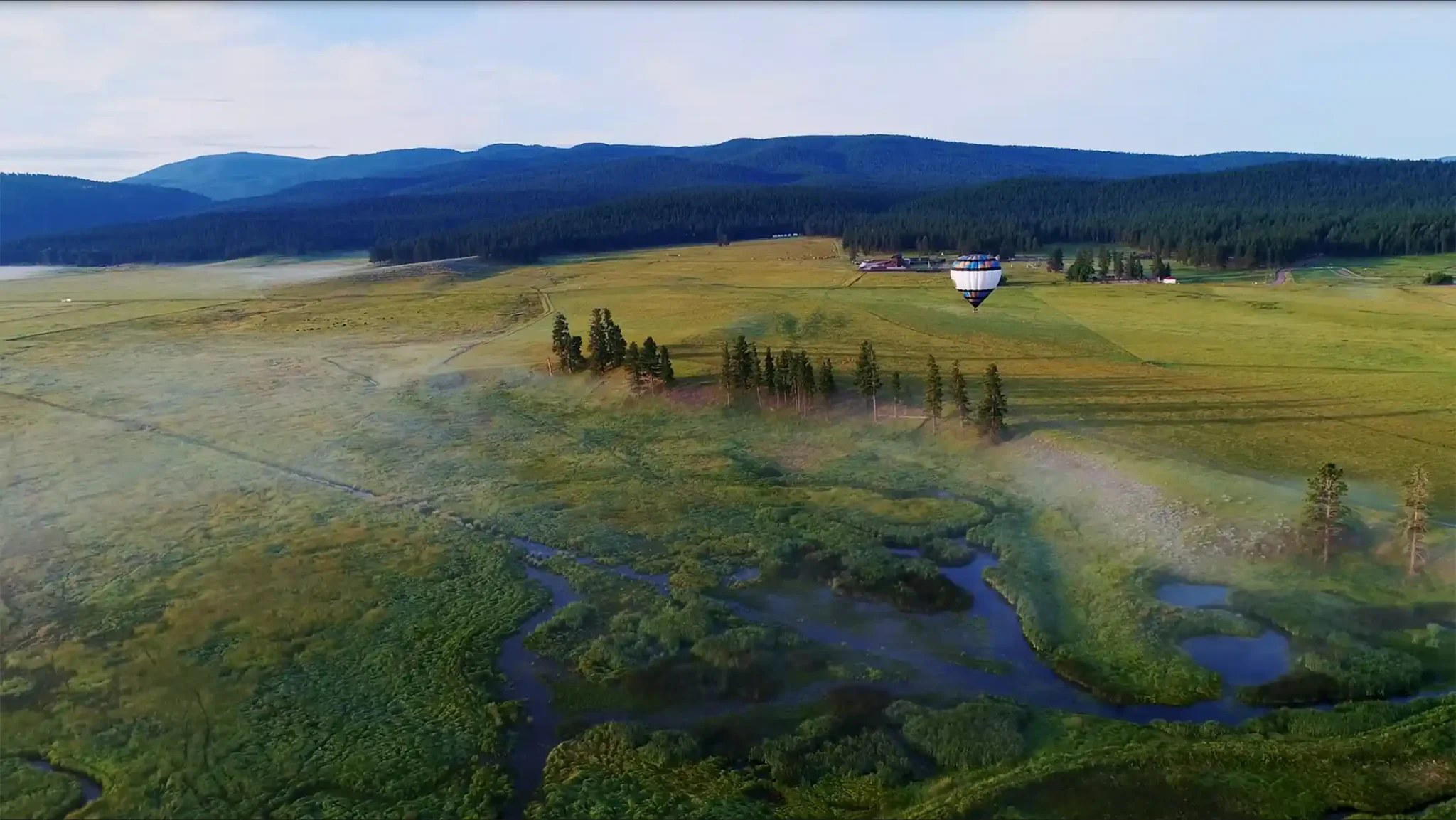
Greenough sits in the Blackfoot River valley in western Montana, roughly 35 miles northeast of Missoula. It is not a dining destination in the conventional sense, there is no restaurant row, no wine bar cluster, no after-dinner bar scene to move between. The Social Haus functions as a destination in itself, which is consistent with the broader pattern of high-quality resort dining in remote mountain settings. Guests who want to map Greenough's broader hospitality offerings can consult our full Greenough restaurants guide, our full Greenough hotels guide, our full Greenough bars guide, our full Greenough wineries guide, and our full Greenough experiences guide. The nearest significant dining alternative is Missoula, which has a working independent restaurant culture of its own. But the point of The Social Haus is that it makes the journey to Greenough the argument, not a compromise.
Frequently asked questions
Q: Is The Social Haus suitable for children?
The Green O is an adults-only property, which resolves the question before it reaches the dining room, the restaurant operates exclusively for adult guests of the resort.
Q: What should I expect atmosphere-wise at The Social Haus?
The atmosphere in Greenough's most recognized restaurant, Pearl-recommended for 2025, runs counter to what the word "resort dining" usually implies. The 24 seats, open fire, charred-wood interior designed to mirror the surrounding pine forest, and a multi-course menu with mystery-format descriptions all push the experience toward something closer to a serious urban tasting room than a lodge buffet. The price tier has not been publicly disclosed, but the format, seat count, and resort context place it firmly in the premium range for Montana.
Q: What is the signature dish at The Social Haus?
Dinner menu changes nightly, so no single dish holds a permanent position on the menu. Within the American Rustic framework that defines the kitchen's approach, and consistent with chef Brandon Cunningham's publicly documented training, the fire-cooked courses represent the clearest expression of what this kitchen does.
Side-by-Side Snapshot
| Venue | Cuisine | Price | Awards | Notes |
|---|---|---|---|---|
| The Social HausThis venue — the venue you are viewing | Modern Fine Dining with Local Montana Fusion | Not listed | James Beard Award Semi Finalist · Forbes 4-Star | Not listed |
| Le Bernardin | French Seafood Fine Dining | $300–500 | 3 Michelin Stars · World's 50 Best #13 | French, Seafood |
| Atomix | Modern Korean Tasting Menu | $300–500 | 2 Michelin Stars · World's 50 Best #7 | Modern Korean, Korean |
| Lazy Bear | Modern American Tasting Menu | Not listed | 2 Michelin Stars · World's 50 Best #25 | Progressive American, Contemporary |
| Alinea | Avant-Garde Molecular Gastronomy | $300–500 | 2 Michelin Stars · World's 50 Best #37 | Progressive American, Creative |
| Masa | Seasonal Hokkaido Tempura Omakase | $150–200 | Tabelog 100 #34 | Sushi, Japanese |
Recognition history
Dated appearances from independent guides and award organizations, with the underlying list record or original source where available.
James Beard Award Semi Finalist
James Beard Award
Forbes 4-Star
Forbes
Full recognition history (3 entries)
Forbes 4-Star
Forbes
Continue exploring
More in Greenough
Restaurants in Greenough
Browse all →
Bars in Greenough
Browse all →
Hotels in Greenough
Browse all →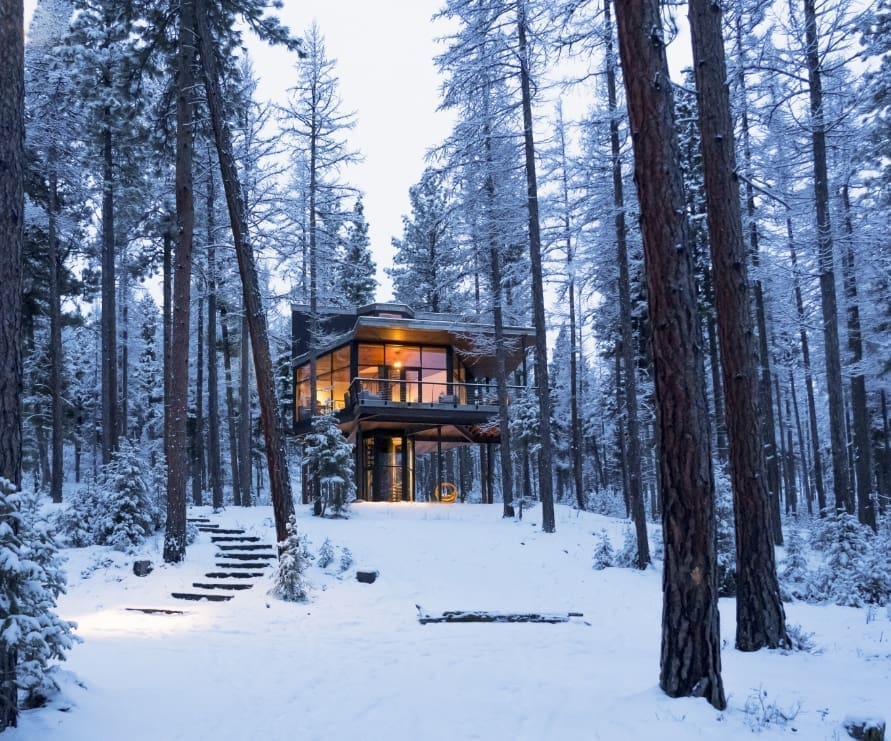
Details
- Intimate
- Rustic
- Cozy
- Elegant
- Scenic
- Special Occasion
- Date Night
- Open Kitchen
- Craft Cocktails
- Local Sourcing
- Mountain
- Tasting Menu
- Prix Fixe
- Vegetarian Friendly
- Allergy Accommodating
Cozy with crackling fireplace, open kitchen aromas of fresh bread, floor-to-ceiling windows bringing in woodland views, and contemporary rustic warmth.