The Parlor
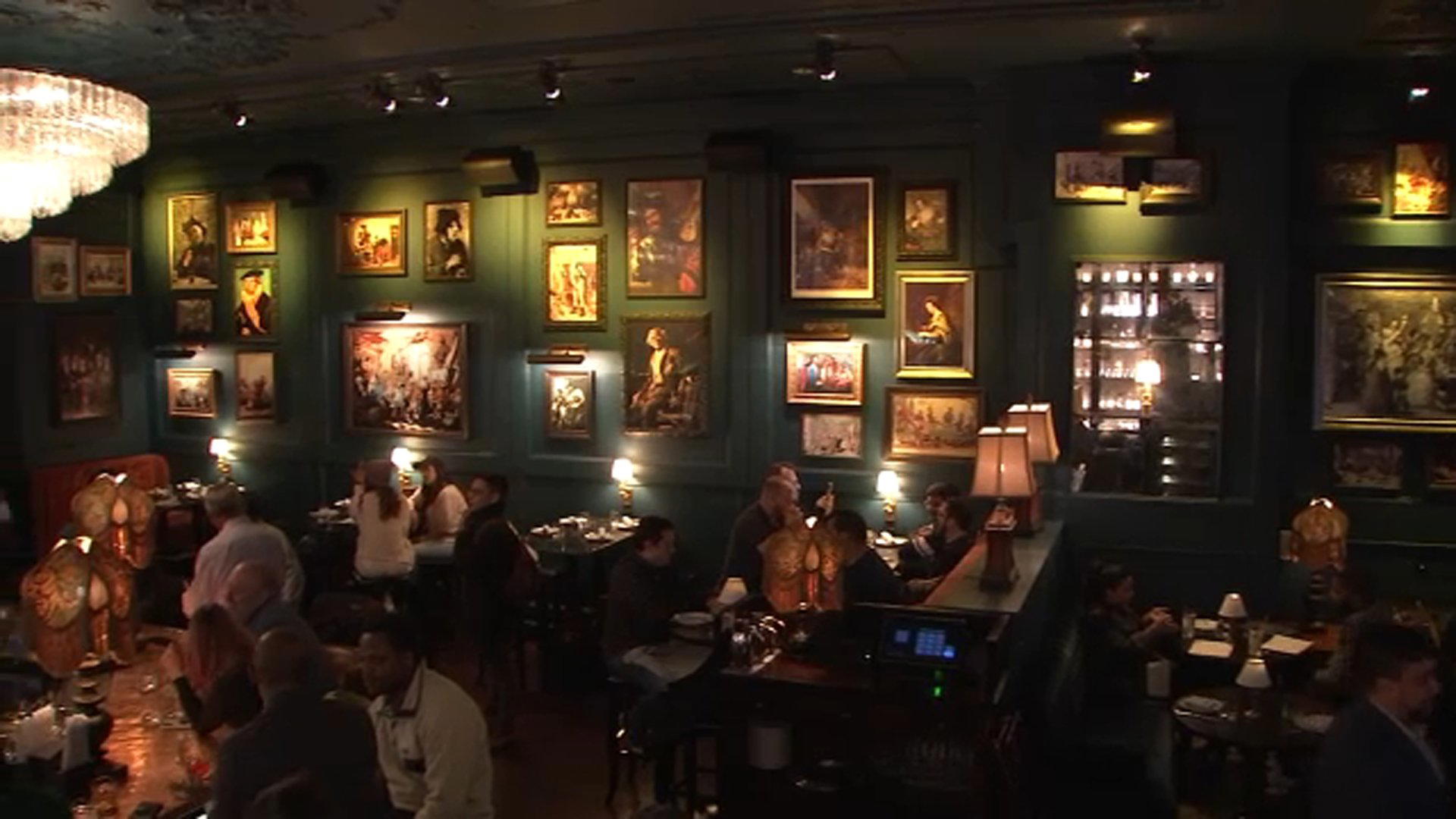
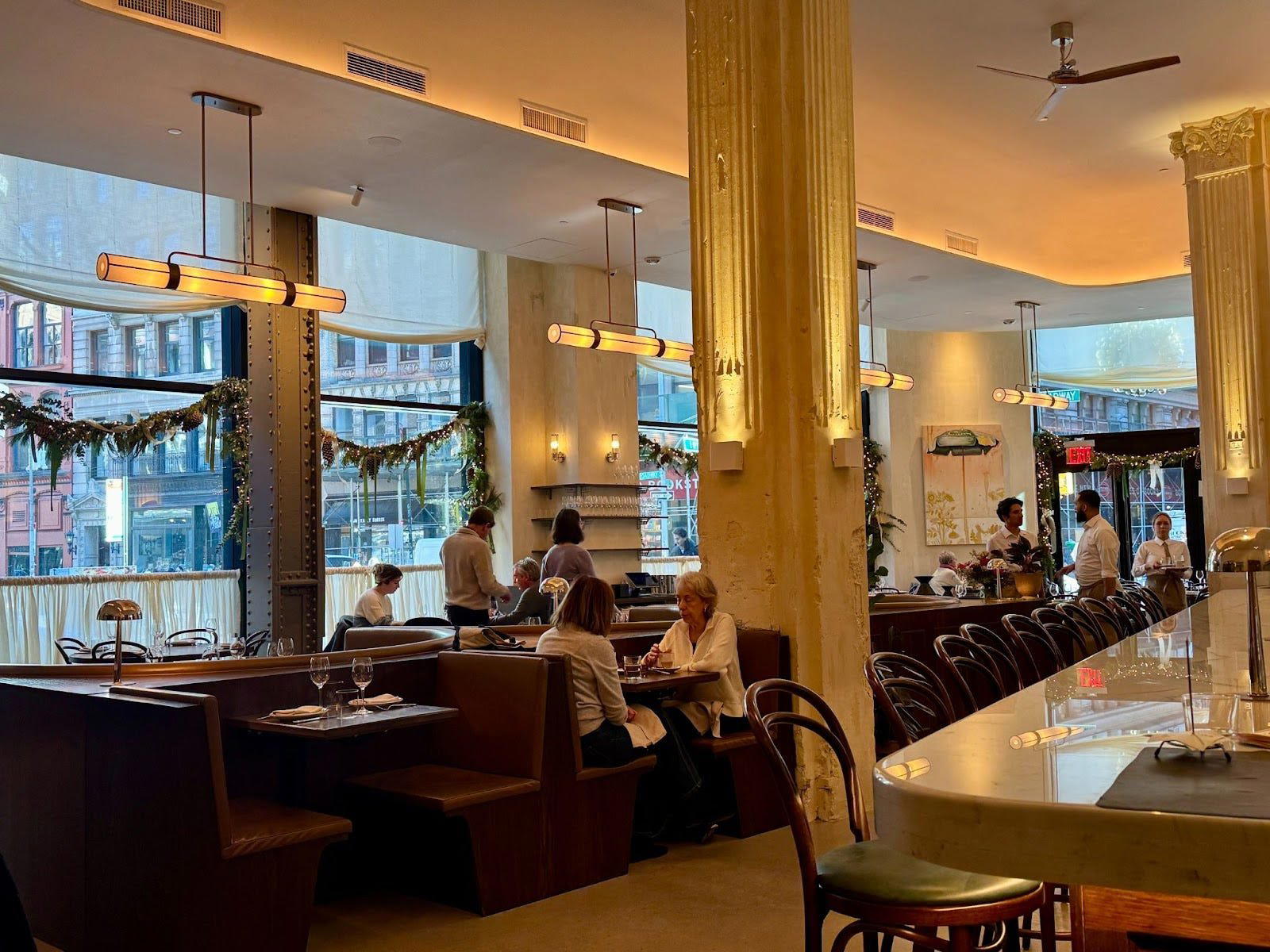
The Parlor occupies the all-day café-bar format that European cities long ago normalized but New York has only recently embraced in earnest, a single space that moves from morning espresso through afternoon pastries to evening cocktails without resetting its identity. Its European-inspired program places it in a distinct niche from the city's destination fine-dining circuit, offering a lower-pressure alternative with a consistent through-line of sourcing and craft.
 Discover on Pearl
Pearl is the En Primeur Club membership app — saves, bookings, and concierge access live there. Same editors, same standards.
Where All-Day Drinking and Eating Has a Conscience
New York's all-day café-bar category has grown considerably over the past decade, but the field remains uneven. Most operators treat the format as a scheduling convenience: the same space runs breakfast service, then clears tables for dinner without much coherent identity threading the two together. A smaller cohort takes a different position, treating the all-day format as a deliberate editorial stance about how people should eat, drink, and spend time in a city. The Parlor belongs to that second group, with a European-inspired program that spans espresso, pastries, and cocktails within a single, sustained sensibility.
This isn't the fine-dining circuit anchored by places like Le Bernardin, Masa, or Per Se, where four-figure bills and months-long booking windows are part of the proposition. The Parlor operates at a different register entirely, with a price point around $65 per person and a format that favors proximity and regularity over occasion. That positioning is increasingly rare in Manhattan, where real estate economics push operators toward either fast-casual volume or high-margin tasting menus. The all-day café-bar format that Paris, Vienna, and Copenhagen normalized long ago remains genuinely underrepresented in New York, which makes spaces that execute it seriously worth attention.
Sourcing as a Structural Commitment
Across the American restaurant industry, sustainability rhetoric has become so common that it functions largely as background noise. What separates operators with genuine environmental programs from those using green language as positioning is specificity: sourcing relationships with named farms, measurable waste reduction targets, menu structures that reflect seasonal constraint rather than just seasonal aesthetics. The all-day format, when done with real discipline, actually supports more ethical sourcing than the conventional dinner-only model. A kitchen running from morning through evening can use whole product more efficiently, pastry programs absorb ingredients that a dinner kitchen would discard, and bar programs can work with syrups, infusions, and shrubs built from kitchen byproduct.
This kind of integrated thinking is visible at places with serious sustainability commitments. Blue Hill at Stone Barns in Tarrytown has made farm-to-table sourcing the structural foundation of its entire program, not an accent. Single Thread Farm in Healdsburg operates its own farm, giving the kitchen direct control over supply chain decisions. These are high-investment, destination-format approaches. The Parlor works at a different scale and price point, but the all-day café-bar model carries its own version of that logic: fewer covers, more intentional product flow, less throwaway production.
The European Model and What It Demands
The European café tradition that The Parlor draws from has specific structural qualities that distinguish it from American brunch culture or the third-wave coffee shop model. In Vienna, a traditional café is a social institution, a place you occupy for hours, drinking coffee, eating something small, perhaps having a glass of wine at noon without anyone looking sideways. In Paris, the zinc bar is a stage for a similar kind of extended, unhurried presence. Both models assume a customer who is not optimizing their time, which is a particular demand to place on a New York audience.
Operators who make that demand successfully do so by removing friction at every point: comfortable seating, a menu that works across timeslots without awkward transitions, and staff who understand that the point of the format is duration, not turnover. The cocktail program in this kind of space functions differently from a destination bar. It's not about theatrical technique or the elaborate clarified-drink formats associated with New York's more technically ambitious bars. It's about accessibility and occasion-neutrality, drinks that work at 11am or 11pm without requiring explanation.
For comparison, the kind of technical ambition that defines New York's high-end drinking culture is represented by venues operating in a completely different comparable set. The Parlor's reference points are European café bars, not the precision cocktail programs that have defined downtown Manhattan's bar scene over the past decade.
All-Day in New York: The Competitive Field
New York's premium dining field tilts heavily toward destination formats. Atomix and Jungsik New York represent the city's contemporary fine-dining ambition at its most considered, long meals, prix-fixe commitment, advance booking. Alinea in Chicago and Lazy Bear in San Francisco represent the same tier in other American cities. These are not competitors for The Parlor, they're context for understanding what The Parlor is not, and why the all-day café-bar format occupies a distinct and underserved space in the city's eating and drinking ecosystem.
The more relevant comparison set is the wave of European-influenced all-day operators that opened in New York during the late 2010s, most of them in lower Manhattan and Brooklyn. Several have closed; the format's economics are genuinely difficult when rent is calculated against a model that prizes duration over turnover. Operators who survive in that format typically have either very low overhead, very loyal neighborhood clientele, or a program strong enough to draw from across the city.
Waste, Efficiency, and the Ethics of the Format
The sustainability argument for the all-day café-bar isn't simply about sourcing, it extends to how food and materials move through the operation. A kitchen that runs continuously from 7am to midnight generates different waste patterns than one that opens for service at 6pm. Bread baked for morning service becomes the base for afternoon snacks; pressed citrus from the morning bar prep feeds afternoon cocktail batches. These are small-scale decisions, but they compound across a week's operation into a meaningfully different waste profile than the standard dinner-service model.
This kind of efficiency is structurally built into the format, which is one reason European café culture has long sat more comfortably within conversations about sustainable urban food systems than American fine dining. The low-waste argument is not a marketing claim but a function of how the kitchen must operate to make the all-day model economically viable. Bacchanalia in Atlanta and Providence in Los Angeles both demonstrate how serious sourcing commitments can anchor a restaurant's identity at the fine-dining tier. The Parlor applies a version of that commitment at a more accessible format and price level.
Internationally, operators like Alain Ducasse at Louis XV in Monte Carlo and 8½ Otto e Mezzo Bombana in Hong Kong show what European café-bar sensibility looks like when applied at a destination fine-dining scale, a useful counterpoint to what The Parlor does at street level.
Planning Your Visit
The Parlor operates as an all-day café-bar with a European-inspired program covering espresso, pastries, and cocktails. Because the format is designed for extended, unhurried visits rather than timed sittings, the approach to planning differs from destination dining. Walk-in is typically the natural mode for this format; advance booking, where available, is worth considering for larger groups or weekend evenings when the bar side of the program draws a fuller crowd.
Quick Reference: All-day café-bar, European-inspired; espresso, pastries, and cocktails; New York City. Verify current hours and contact details directly with the venue.
A Minimal comparable set
Comparable venues nearby, for context on price, style, and recognition.
| Venue | Cuisine | Price | Notes |
|---|---|---|---|
| The ParlorThis venue — the venue you are viewing | Midtown Manhattan, Modern American Grill | $$$ | |
| Terravita | $$$ | Washington Heights (North), Modern American with Mediterranean & Asian Fusion | |
| NOMO Kitchen | $$$ | SoHo-Little Italy-Hudson Square, Seasonal American with Global Influences | |
| Fraunces Tavern | $$$ | Financial District-Battery Park City, Colonial American Gastropub | |
| Pershing Square | East Midtown-Turtle Bay, American Bistro | $$$ | |
| P.J. Clarke's On The Hudson | $$$ | Financial District-Battery Park City, Classic American with Seafood & Raw Bar |
Continue exploring
More in New York City
Restaurants in New York City
Browse all →
Bars in New York City
Browse all →

Hotels in New York City
Browse all →
Wineries in New York City
Browse all →
At a Glance
- Elegant
- Sophisticated
- Classic
- Intimate
- Date Night
- Business Dinner
- Special Occasion
- Hotel Restaurant
- Historic Building
- Extensive Wine List
- Craft Cocktails
- Farm To Table
- Local Sourcing
- Sustainable Seafood
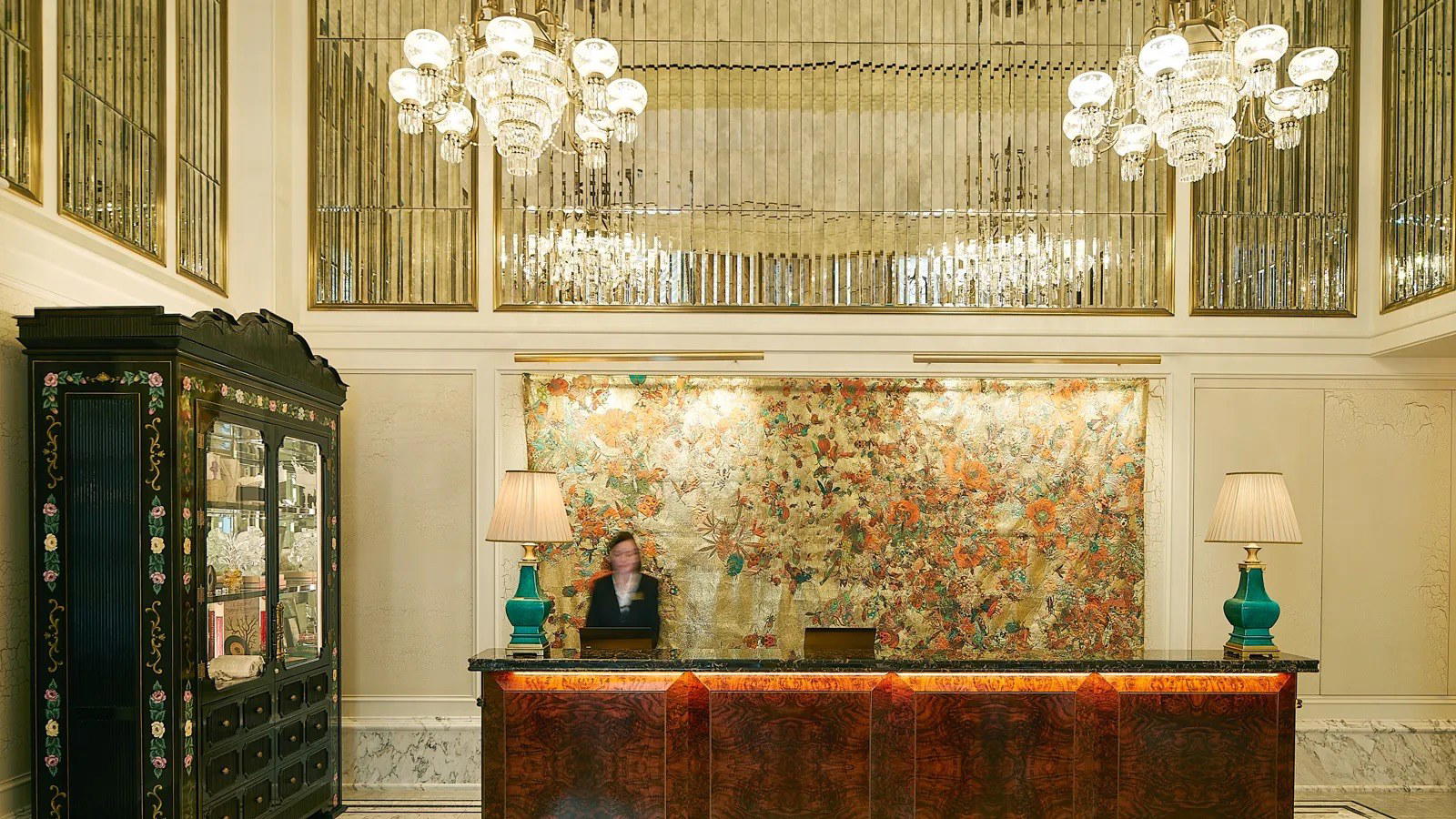
Elegant and swanky with refined, intimate atmosphere complementing the hotel's 1920s heritage and modern design sensibility.