The Ladbroke Arms
Our verdict
The Ladbroke Arms is a Notting Hill pub that sits within one of London's most considered neighbourhoods for food and drink, where the British gastropub tradition and more technically ambitious cooking share the same postcode. Its position in the W11 dining scene places it alongside some of the capital's most serious restaurant addresses, making it a useful reference point for understanding how the gastropub format has evolved in west London.

Pearl is the En Primeur Club membership app, where members save venues, book tables and use the concierge.

The Gastropub and the West London Dining Shift
The British gastropub has had at least three distinct lives since the early 1990s, when the Eagle on Farringdon Road first demonstrated that a pub could serve food worth eating without becoming a restaurant. The first wave was about stripping out the sticky carpets and replacing them with good wine and honest cooking. The second wave imported technique from restaurant kitchens and began applying it to seasonal British produce. The third, which is the one still unfolding across neighbourhoods like Notting Hill and Holland Park, applies genuinely global culinary methods to ingredients sourced within a tighter, more explicitly British supply chain. The Ladbroke Arms, on the western edge of Notting Hill, sits in this third wave's territory, in a postcode that has seen the gastropub format mature alongside some of the capital's most technically ambitious fine dining addresses.
That geography matters. The stretch of London running from Notting Hill through Kensington and into Chelsea now contains a concentration of serious restaurants that sets the standard for the wider city. The Ledbury, Brett Graham's Notting Hill benchmark, has spent over a decade demonstrating what modern European technique applied to British produce can look like at the highest level. A few miles east, CORE by Clare Smyth applies similarly precise thinking to a Modern British menu. The presence of these restaurants in the neighbourhood shapes what the surrounding pub dining scene is measured against, even informally.
Local Ingredients, Imported Methods
The intersection of indigenous British produce and globally sourced technique is the defining tension in contemporary London pub cooking. Where an earlier generation of gastropubs borrowed from French bistro tradition, pulling in classical saucing and charcuterie methods, the current wave draws from a wider set of references. Japanese approaches to seasoning and balance, Nordic attention to fermentation and preservation, and Iberian confidence with fire and smoke have all filtered into the kitchens of West London's better pubs over the past decade. The result is a category of cooking that is distinctly British in its sourcing instincts but considerably less parochial in its technique.
This is the same editorial current running through London's fine dining tier. Dinner by Heston Blumenthal built its entire identity around the archaeology of British culinary history, using contemporary technique to excavate recipes from the fourteenth century onward. Sketch's Lecture Room and Library approaches the question from a French angle, applying classical structure to premium British seasonal produce. The gastropub tier, operating at lower price points and with less theatrical staging, is doing something adjacent: sourcing British but cooking with a broader palette of references than the roast-and-pie tradition would suggest.
The Notting Hill Pub Dining Context
Notting Hill's food and drink scene is more layered than its reputation as a wealthy residential enclave might suggest. The area supports a range of dining formats, from the neighbourhood cafe end through to white-tablecloth destination restaurants, with gastropubs occupying a middle tier that is often the most practically useful for residents and visitors alike. The Ladbroke Arms sits on Ladbroke Road, a quieter residential street that puts it slightly away from the heavier foot traffic of Portobello Road, which means its customer base skews toward the local and the intentional rather than the passing tourist.
For readers planning a west London dining itinerary, the area's gastropub options can be usefully combined with visits to the neighbourhood's more formal restaurant addresses. Those looking to understand the full range of British cooking at a national level should note the comparison available through venues like The Hand and Flowers in Marlow, Tom Kerridge's two-Michelin-starred pub that remains the benchmark for what a British pub kitchen can achieve at the top of the format, or L'Enclume in Cartmel, Simon Rogan's destination in Cumbria that has anchored a broader conversation about British produce-led cooking. These are not direct competitors to a Notting Hill local, but they illustrate the full arc of ambition available within British pub and informal dining.
The wider British fine dining circuit worth tracking alongside a London trip includes Le Manoir aux Quat'Saisons in Oxford, The Waterside Inn in Bray, Moor Hall in Aughton, and Gidleigh Park in Chagford. Internationally, the technique-meets-terroir conversation that defines the better end of British gastropub cooking has close parallels at Le Bernardin in New York, where classical French method is applied to the leading available American seafood, and at Atomix in New York, where Korean technique and indigenous Korean ingredients are deployed in a format that has no precedent in its home country. The underlying editorial logic, using imported or adapted methods to give indigenous produce a new frame, is the same in each case.
For a broader orientation to London's restaurant scene before planning a trip, the EP Club London guide covers the full spectrum from fine dining to neighbourhood-level addresses across all major areas of the city. Additional reference points in other British cities include Opheem in Birmingham, Aktar Islam's Indian-rooted fine dining address that applies European technique to South Asian produce and spice traditions, Midsummer House in Cambridge, and Restaurant Andrew Fairlie in Auchterarder, the only two-Michelin-starred restaurant in Scotland. Hide and Fox in Saltwood offers a useful point of comparison for smaller-format, produce-led cooking in the south-east. Restaurant Gordon Ramsay in Chelsea, the longest-running three-Michelin-starred address in London, completes the picture of what the city's top tier looks like at its most classical.
Planning a Visit
The Ladbroke Arms is on Ladbroke Road in Notting Hill, accessible from Ladbroke Grove or Holland Park tube stations on the Central and Circle lines respectively. As with most well-regarded gastropubs in this part of London, tables fill quickly at weekends, and booking ahead by at least a week is advisable for Friday or Saturday evening sittings. Weekday lunches are generally more accessible and offer a quieter read on the kitchen's output. The pub format means dress code is informal, and the setting suits solo diners at the bar as readily as groups at table.
Frequently asked questions
at The Ladbroke Arms?
The Ladbroke Arms operates within the west London gastropub tradition where seasonal British produce and imported technique define the menu's character. As a general principle at venues in this format, the most rewarding orders tend to be the dishes that use a simple British ingredient, a cut of meat, a root vegetable, a freshwater fish, as the vehicle for something technically more considered than the pub setting suggests. The kitchen's approach, like the broader Notting Hill dining scene shaped by addresses such as The Ledbury, rewards ordering the less obvious main over the crowd-pleasing burger.
How hard is it to get a table at The Ladbroke Arms?
In London's gastropub tier, the better-regarded addresses in residential neighbourhoods like Notting Hill tend to book out weekend evenings two to three weeks ahead during autumn and the pre-Christmas period. The Ladbroke Arms sits in a postcode where demand from local residents is consistent year-round. Visiting midweek or arriving for lunch substantially improves availability without materially changing what the kitchen produces. Award recognition at any level in the British pub dining category, where even a Michelin Bib Gourmand narrows table availability significantly, tends to accelerate booking windows.
What makes The Ladbroke Arms worth seeking out?
The value of a well-placed Notting Hill gastropub is partly about the food and partly about the access it provides to a neighbourhood that has shaped London's broader approach to informal but serious dining. The area's dining density, anchored by restaurants like The Ledbury and CORE by Clare Smyth, means that the gastropub tier here is held to a higher standard than in most other London postcodes. A pub that survives and develops a loyal following in this environment is doing something the cooking supports.
Is The Ladbroke Arms suitable for a full evening or better suited to a quick drink and bar snacks?
British gastropubs in the Notting Hill category typically operate across both registers: the bar area supports a standing drinks visit with snacks, while the dining room functions as a proper sit-down restaurant with a full menu. For visitors specifically interested in the kitchen's range rather than the pub atmosphere, booking a table and working through multiple courses gives a more complete picture. The format also suits solo travellers comfortably, since counter and bar seating is a standard feature of the British pub tradition in a way it is not at neighbouring fine dining addresses like The Ledbury.
Comparable Spots, Quickly
Comparable venues nearby, for context on price, style, and recognition.
| Venue | Cuisine | Price | Awards | Notes |
|---|---|---|---|---|
| The Ladbroke ArmsThis venue (the venue you are viewing) | Modern British Gastropub | $30–50 | Not listed | Not listed |
| Brook House | Modern British Gastropub | $30–50 | The Good Food Guide GFG Good | Parsons Green |
| Harvey Nichols | British Cafe | Not listed | Not listed | Belgravia |
| Browns Grill Room | Classic British Grill | $100–150 | Not listed | Mayfair |
| Formans | British Seafood with Smoked Salmon | $30–50 | Not listed | Hackney Wick |
| St John. Marylebone | Modern British Nose-to-Tail | $50–100 | Not listed | Marylebone |
Continue exploring
More in London
Restaurants in London
All restaurants in London →
Bars in London
All bars in London →

Details
- Cozy
- Classic
- Rustic
- Brunch
- Terrace
- Extensive Wine List
- A La Carte
- Small Plates
- Vegetarian Friendly
- Vegan Options
- Gluten Free Options
Current opening hours
- Monday
- 12–11 PM
- Tuesday
- 12–11 PM
- Wednesday
- 12–11 PM
- Thursday
- 12–11 PM
- Friday
- 12–11 PM
- Saturday
- 12–11 PM
- Sunday
- 12–10:30 PM
Hours can change for holidays and private events. Hours as of .
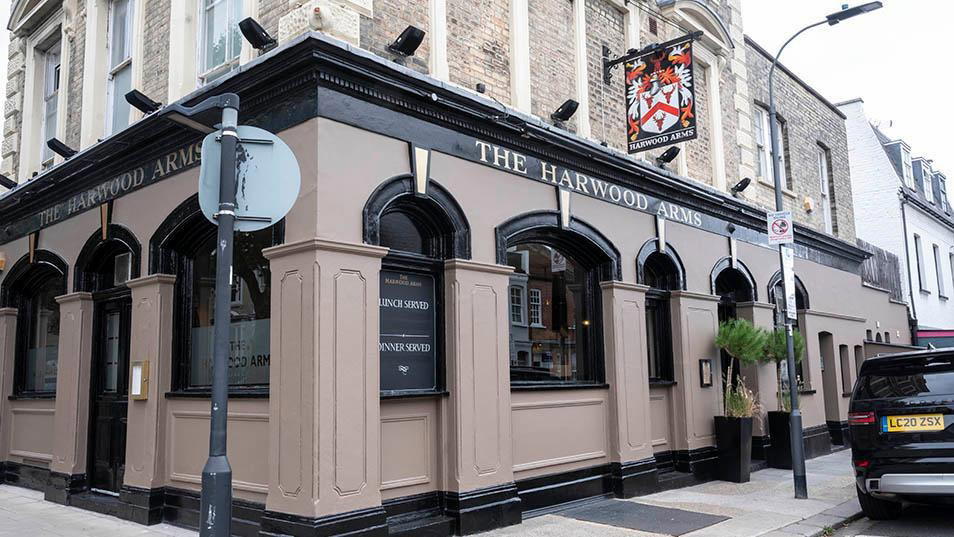
Cozy and traditional with an elegant interior, warm welcoming atmosphere, and leafy terrace for outdoor dining.