The Commons Local Eating House
Our verdict
A neighbourhood staple on Burton Street in Darlinghurst, The Commons Local Eating House occupies the kind of space that Sydney's inner-east does well: casual in feel, considered in execution. Set within a precinct where independent dining rooms compete on character as much as cuisine, it draws a local crowd that returns on frequency rather than occasion. Part of a broader Darlinghurst scene that rewards those who look past the main strips.
- Address
- 32 Burton St, Darlinghurst NSW 2010, Australia
- Phone
- +61 2 9358 1487
- Website
- thecommons.com.au
- Directions
- Get directions
The menu
What to order
- Chicken Parmagiana
- Pumpkin and Pine Nut Ravioli
- Sunday Roasts
- Daily Omelettes
Burton Street and the Darlinghurst Neighbourhood Dining Model
Darlinghurst has long operated as one of Sydney's most concentrated pockets of independent hospitality, where small operators on side streets hold their own against the volume-driven venues along Oxford and Victoria. Burton Street, where The Commons Local Eating House sits at number 32, follows that pattern. The strip attracts locals who treat their dining rooms the way residents of similarly dense urban neighbourhoods do elsewhere: as extensions of daily life rather than destinations reserved for occasions. That context matters when assessing what a place called a "local eating house" is actually doing, and who it is doing it for.
In cities like Sydney, the terminology a venue adopts signals its competitive positioning. "Local eating house" places The Commons squarely in the neighbourhood-first tier rather than the destination-dining bracket occupied by places like Rockpool in Sydney or the ambitious producer-driven formats you find at Brae in Birregurra. It is a deliberate positioning, and in Darlinghurst, it is a credible one. The suburb's dining character has been shaped by exactly this kind of operator: independent, embedded in the streetscape, and running on repeat custom rather than reservation prestige.
The Scene at Street Level
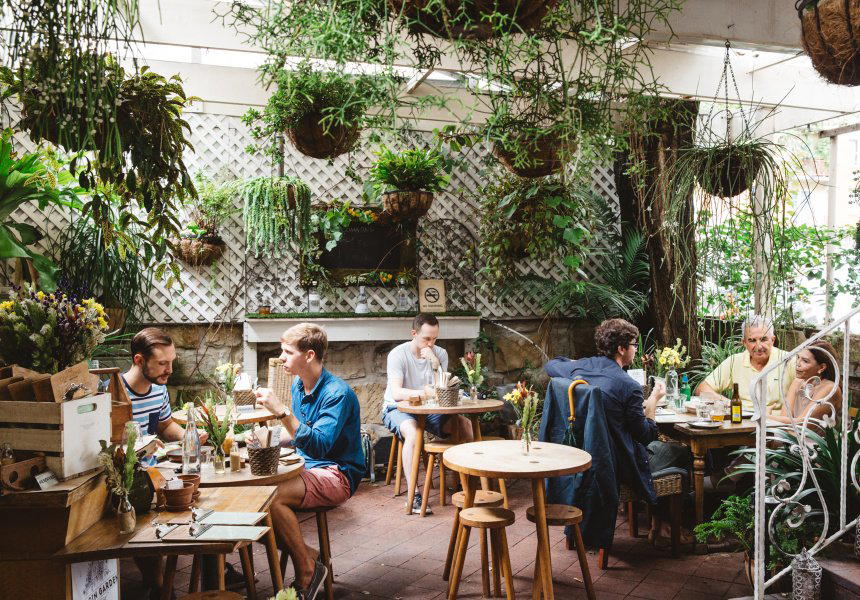
Approaching a venue on a terrace row in Darlinghurst tends to follow a familiar sensory sequence: the narrowing footpath, the low light visible through the window, the sound that stays inside rather than spilling onto the street. The Commons fits the established architecture of the inner-east eating room, where the physical scale encourages a different pace than the louder rooms on major thoroughfares. This is the kind of space where conversation doesn't compete with background noise for dominance, and where the front-of-house rhythm is built around table turns that feel unhurried by design rather than by staffing constraint.
Darlinghurst carries a density of options that rewards comparison. Within a short radius, Chaco Ramen occupies the specialist end of the Japanese ramen format, while Lucio Pizzeria anchors the neighbourhood's Italian tradition with the kind of institutional weight that comes from sustained local presence. Phamish Vietnamese Restaurant adds Southeast Asian depth to the precinct, and Mr Crackles has made a singular product the basis for consistent return visits. Against that spread, a venue identifying as a local eating house positions itself as the connective tissue of the neighbourhood rather than its specialist anchor.
Team Dynamics and the Floor-Kitchen Relationship
In neighbourhood dining rooms of this scale and positioning, the distinction between front-of-house and kitchen tends to compress. The service dynamic that defines a place like The Commons is less about the division of roles between a sommelier, a floor team, and a kitchen brigade, and more about whether the people running the room read it correctly on any given night. At the neighbourhood-dining tier across Australian cities, from Pipit in Pottsville to Provenance in Beechworth, the most consistent operations are those where the floor team carries enough kitchen knowledge to guide guests without a script, and where the kitchen understands that pacing is as much a hospitality decision as a culinary one.
That collaborative floor-kitchen relationship is what separates a genuine local eating house from a venue merely using the label. The Commons, operating in a precinct where regulars form the backbone of the weekly cover count, would live or fall on exactly that dynamic. A room that functions well on a Tuesday is built differently than one optimised for Saturday service, and Burton Street's weekday foot traffic tells you something about the operational consistency a sustained local audience demands. It is a different kind of pressure from the one facing destination formats like Laura at Pt Leo Estate or Attica in Melbourne, where a single sitting carries the full weight of a diner's expectations built over months of anticipation.
How The Commons Sits Within the Broader Australian Dining Conversation
Australian dining criticism has, in recent years, given proportionally more column space to the destination end of the spectrum: the long-weekend drive to Hentley Farm in Seppeltsfield, the coastal splurge at Lizard Island Resort, or the water-view elegance of Ormeggio at The Spit in Mosman. The neighbourhood eating house occupies the other end of that register, and is arguably the format that defines how most people in Sydney actually eat most of the time. Its international analogues, the bistrots of Paris's 11th arrondissement or the trattorie that line the residential blocks of Rome's Prati neighbourhood, derive their character from regularity of use rather than infrequency of occasion.
In that company, Darlinghurst's Burton Street holds a recognisable position. The suburb's proximity to Kings Cross, Paddington, and Surry Hills means it draws a cross-section of inner-city residents who have absorbed a certain baseline expectation about what a casual dinner should offer. Those expectations are shaped by years of exposure to Bar Reggio and its Italian-influenced neighbourhood model, and by the general upward drift in cooking quality that has characterised Sydney's independent sector over the past decade. A local eating house in this environment isn't competing against fine dining; it is competing against every other well-run room within walking distance, which is a harder test than it sounds.
For those weighing the Darlinghurst dining options in full, the full Darlinghurst restaurants guide maps the precinct across formats and price tiers. Internationally, the model of the considered neighbourhood room that punches above its casual positioning has analogues in formats like Lazy Bear in San Francisco, though at a very different price point and ambition level, and the precise technique-meets-accessibility balance of Le Bernardin in New York City shows how floor-kitchen coordination, at any scale, ultimately determines whether a room earns its repeat custom. The principles are universal even when the formats diverge dramatically.
Planning Your Visit
The Commons Local Eating House is located at 32 Burton Street, Darlinghurst, in Sydney's inner-east. Burton Street sits within easy walking distance of the Oxford Street corridor and the broader Darlinghurst grid, making it accessible on foot from Surry Hills and Potts Point as well as by public transport via the nearby bus routes and Potts Point light rail interchange. As with most neighbourhood-scale rooms in the precinct, arriving without a booking on busier evenings carries some risk, particularly Thursday through Saturday when the inner-east dining crowd is at its densest.
Frequently asked questions
What should I expect atmosphere-wise at The Commons Local Eating House?
The Commons sits on Burton Street in Darlinghurst's inner-east, a strip better known for independent operators than destination set-menus. The tone leans toward the kind of room where regulars arrive without a reservation and the floor knows the table. Expect a pace and energy closer to a local eating house than a formal dining room — which is precisely what the name signals.
How does The Commons Local Eating House fit into Darlinghurst's dining scene?
Darlinghurst runs one of Sydney's most concentrated independent hospitality circuits within a tight grid of inner-east streets, and The Commons on Burton Street sits firmly in the local-operator tier rather than the destination-dining category. That positioning matters: it means the room is shaped by repeat custom and neighbourhood rhythm, not by a marketing profile or tasting-menu format. For visitors already in the area, it functions as a credible local reference point rather than a special-occasion detour.
Pricing, Compared
| Venue | Cuisine | Price |
|---|---|---|
| The Commons Local Eating HouseThis venue — the venue you are viewing | Modern Australian with Mediterranean & European Influences | Not listed |
| Bar Reggio | Authentic Italian Trattoria | $20–30 |
| Chaco Ramen | Modern Japanese Ramen | $20–30 |
| Lucio Pizzeria | Authentic Neapolitan Pizza | $20–30 |
| Mr Crackles | Crispy Pork Crackling Rolls | Not listed |
| Phamish Vietnamese Restaurant | Authentic Vietnamese | $20–30 |
Continue exploring
More in Darlinghurst
Restaurants in Darlinghurst
Browse all →
Bars in Darlinghurst
Browse all →
Hotels in Darlinghurst
Browse all →
Wineries in Darlinghurst
Browse all →

The Commons Local Eating House
The wine
- Wine program
- Curated wine list
- Natural wine
- Craft cocktails
- Beer program
Details
- Rustic
- Romantic
- Intimate
- Elegant
- Cozy
- Date Night
- Casual Hangout
- After Work
- Historic Building
- Open Kitchen
- Craft Cocktails
- Beer Program
- Natural Wine
- Local Sourcing
- Farm To Table
- A La Carte
- Set Menu
- Craft Cocktails
- Boutique Wines
- Craft Beers
- Vegetarian Friendly
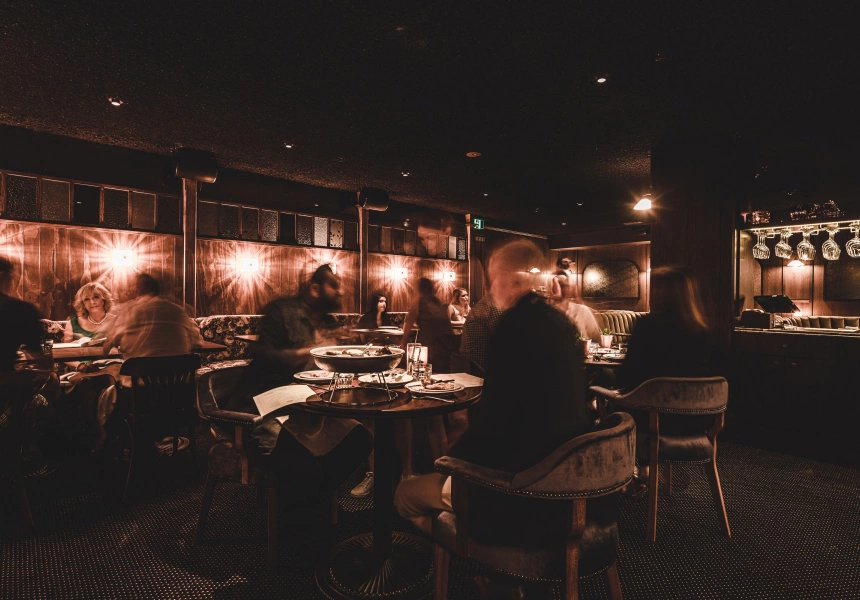
Dim mood lighting with soothing sandstone walls bearing convict markings, vintage furnishings, and a basement speakeasy atmosphere evoking Golden Age American jazz.