The Blue Pig Tavern

The Blue Pig Tavern at Congress Hall in Cape May occupies a particular place in New Jersey's shore dining tradition: a casual-leaning tavern format inside one of the country's oldest seaside resort hotels, drawing on the region's agricultural and coastal supply lines. Cape May's position at the tip of the Delaware Bay peninsula gives it access to some of the Mid-Atlantic's most distinctive seafood and farm produce, and the tavern reflects that geography on the plate.
Pearl is the En Primeur Club membership app — saves, bookings, and concierge access live there. Same editors, same standards.
- Address
- 200 Congress Pl, Cape May, NJ 08204
- Phone
- +16098848422
- Website
- caperesorts.com
- Directions
- Get directions
 Saves & bookings on Pearl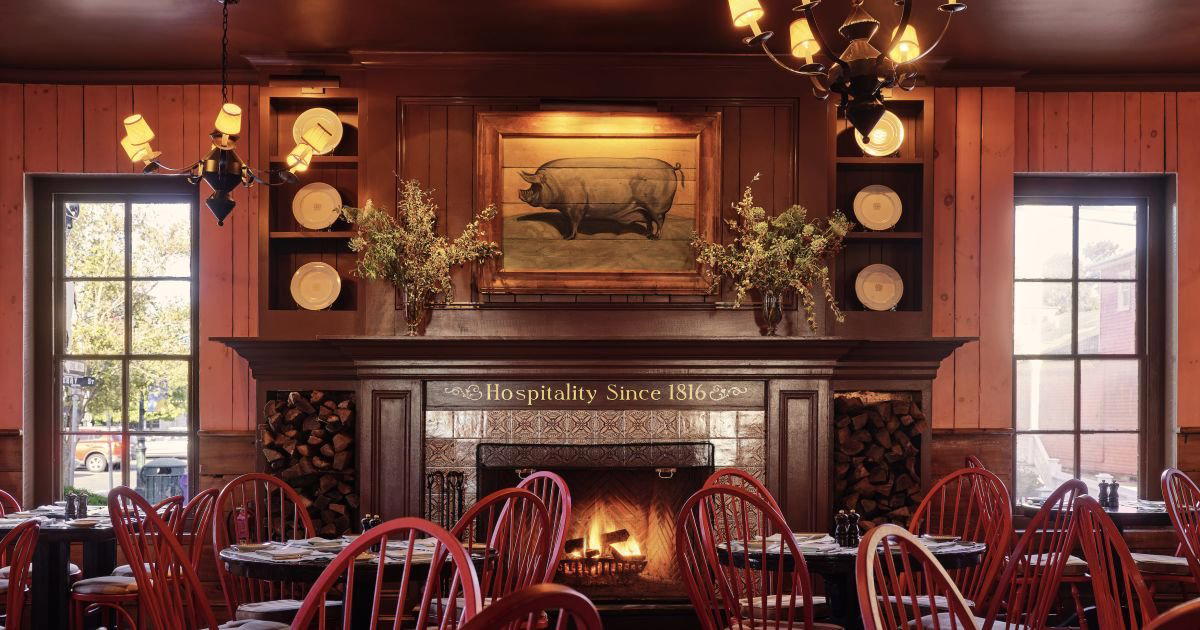
A Shore Town's Larder, Plated
Cape May sits at the southernmost tip of New Jersey, a narrow peninsula caught between the Atlantic Ocean and the Delaware Bay, two distinct bodies of water that produce markedly different seafood. Delaware Bay oysters, cold-water clams, blue crabs, and local flounder all circulate through the kitchens of serious Cape May restaurants. The Blue Pig Tavern, located at 200 Congress Pl within the historic Congress Hall hotel, is a farm-to-table American tavern in Cape May that belongs to that supply tradition. In a town where the dining conversation tends to split between the white-tablecloth ambition of places like the Ebbitt Room and the casual boardwalk end of the spectrum, the Blue Pig occupies deliberate middle ground: a tavern format that draws on regional sourcing without demanding the formality of a full tasting-menu evening.
Congress Hall itself is one of the oldest seaside resort hotels in the United States, which places the Blue Pig in a lineage that most restaurant rooms in New Jersey cannot claim. The building's age is not decorative backstory, it shapes what kind of crowd arrives, what they expect from a meal, and why the tavern format works here in ways it might not in a newer hotel context. That history shows up in the room: wide plank floors, a bar that anchors the space, and the particular kind of unhurried pace that old resort hotels tend to preserve even when the surrounding town has modernised around them.
Where the Food Actually Comes From
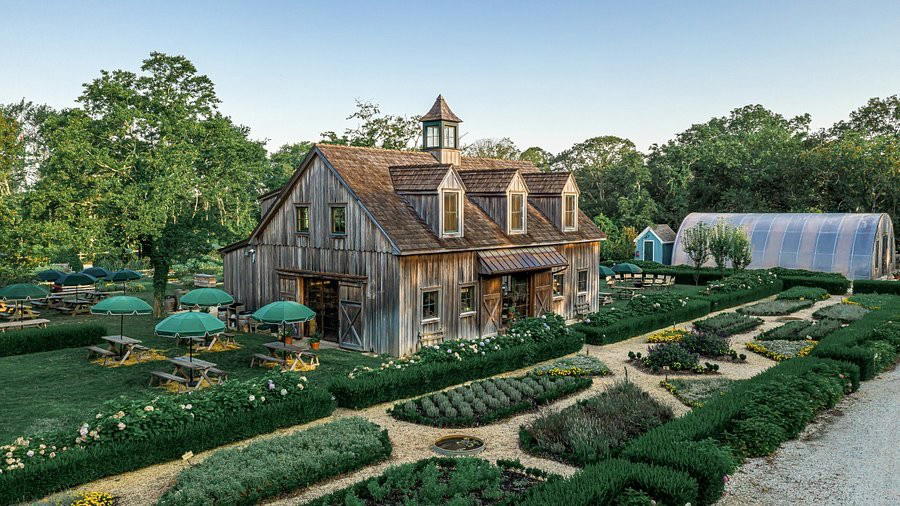
The Mid-Atlantic coast's sourcing geography is more layered than it first appears. Cape May County farms have historically supplied the region with corn, tomatoes, peppers, and sweet potatoes, summer and early-autumn produce that defines the Jersey Shore table at its seasonal peak. Offshore, the continental shelf fisheries and the inshore Delaware Bay system deliver parallel but distinct catches: the Bay's cold, mineral-rich water produces oysters with a salinity profile that differs noticeably from Atlantic-side shellfish grown in warmer, more open water.
Restaurants in Cape May that take ingredient sourcing seriously tend to lean into this dual geography, working with both Bay and ocean supply rather than defaulting to one. The proximity to South Jersey farms, shorter supply chains than those facing, say, a Manhattan kitchen, means that peak-season produce arrives faster and with fewer intermediary steps. That's a structural advantage that a tavern-format kitchen can translate into direct preparation: less need to compensate for inferior raw material through technique. Compare this model to farm-integration programs at places like Blue Hill at Stone Barns in Tarrytown or Single Thread Farm in Healdsburg, where the sourcing relationship is codified and central to the restaurant's identity, and the Blue Pig operates in a less formal register, but within the same geographic logic: the food reflects the land and water immediately around it.
For context on how ingredient-led American dining operates at the higher end of its range, restaurants like Lazy Bear in San Francisco, Bacchanalia in Atlanta, and Frasca Food and Wine in Boulder each build menus around strong regional supply relationships, though in price tiers and format structures that differ substantially from a Cape May tavern. The Blue Pig's interest lies precisely in the contrast: a regional-sourcing approach embedded in a casual, hotel-tavern format rather than a destination dining room.
The Room and What to Expect From It
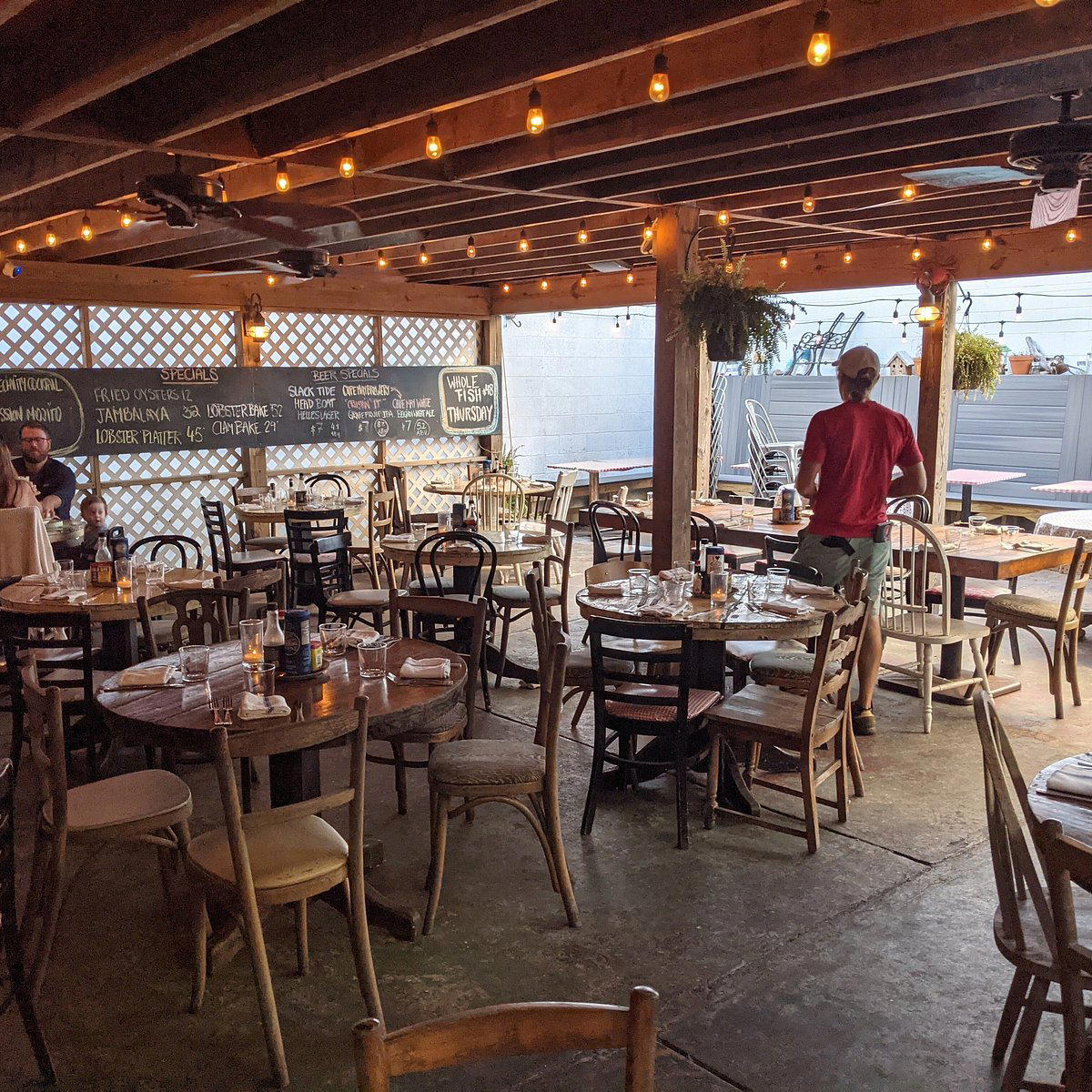
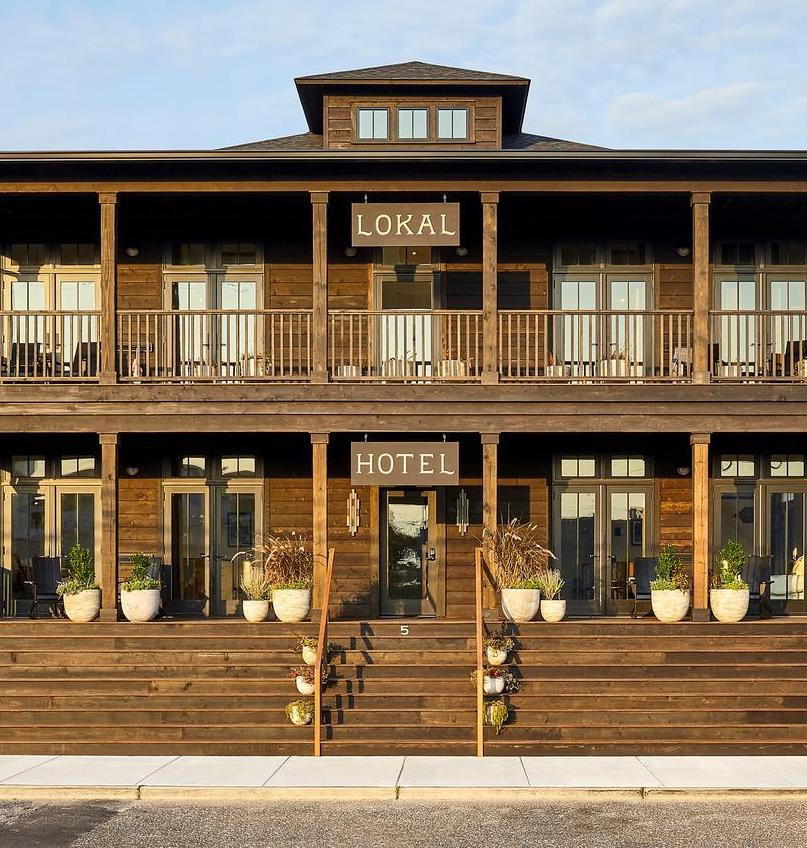
Walking into the Blue Pig Tavern, the Congress Hall porch and yellow facade give way to an interior that reads as genuinely old rather than period-designed. This distinction matters in Cape May, a town that has rebuilt and renovated its Victorian stock so many times that authenticity of atmosphere has become its own kind of asset. The tavern functions as both a dining room for hotel guests and a stand-alone destination for Cape May visitors, a dual role that shapes the pacing and service register. Tables turn at a moderate pace; there's no pressure architecture of a tasting-menu counter, and no performance to sit through.
For readers comparing to other hotel restaurant formats in the region, the Blue Pig occupies a different register than destination dining rooms attached to hotel properties. While restaurants like The Inn at Little Washington or Addison in San Diego use their hotel context to build an immersive, high-ceremony experience, the Blue Pig's tavern format deliberately avoids that architecture. The draw here is a particular kind of ease that Cape May's resort character makes possible, and that is harder to manufacture in urban hotel dining rooms.
Cape May at the Table
Cape May's dining scene draws heavily on the tourist calendar: the town fills sharply in summer, tapers through fall, and quietens significantly in winter. This seasonal rhythm affects restaurant ambition across the board. The busiest kitchens operate with the knowledge that a large share of their summer clientele will not return for months, which creates a different incentive structure than a year-round urban restaurant faces. The Blue Pig, attached to Congress Hall and therefore somewhat insulated from pure seasonal exposure, can sustain a more consistent program than a standalone summer-season operation.
For reference on other American dining rooms worth tracking alongside a Cape May trip, Le Bernardin in New York City, Providence in Los Angeles, and Emeril's in New Orleans represent the kind of seafood-forward American fine dining that shares a philosophical lineage with the Mid-Atlantic's coastal tradition, even when the price points and scale differ substantially. Closer in format, restaurants like Causa in Washington, D.C. and Brutø in Denver show how ingredient-led cooking operates in casual-leaning formats at the contemporary American dining mid-tier. And for readers interested in how international dining rooms approach comparable sourcing questions, Atomix in New York City, Alinea in Chicago, and 8 1/2 Otto e Mezzo Bombana in Hong Kong each demonstrate how place-rooted sourcing translates across radically different culinary traditions.
Planning a Visit
The Blue Pig Tavern is located at 200 Congress Pl, within Congress Hall, placing it in Cape May's historic district and within easy walking distance of the Washington Street Mall and the beach promenade. Cape May operates on seasonal patterns, so visiting between late May and late September often brings the fullest version of the experience, both in terms of regional produce availability and the town's broader resort atmosphere. Booking ahead is recommended during summer weekends, when Congress Hall occupancy and town visitor numbers push demand across all Cape May restaurants simultaneously. The tavern format suits a smart-casual dress code, and the room accommodates a wide range of party sizes, with families, couples, and larger groups all using the space.
In Context: Similar Options
Comparable venues nearby, for context on price, style, and recognition.
| Venue | Cuisine | Price | Notes |
|---|---|---|---|
| The Blue Pig TavernThis venue — the venue you are viewing | Farm-to-Table American Tavern | $$ | Not listed |
| Ebbitt Room | Farm-to-Table American Fine Dining | $$$$ | historic district |
| Chicken or the Egg Marlton | American Breakfast & Wings | $$ | Evesham |
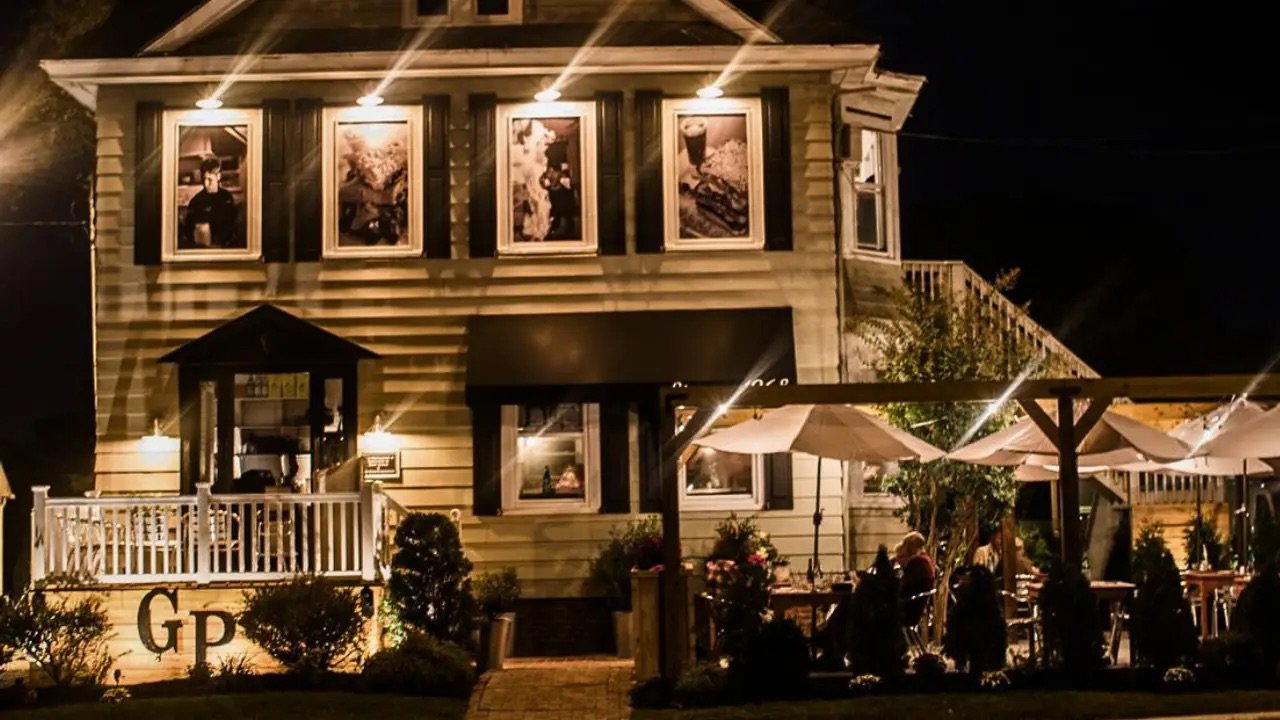
| The Jersey G.O.A.T Grill + Public House | New American Gastropub | $$ | Gloucester Township |
| Wanda BYOB | Modern American Bistro | $$ | Haddonfield |
| STUDIO | New American Small Plates | $$ | Arts District |
Recognition history
Dated appearances from independent guides and award organizations, with the underlying list record or original source where available.
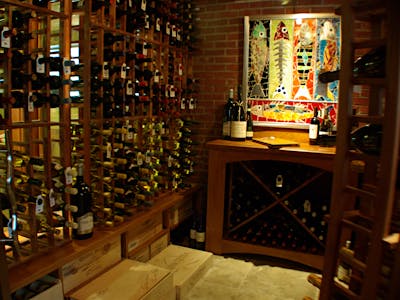
Wine Spectator Award of Excellence
Wine Spectator
Continue exploring
More in Cape May
Restaurants in Cape May
Browse all →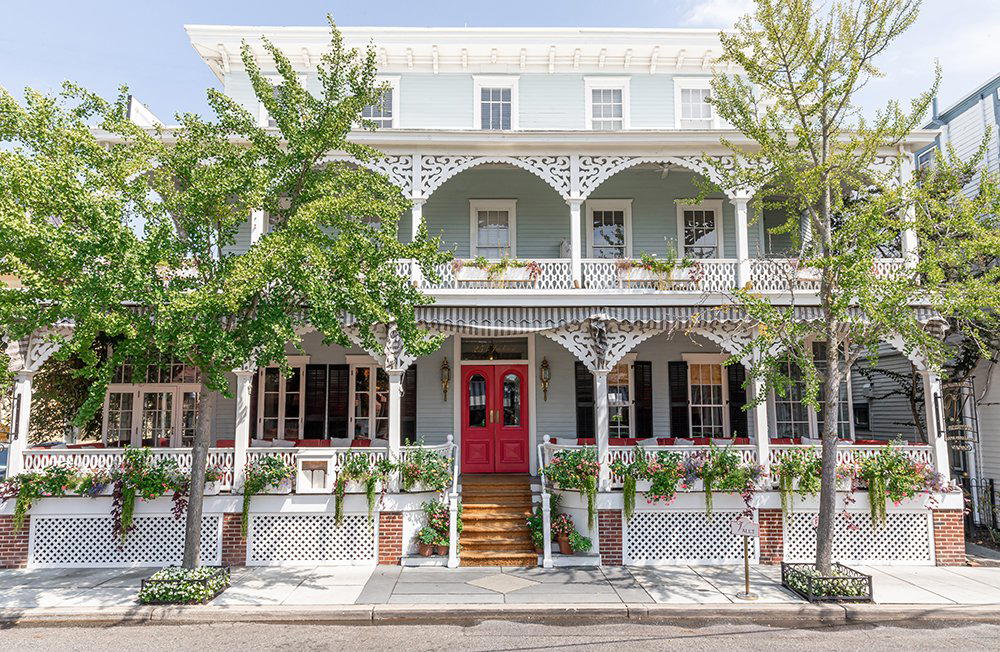
At a Glance
- Cozy
- Classic
- Rustic
- Family
- Brunch
- Special Occasion
- Historic Building
- Hotel Restaurant
- Terrace
- Craft Cocktails
- Farm To Table
- Local Sourcing
Current opening hours
- Monday
- 7:30 AM–2 PM, 5–9 PM
- Tuesday
- 7:30 AM–2 PM, 5–9 PM
- Wednesday
- 7:30 AM–2 PM, 5–9 PM
- Thursday
- 7:30 AM–2 PM, 5–9 PM
- Friday
- 7:30 AM–2 PM, 5–9 PM
- Saturday
- 7:30 AM–3 PM, 5–9 PM
- Sunday
- 7:30 AM–3 PM, 5–9 PM
Hours can change for holidays and private events. Last verified .
Warm and inviting dining room with a magnificent fireplace, traditional decor, lively yet soothing atmosphere.