Beach Plum Farm Cottages

1 Michelin Key
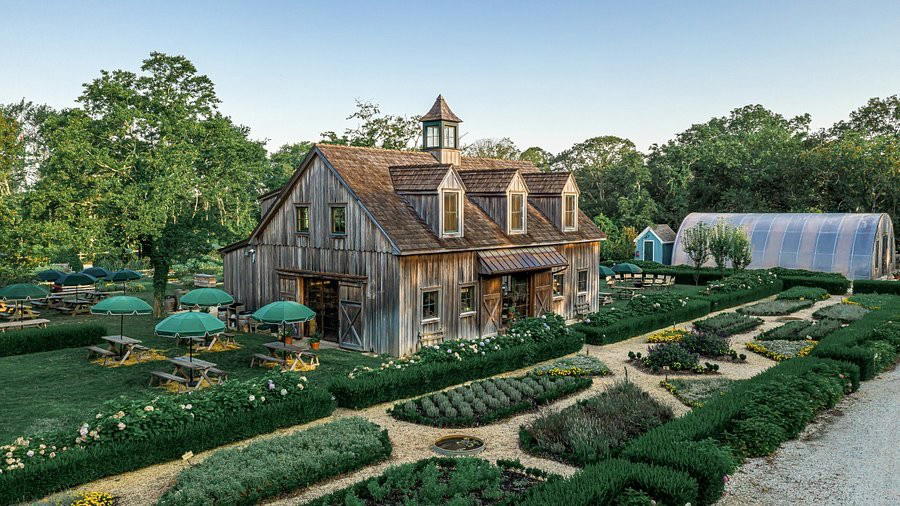
A Michelin Key-recognized working farm turned six-unit retreat on 62 acres at the southern tip of New Jersey, Beach Plum Farm Cottages sits a mile west of Cape May's Victorian center. Three converted barns and two cottages offer full kitchens, indoor fireplaces, and outdoor fire pits alongside a pool and farm tours. Rates begin at $300 per night, bookable through EP Club's customer service team.

Pearl is the En Primeur Club membership app, where members save venues, book tables and use the concierge.
Where the Farm Precedes the Hotel
The Jersey Shore operates on a spectrum. To the north, Asbury Park and Seaside Heights trade in boardwalk density, seasonal crowds, and the particular energy of shore towns built around proximity to the water. Cape May, at the peninsula's southern tip, has always occupied a different register: Victorian architecture catalogued as some of the most concentrated surviving examples in the United States, a slower pace, and a dining scene that has long drawn produce from the agricultural land that surrounds the town rather than relying on the highway distributors that supply most resort communities. It is in that agricultural context that Beach Plum Farm Cottages makes most sense, not as a hotel that happens to have a garden, but as a working farm that added lodging as a second act.
The farm's credentials in Cape May predate its guest accommodations. Before the cottages opened, Beach Plum Farm was already the dedicated supplier to several of the town's better restaurants, a relationship that shaped the local food culture in ways that persist today. That supply-chain history gives the property a standing that most farm-stay concepts cannot claim: the land was productive and locally significant before hospitality entered the picture. For context on how Cape May's broader dining scene has developed around this kind of sourcing, see our full Cape May restaurants guide.
The Architecture of Conversion
Accommodation at Beach Plum Farm sits across five structures on 62 acres: three barns and two cottages, some renovated from existing agricultural buildings, others newly constructed to complement them. The distinction between the two categories matters more than it might at a conventional hotel. Converted agricultural structures carry physical evidence of their former use, ceiling heights determined by hay storage, timber framing exposed rather than concealed, proportions that no purpose-built lodging would replicate. The newer structures, built to sit alongside them, adopt the vocabulary of the originals without pretending to be something they are not.
Interior design navigates a tension that farm-conversion properties often handle poorly: the pull between authentic utilitarian farmhouse character and the comfort requirements of premium lodging guests. Here the approach favors a lively combination rather than choosing sides. Classic farmhouse utilitarianism provides the bones, the exposed materials, the practical layouts, the working fireplaces, while the furnishing and color palette introduce a modernist sensibility that prevents the spaces from tipping into theme-park rusticity. The result reads as a property that knows what it is and where it sits, rather than one performing a version of rural life for urban visitors.
Full kitchens and laundry facilities in each unit signal a self-contained residential logic rather than a hotel model. These are not amenities added to simulate homeliness; they change the nature of the stay, enabling longer residencies and a relationship to the space that a room-and-restaurant format cannot produce. Outdoor grills extend that logic through summer. The farm's swimming pool adds a leisure layer that grounds the property firmly in the premium retreat category rather than the austere agritourism segment.
Properties operating at this intersection of agricultural authenticity and design-led comfort occupy a specific niche in American hospitality. Comparisons surface with properties like Blackberry Farm in Walland, SingleThread Farm Inn in Healdsburg, and Troutbeck in Amenia, properties where the land itself is part of the offer, and where the accommodation is designed to feel continuous with that land rather than insulated from it. Beach Plum Farm operates at a smaller scale than some of those peers, with six units against the larger room counts that farms-with-lodging sometimes carry, which concentrates the experience considerably.
The Michelin Recognition and What It Signals
In 2024, Beach Plum Farm Cottages received a Michelin Key, part of the guide's expanded hotel and accommodation program that applies the same selection rigor Michelin brings to restaurants. A single Key designation indicates a property that offers a particularly memorable stay, assessed across character, service, and the quality of the overall experience. For a six-unit farm property in a secondary market like Cape May, the recognition places it in a tier that the volume-driven shore resorts to the north do not occupy. It is a signal about the seriousness of the offer, not just its category.
That category positioning matters for understanding where Beach Plum Farm sits relative to the broader American range of design-conscious small properties. Properties earning Michelin Key recognition at comparable scales include places like Post Ranch Inn in Big Sur, Amangani in Jackson Hole, and Sage Lodge in Pray, each with strong landscape-integration as a central premise. At a different scale and urban context, the Key program also recognizes properties like The Fifth Avenue Hotel in New York City and Raffles Boston. The range illustrates how the designation cuts across property types rather than rewarding any single format.
The Farm as Activity Layer
Farm tours at Beach Plum Farm are available to guests, adding a direct engagement with the agricultural operation that most properties of this type describe in their marketing but rarely make genuinely accessible. The Farm Market in the central barn sells the farm's produce, and the Farm Kitchen operates for breakfast and lunch, a format that keeps the food offer grounded in what the land actually produces without requiring a full-service restaurant operation. Guests with full kitchens can take the farm's produce directly into their own cooking, which closes the loop in a way that restaurant-format farm stays cannot.
Borrowed bicycles and golf carts extend the property's relationship with the surrounding area. Cape May's Victorian center sits approximately a mile to the east, close enough for an easy ride rather than a committed excursion, far enough that the farm maintains genuine separation from the town's tourist infrastructure. The beach is reachable by the same routes. This positioning gives guests the option of town access without making town proximity the property's primary selling point, an important distinction for a property whose identity is rooted in the land rather than the street.
Seasonal Framing and Practical Planning
Summer is the clearest season for Beach Plum Farm's full offer: outdoor grills, pool access, produce at peak, and the cycling and golf cart infrastructure that makes the surrounding area navigable without a car. The indoor fireplaces and outdoor fire pits extend the property's viability into shoulder seasons, when Cape May's crowds thin and the Victorian town becomes considerably more pleasant to explore. New Jersey's agricultural calendar means spring and early autumn also offer farm activity that summer's heat sometimes suppresses.
Six units across a 62-acre property means availability is genuinely limited, and the Michelin Key recognition will have widened the inquiry pool beyond the regional drive market that historically made up most of Cape May's visitors. Rates begin at $300 per night, with the full cost on request given the variation across unit types and seasons. Reservations require direct coordination through EP Club's customer service team, which handles the additional guest information the property requests before confirming bookings.
For guests building a broader East Coast itinerary that includes properties operating at comparable levels of landscape integration and design intention, Ambiente in Sedona, Amangiri in Canyon Point, and Alpine Falls Ranch in Superior represent the category at different geographical and price points. Closer to the Northeast, Bernardus Lodge in Carmel Valley and Canyon Ranch Tucson address related instincts around land, food sourcing, and deliberate retreat at larger scales. For those whose travel runs toward the entirely different register of city-center luxury, Aman New York, Hotel Bel-Air in Los Angeles, and Four Seasons at The Surf Club in Surfside anchor the opposite end of the spectrum.
Fast Comparison
Comparable venues nearby, for context on price, style, and recognition.
| Venue | Cuisine | Price | Awards | Notes |
|---|---|---|---|---|
| Beach Plum Farm CottagesThis venue (the venue you are viewing) | Working farm cottages blending historic restoration and modern barn builds | $300–500 | 1 Michelin Key | Not listed |
| Lokal Micro Beach Resort, Cape May | Micro beach resort with apartment-style suites and invisible service concept | Not listed | Michelin Selected | Cape May |
| The Chateau Grande Hotel | Contemporary chateau-style luxury boutique hotel | $200–300 | Michelin Selected | East Brunswick |
| W Hoboken | Modern luxury lifestyle hotel with maritime-inspired design and lively social spaces | Not listed | Michelin Selected | Hoboken Waterfront |
| Bungalow Hotel | Modern boutique with West Coast cool and surfer chic aesthetic; art-centric design by celebrity designers Courtney and Robert Novogratz. | Not listed | Michelin Selected | Pier Village |
| The George | Modern style with historic bones in a landmark Georgian Inn. | Not listed | Michelin Selected | Montclair |
Recognition history
Dated appearances from independent guides and award organizations, with the underlying list record or original source where available.
Michelin 1 Key
Michelin
Full recognition history (3 entries)
Michelin 1 Key
Michelin
Michelin 1 Key
Michelin
Continue exploring
More in Cape May
Hotels in Cape May
All hotels in Cape May →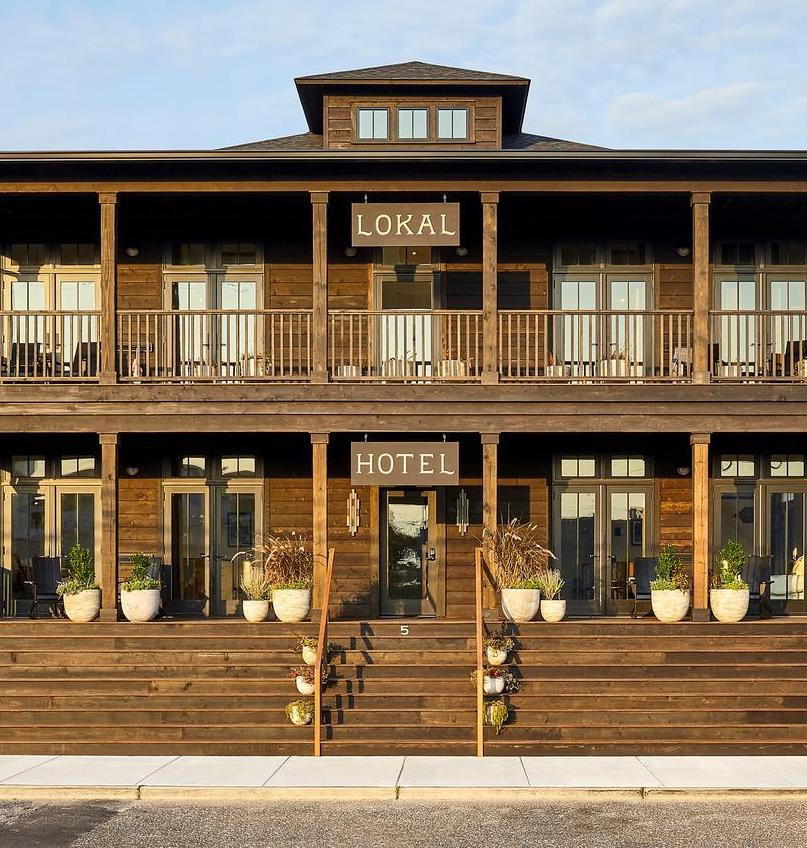
Details
- Rustic
- Cozy
- Scenic
- Romantic
- Whimsical
- Romantic Getaway
- Family Vacation
- Weekend Escape
- Historic Building
- Pool
- Beach Access
- Wi Fi
- Wheelchair Accessible
Cozy with indoor fireplaces, outdoor fire pits, and a lively mix of classic farmhouse and colorful modernist decor.