Ebbitt Room

The Ebbitt Room at Cape May's Virginia Hotel brings a farm-and-sea sourcing ethic to one of New Jersey's most historically preserved shore towns. The kitchen draws on South Jersey's agricultural corridor and Delaware Bay seafood, translating regional provenance into a format that reads as considered dining rather than coastal casual. For a town better known for Victorian porches than serious restaurants, it holds a distinct position.
Pearl is the En Primeur Club membership app — saves, bookings, and concierge access live there. Same editors, same standards.
- Address
- 25 Jackson St, Cape May, NJ 08204
- Phone
- +16098845700
- Website
- caperesorts.com
- Directions
- Get directions
 Saves & bookings on Pearl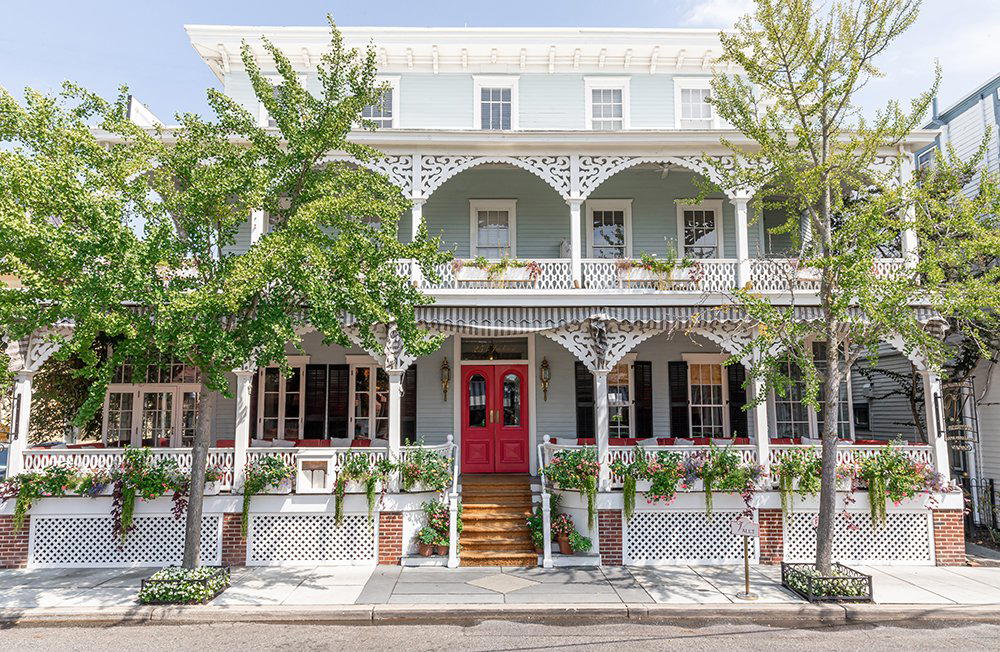
Where the Delaware Bay Meets the Dining Room
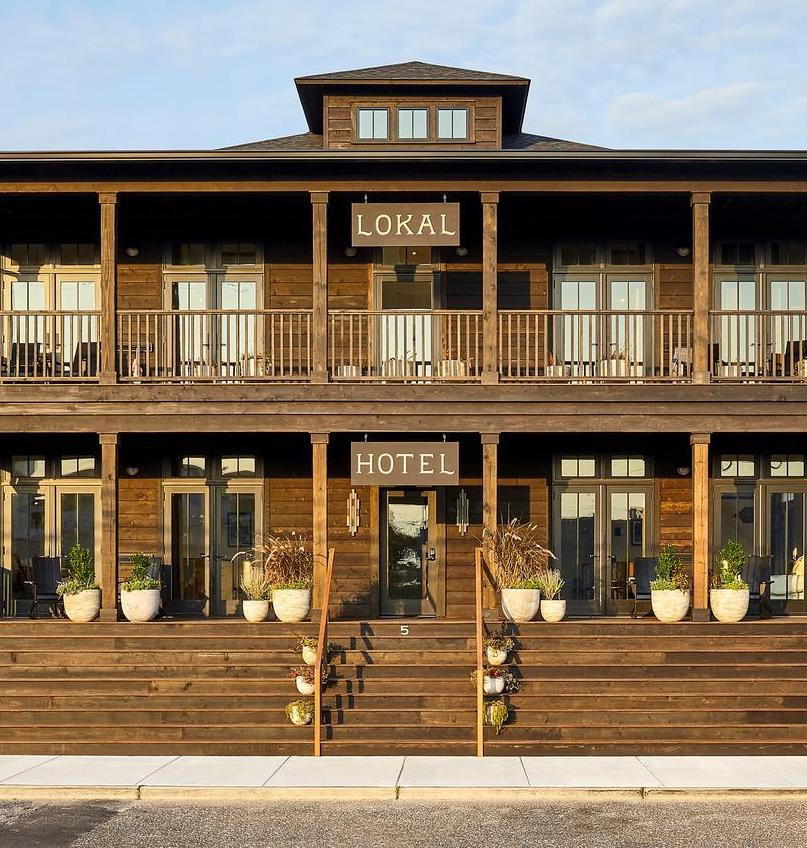
The Ebbitt Room is a restaurant in Cape May, New Jersey, at a four-dollar price tier, inside the historic Virginia Hotel on Jackson Street. It shapes what ends up on the plate at serious kitchens in the area. The Ebbitt Room, set inside the Virginia Hotel on Jackson Street, occupies a building that dates to the 19th century, a period when Cape May's Victorian architecture was being constructed block by block. Walking toward the hotel from the street, the scale stays human: a preserved facade, a quiet entrance, none of the resort-chain signage that dominates more commercialized shore towns. The dining room matches that register, unhurried and formal enough to signal intent without tipping into stiff.
Cape May as a dining destination is genuinely underestimated on the regional circuit. For decades, it functioned primarily as a summer escape for Philadelphia and New York families, with restaurants calibrated to high-volume, high-season traffic rather than to any sustained culinary ambition. That has shifted. A smaller cohort of kitchens in the area now operates year-round, sources deliberately, and prices to reflect the cost of that approach. The Ebbitt Room sits at the front of that cohort.
The ingredient sourcing argument in coastal fine dining tends to collapse into two categories: kitchens that reference local farms and fisheries as marketing language, and kitchens where the supply relationships actually determine what appears on the menu. The distinction matters because it changes how a kitchen responds to season, to weather, and to what the bay is actually producing on a given week.
Cape May sits inside one of the more productive agricultural and marine corridors on the East Coast. South Jersey's sandy loam supports a farming calendar that runs from asparagus in early spring through root vegetables into late autumn. The Delaware Bay, meanwhile, has long sustained commercial harvests of blue crab, weakfish, and surf clams, alongside seasonal runs of fish species that don't reach menus further north in the same condition. A kitchen that sources inside this geography rather than pulling from a national broadline distributor is working with materially different ingredients, and the menu at the Ebbitt Room reflects that orientation.
This places the restaurant in conversation with a broader movement in American fine dining where regional provenance is the primary editorial statement of the kitchen. Blue Hill at Stone Barns in Tarrytown made this argument at scale. Single Thread Farm in Healdsburg built an entire property model around it. Smyth in Chicago applies it to a tasting format. At the restaurant, the operating scale is smaller and the approach is less programmatic, but the underlying sourcing logic is consistent with this tier of kitchen.
The Virginia Hotel is a small property by design, which gives the restaurant a capacity that keeps service ratios closer to what a tasting-format restaurant would maintain than to what a 200-cover shorefront operation can manage. That intimacy is part of the product. The dining room has the measured quiet of a hotel restaurant that takes itself seriously: not the performative silence of a temple-of-gastronomy counter, but the settled calm of a room where the pacing is controlled and the staff understand the difference between attentive and present.
The format positions it in a specific tier of American hotel dining, alongside rooms like The Inn at Little Washington, where the hotel and the restaurant are genuinely co-primary rather than one subsidizing the other. At that tier, the kitchen is not an amenity for hotel guests. It is a destination that happens to have rooms attached.
For regional comparison on the ingredient-forward hotel dining format, Addison in San Diego and Frasca Food and Wine in Boulder both demonstrate how a regionally specific sourcing program can sustain a kitchen's identity across years rather than seasons. Farther afield, Lazy Bear in San Francisco and Providence in Los Angeles represent the West Coast version of the same argument: that serious American dining now happens in places other than the obvious coastal cities, and that regional ingredient access is often the thing that makes it worth the detour.
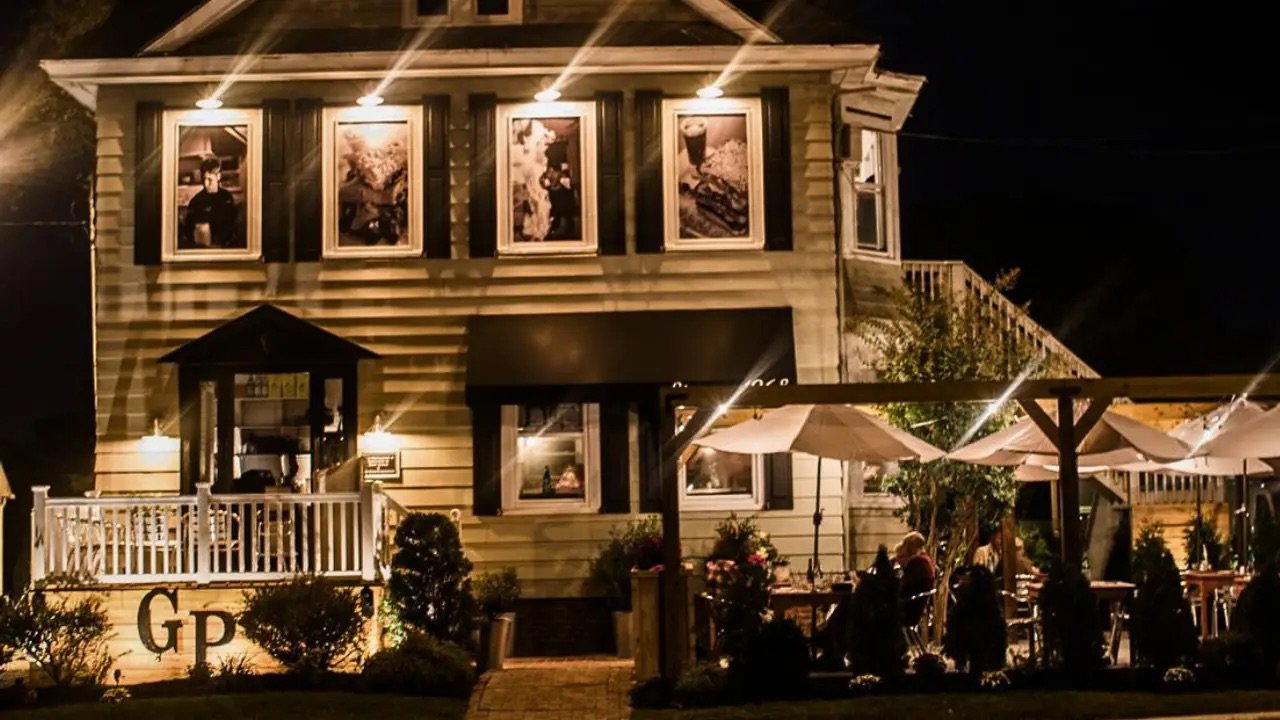
The case for driving two and a half hours from Philadelphia, or three from New York, to eat in Cape May rests on more than the restaurant alone. But the restaurant is a significant part of the argument. The Blue Pig Tavern, also in Cape May, covers the more casual end of the local sourcing story. Together they suggest a small-town dining scene with genuine range rather than a single anomalous kitchen.
The town's Victorian preservation status means development is constrained, which has kept Cape May from the resort homogenization that erased the character of comparable shore towns along the Jersey and Delaware coasts. That constraint is an asset for restaurants: the built environment stays interesting, and the visitor demographic skews toward people who chose Cape May deliberately rather than defaulting to it. That audience sustains a kitchen with ambition.
For kitchens that have built comparable reputations through serious sourcing programs in smaller or secondary markets, The Wolf's Tailor in Denver, Oyster Oyster in Washington, D.C., and ITAMAE in Miami all demonstrate that the sourcing-led model holds across different regional contexts. Atelier Moessmer Norbert Niederkofler in Brunico takes the same logic to an extreme in the South Tyrolean Alps. And at the technical peak of American seafood cooking, Le Bernardin in New York City and Emeril's in New Orleans represent the formal tradition that smaller coastal rooms like the restaurant are in dialogue with, even if at a different price point and scale. Meanwhile, Atomix in New York City demonstrates how a focused sourcing philosophy can carry a kitchen to stronger examples from its competitive tier regardless of cuisine category.
Planning a Visit
Cape May operates on a compressed seasonal calendar, with summer occupancy at the Virginia Hotel running high and the shoulder months of May, June, September, and October offering particularly favorable conditions for both room availability and dining at the restaurant without the peak-season volume. Reservations at the hotel dining room are advisable during summer weekends. The town is accessible by car from Philadelphia, and the Cape May-Lewes Ferry connects it to Delaware. The dress code at the restaurant skews toward smart casual, consistent with the Virginia Hotel's position as a refined but not ceremonial property.
At-a-Glance Comparison
Comparable venues nearby, for context on price, style, and recognition.
| Venue | Cuisine | Price | Notes |
|---|---|---|---|
| Ebbitt RoomThis venue — the venue you are viewing | Farm-to-Table American Fine Dining | $$$$ | Not listed |
| The Blue Pig Tavern | Farm-to-Table American Tavern | $$ | Congress Hall |
| Ninety Acres | Modern American Farm-to-Table | $$$$ | Peapack-Gladstone |
| Blu Livingston | Modern American-Asian Seafood & Steakhouse | $$$$ | Eisenhower Parkway corridor |
| The Poached Pear | Contemporary American Bistro | $$$ | Point Pleasant Beach |
| Redstone American Grill | Modern American Grill & Steakhouse | $$$ | Marlton |
Recognition history
Dated appearances from independent guides and award organizations, with the underlying list record or original source where available.
Wine Spectator Award of Excellence
Wine Spectator
Continue exploring
More in Cape May
Restaurants in Cape May
Browse all →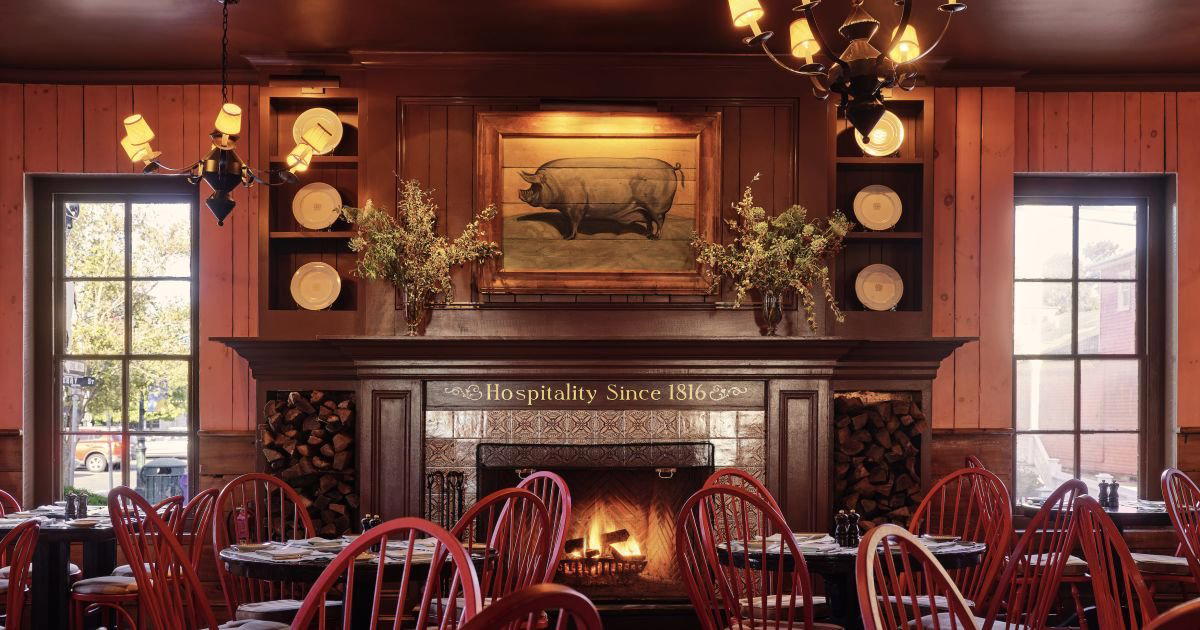
At a Glance
- Elegant
- Sophisticated
- Classic
- Intimate
- Special Occasion
- Date Night
- Celebration
- Hotel Restaurant
- Private Dining
- Historic Building
- Craft Cocktails
- Farm To Table
- Local Sourcing
- Street Scene
Current opening hours
- Monday
- 2–9 PM
- Tuesday
- 2–9 PM
- Wednesday
- 2–9 PM
- Thursday
- 2–9 PM
- Friday
- 2–10 PM
- Saturday
- 12–10 PM
- Sunday
- 12–9 PM
Hours can change for holidays and private events. Last verified .
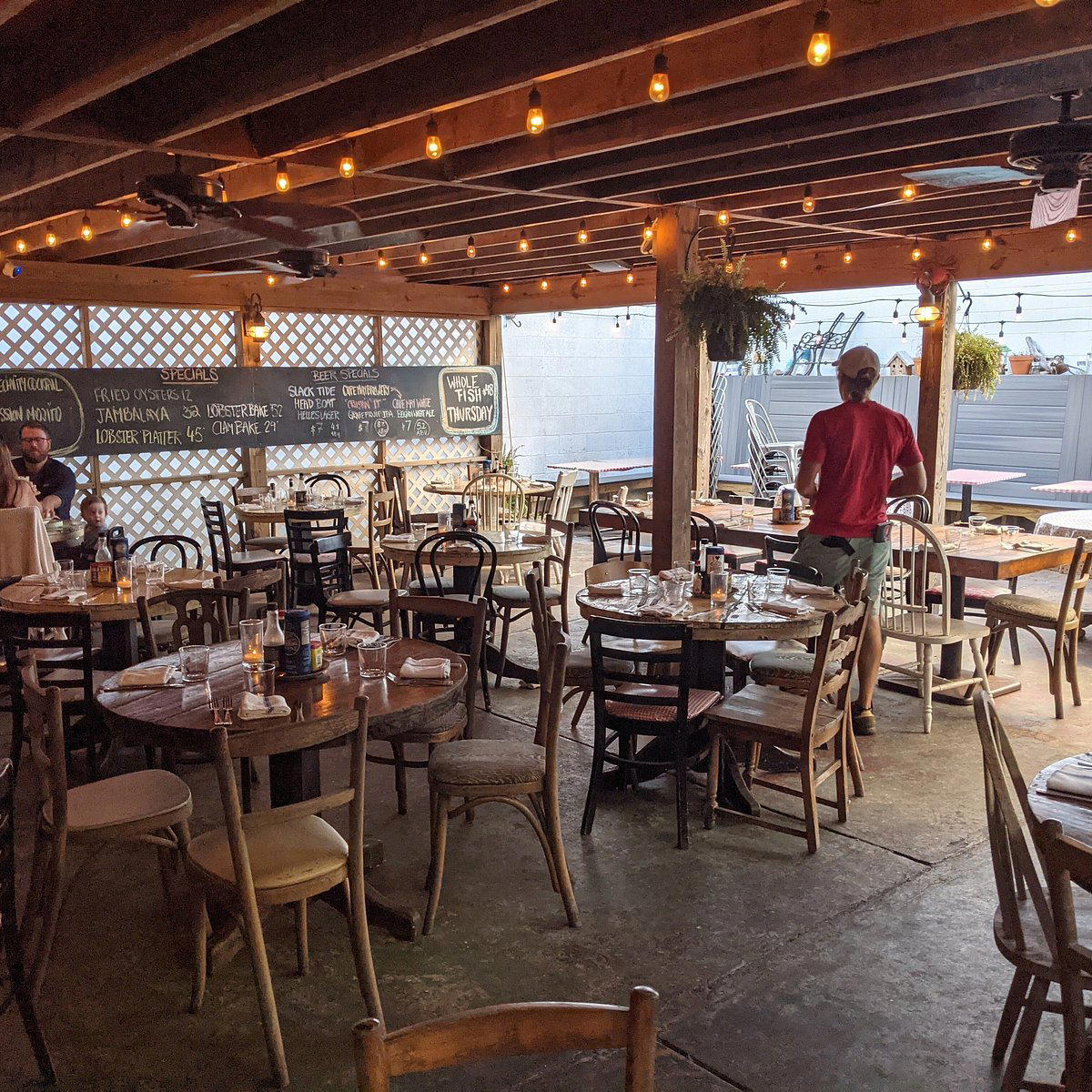
Refined ambiance with flickering candles, fresh summer garden flower arrangements, and a sophisticated yet casual vibe.