The Bengal
On Porchester Road in Bayswater, The Bengal occupies a stretch of West London where Indian restaurants have held ground against neighbourhood change for decades. The regulars here return not for novelty but for consistency, the kind of cooking that earns a postcode loyalty rather than a destination visit. A neighbourhood fixture with the character of a long-established local institution.
Pearl is the En Primeur Club membership app — saves, bookings, and concierge access live there. Same editors, same standards.
- Address
- 62a Porchester Rd, London W2 6ET, United Kingdom
- Phone
- +442072291640
- Website
- thebengal.co.uk
- Directions
- Get directions
 Saves & bookings on Pearl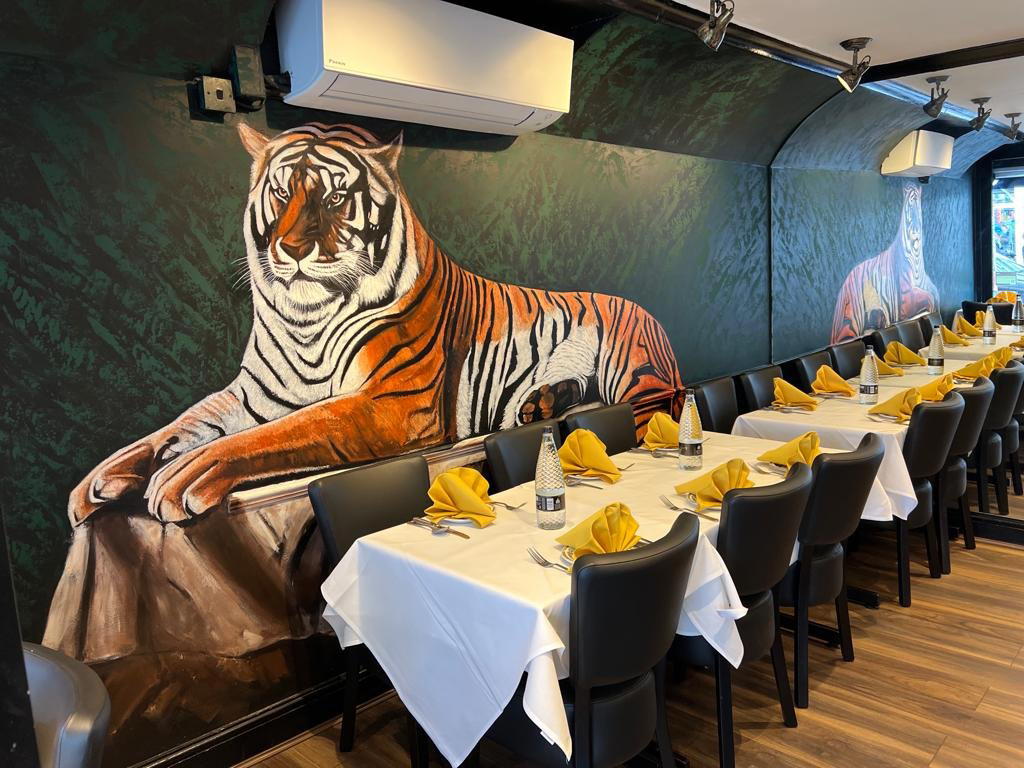
West London's Indian Restaurant Tradition and Where The Bengal Sits Within It
Bayswater and the streets immediately surrounding Porchester Road have supported a concentration of South Asian restaurants since at least the 1970s, when first-generation Bangladeshi and Indian restaurateurs established the area as a reliable corridor for subcontinental cooking outside the more obvious pull of Brick Lane or the West End. That geography still matters. The Bengal, at 62a Porchester Road, operates inside that tradition rather than against it, a neighbourhood restaurant on a residential street, serving a community that already knows what it wants when it walks through the door.
The editorial context worth establishing upfront: this is not the tier of Indian cooking represented by Opheem in Birmingham. Nor does it position against the tasting-menu architecture you find at London's highest-accredited rooms, the CORE by Clare Smyth or Sketch tier, where the entire evening is choreographed around a single extended meal. The Bengal operates on different terms: the terms of the neighbourhood regular, the weeknight customer, the person who knows which dish they are ordering before they sit down.
What the Regulars Come Back For
The strongest indicator of a neighbourhood restaurant's actual quality is not its awards shelf but its repeat-visit rate, and on Porchester Road, repeat business is the only currency that sustains a restaurant across years of neighbourhood change, rent pressure, and the attrition that closes dozens of London independents every year. A venue that survives in a residential pocket without the tourist foot-traffic of the West End or the media attention of Shoreditch is surviving on loyalty alone.
That loyalty, in the context of British-Indian cooking, typically centres on consistency of spice calibration. The regulars at establishments like The Bengal are returning because the kitchen delivers the same result each time, the same balance of heat, the same depth of sauce reduction, the same timing on the bread. This is a different skill from the innovation-driven approach at, say, Dinner by Heston Blumenthal, but it is a skill nonetheless, and a harder one to sustain over time than a single spectacular opening season.
British-Indian restaurant cooking, the tradition that produced the curry house as a cultural institution, has faced sustained critical reassessment over the past fifteen years. The narrative, largely driven by fine-dining advocates, frames the curry house as a compromised form: anglicised, standardised, disconnected from regional Indian specificity. That critique has merit in the abstract, but it misreads how these restaurants function in practice. For a Bayswater regular ordering from memory, the familiarity is precisely the point. The restaurant occupies a position where that familiarity is the product.
Porchester Road and the Neighbourhood it Serves
Porchester Road runs through W2, a postcode that spans the eastern edge of Notting Hill and the western edge of Paddington, a neighbourhood with significant long-term South Asian and Middle Eastern residential presence alongside newer demographic layers from ongoing Paddington regeneration. The restaurant at number 62a is accessible from Royal Oak underground station on the Hammersmith and City line, and sits within reasonable walking distance of Westbourne Grove's more stylised dining scene without being part of it. The address places it firmly in the local-service tier of West London eating: a restaurant for the neighbourhood, not a restaurant the neighbourhood happens to contain.
For comparison, the West London dining corridor that draws destination visitors runs further east and south, through Notting Hill itself and into Kensington, where The Ledbury has long anchored the area's fine-dining credibility. The restaurant operates entirely outside that gravitational field, which is, in its own way, a kind of editorial position.
British Indian Cooking in the Context of the Wider UK Scene
The Indian restaurant sector in the UK is genuinely stratified at this point. At the leading, Michelin-recognised formats like Opheem or London's own Gymkhana have demonstrated that subcontinental cooking can compete on the same critical terms as any European fine-dining tradition. In the middle, a generation of regional Indian restaurants has expanded the vocabulary available to diners beyond the standard curry-house lexicon. And at the base, neighbourhood restaurants continue to function exactly as they have since the 1960s, serving a reliable, affordable, community-embedded version of British-Indian cooking that has its own integrity regardless of its critical standing.
The wider UK dining picture, for those exploring beyond London, includes genuinely ambitious rooms at different price points and formats: Le Manoir aux Quat'Saisons in Oxford, L'Enclume in Cartmel, Moor Hall in Aughton, and the pub-format ambition of Hand and Flowers in Marlow. None of these are competitors to the restaurant in any practical sense, they sit in a different tier entirely. But they establish the range of what serious eating in the UK looks like, and the restaurant's value is understood most clearly when that full range is visible.
For readers with an interest in international comparison, the contrast is equally instructive. The kind of neighbourhood-loyalty dynamic that sustains a restaurant like The Bengal has parallels in New York's outer-borough dining culture.
Planning a Visit
The restaurant is located at 62a Porchester Road, London W2 6ET. The closest underground stations are Royal Oak (Hammersmith and City line) and Bayswater (Circle and District lines), both within comfortable walking distance.
Reputation Context
Comparable venues nearby, for context on price, style, and recognition.
| Venue | Cuisine | Price | Notes |
|---|---|---|---|
| The BengalThis venue — the venue you are viewing | Authentic Indian & Bengali | $$ | Not listed |
| Namaaste Kitchen | Modern Indian Bar and Grill | $$ | Camden Town |
| Salaam Namaste | Modern Indian & Pakistani | $$ | St Pancras |
| The India - City Road | Authentic Indian | $$ | St Luke's |
| Dishoom Shoreditch | Bombay Comfort Food | $$ | Shoreditch |
| Dhaba49 | Authentic North Indian Dhaba | $$ | Maida Hill |
Continue exploring
More in London
Restaurants in London
Browse all →
Bars in London
Browse all →
Hotels in London
Browse all →



At a Glance
- Cozy
- Date Night
- Group Dining
- Special Occasion
- Standalone
- Local Sourcing
Current opening hours
- Monday
- 12–2:30 PM, 5–11 PM
- Tuesday
- 12–2:30 PM, 5–11 PM
- Wednesday
- 12–2:30 PM, 5–11 PM
- Thursday
- 12–2:30 PM, 5–11 PM
- Friday
- 12–2:30 PM, 5–11 PM
- Saturday
- 12–2:30 PM, 5–11 PM
- Sunday
- 12–2:30 PM, 5–11 PM
Hours can change for holidays and private events. Last verified .
Warm and welcoming atmosphere with friendly British customer service.