Namaaste Kitchen
Our verdict
The room draws repeat visitors through consistent, considered cooking that sits outside London's headline Indian restaurant conversation, which may be precisely why it holds its audience so reliably.

Pearl is the En Primeur Club membership app, where members save venues, book tables and use the concierge.

The menu
What to order
- Pistachio chicken korma
- Dal Chini Salmon
- Tandoori Aatish-e-Jingha
That familiarity is worth examining. London's Indian restaurant category spans an enormous range, from the Michelin-recognised modern Indian format exemplified by Opheem in Birmingham to casual curry-house formats that still define most of the country's weekly Indian dining. Camden sits geographically and tonally between those poles, and Namaaste Kitchen has found a position within that gap that sustains a repeat clientele rather than a one-time visitor trade.
The Regulars' Logic
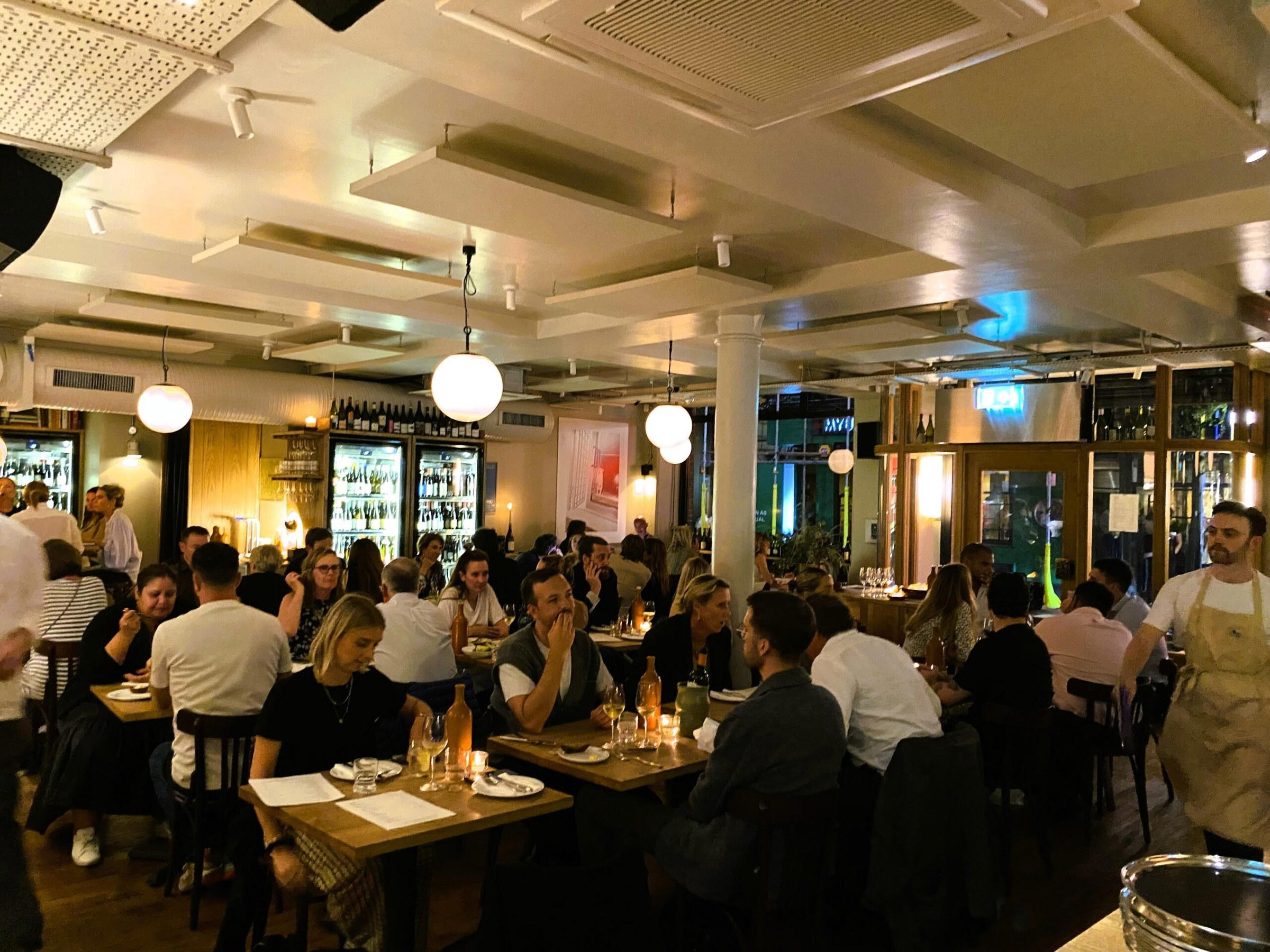
What keeps a neighbourhood diner returning to any restaurant is rarely the same thing that draws a first visit. For Namaaste Kitchen's core audience, the draw appears to be consistency and a room that does not perform for strangers. In London's denser dining neighbourhoods, Mayfair, Fitzrovia, Soho, restaurants are always partly in the business of spectacle, calibrating service and atmosphere to the visiting audience as much as the local one. The restaurant's regulars set the temperature of the room, not the other way around.
This is a dynamic that appears in strong neighbourhood restaurants across the city. The table by the window that is never on the booking system because someone always has it. The dish that is not the most photogenic but is what the Wednesday crowd orders. The service cadence that assumes familiarity rather than requiring its customers to prove they belong. These are not things that appear in a press release, but they are what keeps covers filled on nights when the city's event-driven trade stays home.
Indian Cooking in London: Where Namaaste Kitchen Sits
London's Indian restaurant category has been in transition for more than a decade. The old Brick Lane volume model has ceded ground to a more considered tier, and the city now hosts a number of high-ambition Indian kitchens operating at price points and conceptual registers that would have been unusual fifteen years ago. That shift has created space for restaurants that are neither destination trophies nor entry-level curry houses, a middle tier that serves a neighbourhood's actual appetite rather than its aspirational one.
Namaaste Kitchen operates within that middle tier in a part of London where the residential population is dense and the dining-out frequency is high. Camden's NW1 postcode contains a mix of long-term residents, students from nearby UCL and Royal Veterinary College, and the overflow from Primrose Hill's more expensive dining scene. A restaurant that holds this audience across multiple visits has solved something that many openings at higher price points do not: it has become part of a routine rather than an occasion.
For context on what the higher end of London's restaurant market looks like, the city's ££££ tier includes CORE by Clare Smyth, Restaurant Gordon Ramsay, Sketch, The Lecture Room and Library, The Ledbury, and Dinner by Heston Blumenthal, each operating with formal booking windows, tasting menus, and a guest profile that skews towards occasion dining. Namaaste Kitchen is not competing in that tier. Its competitive set is the capable neighbourhood restaurant that a local returns to, not the destination kitchen a visitor plans around.
Across the UK more broadly, the restaurants drawing critical attention in 2024 include L'Enclume in Cartmel, Moor Hall in Aughton, Waterside Inn in Bray, Le Manoir aux Quat'Saisons in Oxford, Gidleigh Park in Chagford, Hand and Flowers in Marlow, hide and fox in Saltwood, Midsummer House in Cambridge, and Restaurant Andrew Fairlie in Auchterarder. These are destination restaurants that draw from a national and international visitor base. Namaaste Kitchen operates on a different axis entirely: depth of local repeat rather than breadth of one-time visits.
For those planning a wider London trip, our full London restaurants guide maps the city's dining options by neighbourhood and price tier. Internationally, the model of a technically capable neighbourhood Indian restaurant that sustains a regular clientele is something that high-attention venues like Le Bernardin in New York or Atomix are not, those are destination formats. Namaaste Kitchen is something different, and for the visitor who wants to eat as a Camden resident eats rather than as a tourist, that distinction matters.
| Venue | Area | Cuisine | Price tier | Booking format |
|---|---|---|---|---|
| Namaaste Kitchen | Camden, NW1 | Indian | Not confirmed | Not confirmed |
| CORE by Clare Smyth | Notting Hill | Modern British | ££££ | Advance booking required |
| The Ledbury | Notting Hill | Modern European | ££££ | Advance booking required |
| Dinner by Heston Blumenthal | Knightsbridge | Modern British | ££££ | Advance booking required |
Frequently asked questions
Is Namaaste Kitchen suitable for children?
Namaaste Kitchen sits on Parkway in the residential NW1 stretch of Camden, a neighbourhood that draws local families rather than a late-night crowd, which tends to make the room more accommodating for younger diners. Booking ahead is advisable to ensure seating that suits a family group.
What should I expect atmosphere-wise at Namaaste Kitchen?
The Parkway address places Namaaste Kitchen firmly in Camden's quieter, residential corridor rather than the market-adjacent stretch near the Lock, so the room functions more like a local dining room than a destination venue. Expect a pace set by returning regulars rather than first-time visitors passing through. The Northern line's Camden Town station is a short walk away, which keeps the evening crowd largely intentional rather than transient.
How does Namaaste Kitchen differ from Camden Market's Indian food stalls?
Namaaste Kitchen operates at 64 Parkway, NW1 7AH, roughly a ten-minute walk from the Lock market stalls, and the format is a sit-down restaurant rather than counter or street-food service. Where market vendors optimise for throughput and portability, a Parkway dining room operates on a different logic: table service, a full menu, and a kitchen calibrated for repeat local custom rather than one-off foot traffic. For visitors who want a seated meal with Indian cooking rather than a market snack, the two are not really in direct competition.
What's the best thing to order at Namaaste Kitchen?
Specific dish recommendations require firsthand knowledge of the current menu at 64 Parkway, which shifts with the kitchen's focus, so the most reliable approach is to ask staff what is running well on the day of your visit. Indian cooking in London's more considered neighbourhood restaurants tends to foreground regional specificity over the generic curry-house template, and Namaaste Kitchen's position on Parkway suggests it is cooking for a repeat local audience rather than volume tourists. That context is usually a reliable indicator of where the kitchen puts its attention.
Booking and Cost Snapshot
Comparable venues nearby, for context on price, style, and recognition.
| Venue | Cuisine | Price | Notes |
|---|---|---|---|
| Namaaste KitchenThis venue (the venue you are viewing) | Modern Indian Bar and Grill | $20–30 | Not listed |
| Arya Bhavan Leicester Square | Authentic South Indian Vegetarian | $10–20 | Leicester Square, Authentic South Indian Vegetarian |
| The India - Monument | Indian with Bangladeshi influences | $20–30 | Monument, Indian with Bangladeshi influences |
| Postbox | Modern Indian with Goan influences | Not listed | Castelnau, Modern Indian with Goan influences |
| Salaam Namaste | Modern Indian & Pakistani | $30–50 | St Pancras, Modern Indian & Pakistani |
| Taste of Lahore Queensway | Pakistani & North Indian Curry House | $20–30 | Queensway, Pakistani & North Indian Curry House |