The Bear Pit
Our verdict
On Sepulveda Boulevard in Mission Hills, The Bear Pit occupies a stretch of the San Fernando Valley where sit-down dining has long been shaped by neighbourhood regulars rather than restaurant-world attention. The address at 10825 Sepulveda places it squarely in a corridor of working-city commerce, making it a useful lens through which to read how community-rooted restaurants operate at a remove from the Los Angeles dining circuit.

Pearl is the En Primeur Club membership app — saves, bookings, and concierge access live there. Same editors, same standards.
- Address
- 10825 Sepulveda Blvd, Mission Hills, CA 91345
- Phone
- (818) 365-2500
- Hours
- Daily 11:30 AM–8 PM
- Website
- bearpitbbq.com
- Directions
- Get directions
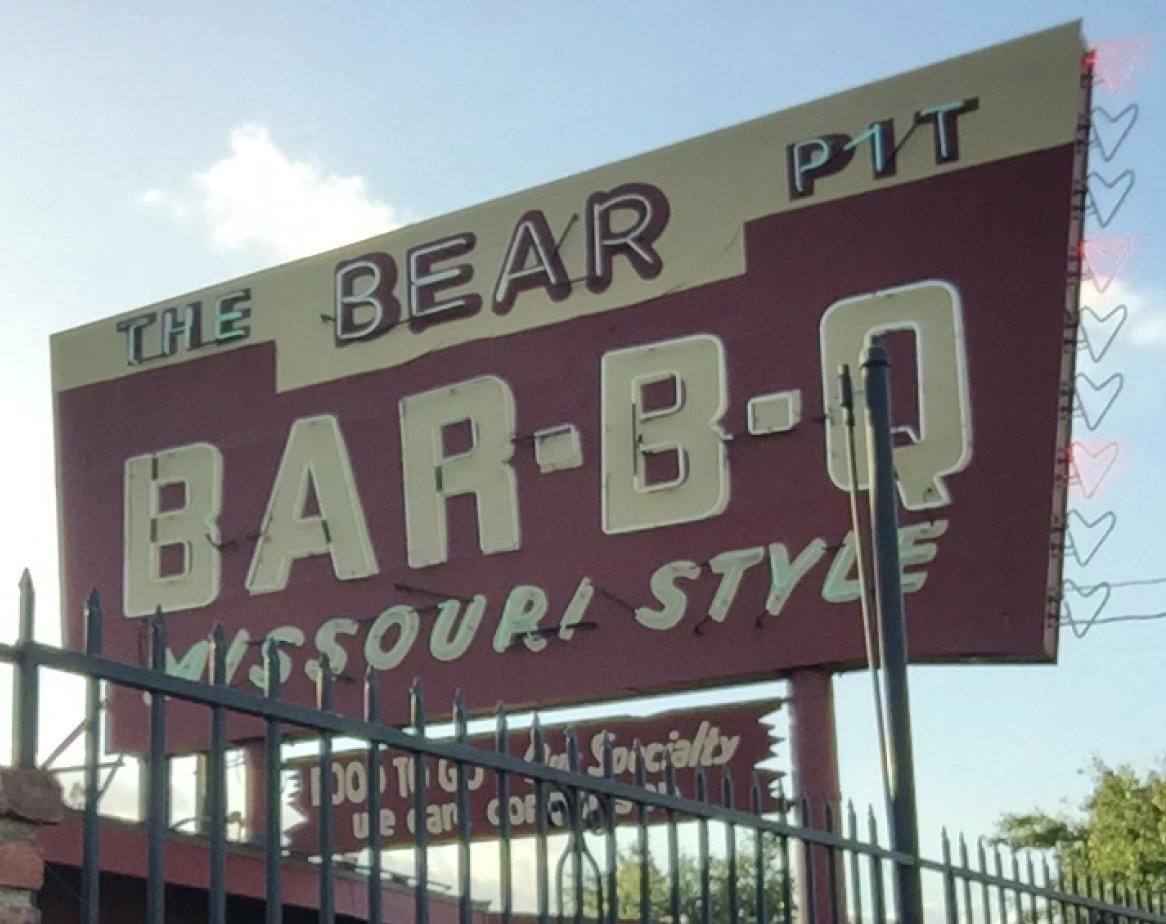
Sepulveda Boulevard and the San Fernando Valley's Working-City Dining
There is a category of American restaurant that exists almost entirely outside the awards apparatus and yet sustains itself for years on something more durable than critical attention: a neighbourhood that needs it. The San Fernando Valley has always had that kind of dining culture. While Los Angeles proper has developed a well-documented tier of ambitious destination restaurants, including Providence in Los Angeles and properties reviewed alongside Addison in San Diego, the Valley operates on a different register. Here, longevity tends to be earned through consistency and familiarity rather than tasting-menu distinction.
The Bear Pit sits at 10825 Sepulveda Boulevard in Mission Hills, a stretch that runs through one of the Valley's more workaday residential and commercial corridors. Approaching the address, you are not entering a destination-dining precinct. The boulevard is wide, the signage functional, and the surroundings are the ordinary texture of a working California city neighbourhood. That context is not a weakness to apologise for; it is the precise condition that defines what this type of restaurant does and whom it serves.
The Sourcing Question in Community Restaurants
The ingredient-sourcing conversation in American dining has become so concentrated around farm-to-table destination formats, places like Blue Hill at Stone Barns in Tarrytown and Single Thread Farm in Healdsburg, that it can obscure how sourcing actually works at the community level. Restaurants in corridors like Sepulveda Boulevard do not typically publish supplier relationships or seasonal provenance notes. What they reflect, instead, is the supply infrastructure of a given city district: the produce distributors, the meat suppliers, the vendors who service dozens of similar addresses within a short radius.
In the San Fernando Valley, that infrastructure is shaped by the region's proximity to California's agricultural breadth. The Central Valley, within a few hours by road, produces a significant share of the country's fruits and vegetables. Southern California's meat supply chains connect to both regional and national producers. For a restaurant operating at the community tier on Sepulveda, this means the raw materials available are not categorically different from those reaching kitchens in more celebrated zip codes; the gap lies in how those materials are treated, presented, and narrated. At the destination end of the spectrum, that narration is the product. At the community end, the food is the product.
This distinction matters when placing The Bear Pit in any meaningful context. The sourcing story here, to the extent it exists publicly, is not one of named farms or harvest-season menus. It is the quieter sourcing story of a neighbourhood anchor: consistent supply, a menu shaped by what a regular clientele expects to find, and the economic logic of serving a community at a price point that community can sustain.
Mission Hills in the Broader Los Angeles Frame
Mission Hills occupies the northern end of the City of Los Angeles, tucked between the 118 and 405 freeways. It is not a neighbourhood that appears on dining itineraries designed around the kinds of venues that readers of publications like this typically track. For comparison, the restaurants that draw Los Angeles area visitors with culinary intent tend to cluster in Hollywood, Koreatown, the Westside, or Downtown, with occasional excursions into the Valley's more restaurant-dense neighbourhoods like Sherman Oaks or Studio City.
That geographic distance from the dining circuit is precisely what gives places like The Bear Pit a different function. They are not competing with Lazy Bear in San Francisco or Alinea in Chicago. They are not positioned in the same tier as Le Bernardin in New York City or Atomix in New York City. The competitive set is entirely local: the other addresses on Sepulveda, the nearby chains, the family-run operations that serve the same catchment area. Within that frame, longevity and community trust function as the relevant measures of performance.
For travellers moving through the San Fernando Valley, the practical question is not whether The Bear Pit matches destination-tier restaurants in other cities, but whether it represents an honest and reliable point of contact with how a specific Los Angeles neighbourhood actually eats. On that question, address and continuity matter more than awards. See our full Mission Hills restaurants guide for a wider view of what the neighbourhood offers.
Where The Bear Pit Sits Relative to Sourcing-Led American Dining
The sourcing-led American dining movement has produced a generation of restaurants where ingredient provenance is the primary editorial and experiential frame. The French Laundry in Napa, Bacchanalia in Atlanta, and Frasca Food and Wine in Boulder each represent iterations of a model in which where the food comes from is explicitly part of what the diner is paying for. At the other end of the spectrum sit the restaurants that have always sourced responsibly by necessity rather than declaration, feeding communities on margins that do not permit waste, and relying on supplier relationships that are practical rather than promotional.
The Bear Pit's address on Sepulveda places it in that second category by default.
That is not a diminished version of dining. It is a different version, one that restaurants like Emeril's in New Orleans, Brutø in Denver, Causa in Washington D.C., ITAMAE in Miami, The Inn at Little Washington in Washington, and 8½ Otto e Mezzo Bombana in Hong Kong occupy entirely different price and prestige levels. The range across that list illustrates how broadly the category of "restaurant" spans, and why placing any venue accurately within its actual competitive tier is the first obligation of any honest assessment.
Planning a Visit: What the Address Tells You
The practical reality of visiting The Bear Pit begins with its location on Sepulveda Boulevard, one of the San Fernando Valley's primary commercial arteries. The address is accessible by car, which is the dominant mode of travel in this part of Los Angeles. Public transit connections exist via Metro Bus routes that run along Sepulveda, though journey times from central Los Angeles are substantial. Parking along commercial stretches of Sepulveda is generally available in adjacent lots, which is the norm for this type of neighbourhood address.
Visitors planning a specific trip should verify operating status directly before travelling.
Frequently asked questions
What kind of setting is The Bear Pit?
The Bear Pit sits on Sepulveda Boulevard, one of the San Fernando Valley's primary commercial arterials, which places it firmly in everyday American dining territory rather than destination-restaurant territory. The address at 10825 Sepulveda Blvd signals a strip-format setting common to Mission Hills, where the room serves the neighbourhood first and visiting critics second.
Where do I go for The Bear Pit?
The Bear Pit is located at 10825 Sepulveda Blvd, Mission Hills, CA 91345.
How The Bear Pit Mission Hills compares with similar nearby venues.
| Venue | Cuisine | Price |
|---|---|---|
| The Bear PitThis venue — the venue you are viewing | Missouri-Style Barbecue | $20–30 |
| Dr. Hogly Wogly’s BBQ | Barbecue | Not listed |
Continue exploring
More in Mission Hills
Restaurants in Mission Hills
Browse all →
Bars in Mission Hills
Browse all →

Hotels in Mission Hills
Browse all →
Wineries in Mission Hills
Browse all →
Details
- Rustic
- Cozy
- Classic
- Family
- Casual Hangout
- Group Dining
- Standalone
- A La Carte
Current opening hours
- Monday
- 11:30 AM–8 PM
- Tuesday
- 11:30 AM–8 PM
- Wednesday
- 11:30 AM–8 PM
- Thursday
- 11:30 AM–8 PM
- Friday
- 11:30 AM–8 PM
- Saturday
- 11:30 AM–8 PM
- Sunday
- 11:30 AM–8 PM
Hours can change for holidays and private events. Last verified .
Rustic and fun neighborhood barbecue joint with a casual, family-friendly atmosphere centered around hearty smoked meats and cheesy garlic toast.