
Thai Yuan has earned back-to-back Michelin Bib Gourmand recognition in 2024 and 2025, making it one of the few Thai restaurants in Taiwan to hold sustained Michelin attention.
Pearl is the En Primeur Club membership app — saves, bookings, and concierge access live there. Same editors, same standards.
- Address
- No. 331號, Baotai Rd, Cianjhen District, Kaohsiung City, Taiwan 806
- Phone
- +886 7 717 2269
- Website
- facebook.com
- Directions
- Get directions
 Saves & bookings on Pearl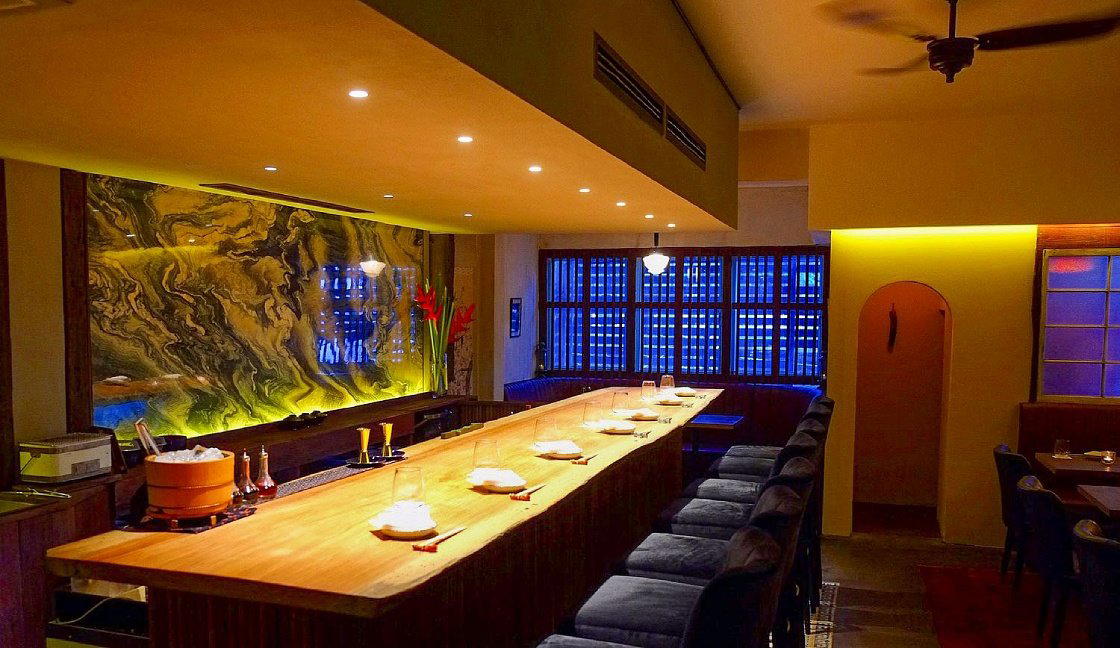
Thai Cooking in a City Built on Practicality
Kaohsiung has always eaten differently from Taipei. The port city's dining culture is grounded in directness: flavours that commit, portions that satisfy, and prices that don't require a separate budget line. Thai Yuan, on Baotai Road in Cianjhen District, fits that register precisely. The street is commercial rather than scenic, the kind of block where working-lunch crowds and neighbourhood regulars share tables without ceremony. That context is not incidental. It is exactly the environment in which Michelin's Bib Gourmand programme is designed to operate, recognising kitchens that deliver quality without inflation. Thai Yuan received that recognition in both 2024 and 2025, placing it among a small group of Kaohsiung restaurants that have held the designation across consecutive years.
The Bib Gourmand tier sits below the starred rankings but carries its own editorial weight. Across Taiwan, the award has flagged kitchens like A Cun Beef Soup on Baoan Road in Tainan, operations where the cooking is technically considered and the value proposition is part of the point. Thai Yuan occupies the same bracket, priced at $$ against a city where the upper dining tier runs to $$$$ at addresses like GEN (Cantonese) and Sho (Japanese).
Thai Food Outside Its Borders: What Sustains It
Thai cuisine has one of the more demanding diaspora records in Asia. Transplanted kitchens often flatten the flavour register, chilli heat dialled back, fish sauce reduced, the sourness of tamarind softened for presumed local preference. The restaurants that avoid this drift tend to share a few qualities: sourcing discipline, kitchen consistency, and a willingness to hold the cooking to its own internal logic rather than to a localised idea of what the market will accept.
In Taiwan, that discipline is relatively rare at the accessible price tier. Thai restaurants in the $$ range tend to converge toward a generic pan-Asian middle. The fact that restaurant has attracted Michelin attention twice over, at a price point where margins are tight and quality control is hardest to maintain, suggests the kitchen is operating with more rigour than the category average.0 across 404 reviews reinforces that the consistency is not reserved for inspectors.
For regional comparison points on Thai cooking that holds its source material seriously, Bangkok addresses like Nahm and Samrub Samrub Thai operate at the research-led end of the spectrum, and AKKEE in Pak Kret represents the kind of neighbourhood-rooted Thai cooking that prioritises ingredient fidelity over presentation. The restaurant is not in direct competition with those addresses, but the underlying commitment to source-true cooking is the same quality that earns recognition across all three tiers.
The Sustainability Dimension in a Low-Margin Kitchen
The environmental story in affordable restaurant cooking is often the least discussed, partly because the sustainability conversation tends to cluster around fine dining, where headline sourcing decisions and tasting-menu waste-reduction programmes are easier to publicise. But the Bib Gourmand tier has its own sustainability logic, one that is structural rather than aspirational.
Kitchens operating at the $$ price point have a material incentive to reduce waste: food cost is a higher proportion of revenue when margins are compressed, so over-ordering, spoilage, and over-preparation are financial problems before they are environmental ones. Whole-ingredient cooking, tight mise en place, and daily menu adaptation to available stock are survival tools in this tier, not premium add-ons. The Thai culinary tradition supports this approach intrinsically. Thai cooking draws on aromatics, lemongrass, galangal, kaffir lime leaf, fresh herbs, that are high in flavour yield relative to volume, and on proteins and vegetables that are used across multiple preparations rather than in single-application formats.
Across Taiwan's recognised dining scene, the kitchens that work with this kind of ingredient discipline at volume tend to appear at both ends of the price range. Akame in Wutai Township has built an entire programme around indigenous sourcing and low-waste preparation at the fine-dining level. At the accessible end, the calculation is less visible but no less present. A kitchen receiving back-to-back Michelin attention at $$ pricing is, by definition, running an efficient operation.
Cianjhen District and the Kaohsiung Dining Context
Cianjhen sits in the southern part of Kaohsiung, a district shaped more by industry and transit infrastructure than by the gallery-and-boutique character of some northern neighbourhoods. Dining here follows working-city patterns: the restaurants that last tend to be the ones that offer consistent, direct cooking without theatrical framing. The restaurant's address on Baotai Road places it within that ecosystem.
Kaohsiung's recognised dining scene has expanded significantly over the past several years, with Michelin attention now spread across price tiers and cuisines. The $$$$ end includes addresses like Haili (Modern Cuisine) and Anchovy (European Contemporary), where tasting-menu formats and premium sourcing set the frame. The restaurant operates in a different register entirely, closer in spirit to the accessible Taiwanese kitchens that make up the city's everyday dining fabric, including A Fung's Harmony Cuisine. The Michelin Bib Gourmand connects both ends of that range under a shared quality standard, even when the formats and price points diverge sharply.
Taiwan's broader food recognition circuit extends well beyond Kaohsiung. JL Studio in Taichung and logy in Taipei represent the fine-dining tier of Taiwan's Michelin presence. Volando Urai Spring Spa and Resort in Wulai District adds a resort-dining dimension. The restaurant belongs to a different but equally deliberate category within that ecosystem.
Planning Your Visit
The restaurant is located at No. 331, Baotai Road, Cianjhen District, Kaohsiung. The $$ pricing makes it one of the more accessible Michelin-recognised addresses in the city, with per-head costs that sit well below the tasting-menu tier. Arriving slightly before or after standard meal times is a reasonable approach. The restaurant is walk-in friendly and open Tuesday through Sunday from 5 p.m. to 12 a.m. with Monday closed.
Cuisine and Awards Snapshot
Comparable venues nearby, for context on price, style, and recognition.
| Venue | Cuisine | Price | Awards | Notes |
|---|---|---|---|---|
| Thai YuanThis venue — the venue you are viewing | Thai Street Noodles | $$ | Bib Gourmand | Not listed |
| Old New Taiwanese Cuisine (Jiuru 2nd Road) | Modern Taiwanese Omakase | $$ | Bib Gourmand | Sanmin |
| Joes (Gangshan) | Traditional Taiwanese Goat Hot Pot | $$ | Bib Gourmand | Gangshan District |
| Mai Yen Shun | Home-style Taiwanese | $$ | Bib Gourmand | Gushan District |
| Liang Chia Pig Knuckle | Modern Taiwanese Pig Knuckle | $$ | Bib Gourmand | Sanmin District |
| Liao Chi Migao | Taiwanese Migao Rice Cake | $ | Bib Gourmand | Qiaotou District |
Recognition history
Dated appearances from independent guides and award organizations, with the underlying list record or original source where available.
Michelin Bib Gourmand
Michelin
Michelin Bib Gourmand
Michelin
Continue exploring
More in Kaohsiung
Restaurants in Kaohsiung
Browse all →
Bars in Kaohsiung
Browse all →
At a Glance
- Trendy
- Cozy
- Casual Hangout
- Sake Program
Current opening hours
- Monday
- Closed
- Tuesday
- 5 p.m.–12 a.m.
- Wednesday
- 5 p.m.–12 a.m.
- Thursday
- 5 p.m.–12 a.m.
- Friday
- 5 p.m.–12 a.m.
- Saturday
- 5 p.m.–12 a.m.
- Sunday
- 5 p.m.–12 a.m.
Hours can change for holidays and private events. Last verified .
Exotic street vibe in a simple 2nd floor dining room with bright blue walls and Thai knickknacks, lacking air conditioning.