
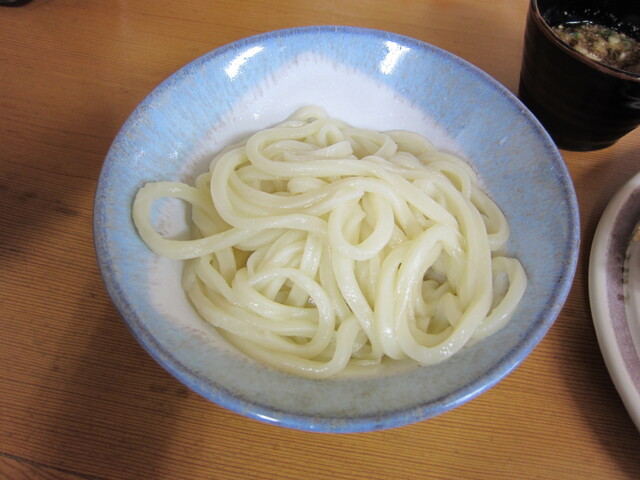
Teuchi Udon Santoku belongs to Kagawa’s serious udon circuit: handmade wheat noodles, onigiri, family-friendly seating, and recognition in Tabelog’s Udon KAGAWA 100 for 2024. Its value lies in the local logic of Sanuki udon, where flour, broth, speed, and repeat custom matter more than ceremony.
Pearl is the En Primeur Club membership app — saves, bookings, and concierge access live there. Same editors, same standards.
- Address
- Japan, 〒761-0301 Kagawa, Takamatsu, Hayashicho, 390−1
- Phone
- +81 87-888-2368
- Website
- santoku-udon.com
 Saves & bookings on Pearl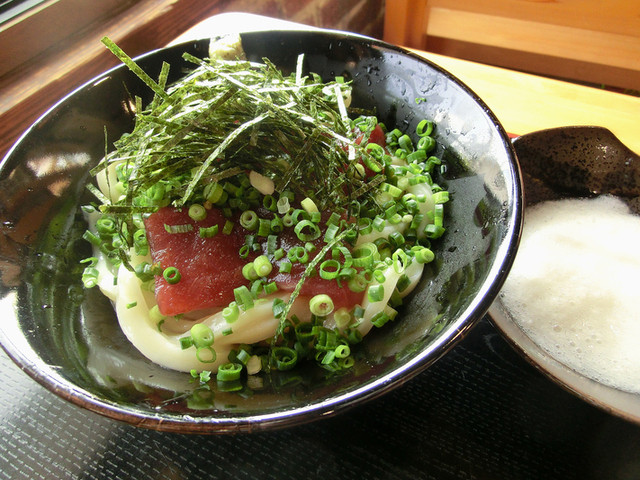
Approaching an udon shop in Takamatsu is rarely about theatre. The signs are practical, the room is built for turnover, and the sound that matters is the rhythm of trays, ladles, and people deciding quickly. Kagawa’s noodle culture has never needed luxury cues to prove seriousness; its authority sits in wheat handling, broth discipline, and the confidence to serve a regional staple without dressing it as a tasting-menu object. Teuchi Udon Santoku fits that grammar: handmade udon, onigiri alongside the noodles, counter and table formats, and a scale large enough to feel like a working local address rather than a precious specialist counter.
Sanuki udon as an ingredient argument, not a garnish game
Kagawa’s udon reputation is built on a narrow set of variables: flour, water, salt, kneading, resting, cutting, boiling, and dashi. That focus can look plain to travellers trained to read value through rare seafood or chef-led menus, but Sanuki udon works differently. The noodle is the main event, and the kitchen’s credibility rests on texture, temperature, and how the broth or dipping sauce frames the wheat rather than covers it.
Teuchi Udon Santoku’s placement in Tabelog’s Udon KAGAWA 100 for 2024 gives it a clear trust signal inside a prefecture where the category is crowded and heavily scrutinised. The recognition matters because Kagawa udon is not a novelty category; it is a daily food with intense local comparison. A shop selected in that field is being judged against places where small differences in chew, broth clarity, and service rhythm are noticed by regulars, not just visitors.
The menu category is concise by design: udon and onigiri. That pairing says a great deal about the meal structure. Onigiri is not a side-show luxury item here; it is part of the same carbohydrate economy that makes Kagawa udon culture so direct. In a city where noodles often anchor breakfast, lunch, and quick family meals, rice balls provide ballast without changing the character of the table.
For travellers mapping Takamatsu through noodles, Santoku sits naturally beside other city udon references such as Azuma, Chikusei Honten, Furukawa Udon, and Furusato Udon. The useful comparison is not glamour but intent: some shops are pilgrimage counters, some are neighbourhood staples, and some are built to absorb families and groups while keeping the noodle standard in view.
A room built for local volume rather than ceremony
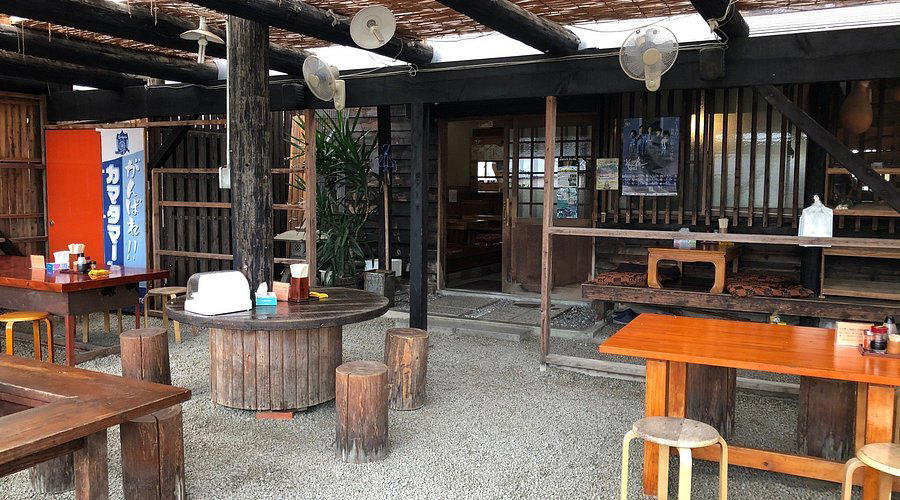
The format tells the reader what kind of meal to expect. With 95 seats across counter seats, tables, and tatami seating, this is not the hushed, reservation-led version of Japanese dining that dominates international coverage. It belongs to a more democratic register: quick decisions, steady movement, and a room where families and friends can eat without the tension of a performance space.
That matters in Takamatsu. The city’s udon culture is not confined to a single neighbourhood or dining hour; it spreads through roadside shops, station-area counters, and suburban addresses where parking and capacity shape demand as much as guidebook attention. Santoku’s setting in Hayashicho, with Ota Station as the nearest rail reference, places it in that broader everyday geography rather than the compact tourist corridor. The 30-space parking provision reinforces the local pattern: many serious udon meals in Kagawa are planned by car, not by a stroll between landmarks.
The shop also carries a small piece of local continuity, having relocated from Kamifukuoka-cho in Takamatsu in June 2007. That detail is useful because udon reputations in Kagawa often travel with customers; a move does not erase a shop’s place in the mental map if the noodles remain part of people’s routines.
Compared with Takamatsu peers such as Utsumi Udon, Honkaku Teuchi Udon Menmusubi, Teuchi Menya Oshima, Teuchi Udon Ueda, and Oshima Udon, the competitive bracket is sharply value-led. The decision is less about luxury hierarchy than about which expression of Sanuki udon fits the day: a fast solo bowl, a family table, a car-based noodle circuit, or a broader crawl through Kagawa’s wheat culture.
How to place it in a Takamatsu food day
Teuchi Udon Santoku makes the strongest case as part of a Takamatsu itinerary that treats udon as culture rather than a single checklist meal. The city rewards repetition. One bowl teaches spring and chew; another teaches broth; another shows how self-service rhythm, rice sides, and family seating shape the everyday experience. Santoku’s appeal is in that context: it offers a substantial, locally recognised stop in the udon conversation, not a detached fine-dining detour.
Travellers building a wider food route can use Our full Takamatsu restaurants guide for the city’s dining spread, then widen the trip with Our full Takamatsu hotels guide, Our full Takamatsu bars guide, Our full Takamatsu wineries guide, and Our full Takamatsu experiences guide. For a counterpoint within the city’s casual canon, Fumiya Okonomiyaki Honten shows another strand of everyday Japanese cooking where batter, heat, and speed carry the argument.
Japan’s regional dining map is wide enough that a noodle stop in Kagawa can sit beside different casual formats elsewhere: -Grilled beef Sukiyaki- KAMAKURA TANUKIAN 鎌倉 たぬき庵 in Kamakura. 鮪と炭火焼き うお炭 秋葉原店 in Tokyo.cafe in Osaka.know in Kumamoto, (Shoku) Vietnam in Kawasaki, and [Curry Senmon Ten] Maruyama Kyoju. in Sapporo each frame a different local appetite. Abroad, Jōdo Saké Bar in Los Angeles and Onigiri Time in Pasadena show how Japanese formats change when removed from their home context.
The editorial read is simple: this is a Kagawa udon stop for travellers who care about ingredient logic and local eating patterns more than ceremony. The award recognition, large seating mix, car-friendly setup, and udon-onigiri focus all point in the same direction. It belongs on a Takamatsu plan when the goal is to understand why a bowl of wheat noodles can carry an entire prefecture’s food identity.
Snapshot
Comparable options at the same price tier.
| Venue | Cuisine | Price | Notes |
|---|---|---|---|
| Teuchi Udon SantokuThis venue — the venue you are viewing | Sanuki hand-made udon | $ | Not listed |
| Makoto Udon | Traditional Sanuki udon noodle shop | $ | Takamatsu |
| Matsubara | Japanese Udon Noodle Bar | $ | Takamatsu |
| Shinpei Udon | Sanuki udon noodle shop | $ | Takamatsu |
| Ikegami Seimensho | Sanuki Udon | $ | Takamatsu |
| Udon Ippuku | Traditional Sanuki Udon Shop | $ | Takamatsu |
Recognition history
Dated appearances from independent guides and award organizations, with the underlying list record or original source where available.
Tabelog 100 #94 · No. 94
Tabelog · Tabelog 100 - Udon - KAGAWA - 2024
Continue exploring
More in Takamatsu
Restaurants in Takamatsu
Browse all →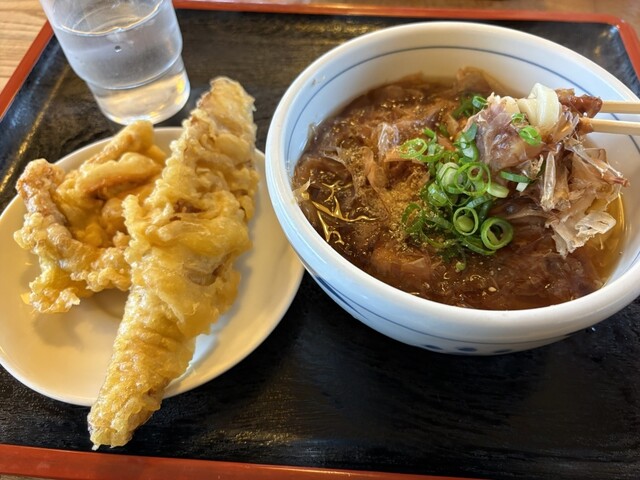
At a Glance
- Lively
- Classic
- Well Known
- Solo
- Family
- Casual Hangout
- Group Dining
- After Work
- Standalone
- Local Sourcing
Current opening hours
- Monday
- 11 AM–3:45 PM
- Tuesday
- 11 AM–3:45 PM
- Wednesday
- Closed
- Thursday
- Closed
- Friday
- 11 AM–3:45 PM
- Saturday
- 11 AM–3:45 PM
- Sunday
- 11 AM–3:45 PM
Hours can change for holidays and private events. Last verified .