Ter:Govw

Ter:Govw sits on Oosthaven canal in Gouda, a short walk from the historic centre, and takes its name from Tergouw, the city's medieval designation. The kitchen runs a set menu that moves between French classical technique and Asian seasoning, with wine pairings handled by the house. At the €€€ price point, it represents Gouda's most considered farm-to-table proposition.
Pearl is the En Primeur Club membership app — saves, bookings, and concierge access live there. Same editors, same standards.
- Address
- Oosthaven 23a, 2801 PC Gouda, Netherlands
- Phone
- +31 182 524 884
- Website
- restauranttergovw.nl
- Directions
- Get directions
 Saves & bookings on Pearl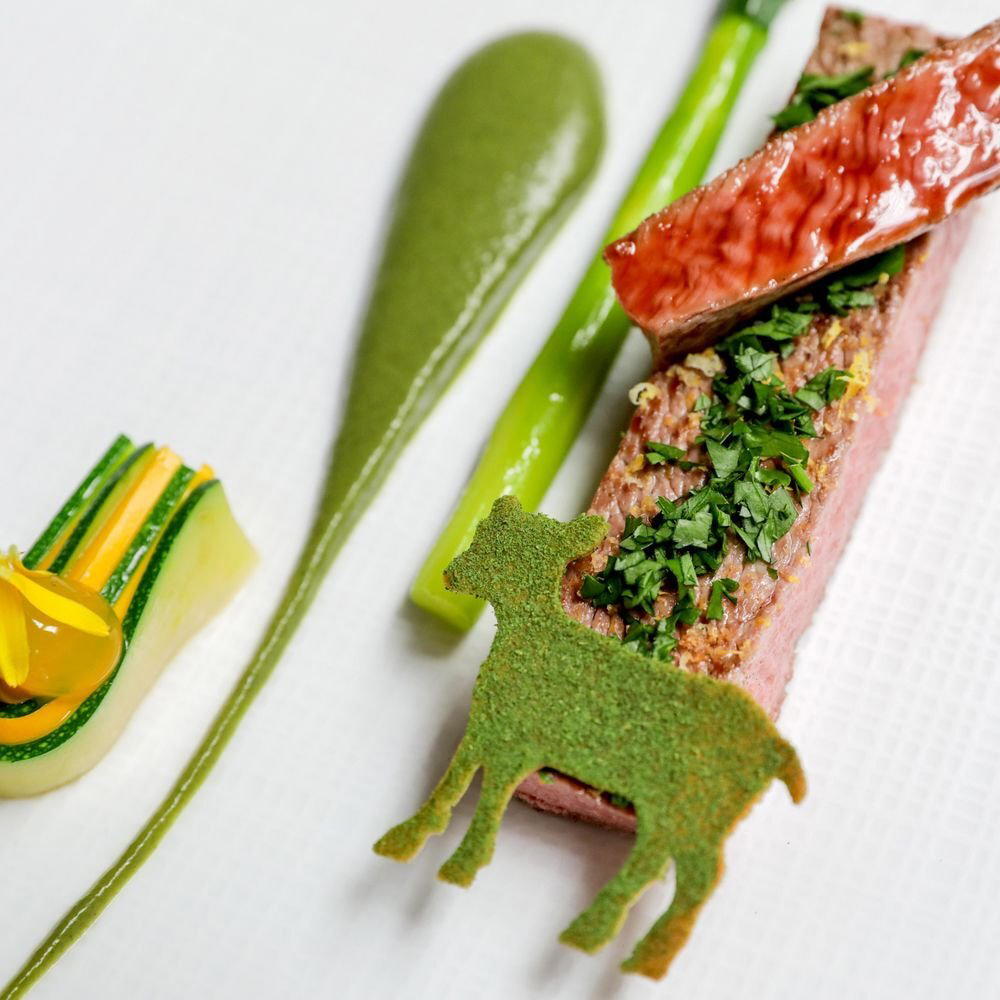
A Canal Address in a Cheese City With More to Say
Gouda's culinary reputation has long been dominated by a single product: the pressed, waxed wheels that bear its name and travel to supermarket shelves across four continents. That dominance has, for decades, made it easy to overlook the city as a dining destination in its own right. Ter:Govw, on the Oosthaven canal a short walk from the central market square, is a restaurant in Gouda serving contemporary French with Asian accents.
The name itself is a deliberate act of local grounding. Tergouw is the historical name for Gouda, drawn from the Gouwe river that defines the city's geography. Choosing it as the restaurant's identity signals an orientation toward place and continuity rather than the kind of rootless fine-dining branding that could land the same concept in Rotterdam or Utrecht without adjustment. In the Netherlands, where De Librije in Zwolle and Aan de Poel in Amstelveen have built national reputations partly by anchoring to their specific regional contexts, that kind of specificity carries weight.
The Set Menu: French Classics Reframed Through an Asian Lens
The format at Ter:Govw is a set menu, which in the Dutch context carries particular meaning. From the mid-tier upward, the tasting format has become the dominant grammar of serious Dutch restaurants, a structure that allows kitchens to express a coherent culinary argument from amuse-bouche through to dessert. What distinguishes Ter:Govw within that convention is the cultural layering the kitchen applies to a French classical skeleton.
Approach belongs to a broader movement in European fine dining that has been gathering pace since roughly the mid-2010s: a re-examination of the French canon through the lens of Asian flavour architecture. This is not fusion in the loose sense of the 1990s but something more disciplined, where techniques like beurre blanc or Madeira reduction are kept intact and then rebalanced with the acidity, umami depth, or aromatic sharpness that characterise Japanese, Vietnamese, or Thai seasoning. The kitchen's reported handling of tuna nigiri alongside a leek-infused beurre blanc is a precise illustration of this method: two fully realised culinary languages running in parallel rather than one diluting the other. A tournedos Rossini enclosed in Madeira jus is a French preparation with a long pedigree, and offering it alongside more zesty, Asian-inflected courses requires confidence in both directions.
Across the Netherlands, the farm-to-table designation has evolved from a marketing phrase into a structural commitment for a certain tier of restaurant. Properties like De Groene Lantaarn in Staphorst, De Woage in Gramsbergen, and Spetters in Breskens have each built menus around regional sourcing in ways that reflect their immediate geography. The restaurant operates within the same ethical and procurement framework, which at this price point is now table stakes rather than a differentiator. The differentiator here is the Franco-Asian tonal range the kitchen applies to that sourced material.
Wine Pairings and the House Approach to the Table
The restaurant delegates the drinks decision to the house, with recommended wine pairings built into the experience. This is common practice across the set-menu tier in the Netherlands, and when it works well, it removes the cognitive burden from the guest and places it with a sommelier or kitchen team who know the menu's flavour arcs. Given the dual register of the food, classical French plus Asian-inflected seasoning, the pairing challenge is more complex than a purely European menu would present: acidity management matters more, and the selection likely moves between Old World structure and wines with the aromatic lift or texture to shadow the kitchen's more assertive seasonal notes.
For comparison, the wine programs at restaurants like Inter Scaldes in Kruiningen and Brut172 in Reijmerstok have been recognised partly for precisely that kind of thoughtful navigation across complex menus. At the restaurant, trusting the house recommendation is the logical approach, particularly on a first visit.
Ter:Govw in Gouda's Dining Context
Gouda supports a compact serious dining scene. LIZZ, at the Creative French end of the spectrum, and Weeshuis Gouda, rooted in Dutch cuisine, represent the two other defined propositions in the city's upper tier. The restaurant at €€€ sits in the same price band, but the farm-to-table structure and the Franco-Asian tonal register position it as a distinct choice rather than an overlap. Each restaurant makes a different argument about what contemporary Dutch dining can be.
For visitors building a broader itinerary through the western Netherlands, Gouda's proximity to Rotterdam and its rail connections make the restaurant viable as part of a multi-city eating programme. Rotterdam's scene, anchored by venues like Fred at the Creative French end, operates at a higher competitive density and a €€€€ price ceiling. Gouda represents an opportunity to eat at a comparable level of ambition for less, in a city whose canal architecture is considerably more intact than Rotterdam's post-war rebuilding.
Further afield, the Dutch farm-to-table tier has produced some of the country's most interesting contemporary cooking. De Bokkedoorns in Overveen and De Lindehof in Nuenen, as well as De Lindenhof in Giethoorn, each demonstrate how regional sourcing and classical technique can combine with local identity to produce cooking with genuine specificity. The restaurant belongs to that conversation, even if it is still making its case on the national stage.
Planning a Visit
The restaurant is located at Oosthaven 23a, 2801 PC Gouda, close to the canal and within comfortable walking distance of the historic centre and the main railway station. The €€€ pricing indicates a mid-to-upper tier for a Dutch city of this size, and the set menu format means the per-head spend is structured rather than variable. Given the canal-side address and the city's status as a weekend destination for Dutch and international visitors, booking ahead is advisable, particularly for Friday and Saturday evenings.
Cost and Credentials
Comparable venues nearby, for context on price, style, and recognition.
| Venue | Cuisine | Price | Awards | Notes |
|---|---|---|---|---|
| Ter:GovwThis venue — the venue you are viewing | Farm to table | $$$ | Michelin Plate | Not listed |
| COCO | Not listed | $$ | Not listed | /, Coffee, cocktails, champagne & light lunch in a chic hotel bar |
| Weeshuis Gouda | Not listed | $$$ | Not listed | historic centre, Modern Dutch Fine Dining |
| Restaurant Unique | Gouda Vest, Creative French Fine Dining | $$$ | Not listed | Not listed |
| LIZZ | Not listed | $$$$ | Michelin 1 Star | Gouda Centrum, Modern French with Asian Influences |
| JanZen | Woerden, Contemporary French Fine Dining | $$$ | Michelin Plate | Not listed |
Recognition history
Dated appearances from independent guides and award organizations, with the underlying list record or original source where available.
Michelin Plate
Michelin
Continue exploring
More in Gouda
Restaurants in Gouda
Browse all →
Bars in Gouda
Browse all →
Hotels in Gouda
Browse all →
Wineries in Gouda
Browse all →
At a Glance
- Warm
- Cozy
- Elegant
- Modern
- Intimate
- Date Night
- Special Occasion
- Business Dinner
- Waterfront
- Extensive Wine List
- Sommelier Led
- Farm To Table
- Local Sourcing
- Waterfront
- Street Scene
Current opening hours
- Monday
- Closed
- Tuesday
- 6 PM–12 AM
- Wednesday
- 6 PM–12 AM
- Thursday
- 6 PM–12 AM
- Friday
- 6 PM–12 AM
- Saturday
- 6 PM–12 AM
- Sunday
- Closed
Hours can change for holidays and private events. Last verified .
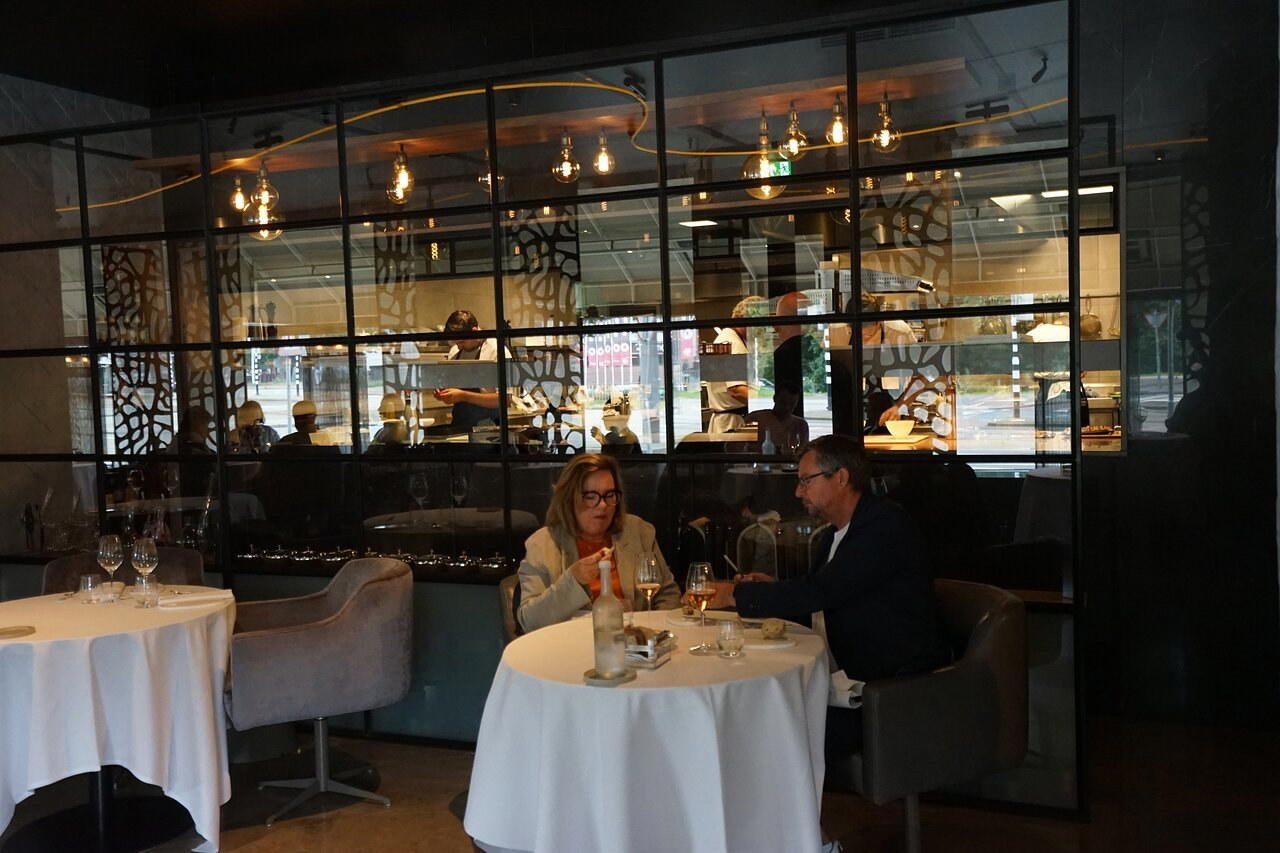
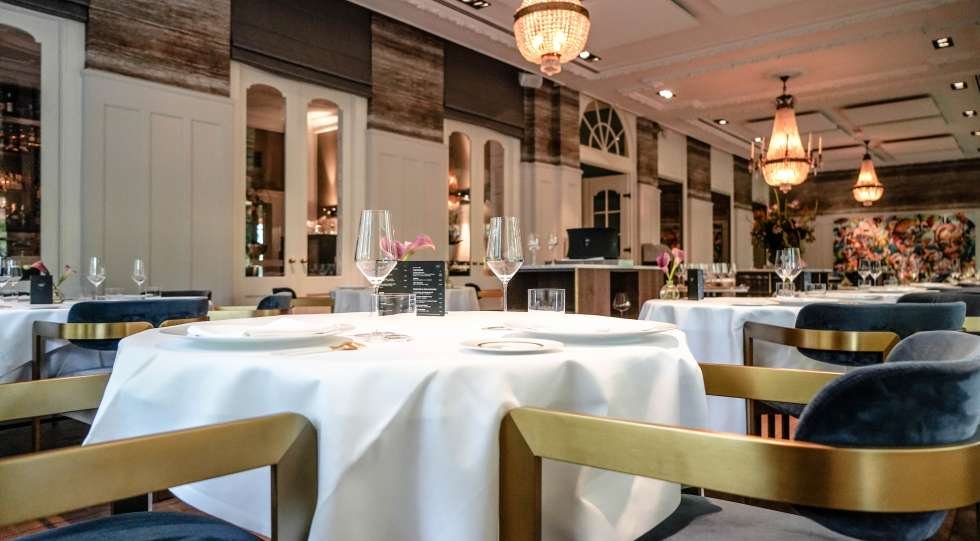
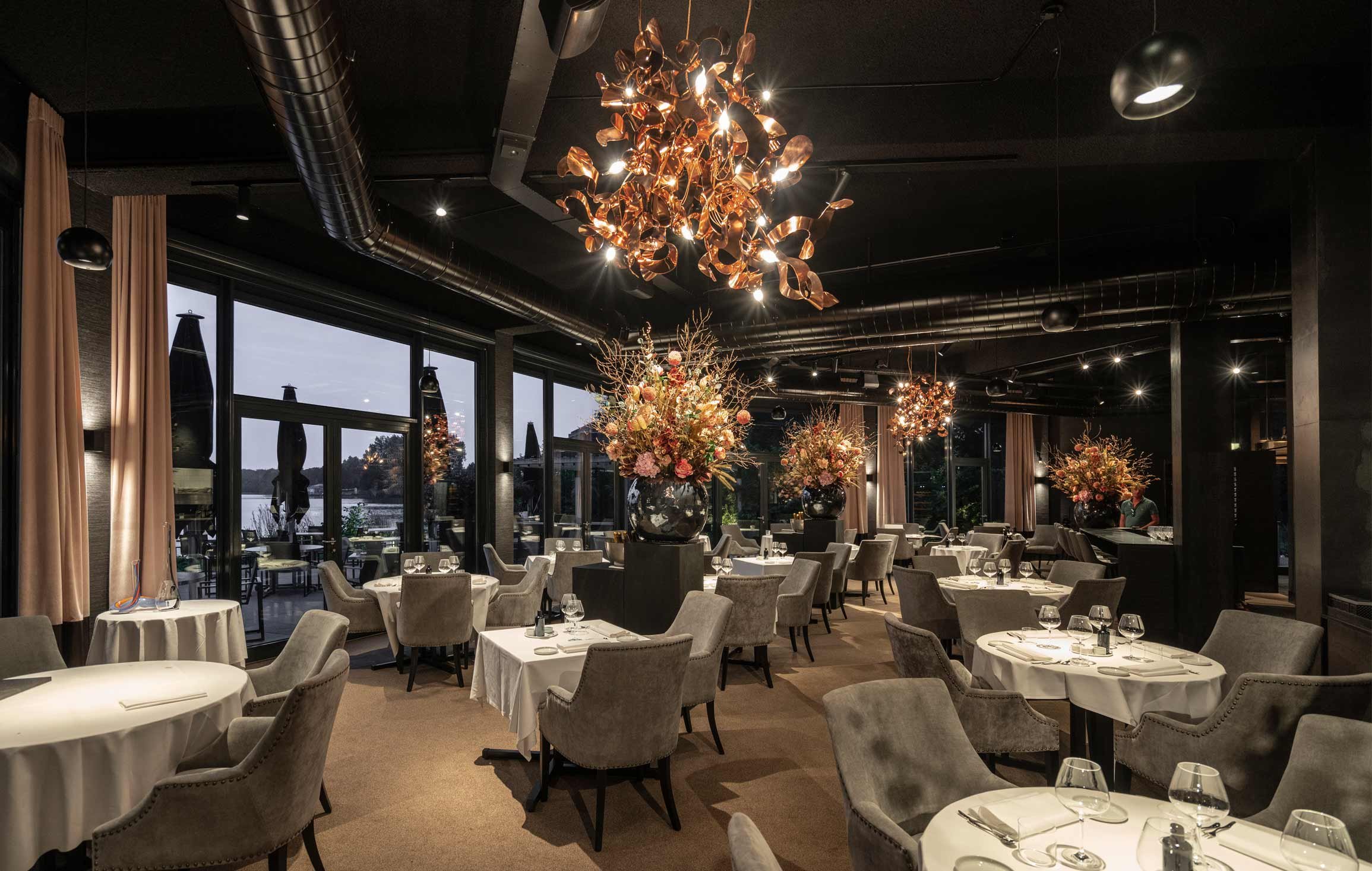
Warm, welcoming, and atmospheric with comfortable, relaxed fine dining setting praised for cozy lighting and pleasant flow.