Black Pearl 1 Diamond
Our verdict
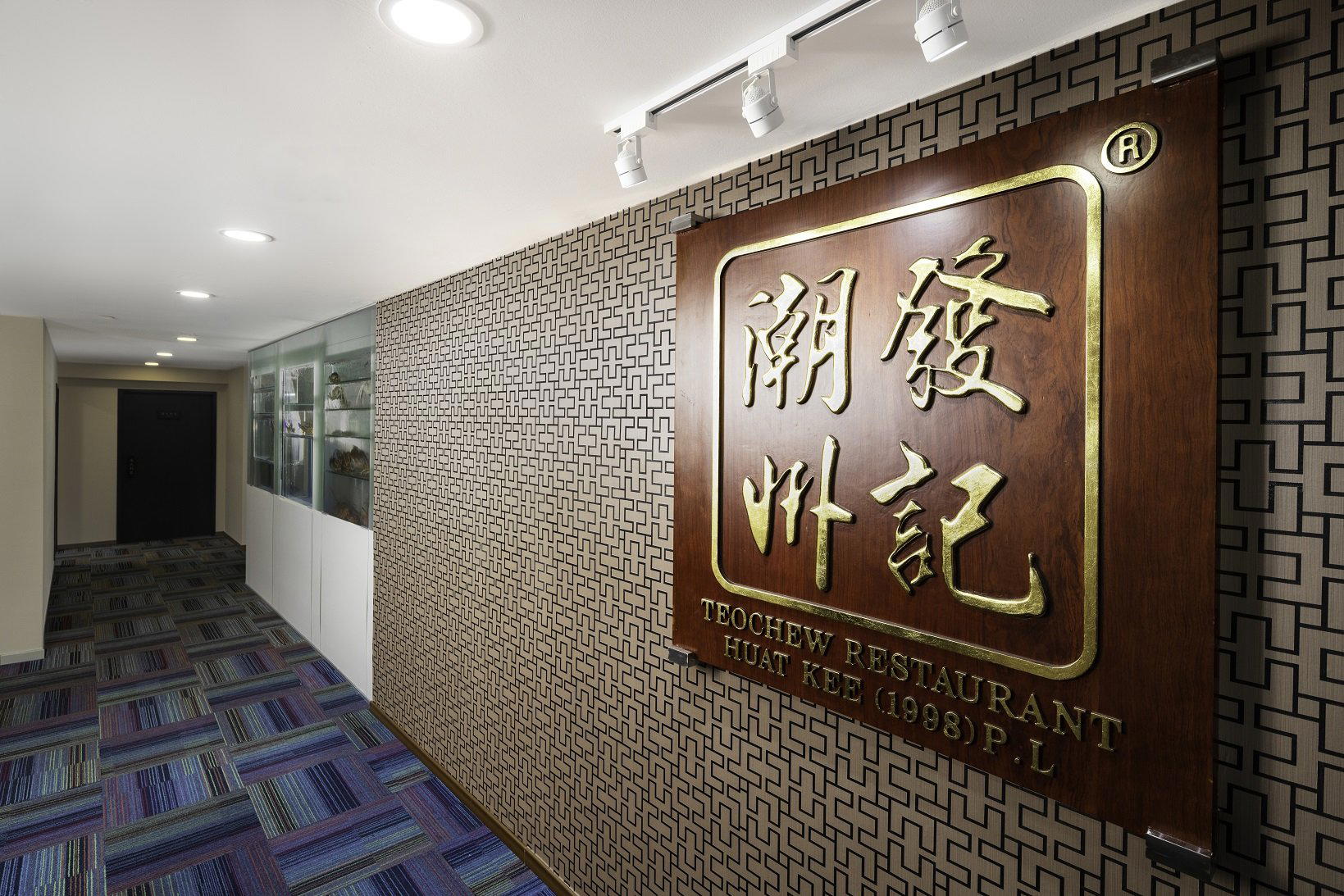
Teochew Restaurant Huat Kee, located in the RELC Building on Orange Grove Road, represents Singapore's quieter tradition of Teochew cooking recognised at the highest levels of the Black Pearl restaurant guide, which awarded it a Diamond in 2025. The address places it away from the main tourist circuits, in a dining room where the food does the communicating rather than the setting.

Pearl is the En Primeur Club membership app, where members save venues, book tables and use the concierge.
The menu
What to order
- Oyster omelette
- Steamed pomfret
- Orh nee
- Braised duck
Teochew in Singapore: A Cuisine That Earns Its Reputation Quietly
Singapore's most decorated dining rooms tend to cluster at the premium end of the hotel corridor or in the conservation shophouses of the CBD. Odette, Les Amis, and Zén occupy that familiar high-visibility tier. Teochew cooking, by contrast, earns its standing through a different register: restraint over display, clarity over richness, and a kitchen vocabulary that resists the kind of dramatic plating that photographs well on social media but fades from memory by dessert. Huat Kee, sitting in the RELC Building on Orange Grove Road with a 2025 Black Pearl Diamond to its name, belongs to the tradition rather than the trend.
The Black Pearl guide, published by Meituan and considered one of the more rigorous recognition systems operating across Asia, awarded its Diamond designation to Huat Kee in 2025. In the context of Singapore's dining scene, that places it in evaluated company that includes heavily funded tasting-menu operations and celebrity chef outposts. That a Teochew specialist earns the same category of recognition as contemporary European formats says something about how seriously the guide weights culinary lineage and execution consistency alongside innovation.
What Teochew Cooking Means at This Level
Teochew cuisine originates in the Chaoshan region of eastern Guangdong province, and its diaspora moved through Southeast Asia over two centuries, taking root most visibly in Singapore, Bangkok, and Ho Chi Minh City. The cooking style is characterised by steaming, braising, and cold-serving techniques that prioritise the original flavour of ingredients over layered saucing. Braised duck, cold crab, raw fish preparations, and slow-cooked offal dishes form its canon. Preserved vegetables appear alongside fresh ones with no hierarchy implied between them; the cuisine treats every ingredient as worthy of careful handling.
What distinguishes the higher tier of Teochew restaurants from the everyday is not a departure from these traditions but a deeper fidelity to them. Sourcing matters more at this level. The braised meats require time and temperature discipline that shortcut kitchens skip. A cold crab served correctly demands precision in timing and handling that erases itself from the final plate, leaving only the crab. These are not techniques that reward impatience, and they are not techniques that photograph as dramatically as the plated compositions coming out of restaurants like Meta or Jaan by Kirk Westaway. They reward attention.
The Service and Floor Dynamic in Teochew Dining
The editorial angle that makes Huat Kee worth examining from a team perspective is not about individual prominence but about the particular demands Teochew cuisine places on front-of-house. Unlike tasting-menu formats at contemporaries such as Le Bernardin in New York City or Alain Ducasse at Louis XV in Monte Carlo, where courses arrive in a predetermined sequence and the floor team executes a scripted service arc, Teochew family-style dining asks the floor to read the table continuously. Dishes arrive in patterns shaped by the group's pace. Cold preparations need to reach the table at the right moment relative to hot dishes. The service rhythm is improvised within a set of understood conventions rather than choreographed from a fixed menu card.
At the level Huat Kee operates, this demands a floor team that understands the food well enough to sequence it intelligently for different group sizes and compositions. A two-person table ordering for themselves functions differently from a business group working through a longer spread. The kitchen and front-of-house relationship in this format is more conversational than in Western tasting-menu contexts, and execution consistency over time is one of the reasons a Black Pearl recognition holds rather than fluctuates. Comparable service dynamics appear in the high-end Cantonese tradition, where Summer Pavilion at the Regent represents one local benchmark, but Teochew's cold-dish component adds a sequencing variable that Cantonese cooking does not always carry.
The Address and What It Signals
The RELC Building on Orange Grove Road is not a dining destination in the way that Marina Bay Sands or Dempsey Hill functions for tourists. Orange Grove Road runs through the Tanglin corridor between Orchard Road and the Botanic Gardens, an area associated more with embassies and educational institutions than with restaurant clusters. That address positions Huat Kee as a local destination rather than an imported experience, serving a clientele that finds its way there deliberately rather than wandering past. This is a pattern seen across Asian cities with strong regional Chinese restaurant traditions: the serious rooms are rarely in the highest-footfall locations.
For the visiting diner, Orange Grove Road is reachable and not inconvenient from the Orchard corridor. Planning a meal here fits naturally alongside other engagements in the Tanglin area. Those building a wider Singapore dining itinerary will find context in our full Singapore restaurants guide, while our Singapore hotels guide covers accommodation options close to this part of the city. The bars guide and experiences guide cover the broader picture for those spending several days in the city.
Huat Kee in the Wider Context of Diamond-Level Dining in Singapore
Singapore's fine dining scene has bifurcated over the past decade. On one side sit the internationally oriented tasting-menu rooms, operating at the $$$-$$$$ price tier and drawing comparison with peers in Hong Kong, where 8½ Otto e Mezzo Bombana anchors the Italian fine dining tier, or in Paris, where Alléno Paris au Pavillon Ledoyen operates at the highest end of the French tradition. On the other side, a smaller but meaningfully evaluated tier of Chinese-heritage specialists holds ground in a different way: through repetition of excellence in a defined culinary framework rather than through continuous menu reinvention.
Huat Kee belongs to that second tier. The 2025 Black Pearl Diamond recognition is a confirmation that the guide's evaluators found consistent, serious cooking in a format that does not announce itself through PR machinery or celebrity association. For those whose dining interests extend toward the regional Chinese specialist category, this is the kind of restaurant that places like Atomix in New York City, Lazy Bear in San Francisco, or Aponiente in El Puerto de Santa María represent in their own categories: technically grounded, culturally specific, and evaluated on terms internal to their tradition rather than borrowed from European fine dining norms. The Singapore wineries guide and Emeril's in New Orleans illustrate how different regional traditions hold their own evaluation logic, and the same applies here.
Planning Your Visit
Huat Kee operates from the second floor of the RELC Building at 30 Orange Grove Road, Singapore 258352. Current booking details and operating hours are not listed publicly through the venue's own digital presence, so confirming availability directly before visiting is advisable. For a Black Pearl Diamond restaurant operating in a neighbourhood setting rather than a hotel complex, demand from regulars can make walk-in access unreliable, particularly at peak dining hours. Those unfamiliar with Teochew ordering conventions may find it useful to arrive with a general sense of the cuisine's structure: cold dishes are typically ordered alongside hot, braised, and steamed preparations rather than sequenced as strict courses. The floor team at this level of operation is equipped to guide the table through that structure, but arriving with some awareness reduces the cognitive load of the meal and allows more attention to land on the food itself.
Frequently asked questions
How do I find Teochew Restaurant Huat Kee?
Teochew Restaurant Huat Kee is located at #02-01 RELC Building, 30 Orange Grove Rd, Singapore 258352, Singapore.
What distinctions does Teochew Restaurant Huat Kee have?
Teochew Restaurant Huat Kee has received recognition including: Black Pearl 1 Diamond (2025).
What should I eat at Teochew Restaurant Huat Kee?
Teochew cooking at Black Pearl Diamond level centres on restraint: the cuisine from Chaoshan in eastern Guangdong favours steaming, light braising, and cold preparations over heavy seasoning. Signature expressions of the tradition include braised meats, steamed fish with preserved vegetables, and oyster omelettes. Specific current menu items are best confirmed directly with the restaurant before your visit.
Is Teochew Restaurant Huat Kee reservation-only?
The RELC Building on Orange Grove Road draws a local professional and diplomatic crowd rather than walk-in foot traffic, which means the dining room runs on a more structured service pattern than a casual shophouse might.
Cuisine Lens
| Venue | Cuisine | Price | Awards | Notes |
|---|---|---|---|---|
| Teochew Restaurant Huat KeeThis venue (the venue you are viewing) | Authentic Teochew | $30–50 | Black Pearl 1 Diamond | Not listed |
| Zén | Yakitori & Japanese Izakaya | $50–100 | Tabelog 100 #92 | European Contemporary |
| Jaan by Kirk Westaway | Modern British Fine Dining | $200–300 | 2 Michelin Stars · Michelin Guide 2 Stars | British Contemporary |
| Burnt Ends | Modern Australian Barbecue | $100–150 | 1 Michelin Star · Michelin Guide 1 Star | Australian Barbecue, Barbecue |
| Summer Pavilion | Michelin-Starred Cantonese | $100–150 | 1 Michelin Star · Michelin Guide 1 Star | Cantonese |
| Born | Contemporary Fusion Fine Dining | $200–300 | 1 Michelin Star · Michelin Guide 1 Star | Creative Cuisine, Innovative |
Recognition history
Dated appearances from independent guides and award organizations, with the underlying list record or original source where available.
Black Pearl 1 Diamond
Black Pearl