Tartini Pizzeria & Spaghetteria
Our verdict
On South Orange Avenue, a stretch that Orlando's casual dining scene has long claimed as its own, Tartini Pizzeria & Spaghetteria occupies the kind of neighbourhood slot that cities build their everyday eating habits around. The menu centres on pizza and spaghetti in a city better known for theme-park dining, positioning Tartini as a local anchor rather than a destination play.

Pearl is the En Primeur Club membership app — saves, bookings, and concierge access live there. Same editors, same standards.
- Address
- 6327 S Orange Ave, Orlando, FL 32809
- Phone
- (407) 704-8011
- Hours
- Mon ClosedTue–Thu 5–10 PMFri 5–11 PMSat 3–11 PMSun 3–9 PM
- Website
- tartinirestaurant.com
- Directions
- Get directions
- Booking
- Book on OpenTable
The menu
What to order
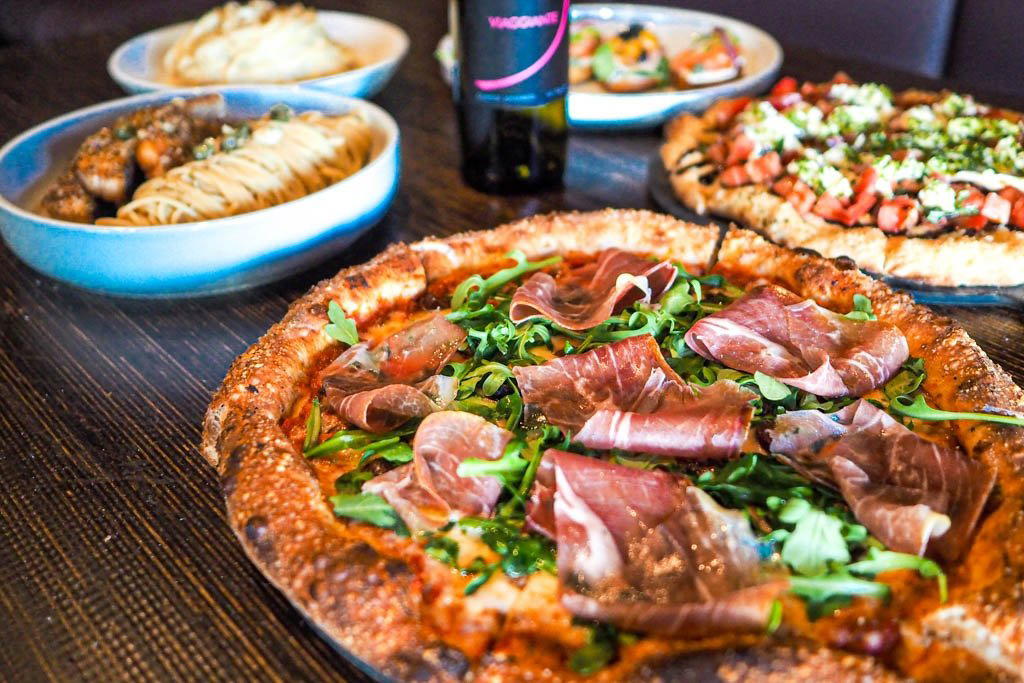
- Pasta Alla Ruota
- Eggplant Parmigiana
- Mussels Marinara
South Orange Avenue and the Everyday Italian Question
Orlando's dining conversation tilts heavily toward its fine-dining tier. Properties like Capa, with its refined steakhouse format, and the omakase counters at Kadence and Sorekara attract the press coverage. But the more revealing story in any American city's food culture is what happens at the neighbourhood level, on the strips where locals eat twice a week rather than twice a year. South Orange Avenue, running through Orlando's 32809 zip code, is that kind of strip. It serves residents rather than visitors, and the restaurants along it tend to be defined by consistency and familiarity rather than ambition or ceremony.
Tartini Pizzeria & Spaghetteria sits at 6327 S Orange Ave inside that framework. The name alone signals the register: this is a place that has chosen to say exactly what it does. Pizza and spaghetti. The double-format name belongs to a tradition of Italian-American restaurants that resisted the pivot toward broader menus during the casual-dining boom of the 1990s and 2000s. In a market where chains systematically widened their offerings to capture the broadest possible demographic, the pizzeria-spaghetteria format is a narrower, older bet.
The Evolution of Italian-American in Florida
Italian-American dining in Florida has moved through several distinct phases. The first wave, concentrated in the mid-twentieth century, built around family-run red-sauce houses that served the same menu for decades. The second wave brought chain saturation: Olive Garden, Carrabba's, and their peers reshaped consumer expectations around portion size, consistency, and price. A third phase, more recent and more uneven, has seen an interest in regional Italian specificity, with some operators drawing distinctions between Neapolitan pizza traditions and Roman styles, or between southern and northern pasta formats.
The pizzeria-spaghetteria model sits at an interesting intersection across all three of those phases. It predates the chain era, survived it by occupying a price and intimacy point that chains could not replicate at scale, and now finds itself in mild tension with the specificity trend. Diners who have learned to ask whether a crust is baked in a wood-fired oven at 900 degrees or a deck oven at 550 bring different questions to a neighbourhood Italian spot than they would have brought twenty years ago. That shift is not unique to Orlando. Across American cities, the everday Italian category is being quietly re-evaluated from below, as food literacy among regular restaurant-goers rises.
For a venue like Tartini, that context matters. The evolution of what the surrounding market expects does not necessarily require a complete reinvention, but it does demand that the fundamentals hold up under closer scrutiny. South Orange Avenue diners are not the same audience as visitors to the resort corridor, and that is, in many ways, the stronger test.
Format and Neighbourhood Fit
The dual-format name, pizzeria plus spaghetteria, implies a menu architecture that prioritises depth in two categories rather than breadth across many. That is a structurally sound position for a neighbourhood restaurant. It allows for repetition, for a regular to cycle through variations on a core format without exhausting the menu too quickly. It also sets a clear expectation at the door, which reduces the friction of the first visit.
South Orange Avenue in the 32809 area skews residential and practical. It is not a destination dining corridor in the way that downtown Orlando's Mills 50 district or the Audubon Park Garden District function. Restaurants on this stretch tend to earn their regulars through proximity, value, and the specific comfort of knowing what you are going to get. In that context, specialisation is an asset, not a limitation.
Orlando's wider Italian offering gives useful comparative framing. The city has no shortage of red-sauce options at the lower price tiers, and the upper end of the Italian category is served by hotel-adjacent fine dining. The mid-tier neighbourhood Italian slot, where pizza and pasta are the anchors and the room feels like it belongs to the surrounding community rather than a hotel lobby, is a category with real demand and, in many American cities, real undersupply of quality operators.
Where Tartini Sits in Orlando's Dining Picture
Orlando's critical dining conversation is largely concentrated in a different part of the market. The city's most-discussed restaurants, including the Vietnamese-influenced menu at Camille and the Japanese formats at Natsu, operate at price points and with ambitions that put them in a national conversation. Nationally, the benchmark for that level of ambition runs from Le Bernardin in New York City and Alinea in Chicago through to The French Laundry in Napa, Providence in Los Angeles, Blue Hill at Stone Barns in Tarrytown, Addison in San Diego, Lazy Bear in San Francisco, The Inn at Little Washington, Atomix in New York City, Single Thread Farm in Healdsburg, and Emeril's in New Orleans. That is not Tartini's competitive set. Tartini operates in a different register entirely, one where the relevant comparison is not Michelin recognition but neighbourhood reliability.
That distinction is worth making clearly, because the framing through which you approach a restaurant shapes what you are actually assessing. Tartini is not a destination for the kind of travel that takes you to 8 1/2 Otto e Mezzo Bombana in Hong Kong. It is, or aspires to be, the kind of place that a South Orlando resident builds into their weekly rotation. That is a different and, arguably, harder thing to sustain over time. Tasting-menu prestige is renewed with each season's menu change. Neighbourhood loyalty is renewed every Tuesday night.
For a broader view of where Tartini sits within Orlando's full dining range, from neighbourhood Italian through to the city's most ambitious tasting-menu formats, see our full Orlando restaurants guide.
Know Before You Go
- Address: 6327 S Orange Ave, Orlando, FL 32809
- Cuisine Format: Pizzeria and spaghetteria (Italian-American)
- Reservations: Not confirmed; walk-in likely, but verify directly before visiting
- Hours:
- Is Tartini Pizzeria & Spaghetteria reservation-only?
- South Orange Avenue neighbourhood restaurants in Orlando at this category level are often walk-in friendly, but that varies. If you are planning a visit on a Friday or Saturday evening, contacting the restaurant directly ahead of time is the practical approach.
- What is Tartini Pizzeria & Spaghetteria known for?
- Tartini is known for a focused Italian-American format built around pizza and spaghetti, operating on South Orange Avenue in a part of Orlando that serves residents rather than the tourist corridor. The dual-format name reflects a deliberate narrowness of scope that has historically been a signal of specialisation in the Italian-American category. No awards or critical citations appear in current available data.
- Is Tartini Pizzeria & Spaghetteria allergy-friendly?
- How does Tartini Pizzeria & Spaghetteria fit into the South Orange Avenue dining corridor compared to Orlando's wider Italian options?
- South Orange Avenue sits outside Orlando's main dining destination zones, serving a residential catchment rather than the tourist or downtown professional market. Tartini's pizzeria-spaghetteria format places it in the neighbourhood-specialist tier of Italian-American dining, a category that competes less on ambition and more on consistency and value. In a city where the upper end of Italian dining is largely absorbed by hotel-adjacent or fine-dining operators, the mid-tier neighbourhood slot that Tartini occupies serves a different and locally relevant function.
Frequently asked questions
What part of town is Tartini Pizzeria & Spaghetteria in?
Tartini Pizzeria & Spaghetteria is located at 6327 S Orange Ave, Orlando, FL 32809.
How does Tartini Pizzeria & Spaghetteria compare to other Italian restaurants in Orlando?
Tartini occupies a different tier than Orlando's resort-district Italian concepts, operating as a neighbourhood-facing pizzeria and spaghetteria on South Orange Avenue rather than a hotel-anchored dining room. Its dual-format focus on pizza and pasta places it closer to the everyday Italian tradition than to the city's fine-dining conversation. For Orlando residents south of the city centre, it represents one of the more format-specific Italian options in that corridor.
What do people recommend at Tartini Pizzeria & Spaghetteria?
The menu architecture at Tartini is built around two categories: pizza and pasta. That kind of deliberate narrowing typically means both receive more attention than they would on a sprawling Italian-American menu. Regulars on South Orange Avenue tend to return for the pasta side — the spaghetteria designation signals it's a focal point, not an afterthought.
Is Tartini Pizzeria & Spaghetteria reservation-only?
Given its South Orange Avenue location at 6327 S Orange Ave, Orlando — a neighbourhood strip rather than a destination dining corridor — walk-ins are plausible, but contacting the restaurant directly before visiting is advisable.
What is Tartini Pizzeria & Spaghetteria known for?
Tartini's identity sits in the dual-format model its name announces: a focused Italian kitchen covering pizza and pasta without spreading into the broader Italian-American catalogue. In an Orlando dining scene dominated by resort-aligned concepts, a neighbourhood-rooted spot on South Orange Avenue operating in this format occupies a distinct position in the local Italian tier.
Is Tartini Pizzeria & Spaghetteria allergy-friendly?
No allergy or dietary accommodation policy is documented for Tartini. For guests with specific requirements, calling ahead is the practical approach — the restaurant's address is 6327 S Orange Ave, Orlando, FL 32809, and direct contact will give the most accurate picture of what the kitchen can accommodate.
How It Stacks Up
Comparable venues nearby, for context on price, style, and recognition.
| Venue | Cuisine | Price | Notes |
|---|---|---|---|
| Tartini Pizzeria & SpaghetteriaThis venue — the venue you are viewing | Rustic Italian Pizzeria & Spaghetteria | $30–50 | Not listed |
| Mangia | Modern Italian | $20–30 | Avalon Park |
| Cala Bella | Modern Italian Mediterranean | $30–50 | Convention Center |
| Mi Casa Tequila Taquería | Authentic Mexican Taqueria | $20–30 | Convention Center |
| JJ's Scratch Cocina | Latin-Mediterranean Fusion | $20–30 | Curry Ford Road |
| Mamak Asian Street Food | Dining | $20–30 | Mills 50 |