Tartarbar

Tartarbar on Vilenskiy Pereulok brings a focused Russian seafood philosophy to St. Petersburg's competitive dining scene, earning 79.5 points in the 2025 La Liste rankings.
Pearl is the En Primeur Club membership app — saves, bookings, and concierge access live there. Same editors, same standards.
- Address
- Vilenskiy Pereulok, 15, St Petersburg, Russia, 191014
- Phone
- +7 911 922-56-06
- Website
- tartarbar.ru
- Directions
- Get directions
 Saves & bookings on Pearl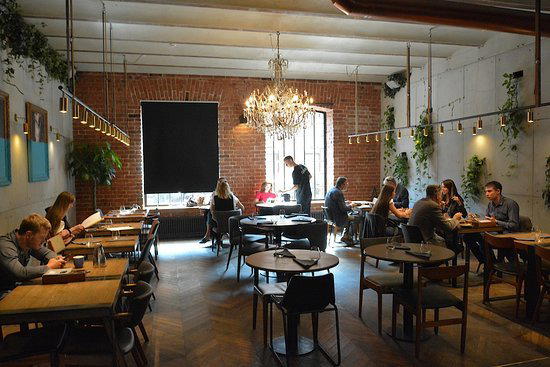
Where St. Petersburg's Seafood Tradition Gets Serious
The side streets branching off Ligovskiy Prospekt in central St. Petersburg carry a particular density of specialist restaurants, the kind of addresses that attract regulars rather than tourists. Vilenskiy Pereulok, a quiet lane at number 15, is that sort of street: understated approach, focused intent. Tartarbar occupies this setting as a modern European tartare specialist at Vilenskiy Pereulok 15, with a focus on seafood preparations handled with structural seriousness.
St. Petersburg's position as Russia's northern maritime gateway has always made it logical territory for seafood-driven cooking. The city sits at the mouth of the Neva, a short distance from the Gulf of Finland, and its culinary history has long drawn on Baltic catches, White Sea shellfish, and the rich river fisheries of Russia's northwest. What separates the current generation of serious seafood addresses from the older hotel dining rooms and tourist-adjacent fish restaurants is a philosophical shift: less decoration, more respect for the catch itself.
The Whole-Catch Argument
The editorial angle that matters most when assessing Tartarbar is not the menu as a list of dishes but the underlying logic of how a kitchen treats its primary ingredient. In the global conversation about sustainable seafood cooking, the nose-to-tail principle applied to fish and shellfish asks a kitchen to use everything: collar cuts, livers, roes, skins prepared as crackling, stocks drawn from frames that would otherwise be discarded. This approach, applied rigorously in Scandinavian kitchens and certain Japanese counter formats for decades, has been slower to arrive in Russian fine-casual dining.
When it does arrive, it changes the economics and the quality signals simultaneously. A kitchen that commits to the whole catch buys differently, sources more carefully, and works more closely with suppliers who can guarantee quality across the entire fish rather than just the premium cuts. The result, when the philosophy holds, is a menu where secondary preparations carry as much interest as the headline pieces. It is worth measuring any serious Russian seafood address against this standard, and Tartarbar's,729 reviews suggests it has earned a place in that conversation at the upper end of St. Petersburg's contemporary dining tier. For comparison in the Moscow market, Wine and Crab in Moscow represents the capital's take on premium Russian seafood, while the format at Le Bernardin in New York City remains the global benchmark for what a kitchen committed entirely to fish can achieve across decades of consistency.
La Liste and What 79.5 Points Actually Means
La Liste's methodology aggregates international guides, local critic sources, and digital signals into a composite score. A 79.5 in the 2025 edition places Tartarbar in a credible upper-middle tier of internationally recognised addresses, below the leading handful of Russian restaurants that break into the 85-plus bracket but above the broad field of locally respected names that do not register on aggregated global indices. For a specialist seafood address rather than a broad tasting-menu format, this is a meaningful credential. It signals that the kitchen's output has been consistent enough, and the experience specific enough, to attract attention beyond the city's immediate dining community.
High critical scores combined with volume public approval at this level indicate a restaurant that manages expectations across different types of visitors, which is harder than it looks for a specialist format in a city where broader European cooking at addresses like Bourgeois Bohemians and Il Lago dei Cigni competes for the same dining-out budget.
St. Petersburg's Competitive Seafood Context
The city's restaurant scene has stratified considerably over the past decade. The tier occupied by Tartarbar sits in productive tension with establishments that apply French technique to Russian ingredients, as seen at Percorso at the Four Seasons, and with more bistro-format Russian cooking at Frantsuza Bistrot and Probka. A seafood specialist that earns international index points in this environment has to do something that the broader field does not: apply specificity of sourcing and technique to a single protein category with enough conviction to draw guests who might otherwise default to a more familiar format.
Across Russia's wider restaurant geography, the renewed interest in native ingredients and regional fishing traditions shows up in different registers. Twins Garden in Moscow takes a farm-driven whole-ingredient approach to Russian produce, while Birch in St. Petersburg situates itself in a modern Russian idiom that also draws on foraged and native sourcing. Further afield, SEASONS in Kaliningrad and La Colline in Bolshoye Sareyevo represent how regional Russian fine dining has expanded its footprint beyond the two main cities. Leo Wine and Kitchen in Rostov and Tsarskaya Okhota in Zhukovka demonstrate the range of register available in Russian fine dining, from casual-sophisticated to ceremonial. Tartarbar's seafood-only focus is a deliberate narrowing against this wide field, and that narrowing is itself a statement about sourcing discipline.
Planning a Visit
Tartarbar is located at Vilenskiy Pereulok 15, St. Petersburg 191014, in the central Ligovskiy area of the city, accessible from Ploshchad Vosstaniya and Ligovskiy Prospekt metro stations within a short walk. The address does not carry the high foot-traffic visibility of the city's main dining corridors, which makes it a deliberate choice for the visitor rather than an accidental discovery. Specific booking method, current hours, and pricing information are best confirmed directly with the venue.
For a full picture of where Tartarbar sits within St. Petersburg's wider dining offer, see the city guide.
Awards and Standing
Comparable venues nearby, for context on price, style, and recognition.
| Venue | Cuisine | Price | Notes |
|---|---|---|---|
| TartarbarThis venue — the venue you are viewing | Modern European Tartare Specialist | $$ | Not listed |
| Сад - Sad | Modern Rustic European | $$$ | Petrogradsky District |
| Bourgeois Bohemians | Contemporary European Fine Dining | $$$ | Northwestern District |
| Frantsuza Bistrot | Modern French Bistro | $$$ | Petrogradka |
| Il Lago dei Cigni | Contemporary Italian Fine Dining | $$$$ | Petrogradsky |
| пробка - Probka | Modern Italian Trattoria | $$$ | Petrogradskaya Side |
Recognition history
Dated appearances from independent guides and award organizations, with the underlying list record or original source where available.
La Liste Top Restaurants
La Liste
Continue exploring
More in Sankt-Peterburg
Restaurants in Sankt-Peterburg
Browse all →
Bars in Sankt-Peterburg
Browse all →

Hotels in Sankt-Peterburg
Browse all →
At a Glance
- Trendy
- Modern
- Cozy
- Industrial
- Sophisticated
- Date Night
- Casual Hangout
- Business Dinner
- Open Kitchen
- Craft Cocktails
Current opening hours
- Monday
- 9 AM–12 AM
- Tuesday
- 9 AM–12 AM
- Wednesday
- 9 AM–12 AM
- Thursday
- 9 AM–12 AM
- Friday
- 9 AM–1 AM
- Saturday
- 9 AM–1 AM
- Sunday
- 9 AM–12 AM
Hours can change for holidays and private events. Last verified .
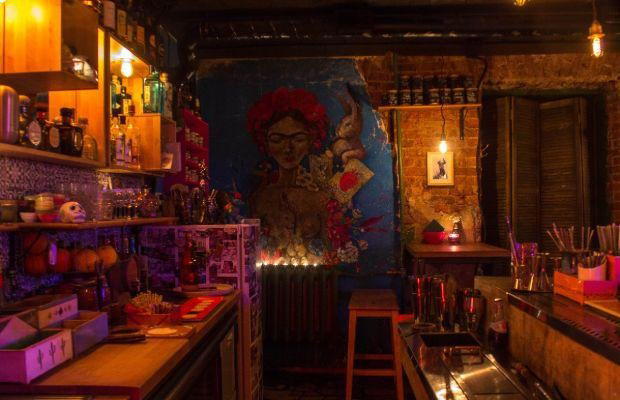
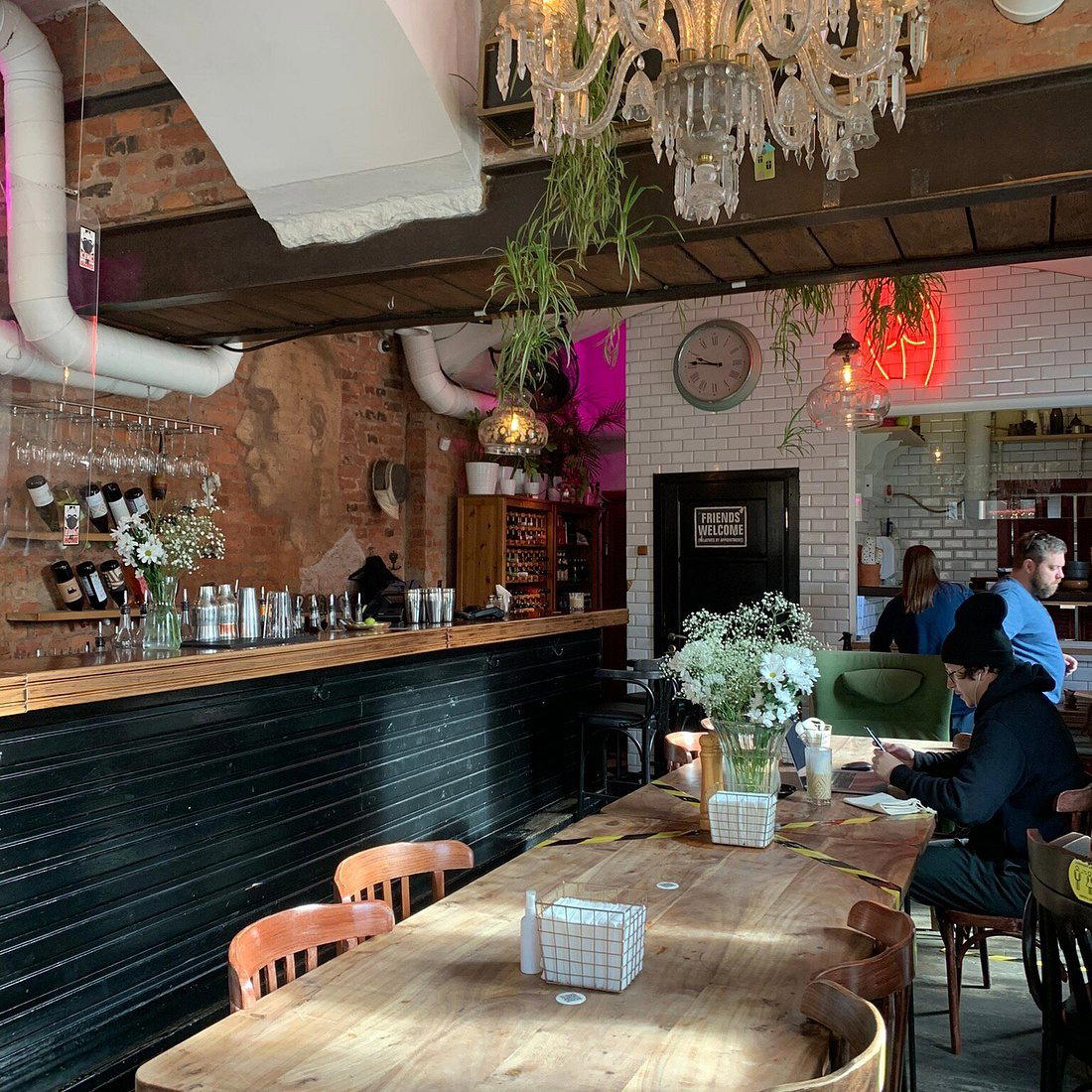
Stylish industrial interior with exposed brick, concrete walls, live ivy, and enigmatic art pieces under spotlights, creating a trendy yet cozy atmosphere.